
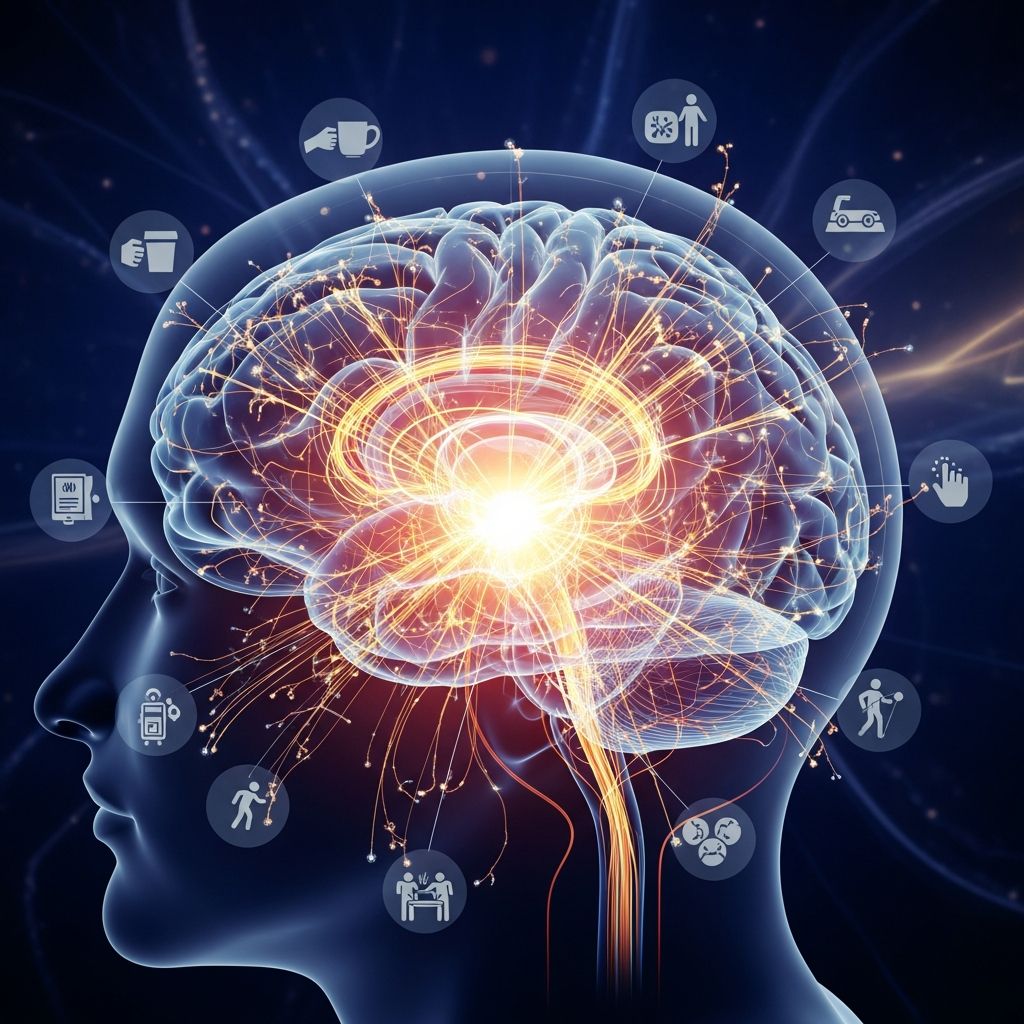
Understanding the Neural Foundations of Motivation and Pleasure
The brain operates as a sophisticated biological machine that constantly evaluates experiences and determines which behaviors to repeat. At the core of this process lies the reward system—a network of interconnected brain structures and chemical pathways that orchestrates how we experience pleasure, develop habits, and pursue meaningful goals. This intricate system evolved over billions of years to ensure survival and reproduction by reinforcing behaviors essential for thriving in our environments. When you accomplish something meaningful, enjoy a delicious meal, or receive social recognition, your brain isn’t simply generating fleeting pleasure; it’s executing an ancient neural program designed to stamp that experience into memory and motivate future repetition.
The Chemical Messenger: Dopamine’s Central Role
While the reward system involves multiple neurotransmitters and brain regions, one chemical stands out as particularly crucial: dopamine. This neurotransmitter acts as the brain’s primary motivational currency, released in response to rewarding experiences and anticipated rewards. Dopamine’s significance becomes apparent when examining its evolutionary history—the same neurotransmitter that drives reward processing in humans exists in organisms as simple as worms and flies, indicating its fundamental importance to survival.
Dopamine operates differently than many people assume. Rather than simply creating feelings of pleasure in the moment, dopamine primarily drives “wanting”—the motivation to pursue and repeat rewarding behaviors. This distinction proves crucial for understanding how habits form, why we become drawn to certain activities, and how addiction develops. The dopamine system essentially tells your brain: “That was valuable; remember this and do it again.”
The Mesolimbic Pathway: Your Brain’s Reward Highway
The most important reward pathway in the brain is the mesolimbic dopamine system, a circuit connecting two key brain structures: the ventral tegmental area (VTA) and the nucleus accumbens (NAc). This pathway functions as the brain’s primary detector of rewarding stimuli, continuously evaluating external and internal experiences to determine their value. Under normal circumstances, this circuit manages responses to natural rewards—food, social interaction, sexual activity—making it fundamental to motivation and goal-directed behavior.
When you experience something rewarding, the VTA releases dopamine into the nucleus accumbens, creating a signal that broadcasts: “This behavior produced a positive outcome.” The brain then encodes this experience, linking the reward to the specific actions and context that produced it. Over time, repeated activation strengthens these neural connections, making the behavior increasingly automatic and habitual.
How Your Brain Processes and Learns from Rewards
The journey from perceiving a potential reward to forming lasting behavioral patterns involves several coordinated stages of neural processing:
Initial Perception and Evaluation
When your brain encounters a potential reward—whether a piece of chocolate, a notification on your phone, or an opportunity for social connection—it immediately begins evaluation. The hippocampus provides context from past experiences, helping your brain determine whether this stimulus resembles previous rewards. Simultaneously, the amygdala assigns emotional significance to the stimulus, determining how intensely you feel drawn to it. This initial processing happens largely outside conscious awareness, yet it shapes your subsequent motivation and behavior.
The Dopamine Signal and Learning Phase
Once the brain recognizes a rewarding stimulus, the nucleus accumbens receives a burst of dopamine from the VTA. This chemical signal doesn’t merely create pleasure; it serves a critical learning function. The dopamine release communicates to your prefrontal cortex—the brain region responsible for decision-making and planning—that this particular behavior produced a valuable outcome. The stronger the dopamine response, the more powerfully your brain encodes this lesson. This mechanism explains why particularly rewarding experiences (like winning a competition or achieving a major goal) create stronger memories and more powerful motivation to repeat them.
Contextual Memory Integration
The reward system doesn’t process rewards in isolation. The nucleus accumbens maintains tight connections with the hippocampus and amygdala, creating an integrated circuit that links pleasure, memory, and emotion. This means your brain doesn’t simply remember that a behavior produced a reward; it remembers where the reward occurred, who was present, what time it happened, and the emotional tone of the experience. These contextual details become part of the reward memory, triggering motivation when similar situations arise.
Feedback Loops and Behavioral Refinement
The VTA, nucleus accumbens, and prefrontal cortex engage in ongoing feedback conversations that fine-tune your reward-seeking behavior over time. If you expect a reward but the actual outcome disappoints you, these brain regions adjust downward, reducing your motivation to pursue that stimulus in the future. This mechanism prevents you from endlessly chasing diminished rewards and helps optimize your behavior based on changing circumstances. The system essentially learns: “This used to be valuable, but it’s not anymore; recalibrate your motivation.”
Anticipation: The Brain Celebrates Rewards Before They Arrive
One of the most fascinating aspects of the reward system involves anticipation. Research reveals that dopamine pathways activate not only when receiving rewards but also when expecting them. In fact, the brain’s response to anticipated rewards often exceeds its response to the actual reward itself. This explains why the buildup to an exciting event often feels more thrilling than the event itself, and why the prospect of a reward can be nearly as motivating as receiving it.
The greater the potential reward, the stronger your brain’s anticipatory response. This is why lottery tickets captivate people despite terrible odds, and why social media notifications trigger dopamine releases—the brain is responding to the possibility of reward rather than guaranteed outcomes. Understanding this mechanism illuminates why your behavior often follows anticipated rather than actual consequences.
Beyond Dopamine: The Broader Neural Network
While dopamine pathways form the foundation of the reward system, the complete network encompasses considerably more complexity. Multiple brain regions and neurotransmitters contribute to reward processing beyond the mesolimbic pathway. The mesocortical pathway, running from the VTA to the prefrontal cortex, handles the cognitive aspects of reward—helping you think critically about whether, when, and how to pursue rewards again.
The system also includes an “anti-reward” circuit that acts as a brake on reward-seeking behavior. Involving parts of the amygdala and specific neurotransmitters like norepinephrine and dynorphin, this opposing system prevents endless pursuit of food, sex, and other drives. Balance between reward-seeking and reward-inhibiting circuits maintains psychological stability and adaptive behavior.
Natural Rewards Versus Artificial Stimulation
The reward system evolved to respond to natural rewards essential for survival and reproduction: nutritious food, social connection, sexual activity, and achievement. However, the system can become dysregulated when exposed to artificial rewards that exceed the intensity of natural stimulation. Certain drugs, high-sugar foods, and compulsive behaviors (like social media use) hijack the reward system by delivering dopamine surges far exceeding what natural rewards produce.
When the brain repeatedly receives artificial super-stimuli, it begins requiring increasingly intense activation to achieve the same subjective reward experience—a process called tolerance. Additionally, the baseline dopamine level decreases, making normal activities feel less rewarding. This dynamic forms the neurobiological foundation of addiction.
The Social Reward Connection
Human social interaction powerfully activates the reward system. A compliment from a respected colleague, appreciation from friends, or approval from social media audiences triggers dopamine release in the nucleus accumbens. This evolved mechanism makes sense evolutionarily—social approval predicted access to resources, mating opportunities, and group protection. Modern technology has exploited this vulnerability by creating variable reward schedules (like social media notifications) that trigger the same neural circuits as traditional rewards.
Practical Implications for Understanding Your Own Behavior
Understanding how your reward system operates provides powerful insights for managing behavior and decision-making:
- Recognize that habits form through repeated dopamine-mediated reinforcement, making awareness of reward patterns the first step toward behavior change
- Understand that anticipation often drives motivation more than actual outcomes, explaining why you might pursue things that ultimately disappoint
- Recognize social approval as a genuine reward signal, not weakness, while remaining conscious of how this can be manipulated
- Appreciate that your reward system evolved for ancestral environments, explaining why modern stimuli sometimes feel irresistibly compelling
- Use knowledge of feedback loops to consciously create consequences that shape your motivation toward desired behaviors
Frequently Asked Questions
Q: Can you change how sensitive your reward system is?
A: Yes. Regular exposure to artificial super-stimuli can reduce sensitivity to natural rewards, but this can be partially reversed through abstinence and exposure to meaningful natural rewards. Practices like meditation and mindfulness may also increase appreciation for subtle rewards.
Q: Why does the same reward become less exciting over time?
A: Your brain adapts to repeated reward stimulation through a process called habituation. The baseline dopamine level increases, requiring greater reward intensity to produce the same subjective pleasure. This explains why the “honeymoon phase” of new experiences eventually fades.
Q: How does the prefrontal cortex interact with the reward system?
A: The prefrontal cortex evaluates long-term consequences and helps override immediate reward impulses. This brain region receives dopamine and uses it to weigh different outcomes, making decisions based on abstract goals rather than immediate pleasure.
Q: Can understanding the reward system help with motivation?
A: Absolutely. By recognizing that motivation stems from dopamine-mediated reward processing, you can deliberately structure your environment and behaviors to activate appropriate reward signals for desired goals.
Q: Why do some people seem more motivated than others?
A: Genetic factors influence dopamine receptor density and sensitivity, meaning some individuals naturally experience stronger motivation from rewards. Additionally, past experiences shape reward sensitivity—people with histories of reward deprivation may show blunted responses.
References
- Brain Reward System — Simply Psychology. 2024. https://www.simplypsychology.org/brain-reward-system.html
- The Brain’s Reward System in Health and Disease — National Center for Biotechnology Information (NCBI/PMC). 2023. https://pmc.ncbi.nlm.nih.gov/articles/PMC8992377/
- Reward system — Wikimedia Foundation. 2024. https://en.wikipedia.org/wiki/Reward_system
- Brain Reward Pathways — Icahn School of Medicine at Mount Sinai. http://neuroscience.mssm.edu/nestler/nidappg/brain_reward_pathways.html
- Know Your Brain: Reward System — Neuroscientifically Challenged. 2024. https://neuroscientifallychallenged.com/posts/know-your-brain-reward-system

- Integrated M.A. in Applied Linguistics, University of Hyderabad
- 5+ years in editorial, instructional, SEO, and research-based writing
Sneha is a relationships and lifestyle writer with a strong foundation in applied linguistics and certified training in relationship coaching. She brings over five years of writing experience to theskillvault, crafting thoughtful, research-driven content that empowers readers to build healthier relationships, boost emotional well-being, and embrace holistic living. Her writing and insights reflect the belief that beauty, happiness, and wellness…