
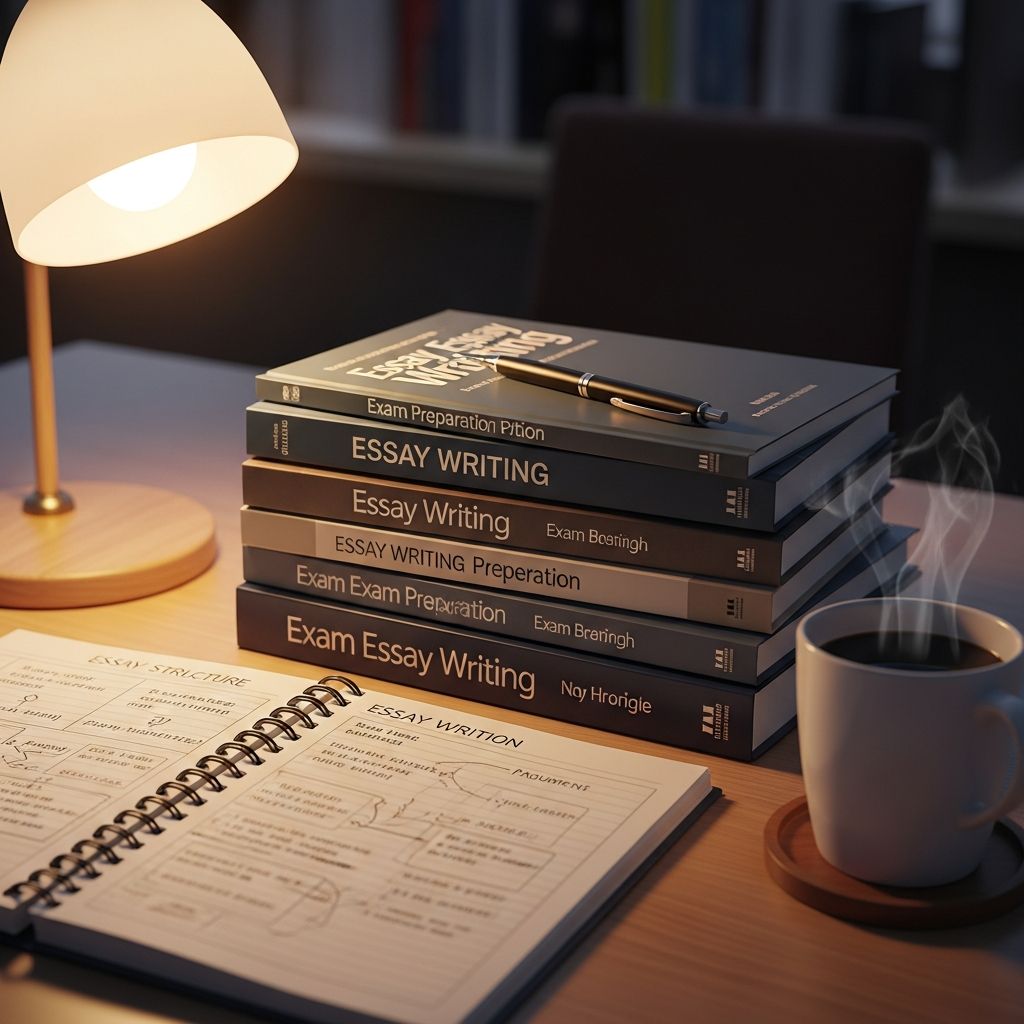
Essay exams challenge students to demonstrate deep understanding, critical thinking, and clear communication under time constraints. Unlike multiple-choice tests, they require synthesizing knowledge into coherent arguments. This guide provides a complete roadmap to excel, drawing from educational research and proven practices.
Building a Strong Foundation Before the Exam
Success starts long before test day. Effective preparation transforms vague notes into powerful recall tools. Focus on active learning techniques that mirror exam demands.
- Develop Comprehensive Study Aids: Create outlines, mind maps, or combo notes capturing main ideas and supporting details from lectures and readings. These tools help predict potential questions and practice responses.
- Anticipate Questions: Review syllabi, past exams, or instructor hints to formulate likely prompts. Practice outlining or fully writing answers to build familiarity.
- Simulate Test Conditions: Time yourself handwriting essays on practice prompts. This builds stamina and reveals knowledge gaps, especially if you’re used to typing.
Research from the University of Kansas shows students using structured strategies like outlining improved essay scores dramatically, from 5% to 85% proficiency in test behaviors. Invest time weekly in these methods for cumulative gains.
Arrival and Initial Assessment: Setting the Stage
The first minutes of an essay exam are pivotal. Rushed decisions lead to poor time allocation and misread prompts.
| Step | Action | Time Allocation |
|---|---|---|
| 1. Scan Entire Test | Read all instructions and questions fully | 2-5 minutes |
| 2. Budget Time | Assign minutes per question based on points | 1-2 minutes |
| 3. Prioritize | Start with strongest question for momentum | Immediate |
Thorough reading prevents overlaps and unlocks blocked recall as context emerges. Prioritizing confident questions builds psychological momentum, easing recall for tougher ones.
Decoding Prompts: Understanding What’s Asked
Essay prompts contain directive verbs dictating response structure. Misinterpreting them dooms even knowledgeable answers.
- Analyze: Break down components, relationships, causes/effects.
- Compare: Highlight similarities.
- Contrast: Emphasize differences.
- Evaluate: Judge merits/flaws with evidence.
- Illustrate: Use examples to clarify.
Indiana University’s Writing Guides stress organizing around these terms to directly address requirements. Underline verbs and key phrases; rephrase the prompt as your thesis to stay on track.
Quick Brainstorming: Organizing Thoughts Efficiently
Before writing, capture ideas to avoid blank-page panic. A simple vertical web works wonders under pressure.
- Top box: Thesis statement restating the prompt.
- Middle bubbles: 3-4 main points with supporting evidence branches.
- Bottom box: Concluding summary.
This method, endorsed by EBL Coaching, ensures balanced coverage and prevents rambling. Jot marginal notes numbering sequence for logical flow. Leave space between answers for later additions.
Crafting a Compelling Structure
A strong essay persuades the grader of your mastery. Follow this blueprint:
- Introduction (10% of time): Restate prompt as thesis; outline main points.
- Body Paragraphs (70%): One per main idea—topic sentence, evidence, analysis, transition.
- Conclusion (10%): Restate thesis, synthesize insights, end impactfully.
- Reserve 10% for Revision.
Write main ideas first, then details. Use specific facts, names, dates—vague answers score low. Double-space for readability and insertions.
Time Management During the Test
Poor pacing is a common pitfall. Pre-plan segments:
| Essay Length | Intro/Per Para | Conclusion | Proofread |
|---|---|---|---|
| Short (300 words) | 3-4 min | 2 min | 3 min |
| Long (800+ words) | 8-10 min | 5 min | 7 min |
Answer all questions partially for credit; specifics trump volume. If stuck, move on—details often surface later.
Writing Techniques for Clarity and Impact
Clear, organized prose maximizes points. Teachers favor concise, neat responses.
- Be Specific: Cite evidence persuasively.
- Transition Smoothly: Use ‘furthermore,’ ‘in contrast.’
- Defend Thesis: Every paragraph ties back.
- Neatness Counts: Legible handwriting influences grading.
Practice yields polished products. Stetson University advises reading the full exam first to integrate ideas cohesively.
Final Review: Polishing for Perfection
Budget time to reread. Check:
- Did I answer the exact question?
- Are points supported with specifics?
- Grammar, spelling, punctuation errors?
- Logical flow and completeness?
EBL’s self-checking sequence—brainstorm, write, verify elements—boosts mastery of timed essays. Cross out digressions neatly.
Common Pitfalls and How to Avoid Them
Digressing: Stick to thesis; outline prevents this.
Ignoring Time: Watch clock; partial answers beat none.
Vagueness: Use facts, not opinions.
Rushing Proofread: Neatness and accuracy matter.
University of Waterloo emphasizes planning over impulsive starts, saving time overall.
Advanced Strategies for High-Stakes Tests
For college entrance or competency exams, layer in SIM strategies: dissect prompts, outline rigorously, revise structurally. Practice under realism accelerates gains.
Frequently Asked Questions (FAQs)
What if I go blank during the exam?
Breathe, skip briefly, return later. Scanning all questions often jogs memory.
How many paragraphs for a 45-minute essay?
Aim for 5: intro, 3 body, conclusion. Adjust per points.
Should I write a full outline?
Quick web or marginal notes suffice; full ones if time allows.
Handwriting vs. typing: any tips?
Practice handwriting; double-space for legibility.
Partial credit on unanswered questions?
Yes—jot key points for points.
Long-Term Habits for Essay Excellence
Integrate daily writing, feedback-seeking, and reflection. Track progress; adjust. Consistent application turns good students into top performers.
(Word count: 1678)
References
- Strategies for Taking Subjective or Essay Tests — Total Learning Concepts. Accessed 2026. https://www.totallearningconcepts.com/essay-tests/
- Taking an Essay Exam — Indiana University Writing Guides. Accessed 2026. https://wts.indiana.edu/writing-guides/taking-an-essay-exam.html
- How To Take Essay Tests: Tips for Student Success — EBL Coaching. Accessed 2026. https://eblcoaching.com/how-to-take-essay-tests/
- 9 Tips to Ace That Timed Essay — University of Waterloo Writing and Communication Centre. 2016-11-03. https://uwaterloo.ca/writing-and-communication-centre/blog/9-tips-ace-timed-essay
- Essay Test-Taking Strategy — University of Kansas Strategic Instruction Model. Accessed 2026. https://sim.ku.edu/essay-test-taking-strategy
- Tips for Taking Essay Tests — Stetson University Academic Success. Accessed 2026. https://www.stetson.edu/administration/academic-success/media/ESSAY%20TESTS%20TIPS.pdf

Medha Deb is an editor with a master's degree in Applied Linguistics from the University of Hyderabad. She believes that her qualification has helped her develop a deep understanding of language and its application in various contexts. Medha specializes in the areas of beauty, health, sports, and wellness and is committed to ensuring that the content on the website is…