
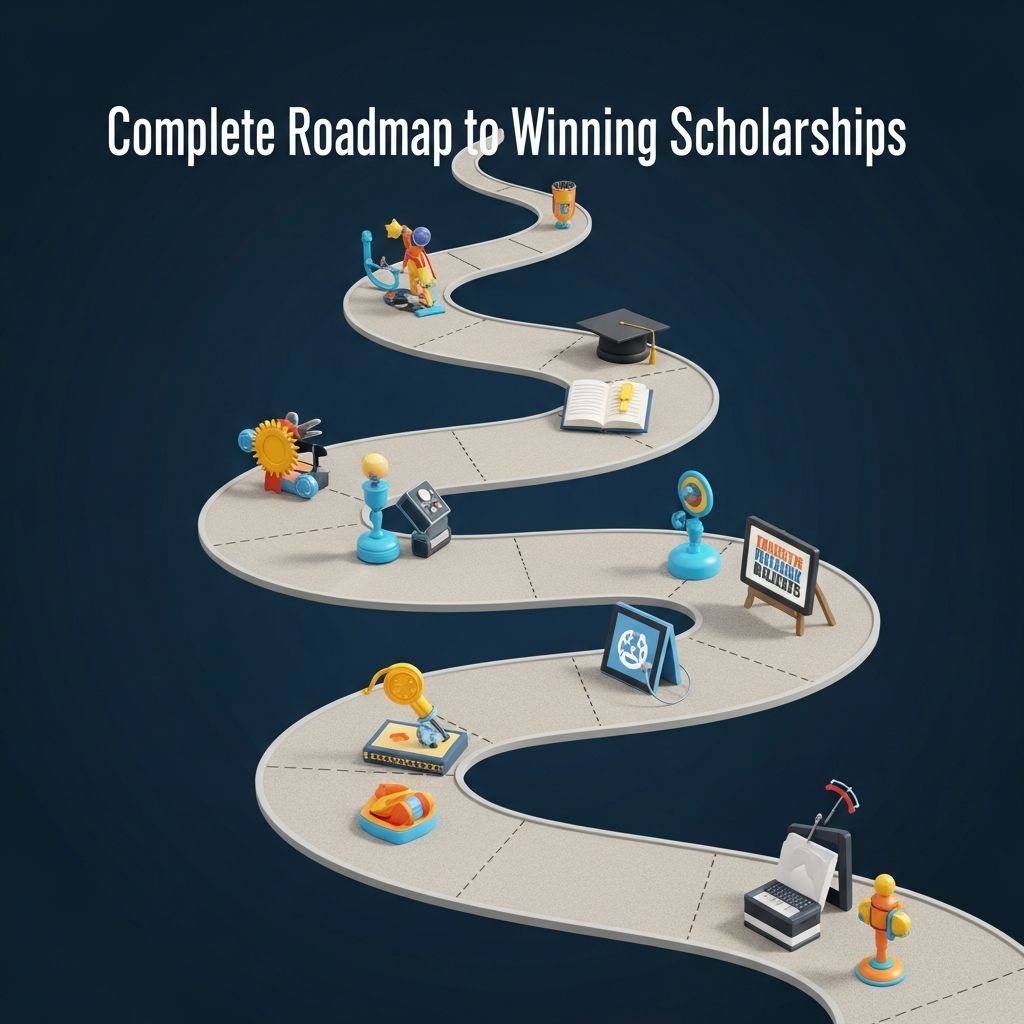
Pursuing education is expensive, but scholarships can dramatically cut your costs if you know where to look and how to apply strategically. This roadmap walks you through every stage of the process so you can move from overwhelmed to organized and confident.
Why Scholarships Matter More Than You Think
Scholarships are a form of gift aid that you do not have to repay, unlike most student loans. Even relatively small awards can add up over several years and reduce the need to borrow, which in turn lowers your long-term debt burden.
In many countries, grants and scholarships are also used to promote access for students from low-income families and underrepresented groups, making them an important tool for educational equity.
Understanding the Types of Scholarships
Not all scholarships are the same. Understanding the main categories will help you focus your energy on the opportunities that fit you best.
- Merit-based scholarships – Awarded for strong grades, test scores, leadership, artistic talent, or other achievements.
- Need-based scholarships – Based primarily on financial circumstances, often using information from need-analysis forms (for example, national aid applications such as FAFSA in the U.S.).
- Field- or major-specific scholarships – Targeted at students studying areas like engineering, nursing, teaching, or the arts.
- Location-based scholarships – Restricted by country, state, region, or city of residence or study.
- Identity- and community-based scholarships – Offered to students from particular backgrounds, communities, or demographic groups.
- Institutional scholarships – Awarded directly by colleges and universities as part of their financial aid packages.
- External or private scholarships – Funded by foundations, nonprofits, companies, and professional associations.
Planning Your Scholarship Strategy
Winning scholarships is less about luck and more about planning. A structured approach will keep you from missing deadlines and duplicating effort.
Build a Core Scholarship Profile
Create a reusable set of information that you can adapt for multiple applications:
- Updated academic transcript details (GPA, class rank if applicable).
- List of extracurricular activities, jobs, and volunteer roles with dates and responsibilities.
- Short summary of your goals (academic, career, and personal).
- Record of honors, awards, and key projects.
- Basic family and financial information, if required for need-based awards.
Use a Scholarship Tracking System
Staying organized can significantly improve your success rate. Libraries and college advisors commonly recommend tracking details like deadlines, required documents, and award amounts in a list or spreadsheet.
| Field | What to Record |
|---|---|
| Name of scholarship | Official title of the award and provider |
| Deadline | Exact due date and time; note time zone |
| Award amount | Total value and whether it is renewable |
| Eligibility notes | Key criteria such as GPA, major, residency |
| Required documents | Essays, transcripts, recommendation letters, etc. |
| Status | Not started, in progress, submitted, or result received |
Where to Find Legitimate Scholarships
Many students underestimate how many scholarships they are eligible for. Use multiple channels to build a strong list of options.
- College and university financial aid offices – Institutional academic and need-based scholarships are often awarded automatically after you apply for admission and submit required documents.
- Official government and aid portals – National or regional financial aid websites often list public scholarship programs and provide trusted information on eligibility and applications.
- Local organizations – Community foundations, rotary clubs, religious groups, and local businesses frequently fund smaller awards with less competition.
- Professional associations – Engineering, health, education, and other fields often have student scholarships to encourage future professionals.
- Reputable scholarship databases – University libraries and guidance offices often recommend vetted scholarship search tools and explain how to avoid scams.
Decoding Eligibility and Fine Print
Before you invest time in any application, make sure you fully understand the requirements and restrictions.
- Academic thresholds – Minimum GPA, standardized test scores, or specific course requirements.
- Enrollment status – Whether the award is limited to full-time students, first-year students, transfers, or certain class years.
- Program of study – Major, minor, or intended field of study may be strictly defined.
- Residency and citizenship – Some awards are limited to citizens or residents of specific countries or states; others allow international applicants.
- Financial need – Need-based awards may require income information or proof that you have completed national aid forms.
- Renewal conditions – Requirements to keep the award, such as maintaining a GPA or completing a certain number of credits each term.
Mastering Scholarship Timelines
Scholarship deadlines can be earlier than college admission deadlines, especially for major academic awards. Missing a date often means waiting an entire year.
- Check priority scholarship deadlines listed by each institution or program carefully.
- Note that some community college and institutional funds have fixed application windows several months before the academic year begins.
- Plan backward from each deadline to set target dates for drafts, recommendations, and final review.
Building a Strong Application Package
Most scholarship applications require similar components. Assembling your materials early will reduce last-minute stress.
Common Documents You May Need
- Official or unofficial academic transcripts.
- Standardized test scores, if applicable.
- Proof of enrollment or admission for the upcoming year.
- Financial aid forms or income information for need-based programs.
- One or more recommendation letters.
- Personal statement or essay responses.
- Résumé or activity list summarizing roles and achievements.
Writing Compelling Scholarship Essays
The essay is often the most important part of your application because it allows reviewers to understand your story, goals, and character beyond the numbers.
- Answer the prompt directly – Identify all parts of the question and address each one clearly.
- Show, don’t just tell – Use specific examples instead of vague claims about being hardworking or passionate.
- Connect your goals to the award – Explain how this particular scholarship will impact your education and future plans.
- Maintain authenticity – Selection committees respond to honest, reflective writing grounded in real experiences.
- Revise thoroughly – Set the essay aside and return with fresh eyes; ask a teacher, mentor, or advisor to review for clarity and grammar.
Getting Effective Recommendation Letters
Strong recommendation letters provide independent evidence of your achievements and character. Universities and scholarship organizations often stress their importance in competitive selection processes.
- Choose recommenders who know you well in academic, professional, or community settings.
- Provide them with your résumé, draft essays, and a summary of the scholarship’s criteria.
- Request letters well in advance of deadlines and send gentle reminders as needed.
- Thank your recommenders and let them know the outcome of your applications.
Avoiding Common Scholarship Mistakes
Even strong candidates lose out on funding because of preventable errors. Research on scholarship advising and institutional guidance highlights recurring pitfalls applicants should avoid.
- Missing documents – Incomplete applications are a frequent reason for disqualification, even when students are otherwise competitive.
- Ignoring instructions – Overlooking word limits, format requirements, or eligibility rules can signal that you do not pay attention to detail.
- Submitting generic applications – Reusing the same essay without tailoring it to each scholarship’s goals weakens your impact.
- Waiting until the last minute – Late starts make it harder to secure recommendations, revise essays, or resolve technical issues.
- Falling for scams – Be wary of services that guarantee awards or charge high fees; reputable scholarship programs generally do not require payment to apply.
After You Submit: Follow-Up and Next Steps
Your work is not over once you press submit. Thoughtful follow-up protects your applications and prepares you for future opportunities.
- Confirm receipt – When possible, check portals or confirmation emails to ensure your materials arrived successfully.
- Document outcomes – Record results in your tracking system, including feedback if it is provided.
- Respond promptly – If you receive an offer, pay attention to any deadlines related to accepting the award, providing proof of enrollment, or signing agreements.
- Plan for renewals – Note GPA or credit requirements and any annual reapplication steps so you do not lose ongoing funding.
Balancing Scholarships with Other Financial Aid
Scholarships should be considered alongside grants, work-study, and loans as part of your overall financial plan. Official aid offices emphasize that scholarships are one of several tools to make education more affordable.
- Notify your financial aid office about external scholarships; institutions may adjust your aid package to comply with regulations.
- Compare net cost after all grants and scholarships, not just the headline tuition price.
- Use scholarships strategically to reduce borrowing, especially high-interest loans.
Frequently Asked Questions (FAQs)
Q: When should I start looking for scholarships?
You should begin your search at least a year before you plan to enroll, since many major institutional and private scholarships have early priority deadlines.
Q: How many scholarships should I apply for?
There is no fixed number, but you will improve your chances by applying to several well-matched scholarships instead of sending many rushed, generic applications.
Q: Do small scholarships really make a difference?
Yes. Smaller awards can cover books, fees, or part of your housing costs and may be easier to win due to lower competition. Over multiple years, they significantly reduce what you need to borrow.
Q: Can international students apply for scholarships?
Many institutions and private organizations offer scholarships for international students, although some government-funded programs limit eligibility by citizenship or residency.
Q: Will scholarships affect my other financial aid?
Scholarships can change the mix of your financial aid package, particularly if they reduce your calculated financial need, so you should report all external awards to your financial aid office and ask how they will be integrated.
References
- How to Apply for Scholarships: A Step-by-Step Guide — Central Scholarship. 2023-08-10. https://central-scholarship.org/blog/how-to-apply-for-scholarships-a-step-by-step-guide
- Guide to Academic Freshman Scholarships — University of Arkansas, Academic Scholarship Office. 2024-01-15. https://scholarships.uark.edu/guide-to-academic-freshman-scholarships/
- Scholarship Application Guide — Tulsa Community College. 2024-09-01. https://www.tulsacc.edu/paying-college/scholarships-waivers/scholarship-application-guide
- Applying for a Scholarship: The Basics — TopUniversities. 2022-05-12. https://www.topuniversities.com/student-info/scholarships/applying-scholarship-basics
- Scholarship Application Process – Finding Scholarships — Goodwin University Library. 2021-04-05. https://goodwin.libguides.com/c.php?g=29107&p=181287
- Scholarship Application Guide & Tips — APIA Scholars. 2024-07-01. https://apiascholars.org/scholarships/application-support/application-guide-tips/
- Apply for Scholarships — Federal Student Aid, U.S. Department of Education. 2023-11-14. https://studentaid.gov/understand-aid/types/scholarships

- Integrated M.A. in Applied Linguistics, University of Hyderabad
- 5+ years in editorial, instructional, SEO, and research-based writing
Sneha is a relationships and lifestyle writer with a strong foundation in applied linguistics and certified training in relationship coaching. She brings over five years of writing experience to theskillvault, crafting thoughtful, research-driven content that empowers readers to build healthier relationships, boost emotional well-being, and embrace holistic living. Her writing and insights reflect the belief that beauty, happiness, and wellness…