
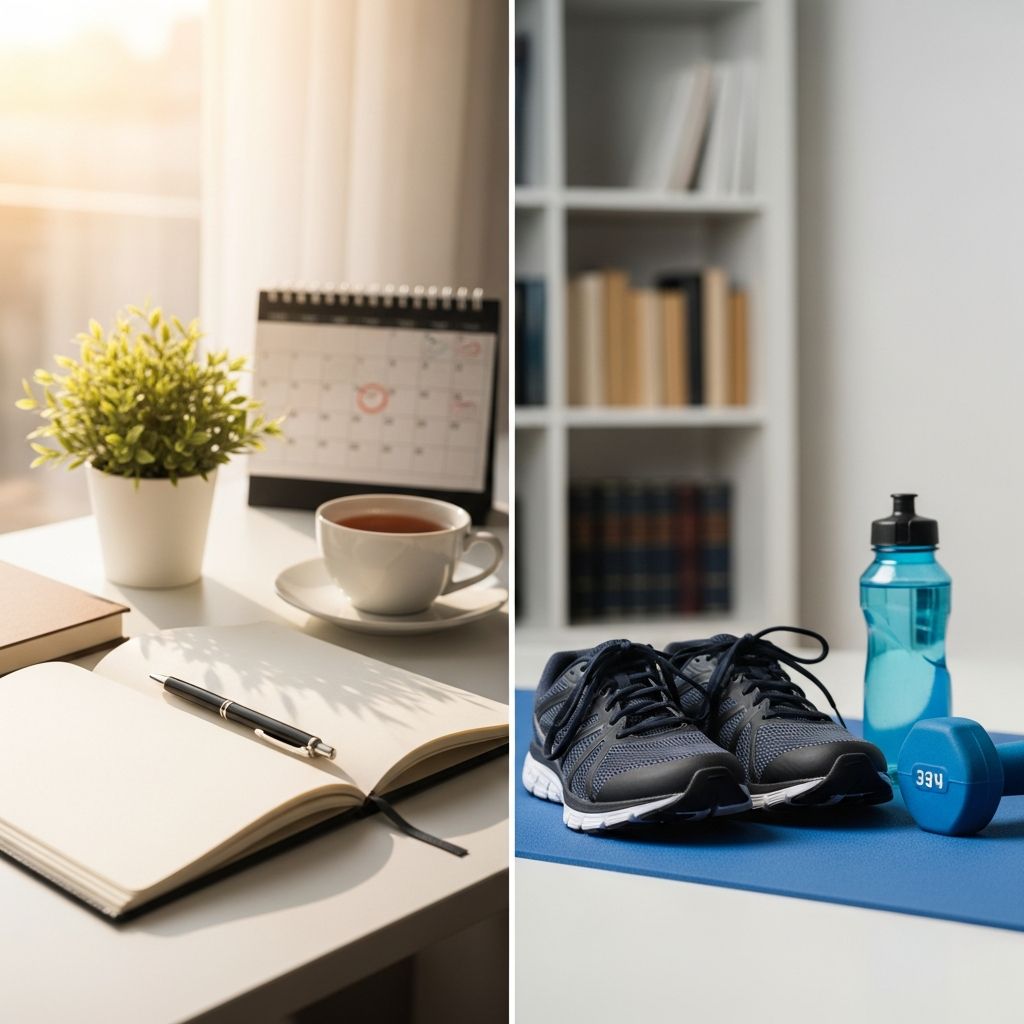
Becoming a better person is less about dramatic reinventions and more about small, consistent choices. Tiny changes in how you think, speak, and act—repeated over time—reshape your character, your relationships, and your sense of meaning.
This guide gathers practical, research-informed ideas you can start using today. You do not need to apply them all at once. Choose a few that fit your life, experiment, and refine as you go.
1. Build Honest Self-Awareness Without Self-Attack
Positive change begins with seeing yourself clearly: your patterns, strengths, and blind spots. Self-awareness predicts better decision-making, leadership, and relationships.
Simple ways to strengthen self-awareness
- End-of-day reflection: Spend 5–10 minutes noting what went well, what felt off, and what you would do differently next time.
- Ask for reality checks: Invite trusted people to share one strength they see in you and one behavior that sometimes makes things harder.
- Notice recurring triggers: Pay attention to moments you keep repeating—snapping when stressed, withdrawing when uncomfortable—and label the pattern.
When reflecting, replace harsh self-talk with curious questions like, “What can I learn from this?” or “What need was I trying to meet?”
2. Practice Emotional Regulation Instead of Emotional Suppression
Being a better person is not about never feeling anger, fear, or jealousy. It is about handling those emotions in ways that do not harm you or others. Emotional regulation skills are strongly linked to mental health and satisfying relationships.
Healthy emotional habits
- Name what you feel: Use specific words (“irritated,” “disappointed,” “anxious”) rather than just “fine” or “mad.” Naming emotions can reduce their intensity.
- Pause before reacting: Take three slow breaths before sending a message, replying in a meeting, or confronting someone.
- Choose a response channel: Some conversations are better by phone or in person than over text, especially when emotions run high.
Over time, this shift from reacting to responding helps you become more consistent, reliable, and easier to be around.
3. Strengthen Empathy and Everyday Kindness
Empathy—the ability to understand and share the feelings of others—is a cornerstone of “being a better person.” It improves cooperation and reduces conflict at home and work.
Daily empathy practices
- Mentally switch places: Before judging someone’s behavior, ask, “If I were them, with their pressures, how might this make sense?”
- Reflect back feelings: Try short phrases like “That sounds really frustrating” or “I can see why you’d feel hurt.”
- Look up from your own story: Once a day, deliberately notice someone else’s load—an overworked colleague, a tired parent, an isolated neighbor—and ask how you could quietly ease it.
Quick acts of kindness that matter
- Send a brief message of appreciation.
- Offer help without being asked.
- Give someone your full attention for five minutes.
Research on prosocial behavior shows that even small acts of kindness reliably boost both giver and receiver well-being.
4. Communicate With Respect, Even When You Disagree
How you talk to people shapes how safe they feel around you. Improving your communication skills can transform your relationships and your reputation.
Communication habits to adopt
- Listen all the way through: Let people finish their point before planning your response. Active listening is consistently linked with stronger relationships.
- Use “I” statements: Instead of “You never help,” try “I feel overwhelmed when the chores pile up and I’m doing them alone.”
- Clarify before reacting: Ask, “Do you mean…?” or “Can you say more about that?” rather than assuming bad intent.
| Unhelpful Pattern | Better Alternative |
|---|---|
| Interrupting to correct details | Letting the person finish, then adding clarifications gently |
| Blaming language (“You always…”) | Describing impact (“When X happens, I feel Y”) |
| Stonewalling or giving the silent treatment | Requesting a pause (“I need 20 minutes to calm down, then I’m open to talking”) |
5. Align Your Actions With Your Values
It is easier to feel proud of who you are when your daily choices match what you say matters. Values-aligned behavior is associated with greater life satisfaction and psychological well-being.
Clarify what “better” means to you
- Write down 3–5 values that matter most (for example: honesty, kindness, courage, learning, fairness, faith, creativity).
- For each value, ask: “What does this look like on a normal Tuesday, not just on big occasions?”
- Choose one value per week to focus on and design one concrete, small action that expresses it.
For instance, if you value learning, you might spend 15 minutes reading quality material instead of scrolling social media. If you value fairness, you might speak up when someone’s voice is overlooked in a meeting.
6. Cultivate Gratitude and a Balanced Perspective
Gratitude is not about ignoring problems; it is about also noticing what is going right. Studies link regular gratitude practice to improved mood, sleep, and overall well-being.
Gratitude habits that take under 5 minutes
- Three good things: Each evening, note three things you are grateful for and why they mattered that day.
- Gratitude messages: Once a week, send a short note to someone describing a specific thing they did that you appreciate.
- Reframing practice: When something goes wrong, ask, “What, if anything, did this teach me or reveal to me?”
Over time, your attention naturally starts to balance hardships with sources of support and meaning.
7. Set Small, Clear Goals That Support Growth
Wanting to be a better person, without a plan, easily becomes vague guilt. Turning intentions into small, specific goals makes change doable and trackable.
How to make growth goals practical
- Be specific: Replace “I’ll be nicer” with “I’ll give at least one genuine compliment per day.”
- Make them measurable: Track with a simple checklist or habit app.
- Start tiny: A two-minute behavior is more likely to stick than a 60-minute one.
Example micro-goals you might try:
- Read a page or two of a thoughtful book each day.
- Pause before replying to any difficult email.
- Pick up one extra household task without being asked.
8. Take Care of Your Body so You Can Show Up Better
It is hard to be patient, kind, or focused when you are exhausted or unwell. Physical habits form a foundation for emotional stability and self-control.
Physical habits that support character
- Prioritize sleep: Aim for a consistent sleep schedule; insufficient sleep impairs emotional regulation and decision-making.
- Move regularly: Even brisk 10–15 minute walks several times a week can improve mood and stress resilience.
- Protect focus: Set boundaries around constant notifications so you can be fully present in conversations and tasks.
Think of these not as aesthetic goals, but as ways to give your mind and character the energy they need.
9. Repair When You Mess Up
Being a better person does not mean never getting it wrong. It means taking responsibility when you do. People who apologize sincerely and try to repair harm tend to have stronger, more trusting relationships.
Steps for a meaningful repair
- Own your part: Focus on what you did, not on what the other person “made” you do.
- Validate impact: Acknowledge how your actions affected them, even if you did not intend harm.
- Offer a concrete change: Explain what you will do differently next time and follow through.
Repair is not about perfect words; it is about genuine accountability plus changed behavior.
10. Contribute Beyond Yourself
Contributing to something larger—your family, community, profession, or planet—adds meaning and perspective. Research on volunteering finds links with higher life satisfaction and lower rates of depression.
Small ways to make a difference
- Volunteer a few hours a month for a cause you care about.
- Mentor someone who is a few steps behind you.
- Share resources, knowledge, or encouragement freely when you can.
Contribution does not have to be grand. Consistent, modest efforts often matter most.
Putting It All Together: A Sample Weekly Plan
You do not need a complicated system. Here is a simple example of weaving these practices into a realistic week.
| Day | Focus Area | Example Micro Habit |
|---|---|---|
| Monday | Self-awareness | Write three lines about one situation you would handle differently next time. |
| Tuesday | Communication | Practice active listening in one conversation—no interruptions, clarify before responding. |
| Wednesday | Kindness | Do one unrequested favor for someone at home or work. |
| Thursday | Values | Choose one value and take a 10-minute action that expresses it. |
| Friday | Gratitude | Write down three good things that happened this week and why they mattered. |
| Weekend | Body & Contribution | Take a walk outdoors and spend at least 30 minutes helping someone or a cause. |
Frequently Asked Questions (FAQs)
Q: How long does it take to notice a difference when I start these habits?
A: Many people feel small shifts—like more calm or less regret—within a couple of weeks of consistent practice, but deeper changes in how others experience you often build gradually over months.
Q: Do I need to follow all these suggestions to become a better person?
A: No. Choose two or three habits that fit your current season of life, practice them regularly, and then layer on more only when they feel stable.
Q: What if I keep slipping back into old behaviors?
A: Relapses are normal whenever you build new habits. Treat each slip as information, not failure—ask what triggered it, adjust your environment or strategy, and start again with the smallest possible version of the habit.
Q: Can personal growth goals also help my career?
A: Yes. Skills like emotional regulation, communication, and self-awareness are strongly associated with better leadership, collaboration, and performance at work.
Q: How do I stay motivated over the long term?
A: Connect your habits to your values, track small wins, and regularly remind yourself who you are trying to become—not just what you are trying to stop doing.
References
- Emmons, R. A., & McCullough, M. E. (2003). Counting blessings versus burdens — Journal of Personality and Social Psychology. 2003-02-01. https://doi.org/10.1037/0022-3514.84.2.377
- Physical Activity Guidelines for Americans, 2nd Edition — U.S. Department of Health and Human Services. 2018-11-01. https://health.gov/sites/default/files/2019-09/Physical_Activity_Guidelines_2nd_edition.pdf
- 7 personal development habits worth adopting for career and personal growth — PeopleForce Blog. 2023-10-05. https://peopleforce.io/blog/personal-development-habits-worth-adopting-for-career-and-personal-growth
- 21 Examples of Personal Development Goals for a Better You — EmployeeConnect. 2017-01-10. https://www.employeeconnect.com/2017/01/personal-development-goals-examples/
- How to Create a Personal Development Plan: 3 Examples — PositivePsychology.com. 2022-06-20. https://positivepsychology.com/personal-development-plan/
- 20 Daily Goals For Self-Improvement — BetterUp. 2024-01-15. https://www.betterup.com/blog/goals-for-self-improvement

- Integrated M.A. in Applied Linguistics, University of Hyderabad
- 5+ years in editorial, instructional, SEO, and research-based writing
Sneha is a relationships and lifestyle writer with a strong foundation in applied linguistics and certified training in relationship coaching. She brings over five years of writing experience to theskillvault, crafting thoughtful, research-driven content that empowers readers to build healthier relationships, boost emotional well-being, and embrace holistic living. Her writing and insights reflect the belief that beauty, happiness, and wellness…