
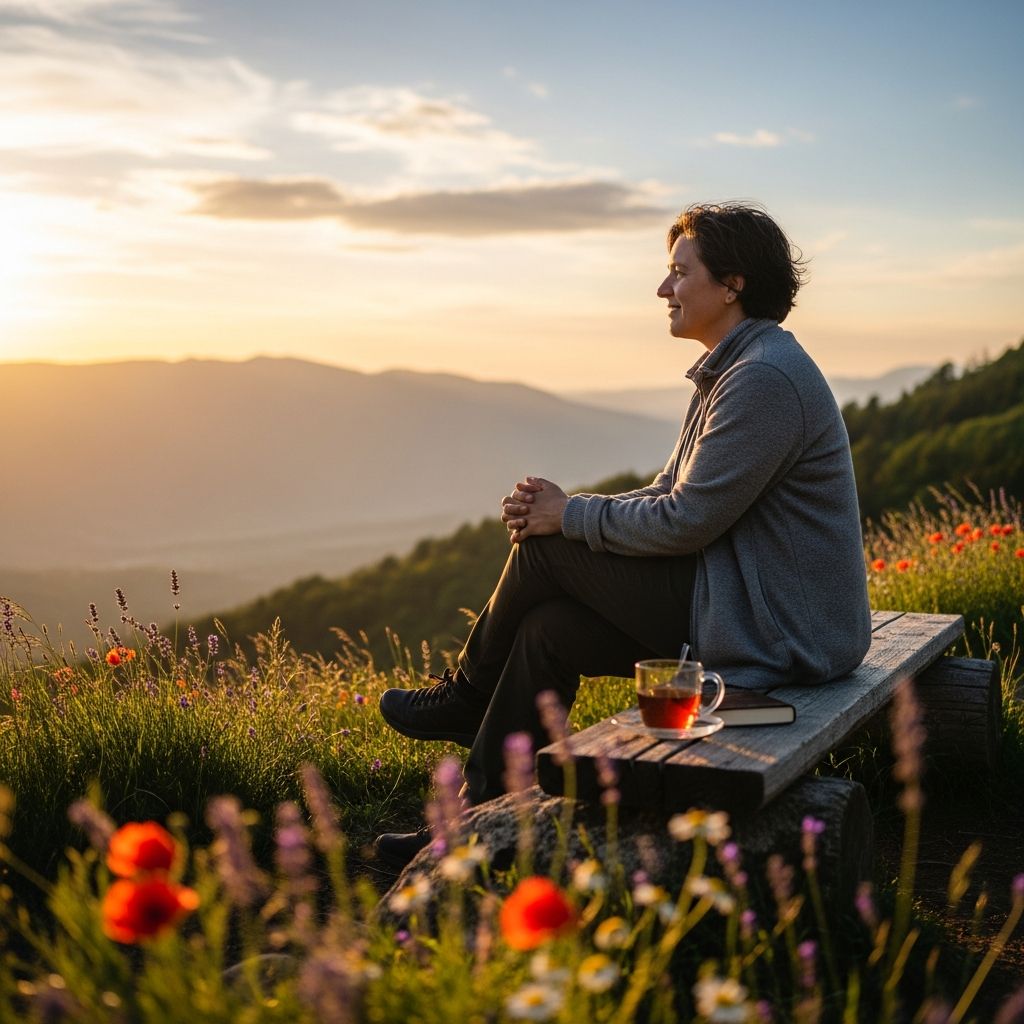
Spending time alone does not have to mean being lonely. With the right mindset and habits, solitude can become a powerful source of happiness, clarity, and personal growth. This guide draws on psychological research to show how you can feel genuinely content and fulfilled in your own company.
Why Enjoying Solitude Matters
Psychologists distinguish between loneliness (feeling disconnected) and solitude (being physically alone but emotionally steady and supported). Learning to value solitude can:
- Increase emotional resilience and independence
- Support self-understanding and personal growth
- Reduce stress by giving you mental space to decompress
- Improve decision-making by creating room for reflection
Research on positive psychology shows that practices such as gratitude, self-compassion, and mindful attention significantly boost well-being and life satisfaction.
The Difference Between Happiness and Contentment
Many people chase intense moments of happiness and overlook quieter forms of well-being. Researchers increasingly highlight contentment as a more stable, sustainable emotional state, involving acceptance, balance, and a gentle attitude toward oneself.
| Happiness (as commonly pursued) | Contentment (quiet well-being) |
|---|---|
| Often linked to excitement and highs | Linked to calm, ease, and steadiness |
| Can depend heavily on external events | More rooted in inner attitudes and values |
| May feel temporary and fleeting | Can persist even during ordinary days |
| Focuses on increasing positive emotions | Focuses on acceptance and balance |
Shifting your focus from chasing constant excitement to cultivating contentment makes it easier to enjoy quiet time alone without feeling that something is missing.
1. Reframe How You Think About Being Alone
Your thoughts about solitude strongly influence how you feel when you are by yourself. Instead of viewing alone time as a sign that you lack relationships, you can see it as a chance to:
- Rest your nervous system and reduce stimulation
- Reconnect with your own needs, values, and preferences
- Practice skills that might feel harder in busy social settings, such as reflection or creative exploration
Positive psychology research suggests that how we interpret events is a key driver of well-being. Learning to reframe situations in a more constructive way—known as cognitive reappraisal—is linked with higher life satisfaction and lower distress.
Helpful mental shifts
- From scarcity to opportunity: “Nobody is around” becomes “I have space to do what truly matters to me.”
- From comparison to uniqueness: Instead of comparing your social life to others, you can focus on what feels authentic and sustainable for you.
- From avoidance to choice: See solitude not as something happening to you, but as time you can consciously shape.
2. Practice Mindful Presence in Daily Moments
Mindfulness—paying attention to the present moment with curiosity and without harsh judgment—has been shown to reduce anxiety, depression, and stress while increasing psychological well-being. When you are alone, mindfulness can prevent you from getting lost in worry or self-criticism.
Simple mindfulness practices for solo time
- One-minute breathing pause: Focus on the sensation of breathing for 60 seconds whenever you notice restlessness.
- Mindful routine tasks: While showering, eating, or making coffee, pay close attention to sounds, textures, scents, and movements.
- Observation breaks: Look out a window or at a plant for a few minutes, noticing details you usually overlook.
These short practices can transform ordinary alone moments into opportunities for grounding and calm.
3. Build a Kind Inner Voice with Self-Compassion
Self-compassion means treating yourself with the same warmth and understanding you would offer a good friend. Research by Kristin Neff and others shows that self-compassion is strongly associated with higher happiness, less anxiety, and greater resilience.
Core components of self-compassion
- Self-kindness: Speaking to yourself supportively rather than harshly
- Common humanity: Remembering that everyone struggles and feels lonely at times
- Mindful awareness: Acknowledging your feelings without exaggerating or suppressing them
Practical ways to grow self-compassion
- Try a “double-standard” check: When you criticize yourself, ask: “Would I say this to a friend?” If not, rephrase it more kindly.
- Write brief supportive notes: Jot down one sentence each evening that validates something you handled reasonably well that day.
- Use grounding phrases: For example: “It’s understandable to feel this way. I can be gentle with myself right now.”
4. Design Meaningful Solo Rituals
Regular, intentional activities can turn solitude into something you anticipate rather than dread. Rituals provide structure, a sense of continuity, and a small dose of purpose—elements shown to support contentment and emotional stability.
Ideas for grounding rituals
- Morning check-in: Spend five minutes asking yourself, “What do I need today?” and “What is one small thing I can look forward to?”
- Evening gratitude pause: Note two or three things you appreciated that day, no matter how small.
- Weekly solo date: Schedule time with yourself as seriously as you would a meeting—reading at a café, walking in a park, or exploring a new neighborhood.
5. Use Creativity and Curiosity to Enter a Flow State
Psychologist Mihaly Csikszentmihalyi described flow as a mental state where you are fully absorbed in a challenging but manageable activity. People frequently report high satisfaction and reduced self-consciousness during flow experiences. Creative and learning activities are common ways to enter this state when alone.
Activities that often promote flow
- Drawing, painting, journaling, or creative writing
- Cooking or baking new recipes
- Practicing a musical instrument
- Learning a language or new skill through online resources
- Solving puzzles or logic games
Flow-inducing tasks are typically:
- Engaging enough to hold your attention
- Somewhat challenging but not overwhelming
- Aligned with your interests and values
6. Create a Physical Environment That Supports Calm
Your surroundings can shape how you experience alone time. Environmental psychology suggests that light, noise, clutter, and access to nature influence mood and cognitive function.
Small environmental changes that help
- Declutter your main sitting area: Clear or organize just one surface where you spend time alone.
- Incorporate nature: Add a plant, open a window, or spend time outdoors; research links contact with nature to improved mood and reduced stress.
- Adjust lighting: Use softer lighting in the evenings to signal rest and brighter light earlier in the day to support alertness.
7. Build Quiet Contentment with Gratitude and Savoring
Gratitude practices—intentionally noticing and appreciating positive aspects of your life—are among the most consistently supported strategies for increasing well-being. Savoring, or deliberately lingering on enjoyable experiences, helps extend and deepen positive emotions.
Research-backed gratitude ideas
- Gratitude list: Once or twice a week, list three things you are thankful for, focusing on specific details rather than generalities.
- Look for small joys: Notice minor but pleasant events: a comfortable chair, a favorite song, or a warm drink.
- Replay good moments: Before bed, mentally walk through one positive moment from the day, recalling what you saw, heard, and felt.
8. Stay Connected Without Relying on Constant Company
Enjoying solitude does not mean withdrawing from others. Studies on well-being consistently highlight the value of having a few supportive relationships, even if you spend many hours alone. The key is balancing connection with autonomy.
Healthy connection habits for people who value solitude
- Reach out to one person each week for a meaningful conversation, even if brief.
- Set boundaries around communication so you can still protect quiet time when needed.
- Engage in communities aligned with your interests rather than socializing only to avoid being alone.
9. Align Your Alone Time with Personal Values
Contentment grows when your actions line up with what you consider important—your values. Positive psychology research suggests that setting meaningful goals and using your strengths in daily life contributes to greater well-being than pursuing pleasure alone.
Questions to clarify values
- What qualities do I admire in others (e.g., kindness, curiosity, courage)?
- When have I felt proud of how I spent my time, even if no one else knew?
- Which activities leave me feeling quietly satisfied rather than drained?
Once you identify a few core values, you can design solo activities that reflect them—for example, reading about a topic you care about, practicing a skill, or engaging in creative or reflective work that matters to you.
10. When Solitude Feels Overwhelming
There is a difference between choosing solitude and feeling stuck in unwanted isolation. If you frequently feel hopeless, disconnected, or unable to carry out everyday tasks, it may be helpful to seek support from a mental health professional or trusted healthcare provider.
Many counseling services and university centers provide resources on positive coping strategies and when to seek help. Reaching out is not a sign that you have failed at being happy alone—it is an act of self-respect and care.
Frequently Asked Questions (FAQs)
Q1: Is it unhealthy to prefer being alone?
Preferring solitude is not inherently unhealthy. Problems arise when alone time is driven mainly by fear, shame, or hopelessness, or when you feel chronically lonely and disconnected. Enjoying time by yourself while maintaining a few supportive relationships is consistent with healthy psychological functioning.
Q2: How long does it take to feel more comfortable being alone?
There is no set timeline. Many people notice small changes within a few weeks of consistently practicing skills like mindfulness, self-compassion, and gratitude. Because these strategies gradually reshape habits of attention and self-talk, steady repetition matters more than speed.
Q3: Can these strategies replace therapy?
The practices described here are based on psychological research and can support well-being, but they are not a substitute for professional assessment or treatment. If you struggle with intense distress, trauma, or persistent depressive symptoms, working with a licensed mental health professional is recommended.
Q4: What if I try to be mindful but just feel more anxious?
It is common for uncomfortable thoughts or emotions to become more noticeable when you first slow down. You can start with very short practices—such as a few mindful breaths—and combine them with grounding actions like gentle movement, stretching, or going outside. If mindfulness consistently increases distress, consider guidance from a professional trained in these methods.
Q5: How do I balance wanting more friends with learning to enjoy solitude?
These goals work well together. Learning to be content alone can reduce desperation and anxiety around meeting new people, leading to more authentic connections. You can devote part of your week to nourishing your inner life and another part to gently expanding your social world through shared interests or low-pressure activities.
References
- Embracing Solitude: 7 Ways to Be Alone But Happy in Your Own Company — Ahead App Blog. 2023-07-10. https://ahead-app.com/blog/happiness/embracing-solitude-7-ways-to-be-alone-but-happy-in-your-own-company
- How to be happy alone: a guide on finding joy solo — Worldpackers. 2023-05-01. https://www.worldpackers.com/articles/how-to-be-happy-alone
- Positive Psychology Strategies for Increased Happiness — University of New Hampshire, Psychological and Counseling Services. 2022-02-15. https://www.unh.edu/pacs/positive-psychology-strategies-increased-happiness
- Real Happiness: Proven Paths for Contentment, Peace and Well-Being — Linda Graham, MFT. 2019-06-20. https://lindagraham-mft.net/real-happiness-proven-paths-for-contentment-peace-and-well-being/
- Beyond Happiness: Strategies to Find Contentment — Grow Mindfulness. 2021-08-12. https://growmindfulness.com/beyond-happiness-strategies-to-find-contentment/
- A Different Kind of Happiness: The Quiet Power of Contentment — Psychology Today. 2025-01-05. https://www.psychologytoday.com/us/blog/sense-of-belonging/202511/a-different-kind-of-happiness-the-quiet-power-of-contentment
- What If You Pursued Contentment Rather Than Happiness? — Greater Good Science Center, UC Berkeley. 2023-04-18. https://greatergood.berkeley.edu/article/item/what_if_you_pursued_contentment_rather_than_happiness

- Integrated M.A. in Applied Linguistics, University of Hyderabad
- 5+ years in editorial, instructional, SEO, and research-based writing
Sneha is a relationships and lifestyle writer with a strong foundation in applied linguistics and certified training in relationship coaching. She brings over five years of writing experience to theskillvault, crafting thoughtful, research-driven content that empowers readers to build healthier relationships, boost emotional well-being, and embrace holistic living. Her writing and insights reflect the belief that beauty, happiness, and wellness…