
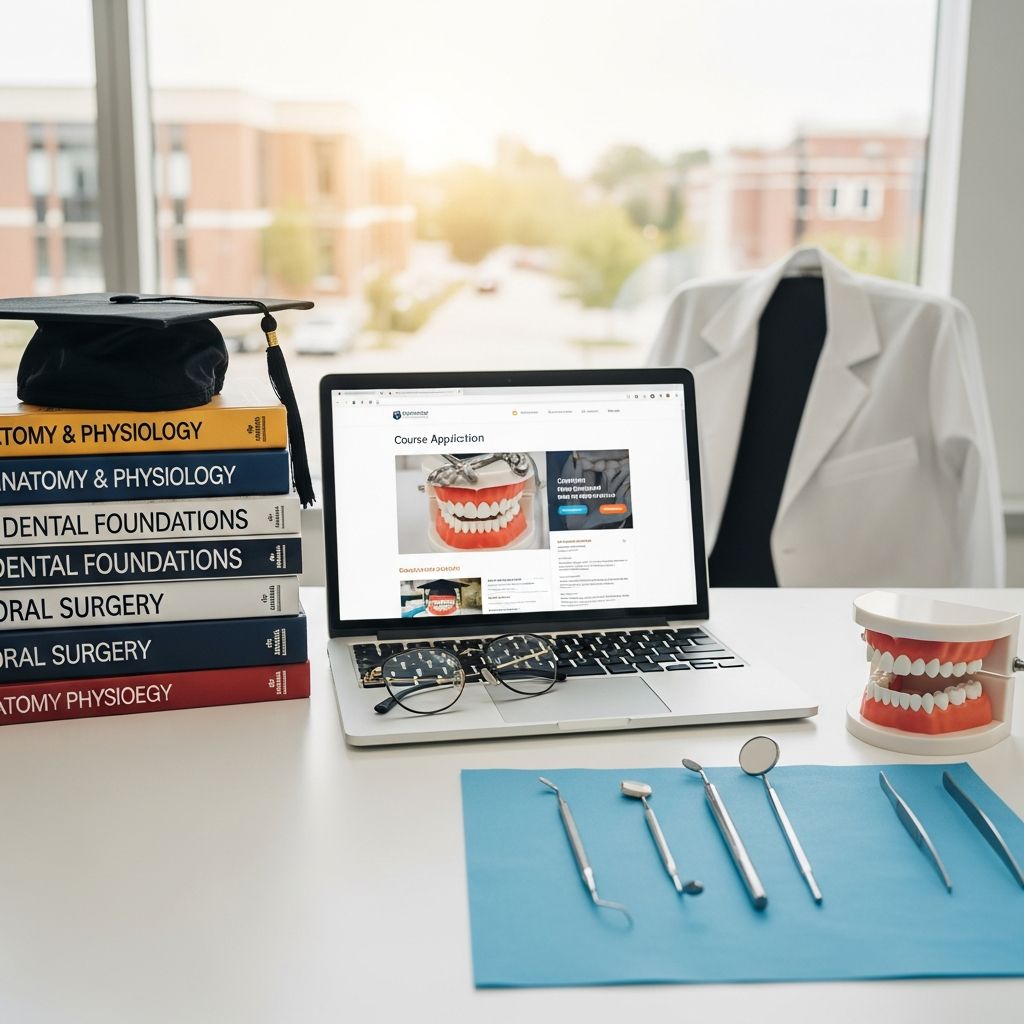
Understanding the Dental Profession as a Career Choice
The dental profession represents one of the most rewarding careers in healthcare, combining technical expertise, patient interaction, and entrepreneurial opportunities. Dentists play a critical role in oral health, preventive care, and maintaining patients’ overall well-being. However, the journey to becoming a dentist requires substantial academic preparation, professional commitment, and long-term dedication. This comprehensive guide walks you through every stage of the pathway, from initial undergraduate studies through advanced specialization options.
Starting with Undergraduate Education: Building Your Foundation
Your dental career begins during your undergraduate years at a four-year college or university. While dental schools do not require a specific major, they do mandate completion of rigorous prerequisite courses that establish your scientific foundation. These prerequisites ensure you possess the fundamental knowledge necessary to succeed in the demanding dental school curriculum.
The core prerequisite courses you must complete include:
- General Biology with laboratory component
- General Chemistry with laboratory component
- Organic Chemistry with laboratory component
- Physics with laboratory component
- Biochemistry
- English Composition
- Mathematics or Statistics
Beyond these mandatory prerequisites, many successful dental school applicants strengthen their applications by completing additional coursework in the biological sciences, such as anatomy, physiology, microbiology, and advanced chemistry courses. These supplementary courses demonstrate your serious commitment to the field and provide valuable preparation for the accelerated pace of dental school instruction.
During your undergraduate years, maintain an excellent grade point average, as dental schools carefully review your overall GPA and the specific grades you earned in science and prerequisite courses. Most schools prefer applicants who complete their prerequisite requirements with grades of C or higher, though competitive applicants typically achieve significantly higher marks. The quality and rigor of your coursework also matters; dental schools recognize the difference between introductory and advanced-level courses.
Gaining Practical Experience and Demonstrating Commitment
Dental school admissions committees recognize that academic achievement alone does not predict success in dentistry. They evaluate your personal qualities, character, and genuine interest in the profession through multiple assessment methods. Building practical experience during your undergraduate years substantially strengthens your application.
Consider pursuing the following types of experiences:
- Job shadowing with practicing dentists to observe daily clinical work
- Volunteer positions at dental clinics or community health centers
- Dental assistant or dental hygiene internships
- Research projects related to dentistry or oral health
- Leadership roles in pre-dental clubs or professional organizations
- Community service initiatives focused on oral health education
Admissions committees also assess your interpersonal abilities, leadership potential, and cultural competence through your application materials and interviews. They want to understand how you overcome challenges, your commitment to continuous learning, and your ability to work effectively with diverse patient populations. Letters of recommendation from professors, employers, or mentors provide insight into your character and potential as a future dental professional.
Mastering the Dental Admission Test: Your Gateway to Dental School
The Dental Admission Test (DAT) represents a critical milestone in your journey toward dentistry. This standardized examination, required by all U.S. dental schools, evaluates your knowledge and reasoning abilities across multiple domains relevant to dental practice.
The DAT assessment components include:
- Survey of Natural Sciences covering biology, general chemistry, and organic chemistry
- Perceptual Ability testing spatial visualization and manual dexterity potential
- Reading Comprehension measuring your ability to understand complex scientific material
- Quantitative Reasoning assessing mathematical and analytical problem-solving
Most students take the DAT during their junior year of undergraduate studies, allowing time for retesting if necessary before submitting dental school applications. Thorough preparation proves essential for achieving competitive scores. Many successful applicants invest 200-300 hours in structured study plans, practice examinations, and formal preparation courses. Beginning your study regimen at least three to four months before your test date provides adequate time for comprehensive review and skill development.
Navigating the Dental School Application Process
The dental school application process involves multiple coordinated components that collectively present your qualifications to admissions committees. Beginning your preparation 12-18 months before your intended enrollment date significantly improves your chances of success.
Key application components include:
- Completing the ADEA Associated American Dental Schools Application Service (AADSAS) application with detailed personal and academic information
- Writing a compelling personal statement articulating your motivation for dentistry and career aspirations
- Securing strong letters of recommendation from professors, mentors, or dental professionals
- Preparing thoroughly for dental school interviews
- Submitting application materials early to take advantage of rolling admissions processes
Dental schools consider your overall academic preparation, including your GPA, prerequisite course performance, and the difficulty level of coursework you selected. They also evaluate your DAT scores, professional experience, volunteer activities, and demonstrated understanding of the dental profession. Early application submission significantly advantages your candidacy, as many programs make admissions decisions on a rolling basis throughout the application cycle.
Dental School: Four Years of Intensive Professional Training
Upon acceptance to dental school, you embark on a four-year program leading to either a Doctor of Dental Surgery (DDS) or Doctor of Medicine in Dentistry (DMD) degree. Both degrees require identical coursework and demonstrate equivalent qualifications; dental schools award one degree or the other based on institutional tradition rather than curricular differences.
The dental school curriculum combines didactic coursework with extensive clinical practice. During your first two years, you focus heavily on classroom instruction in oral anatomy, oral pathology, pharmacology, periodontics, operative dentistry, and prosthodontics, among other subjects. Concurrently, you gain hands-on experience in preclinical laboratories where you practice procedures on models and artificial teeth before working with actual patients.
During your final two years, clinical rotations occupy an increasingly larger portion of your schedule. You treat actual patients under faculty supervision, developing the manual dexterity, decision-making skills, and patient communication abilities essential for independent practice. You gain experience in preventive care, restorative procedures, surgical extractions, and managing diverse patient populations with varying needs and backgrounds.
Licensing Requirements: Demonstrating Professional Competency
Upon graduating from dental school, you must obtain licensure to practice dentistry independently. Licensing requirements vary by state but follow a consistent national framework.
Standard licensing requirements typically include:
- Graduation from an accredited dental program recognized by the Commission on Dental Accreditation
- Passing the National Board Dental Examinations (Parts I and II), which assess your understanding of dental conditions, topics, and clinical decision-making
- Completing a clinical examination administered by a regional testing agency
- Passing background checks and providing proof of CPR certification
- Meeting state-specific requirements, which may include additional exams or documentation
In most states, you can begin practicing dentistry immediately after meeting these requirements. However, several states require a one-year post-doctoral residency in general dentistry or a specific specialty as an alternative to or in addition to the licensing examination. Research your intended state’s specific requirements before graduating to ensure you understand the pathway to licensure in your target location.
Many states also mandate continuing education for license renewal, ensuring dentists stay current with evolving techniques, materials, and standards of care throughout their careers.
Exploring Specialized Dental Careers and Advanced Training
After obtaining your general dentistry license, you have the option to pursue specialized training in one of 12 ADA-recognized advanced dental education specialties. Specialization typically requires an additional 2-6 years of post-doctoral education, depending on the specialty selected. Each specialty demands distinct coursework, clinical training, and professional competencies.
Major dental specialties and their typical training durations include:
- Orthodontics (2-3 years) — straightening teeth and correcting bite problems
- Oral and Maxillofacial Surgery (4-6 years) — performing surgical procedures in the mouth and jaw
- Pediatric Dentistry (2-3 years) — treating children’s dental needs and development
- Periodontics (3 years) — managing gum disease and implant placement
- Endodontics (2-3 years) — performing root canal therapy and pulp-related treatments
- Prosthodontics (3 years) — designing and fitting artificial teeth and restorations
- Oral Pathology (3 years) — diagnosing and managing oral diseases
- Dental Public Health (2 years) — addressing community-level oral health initiatives
- Oral and Maxillofacial Radiology (2 years) — interpreting dental imaging and diagnostics
Specialists typically earn higher incomes than general practitioners but must invest additional time and financial resources in their education. The decision to specialize should align with your clinical interests, long-term career goals, lifestyle priorities, and financial considerations.
Essential Personal Qualities and Professional Competencies
Beyond academic credentials, successful dentists possess specific personal qualities and professional competencies that distinguish excellent practitioners. These attributes prove as important as technical knowledge for patient safety and satisfaction.
Critical competencies for dental professionals include:
- Superior manual dexterity and eye-hand coordination essential for intricate clinical procedures
- Strong interpersonal and communication skills for effective patient interaction
- Reliability, honesty, and accountability in all professional endeavors
- Ability to remain calm and composed under pressure during complex procedures
- Competence in negotiation and conflict resolution with patients and staff
- Cultural competence and empathy for diverse patient backgrounds and needs
- Commitment to lifelong learning and continuous professional development
- Leadership capabilities and community engagement orientation
Your manual dexterity, the ability to perform precise movements with steady hands and excellent eye-hand coordination, proves critical for ensuring patient safety and treatment quality. Beyond technical skills, dentists must excel at communication, listening carefully to patient concerns, explaining procedures clearly, and building trust with anxious or apprehensive patients.
Maintaining Professional Excellence Through Continuing Education
Dentistry represents a dynamic profession where new techniques, materials, and evidence-based practices continually evolve. As a dentist, you must commit to constant professional growth and skill enhancement throughout your career. This dedication to continuing education benefits your patients through access to cutting-edge treatments and serves your community by advancing the collective knowledge and capabilities of the dental profession.
Timeline Overview: From Undergraduate to Practice
| Career Stage | Duration | Key Milestones |
|---|---|---|
| Undergraduate Education | 4 years | Complete prerequisites, maintain strong GPA, gain practical experience |
| Dental Admission Test Preparation | 3-4 months | Study and achieve competitive DAT scores |
| Dental School Applications | 6-12 months | Submit applications, complete interviews, secure acceptance |
| Dental School | 4 years | Complete didactic and clinical coursework, earn DDS or DMD |
| Licensing Examinations | Variable | Pass National Board exams and regional clinical exams |
| General Practice | Ongoing | Begin independent practice or associate position |
| Specialty Training (Optional) | 2-6 years | Advanced education in chosen specialty |
Frequently Asked Questions
Q: Do I need a specific undergraduate major to attend dental school?
A: No specific major is required, but you must complete all prerequisite coursework in science and mathematics. Many students major in biology, chemistry, or other health-related fields, though successful applicants come from diverse academic backgrounds provided they complete required prerequisites.
Q: How many times can I take the DAT if I’m unsatisfied with my score?
A: While you can retake the DAT, dental schools review all scores you submit. Most students take the exam once after thorough preparation, though some pursue retesting if initial scores fall below their target range.
Q: Is a one-year residency required after dental school?
A: In most states, no residency is required after graduation and licensure. However, some states require a one-year post-doctoral residency as an alternative to or in addition to licensing examinations. Check your state’s specific requirements.
Q: What personal qualities matter most for dental school admissions?
A: Admissions committees value demonstrated commitment to dentistry through job shadowing and volunteering, strong communication skills, reliability, cultural competence, and evidence of overcoming challenges.
Q: Can I practice dentistry in another state with my current license?
A: Dental licenses are state-specific. You must meet the licensing requirements of any state where you wish to practice, which may involve additional examinations or applications.
Q: What is the average cost of dental school?
A: While specific costs vary by institution and location, dental education represents a significant investment. Many students graduate with substantial student loan debt, making financial planning an important consideration during the application process.
References
- 4 Things You Need To Know About Your Dentist’s Qualifications — Mills River Family Dental. Accessed January 2026. https://www.millsriverdental.com/4-things-you-need-to-know-about-your-dentists-qualifications/
- How to Become a Dentist: Education Path & Career Outlook — Tulsa Dental Center. Accessed January 2026. https://tulsadentalcenter.com/dental-knowledge/how-to-become-a-dentist/
- How to Become a Dentist – Explore Health Careers — Explore Health Careers. Accessed January 2026. https://explorehealthcareers.org/careers/dentistry/dentist/
- What a Career in Dentistry Demands — American Dental Education Association (ADEA). Accessed January 2026. https://www.adea.org/godental/discover-dentistry/Why-be-a-dentist/Is-dentistry-right-for-you/what-a-career-in-dentistry-demands
- Pre-Dental Course Requirements — The University of Texas at Austin Health Professions Office. Accessed January 2026. https://healthprofessions.utexas.edu/health-professions/pre-dental-pathway/pre-dental-course-requirements
- Dentists : Occupational Outlook Handbook — U.S. Bureau of Labor Statistics. Accessed January 2026. https://www.bls.gov/ooh/healthcare/dentists.htm

Medha Deb is an editor with a master's degree in Applied Linguistics from the University of Hyderabad. She believes that her qualification has helped her develop a deep understanding of language and its application in various contexts. Medha specializes in the areas of beauty, health, sports, and wellness and is committed to ensuring that the content on the website is…