
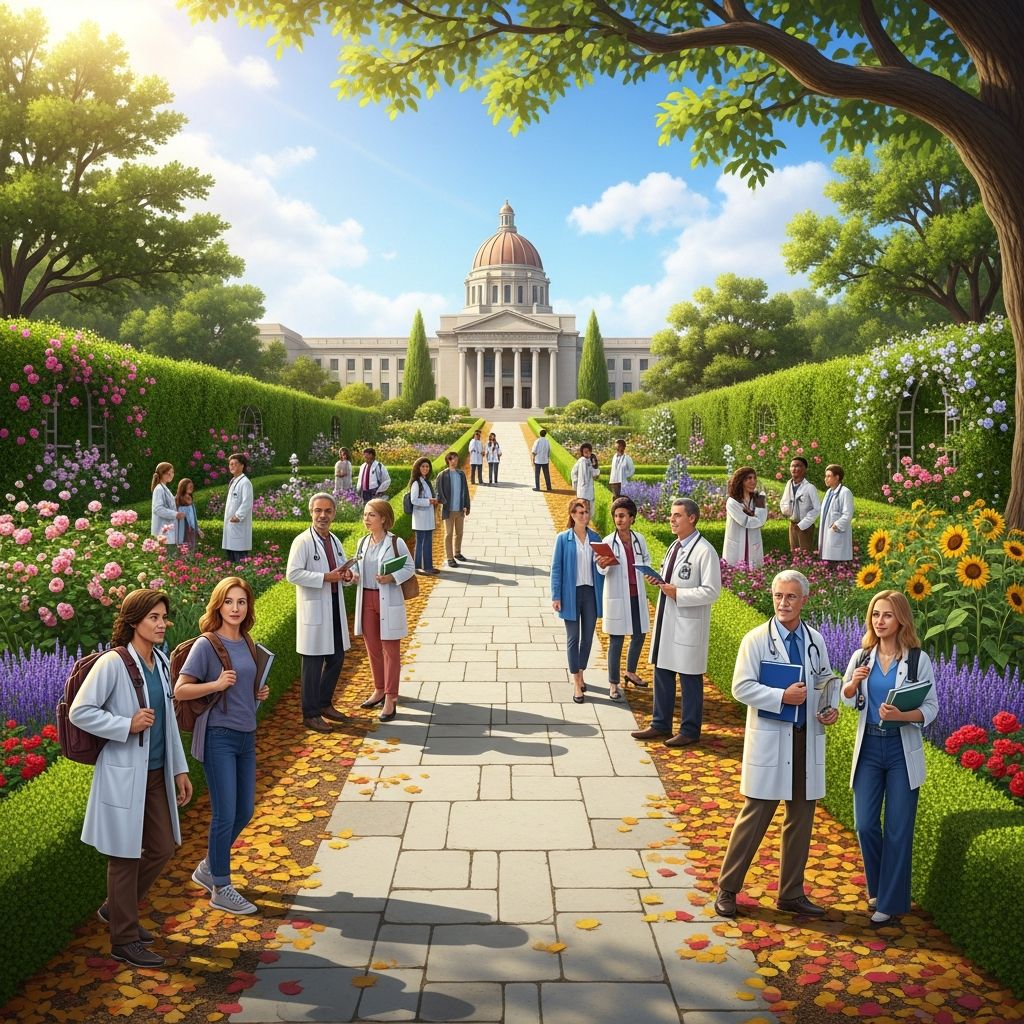
Becoming a physician demands dedication, academic excellence, and hands-on experience over more than a decade. This guide outlines the essential stages, from foundational education to specialized practice, drawing on established pathways in medical training.
Building a Strong Foundation in High School
High school sets the stage for a medical career by fostering discipline and core knowledge. Focus on excelling in science courses like biology, chemistry, and physics, alongside mathematics and English to develop analytical and communication skills.
- Maintain a high GPA, ideally above 3.8, to stand out in college admissions.
- Participate in extracurriculars such as science clubs, volunteering at clinics, or research programs to demonstrate commitment.
- Explore shadowing opportunities with local doctors to gain early exposure to patient care.
These efforts not only build credentials but also help confirm your interest in medicine early on.
Choosing and Excelling in Undergraduate Studies
A bachelor’s degree is mandatory, typically taking four years, with no specific major required but strong emphasis on pre-medical prerequisites. Common majors include biology, chemistry, or neuroscience, though humanities degrees work if prerequisites are met.
Key prerequisite courses include:
- One year each of biology, general chemistry, organic chemistry, and physics.
- Biochemistry, calculus or statistics, and English or writing-intensive courses.
- Social sciences like psychology and sociology for understanding patient behavior.
Aim for a GPA of at least 3.7, as top medical schools average 3.9 or higher. Engage in research, leadership roles, and clinical volunteering to strengthen applications.
Mastering the MCAT: The Gateway Exam
The Medical College Admission Test (MCAT) assesses critical thinking, scientific knowledge, and problem-solving, lasting about 7.5 hours with sections on biological sciences, physical sciences, behavioral sciences, and critical analysis.
Preparation involves 3-6 months of study, using official AAMC practice tests. Average scores for accepted students exceed 510, with elite programs over 515. Retakes are possible but show preparation discipline.
| MCAT Section | Topics Covered | Approx. Time |
|---|---|---|
| Biological and Biochemical Foundations | Biology, biochemistry, organic chemistry | 95 minutes |
| Chemical and Physical Foundations | Physics, chemistry, biochemistry | 95 minutes |
| Psychological, Social, Biological Foundations | Psychology, sociology, biology | 95 minutes |
| Critical Analysis and Reasoning Skills | Reading comprehension, data analysis | 90 minutes |
High scores correlate strongly with admission success.
Navigating Medical School Admissions
Applications via AMCAS or AACOMAS require transcripts, MCAT scores, personal statements, letters of recommendation, and interviews. Competitive applicants boast GPAs above 3.7, MCATs over 510, and substantial experience.
Interviews, often multiple mini-interviews (MMI), evaluate ethics, communication, and fit. Costs average $162,000-$265,000 for four years, with financial aid available.
Thriving Through Medical School
Medical school spans four years: the first two focus on classroom and lab work in basic sciences, culminating in USMLE Step 1. Years three and four involve clinical rotations in specialties like internal medicine, surgery, and pediatrics, preparing for USMLE Step 2.
Students pass USMLE Step 1 before rotations and Step 2 CK/CS during rotations. This rigorous phase builds diagnostic and patient management skills.
Securing Residency: Hands-On Specialization
Residency, matched via NRMP, lasts 3-7 years based on specialty. Graduates rank programs; algorithms pair preferences. Training under supervision leads to independent practice post-licensure exams.
| Specialty | Residency Length | Total Training Post-Undergrad |
|---|---|---|
| Family Medicine | 3 years | 11 years |
| Emergency Medicine | 3-4 years | 11-12 years |
| Surgery | 5 years | 13 years |
| Cardiology | 3 (IM) + 3 fellowship | 14 years |
| Neurosurgery | 7 years | 15 years |
Fellowships add 1-3 years for subspecialties.
Board Certification and Lifelong Learning
Post-residency, pass USMLE Step 3 for licensure. Board exams from ABMS specialties ensure competence. Maintenance requires continuing education and recertification every 10 years.
Financial Realities and Debt Management
Total costs exceed $400,000, but salaries start at $200,000-$300,000 post-residency, rising with experience. Loan forgiveness programs like PSLF aid public service.
Essential Qualities for Aspiring Physicians
- Resilience: Endure long hours and high stress.
- Empathy: Connect with diverse patients.
- Curiosity: Stay updated on advancing medicine.
- Teamwork: Collaborate in healthcare settings.
Alternative Pathways and Accelerated Options
BS/MD programs shorten timelines to 7-8 years. DO programs emphasize holistic care with similar training. International options like Caribbean schools offer paths but verify accreditation.
Common Challenges and How to Overcome Them
Burnout affects 50% of residents; prioritize wellness, mentorship, and balance. Imposter syndrome is common—seek peer support. Competition is fierce, so persistent preparation pays off.
FAQs
How long does it take to become a doctor?
Typically 11-16 years: 4 undergraduate, 4 medical school, 3-8 residency/fellowship.
Is a science major required for medical school?
No, but prerequisites in sciences are mandatory.
What is a good MCAT score?
510+ for most schools; 515+ for top programs.
Can I work during medical school?
Limited; focus on studies, but some do part-time research.
What if I don’t match into residency?
S SOAP phase offers additional spots; reapply or consider prelim years.
References
- I Want to Be a Doctor! What Now? | Long School of Medicine — UT Health San Antonio. 2023. https://uthscsa.edu/medicine/education/ume/outreach/become-doctor
- How to Become a Doctor in 5 Steps — BestColleges. 2024-10-15. https://www.bestcolleges.com/healthcare/careers/how-to-become-a-doctor/
- Starting a Career in Medicine: How to Become a Doctor — American University of the Caribbean. 2024. https://www.aucmed.edu/blog/how-to-become-a-doctor
- Your Guide to Becoming a Doctor with an MD Degree — Medical University of the Americas. 2024. https://www.mua.edu/blog/your-guide-to-becoming-a-doctor-with-an-md-degree
- How Long Does It Take to Become a Medical Doctor? — Ross University School of Medicine. 2024. https://medical.rossu.edu/about/blog/how-long-does-it-take-to-become-a-doctor
- Your Path to Becoming a Medical Doctor at the University of Iowa — University of Iowa. 2023. https://www.healthcare.uiowa.edu/marcom/uihealthcare/stem/professional_programs/Path_Becoming_Doctor.pdf
- How Long Does It Take to Become a Doctor? — Kaplan Test Prep. 2024. https://www.kaptest.com/study/mcat/how-long-does-it-take-to-become-a-doctor/

Medha Deb is an editor with a master's degree in Applied Linguistics from the University of Hyderabad. She believes that her qualification has helped her develop a deep understanding of language and its application in various contexts. Medha specializes in the areas of beauty, health, sports, and wellness and is committed to ensuring that the content on the website is…