
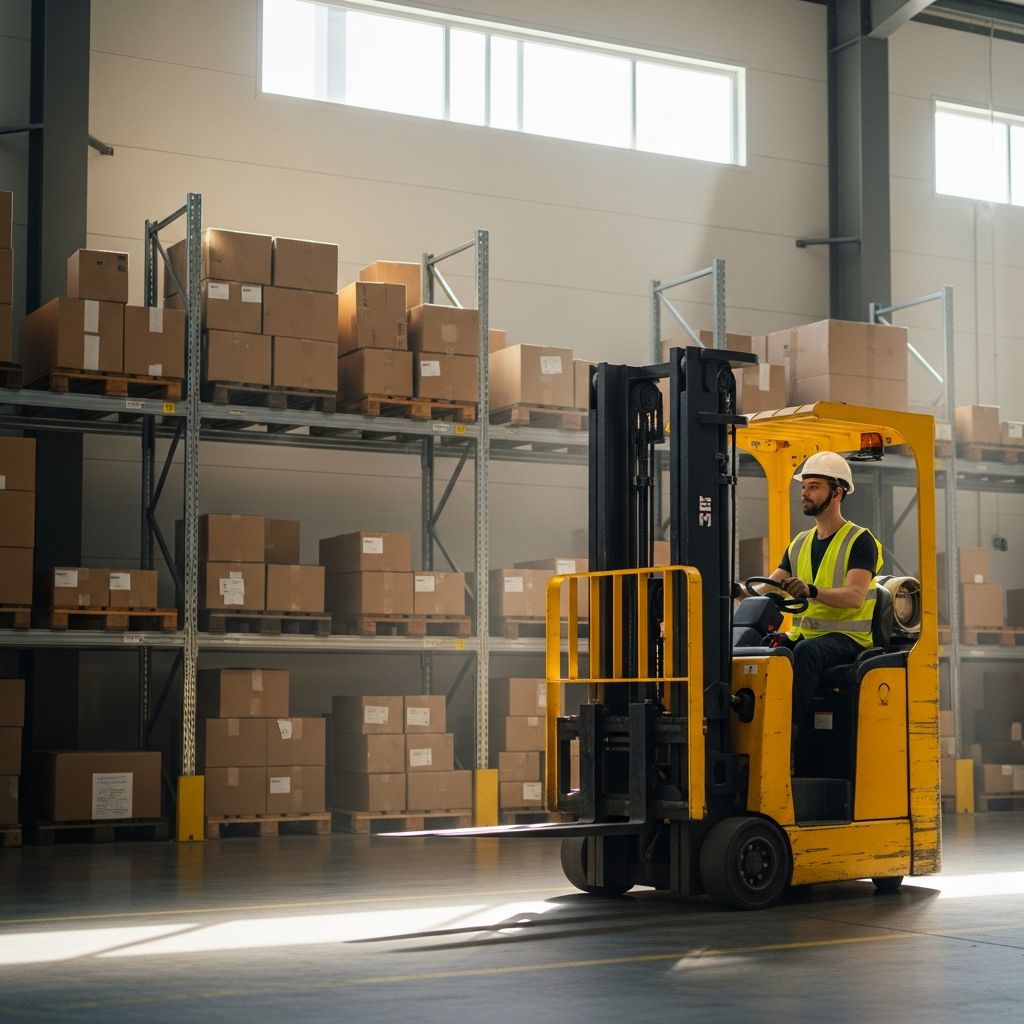
Launching a Career in Material Handling Operations
The material handling and warehousing industry continues to experience steady growth, creating abundant employment opportunities for trained professionals. Forklift operators represent a critical workforce segment within this sector, responsible for safely moving, stacking, and retrieving goods in warehouses, distribution centers, manufacturing facilities, and retail environments. Unlike many career paths that require extensive formal education, becoming a forklift operator presents an accessible entry point into stable employment with competitive wages and clear advancement pathways.
This career choice appeals to individuals seeking immediate employment without pursuing four-year degrees, offering training programs that can be completed in weeks rather than years. The demand for qualified operators remains consistently strong across North America, as businesses depend on efficient material handling to maintain supply chain operations. Understanding the requirements and preparing yourself adequately will position you for success in this dynamic field.
Meeting the Baseline Eligibility Standards
Before pursuing forklift operator training, you must satisfy several fundamental prerequisites that employers and certification bodies require. These baseline standards ensure that candidates possess the maturity, legal capacity, and basic competencies necessary for safe equipment operation.
Age Requirements and Legal Considerations
The minimum age requirement for forklift operation is firmly established at 18 years old. This regulation, set by the Fair Labor Standards Act, reflects the safety-sensitive nature of the position and the legal responsibilities associated with operating heavy equipment in commercial settings. Younger individuals should focus on completing their secondary education and preparing for certification once they reach this threshold.
Educational Foundation
While not technically a universal mandate, most employers and training programs require or strongly prefer candidates to hold a high school diploma or General Educational Diploma (GED). This credential demonstrates proficiency in reading, writing, mathematics, and communication skills essential for comprehending safety protocols, interpreting equipment manuals, and maintaining operational logs. The technical aspects of forklift operation require solid foundational literacy and numeracy to understand mechanical specifications and load calculations.
Valid Driving License
A valid driver’s license is a standard requirement across the industry. Even though forklift operation differs from standard vehicle operation, the license requirement serves multiple purposes: it verifies your ability to follow traffic regulations, demonstrates responsible vehicle operation history, and may inform insurance and liability considerations for employers.
Physical and Cognitive Capabilities
Operating forklifts demands specific physical abilities and cognitive skills that extend beyond age and education credentials. Employers assess these competencies during hiring and training phases.
Physical requirements include the capacity to lift at least 50 pounds repeatedly throughout shifts. Operators must possess good hand-eye coordination, peripheral vision, and spatial awareness to navigate equipment safely in confined warehouse environments. The ability to sit or stand for extended periods while maintaining focus and physical control is essential, as shifts typically range from six to ten hours. Upper-body strength and flexibility prove valuable when adjusting loads or conducting light maintenance work on equipment.
Cognitive and perceptual skills are equally important. Operators must demonstrate depth perception to accurately position loads, spatial recognition to judge distances and clearances, and the ability to process multiple environmental factors simultaneously while operating equipment that moves in three dimensions. Mental acuity and situational awareness prevent accidents that could result in injuries, equipment damage, or productivity losses.
Substance abuse screening represents a critical component of qualification standards. Because forklift operation is classified as a safety-critical position, employers conduct pre-employment drug and alcohol testing. Many companies also implement random testing protocols during employment and mandatory testing following any workplace incidents. Operating heavy equipment while impaired poses extreme risks to personal safety and workplace integrity.
The Certification and Training Pathway
Obtaining forklift certification involves structured training that progresses through distinct phases, each building competency and demonstrating readiness for independent operation.
Understanding OSHA Standards and Regulations
The Occupational Safety and Health Administration (OSHA) establishes comprehensive standards for powered industrial truck operation under regulation 1910.178. These standards mandate that all forklift operators complete certified training before operating equipment. OSHA requirements cover both theoretical knowledge and practical competency demonstration, ensuring operators understand equipment mechanics, safety protocols, and workplace-specific hazards.
Training Program Structure
Comprehensive forklift certification typically requires six to eight hours of instruction, delivered through various formats to accommodate different learning preferences. Programs generally include:
- Classroom-based theoretical instruction covering equipment mechanics and operational principles
- Video-based learning materials demonstrating proper techniques and safety procedures
- Written instructional materials and study guides for reference and review
- Hands-on practical training with supervised equipment operation
- Site-specific and equipment-specific instruction tailored to workplace conditions
Training providers offer both in-person classroom instruction and online components, allowing flexibility for working adults or those with scheduling constraints. However, practical hands-on operation must occur under direct professional supervision, regardless of the theoretical delivery method.
Certification Examination Process
Earning formal certification requires passing both written and practical examinations administered by certified forklift trainers. The written assessment evaluates your understanding of equipment operation, safety protocols, load management principles, and OSHA regulations. The practical examination, conducted at your job site or training facility, assesses your ability to safely operate equipment, demonstrate proper techniques, handle various load types, and navigate challenging scenarios.
Certification documentation must specify the exact forklift type or class for which you are authorized to operate. This classification-specific approach recognizes that different forklift designs (counterbalance, reach trucks, pallet jacks, etc.) require distinct operating techniques and competency verification.
Essential Competencies and Workplace Skills
Beyond formal certification, successful forklift operators develop a comprehensive skill set encompassing technical proficiency, safety awareness, and professional communication.
| Skill Category | Key Competencies ||—|—|| **Equipment Operation** | Precise controls, load positioning, speed management, obstacle navigation || **Safety Protocols** | Pre-shift inspections, hazard identification, proper PPE usage, incident reporting || **Load Management** | Weight assessment, balance calculations, secure loading techniques, stacking safety || **Mechanical Understanding** | Basic equipment maintenance, troubleshooting common issues, identifying mechanical problems || **Communication** | Coordinating with warehouse staff, following instructions, reporting issues clearly || **Situational Awareness** | Monitoring surroundings, predicting hazards, adapting to changing conditions |
Pre-Shift Equipment Inspection
Professional operators begin each shift by systematically inspecting their assigned equipment. This includes checking tire condition, verifying brake responsiveness, confirming hydraulic system integrity, inspecting load-carrying forks for damage, and testing warning systems. These inspections prevent equipment failures that could cause accidents or delays.
Load Handling Expertise
Operators must master techniques for assessing load weight, determining proper positioning under loads, and executing stable lifting and stacking operations. Understanding load limits, weight distribution, and equipment capacity prevents overloading situations that compromise safety and equipment integrity.
Navigating the Certification Timeline and Renewals
Certification represents an ongoing commitment rather than a one-time achievement. Understanding renewal requirements ensures you maintain compliance and employment eligibility.
Initial Certification Duration
Upon successfully completing training and examinations, you receive formal certification authorizing operation of specified forklift classes. This credential enables independent equipment operation without direct supervision, though employers may implement additional workplace-specific policies.
Mandatory Retraining Requirements
OSHA regulations mandate that forklift operators complete refresher training and skill reassessment every three years. Additionally, retraining becomes mandatory following any workplace incidents, accidents, or situations where you demonstrate operational errors. This ongoing education requirement ensures operators maintain safety awareness, learn about equipment updates, and stay current with regulatory changes.
Documentation and Proof of Certification
You must carry valid proof of current certification when performing forklift operations. This documentation typically includes your certification card, training date, expiration date, authorized equipment classes, and trainer information. Employers maintain records confirming each operator’s certification status and training history.
Gaining Competitive Advantages in the Job Market
Beyond basic certification, additional qualifications and experiences distinguish you as an exceptional candidate to employers seeking reliable, safety-conscious operators.
Specialized Equipment Certifications
Different forklift types require specific operation techniques. While your initial certification covers fundamental principles, obtaining certifications for specialized equipment (reach trucks, turret trucks, order pickers, or telehandlers) expands your employment options and increases earning potential. Employers particularly value operators qualified across multiple equipment classes.
Prior Warehouse Experience
Prior employment in warehousing, distribution, or manufacturing environments provides valuable context for understanding workplace safety culture, inventory systems, and operational procedures. Employers frequently prefer candidates with one or more years of warehouse experience, as these individuals understand the logistics environment and require shorter onboarding periods.
Additional Safety Certifications
Pursuing supplementary certifications in areas like hazardous materials handling, safety leadership, or occupational health compliance strengthens your professional profile. These credentials demonstrate commitment to workplace safety and position you for supervisory or training roles.
Professional Development and Communication
Developing strong communication skills, reliability, and professional demeanor creates opportunities for advancement. Operators who consistently demonstrate safety consciousness, accurate record-keeping, and cooperative teamwork often progress into supervisory, training, or quality assurance positions within warehouse operations.
Finding Quality Training and Certification Programs
Selecting an appropriate training provider significantly impacts your learning experience and certification validity. Consider multiple options when planning your certification journey.
Employer-provided training: Many companies offer on-site forklift certification programs conducted by internal trainers or contracted providers. This approach offers convenience and often minimal cost to employees, while ensuring training aligns with company equipment and procedures.
Independent certification providers: Specialized training organizations deliver OSHA-compliant programs at dedicated facilities or through online platforms combined with hands-on assessments. These programs offer flexibility regarding scheduling and location, though you typically bear training costs.
Community colleges and vocational schools: Educational institutions frequently offer forklift certification as part of broader material handling or warehouse management programs. These providers combine theoretical instruction with practical experience and may offer credit toward broader vocational credentials.
Regardless of provider choice, verify that your certification meets OSHA standards and that trainers hold current instructor credentials. Your final certification must be recognized and accepted by potential employers.
Frequently Asked Questions
Q: Can I obtain forklift certification before turning 18?
A: No, federal regulations establish 18 years as the mandatory minimum age for forklift operation and certification enrollment. This requirement is firm and non-negotiable across all states and employers.
Q: How long does forklift certification remain valid?
A: Initial certification typically remains valid for three years. After this period, you must complete refresher training and reassessment to maintain active certification. Certification also becomes invalid following workplace incidents requiring immediate retraining.
Q: Are online forklift training courses acceptable?
A: Online courses may cover theoretical components, but OSHA requires hands-on practical training and evaluation supervised by certified trainers. Reputable programs combine online instruction with in-person practical assessment to satisfy regulatory requirements.
Q: What happens if I let my certification expire?
A: Expired certification means you cannot legally operate forklifts and become ineligible for forklift operator positions. You must complete full retraining and recertification to resume operations, similar to obtaining initial certification.
Q: Do different forklift types require separate certifications?
A: Your certification specifies which forklift classes you are authorized to operate. Operating equipment types for which you are not certified violates OSHA regulations. You may pursue additional certifications for other equipment classes through supplementary training.
Q: What disqualifies someone from forklift certification?
A: Primary disqualifying factors include being under 18 years old, failing drug or alcohol screening, inability to safely operate equipment, or failing certification examinations. Some medical conditions affecting physical capability or cognitive function may also prevent certification.
References
- Forklift Operator Requirements 2025: Complete Guide — Forklift Academy. 2025-01-15. https://www.forkliftacademy.com/forklift-operator-requirements-2025/
- The Qualifications Needed to Become a Forklift Operator — MyCustom Staffing. https://mycustomstaffing.com/forklift-operator-qualifications-top-staffing-agency/
- How to become a forklift operator — Spherion Staffing Services. https://www.spherion.com/job-profiles/forklift-operator/
- How to become a forklift operator — EmployBridge. https://www.employbridge.com/position-spotlight/how-to-become-a-forklift-operator
- OSHA Forklift Certification Requirements & Training Rules — CertifyMe.net. https://www.certifyme.net/forklift-certification-requirements/

- Integrated M.A. in Applied Linguistics, University of Hyderabad
- 5+ years in editorial, instructional, SEO, and research-based writing
Sneha is a relationships and lifestyle writer with a strong foundation in applied linguistics and certified training in relationship coaching. She brings over five years of writing experience to theskillvault, crafting thoughtful, research-driven content that empowers readers to build healthier relationships, boost emotional well-being, and embrace holistic living. Her writing and insights reflect the belief that beauty, happiness, and wellness…