
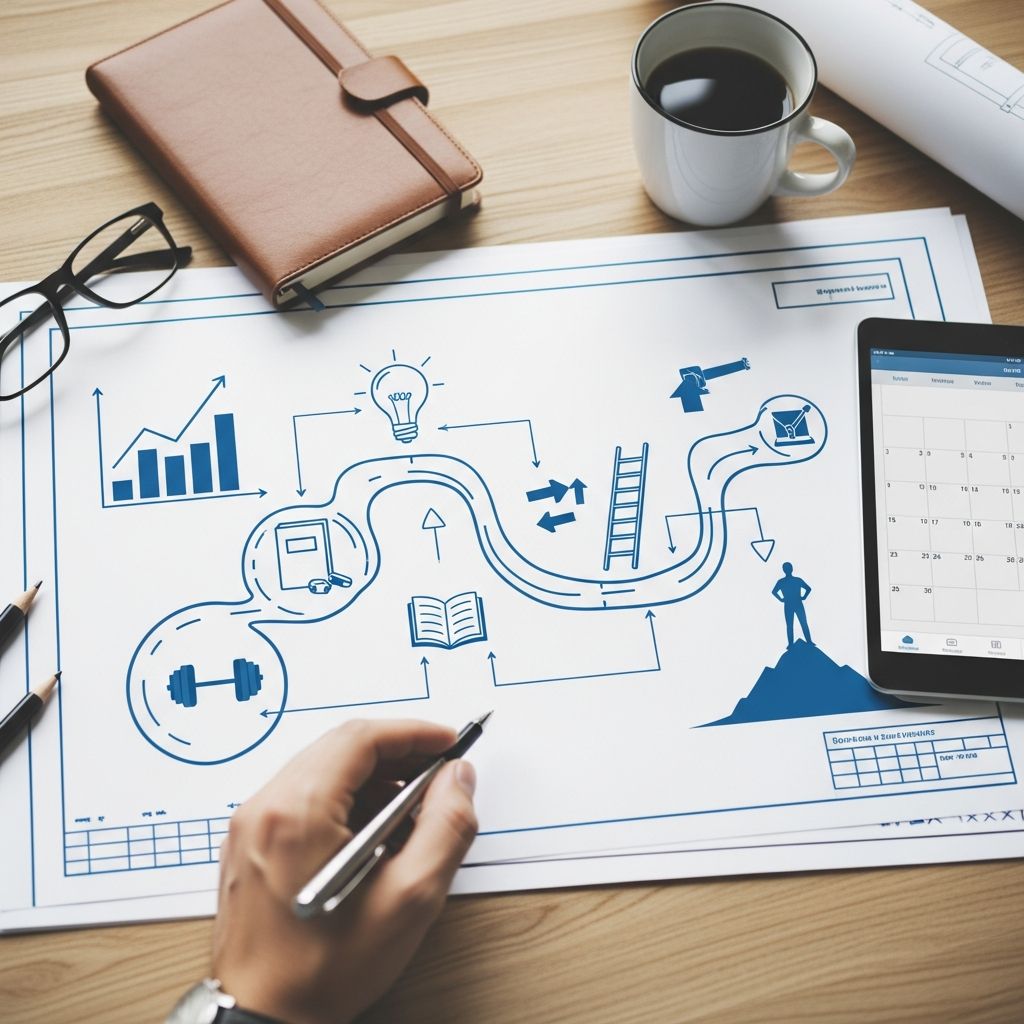
Personal development is no longer a luxury but a necessity in today’s rapidly evolving world. Whether you’re seeking career advancement, skill enhancement, or personal fulfillment, a structured approach to growth is essential. A personal development plan serves as your roadmap—a deliberate strategy that transforms vague aspirations into concrete, measurable outcomes.
Unlike wishful thinking or New Year’s resolutions that fade by February, a well-constructed personal development plan provides accountability, direction, and a framework for sustainable progress. This comprehensive guide will walk you through the process of creating and implementing a development plan that genuinely works.
Understanding the Foundation: What Makes a Development Plan Effective
Before diving into the mechanics of creating a personal development plan, it’s crucial to understand what separates effective plans from those that sit unused in a drawer. An effective plan is built on several foundational principles that work together to support meaningful change.
First, clarity is paramount. Your plan must articulate not just what you want to achieve, but why you want to achieve it. This distinction between goals and motivation is critical because motivation sustains effort through obstacles and setbacks. When you clearly understand your “why,” you’re more likely to persist when challenges arise.
Second, a personal development plan must be personal. It should reflect your unique circumstances, values, learning style, and aspirations—not what others think you should pursue. This alignment between your plan and your authentic self dramatically increases the likelihood of consistent engagement and success.
Third, effectiveness requires measurability. Vague aspirations like “becoming better at my job” or “improving myself” lack the specificity needed to track progress or celebrate achievements. Measurable objectives create checkpoints that confirm you’re moving in the right direction.
Establishing Your Vision: The Starting Point for Strategic Planning
Paradoxically, creating an effective personal development plan requires you to start at the end. Begin by envisioning your desired future state—not just a year from now, but two to five years ahead. This long-term vision serves as the anchor for all subsequent planning.
Ask yourself profound questions: What would your ideal professional and personal life look like? What competencies would you have developed? What achievements would you have accomplished? What kind of person would you have become? These questions aren’t meant to be answered quickly; they require genuine reflection.
Your vision should encompass multiple dimensions of human development. Consider three key areas: your body and physical well-being, your mind and intellectual capabilities, and your spirit and sense of purpose. A holistic vision prevents you from becoming lopsided in your development—succeeding professionally while neglecting health, for example, or pursuing knowledge at the expense of meaningful relationships.
Once you’ve articulated your vision, extract the core themes and areas where you want to focus. These thematic areas become the organizing structure for your entire development plan.
Assessing Your Current Position: Honest Self-Evaluation
With your vision established, the next critical step is understanding your starting point. This requires honest self-assessment across your identified focus areas. The gap between where you are and where you want to be reveals the development work ahead.
Conduct a comprehensive skills and competencies audit. For each area of focus, identify your current strengths—the capabilities you already possess and the results you’ve already achieved. Strengths aren’t something to hide modestly; recognizing them provides confidence and identifies resources you can leverage.
Equally important is identifying skill gaps and areas for improvement. What capabilities do you need to develop to reach your vision? What knowledge do you lack? What competencies require strengthening? This assessment should be evidence-based whenever possible, incorporating feedback from multiple sources: your own observations, feedback from colleagues or mentors, performance evaluations, or formal assessments.
Many people find it valuable to seek 360-degree feedback—input from supervisors, peers, direct reports, and even personal contacts—to understand how others perceive their strengths and development areas. This external perspective often reveals blind spots that self-assessment alone misses.
Converting Vision into Goals: The Art of Goal Architecture
Goals are the bridge between vision and action. Well-constructed goals provide clarity and direction while remaining flexible enough to adapt as circumstances evolve. The most effective goal-setting framework remains the SMART criteria, though understanding what each letter truly means is essential.
Specific goals clearly define what you want to accomplish. Rather than “improve leadership skills,” a specific goal might be “develop conflict resolution expertise in team settings.” Specificity eliminates ambiguity about what success looks like.
Measurable goals include quantifiable indicators of progress. How will you know you’ve succeeded? What evidence will demonstrate achievement? Without measurability, you can’t track progress or celebrate wins. Measurable goals might include completing a certification, achieving a certain performance metric, or receiving specific feedback from stakeholders.
Achievable goals are challenging yet realistic given your current circumstances. Goals that are too easy don’t drive growth; goals that are impossible breed discouragement. This is where understanding your resources, constraints, and timeline becomes crucial.
Relevant goals align with your vision and values. Each goal should contribute meaningfully toward the future you’ve envisioned. Relevance helps maintain motivation because you understand why each goal matters.
Time-bound goals have specific deadlines. Deadlines create urgency, prevent indefinite procrastination, and provide natural checkpoints for assessment and adjustment.
Organize your goals hierarchically. Identify one to three major goals that represent significant progress toward your vision. Under each major goal, outline the specific objectives, skills, and knowledge you need to acquire. This architecture prevents your plan from becoming overwhelming while maintaining focus on what truly matters.
Designing Development Activities: From Theory to Practice
Goals define the destination; development activities provide the vehicles for getting there. An effective personal development plan includes multiple learning and growth modalities because people learn differently and growth happens through varied experiences.
Consider formal education options: relevant courses, certifications, degree programs, or workshops. Formal education provides structured learning and recognized credentials. However, formal learning addresses only one dimension of development.
Include experiential learning—learning through doing. This might involve taking on challenging projects, rotating into new roles, or seeking stretch assignments that require you to apply new skills in real situations. Experiential learning is often where real competency develops.
Mentorship and coaching provide personalized guidance from someone with experience in your development area. A mentor can accelerate your learning by helping you navigate common pitfalls, offering perspective, and providing accountability. The relationship is typically more hands-on than the traditional mentorship model.
Reading, research, and self-directed learning round out your development activities. Books, articles, podcasts, and online resources offer flexible, low-cost learning opportunities. This dimension is particularly valuable for intellectual and conceptual development.
Your development plan should include a diverse mix of activities. This variety maintains engagement, addresses different learning styles, and creates multiple reinforcement pathways for new knowledge and skills.
Building Your Implementation Timeline: Making Growth Actionable
A development plan without a timeline remains theoretical. Implementation timelines transform intentions into commitments with clear deadlines and checkpoints.
Break your major goals into concrete action steps. For example, if your goal is to develop public speaking skills, action steps might include: enroll in a speaking workshop by March, attend two Toastmasters meetings monthly, deliver a presentation to your team by June, and speak at an industry conference by year-end. Each step is specific and time-bound.
Identify realistic milestones—intermediate checkpoints that indicate progress toward major goals. Milestones serve multiple purposes: they provide early evidence of progress (maintaining motivation), they allow for course correction if needed, and they create natural moments for reflection and celebration.
Establish deadlines not just for completion but for starting work on each action step. People often underestimate the time required to begin; without explicit start dates, important activities get perpetually postponed.
Create a visual timeline or roadmap. Whether you use a simple spreadsheet, a project management tool, or a strategic planning template, the visual representation helps you see the overall architecture of your plan and maintain perspective on priorities.
Securing Support and Resources: You Don’t Grow Alone
Sustainable development requires more than individual willpower; it requires support systems and resources. Identify what you need to successfully execute your plan.
Resources might include financial investments—budget for courses, workshops, or coaching. They might include time resources—protecting specific hours for development activities. They might include learning resources—books, software, or subscriptions that support your growth.
Equally important are human resources. Who can support your development? Potential supporters include mentors, managers, peers, family members, or professionals like coaches or therapists. Different supporters serve different functions: some provide expertise, others provide accountability, others provide emotional support.
Have explicit conversations with key supporters. Share your development goals and ask for specific support. Rather than hoping your manager notices your effort, directly request time for development activities or ask for assignments that build targeted skills. Clarity about your goals and requests for support increases the likelihood of receiving it.
Monitoring Progress: Feedback and Continuous Refinement
A personal development plan is not static. Regular monitoring and refinement ensure your plan remains relevant and effective as circumstances change.
Establish a regular review rhythm—quarterly or monthly, depending on your goals. During reviews, assess progress against milestones. Have you completed planned action steps? Are you seeing evidence of skill development? Are your goals still relevant, or have circumstances changed in ways that warrant adjustment?
Seek feedback actively. Ask mentors, managers, and peers whether they see evidence of your development. External feedback often provides insights you can’t generate through self-reflection alone. Be specific about what feedback you’re seeking—general praise is less valuable than specific input on whether you’re demonstrating new capabilities.
Be willing to adjust your plan. If a development activity isn’t working, try a different approach. If your circumstances change substantially, update your timeline or goals accordingly. Rigidity in the face of changing realities is counterproductive; flexibility is a feature of good planning, not evidence of failure.
Celebrate progress and completed milestones. Recognition reinforces motivation and builds momentum. Don’t wait until the entire plan is complete to acknowledge achievement.
Common Pitfalls and How to Avoid Them
Understanding common obstacles helps you design plans that are more likely to succeed. Many people create overly ambitious plans that collapse under their own weight. Start with one to three major goals rather than trying to overhaul yourself completely.
Others create plans and then file them away, never referring to them again. Combat this by making your plan visible—post it where you see it regularly, share it with accountability partners, and schedule regular review dates in your calendar.
Some people focus exclusively on professional development while neglecting personal well-being, relationships, or health. Remember that sustainable development is balanced development across multiple life dimensions.
Finally, many abandon plans when they encounter setbacks. Development is rarely linear; progress includes plateaus, occasional regressions, and unexpected obstacles. Persistence matters more than perfection.
Templates and Tools for Plan Creation
| Plan Component | Key Elements | Timeline |
|---|---|---|
| Vision Statement | Future self description, values alignment, desired outcomes | Reflect and draft (2-5 hours) |
| Goals and Objectives | SMART criteria, 1-3 major goals, supporting objectives | Define and validate (3-5 hours) |
| Skills Assessment | Current strengths, gaps, development priorities | Assess and document (2-4 hours) |
| Development Activities | Courses, mentoring, projects, reading, experiences | Research and select (3-6 hours) |
| Action Plan | Specific steps, milestones, deadlines, resource needs | Detail and schedule (3-5 hours) |
| Support Systems | Mentors, managers, peers, coaches, learning resources | Identify and confirm (1-3 hours) |
| Review Process | Monthly/quarterly assessment, feedback collection, adjustments | Schedule ongoing |
Frequently Asked Questions
Q: How long should it take to create a personal development plan?
A: Initial plan creation typically requires 12-20 hours of focused work spread over 2-4 weeks. This includes reflection, research, goal-setting, and action planning. The time investment upfront pays dividends through focused execution.
Q: What if my circumstances change significantly after I create my plan?
A: Plans should evolve with changing circumstances. Review your plan quarterly and update goals, timelines, or action steps as needed. A plan should be a living document that guides your development, not a rigid constraint.
Q: How many goals should my development plan include?
A: Start with one to three major goals. Multiple major goals can scatter focus and make execution difficult. You can include supporting objectives under each major goal, but keep primary goals manageable.
Q: Should my personal development plan focus on career development or personal growth?
A: Ideally, your plan addresses both. Professional and personal development reinforce each other. A comprehensive plan includes career advancement, skill development, health, relationships, and personal fulfillment.
Q: How often should I review and adjust my development plan?
A: Conduct formal reviews monthly or quarterly, depending on the timeframe of your goals. Weekly check-ins on action steps help maintain momentum. Annual reviews ensure your long-term vision remains relevant.
Q: What should I do if I’m not making progress toward my goals?
A: First, honestly assess whether your goals are realistic given your circumstances. If goals are appropriate, examine your action plan—are activities actually supporting development? Consider changing your approach, seeking additional support, or adjusting timelines rather than abandoning goals.
References
- Building a Personal Development Plan – A Comprehensive Guide — Keystone Partners. 2024. https://www.keystonepartners.com/resources/building-personal-development-plan/
- How to Write Personal Development Plan in 5 Steps — The Mentoring Group. 2024. https://mentoringgroup.com/writing-your-personal-development-plan.html
- 7-Step Personal Development Plan: Templates and Examples — Scott Jeffrey. 2024. https://scottjeffrey.com/personal-development-plan/
- Creating a Personal Development Plan for Career Advancement — ICON plc Careers. October 2024. https://careers.iconplc.com/blogs/2024-10/creating-a-personal-development-plan-for-career-advancement
- How to Create a Professional Development Plan — Southern New Hampshire University. 2024. https://www.snhu.edu/about-us/newsroom/career/personal-development-plan
- The Individual Development Plan (IDP): Chart Your Course — University of Nebraska-Lincoln Graduate Studies. 2024. https://graduate.unl.edu/professional-development/individual-development-plan/
- How to Create an Effective Personal Development Plan — Field Engineer. 2024. https://www.fieldengineer.com/article/personal-development-plan/

Medha Deb is an editor with a master's degree in Applied Linguistics from the University of Hyderabad. She believes that her qualification has helped her develop a deep understanding of language and its application in various contexts. Medha specializes in the areas of beauty, health, sports, and wellness and is committed to ensuring that the content on the website is…