
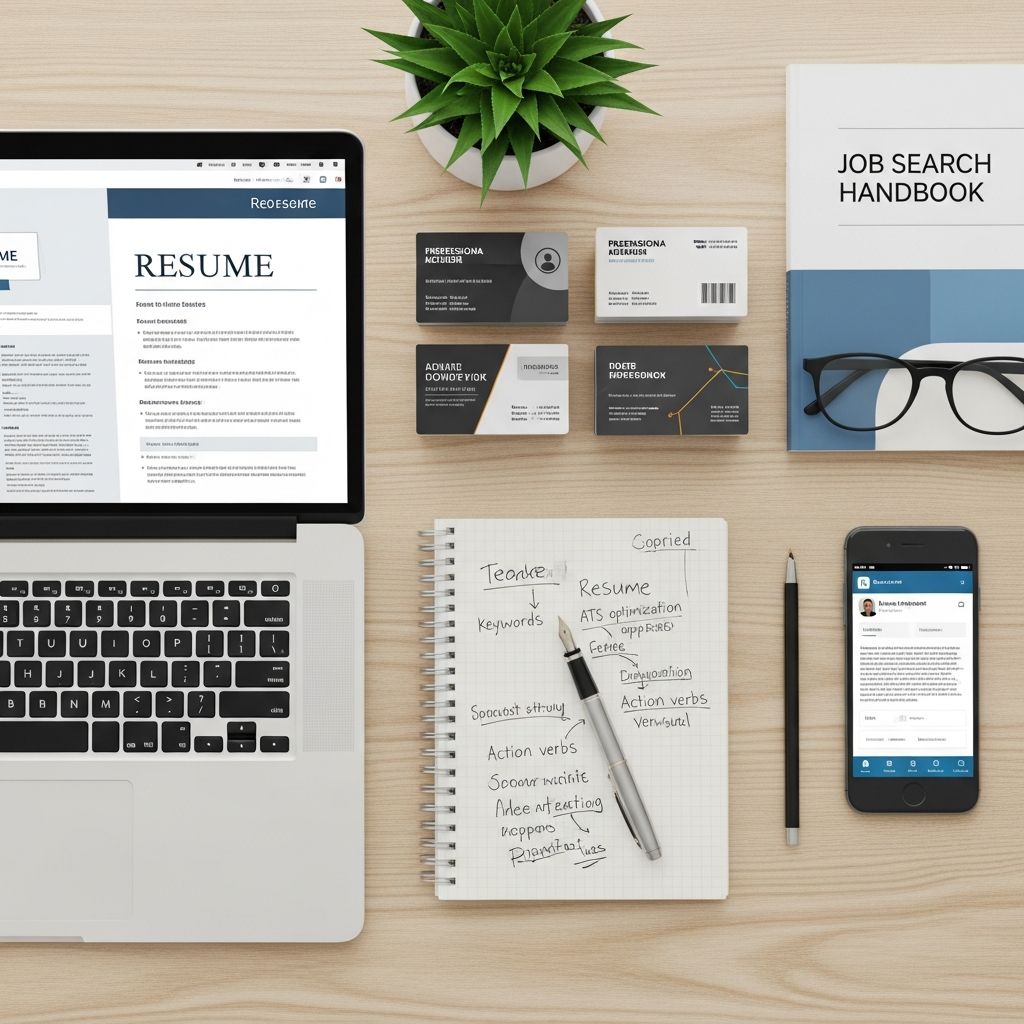
Building a Resume That Opens Doors: Essential Foundations for Career Success
In today’s competitive employment landscape, your resume serves as your primary introduction to potential employers. This document represents your professional identity, achievements, and qualifications in a format that must simultaneously appeal to both automated screening systems and human recruiters. Understanding how to construct an effective resume goes beyond simply listing past employment—it requires strategic thinking about how to position your experience, quantify your accomplishments, and align your background with organizational needs.
The modern resume has evolved considerably. Employers now expect more than chronological job listings; they seek evidence of impact, measurable contributions, and clear demonstrations of how you solved problems in previous roles. Whether you’re transitioning careers, re-entering the workforce, or advancing within your field, mastering resume composition can significantly improve your interview prospects and career trajectory.
Selecting the Right Structural Framework for Your Background
The foundation of any effective resume begins with choosing an appropriate organizational structure. Different formats emphasize various aspects of your professional history, and your selection should depend on your career progression, industry standards, and the specific position you’re pursuing.
The Reverse-Chronological Approach
The reverse-chronological format remains the industry standard and preferred choice for most job seekers. This structure lists your work experience beginning with your most recent position and moving backward through your career history. This format works particularly well when you have consistent employment, clear career progression, or are seeking roles similar to your previous positions.
The reverse-chronological format provides clarity that hiring managers expect and that applicant tracking systems can easily parse. It emphasizes your most recent and relevant experience at the top of the resume, where it receives the most attention. For each position, you include your job title, company name, location, employment dates, and a series of bullet points describing your responsibilities and accomplishments.
Alternative Structural Options
While less common, functional and hybrid formats serve specific career situations. A functional resume emphasizes skills and competencies rather than chronological work history, making it useful when you’re changing careers, have employment gaps, or are entering the job market with limited professional experience. A hybrid or combination resume merges elements of both approaches, allowing you to highlight relevant skills while maintaining a chronological employment history.
Your choice should reflect your unique circumstances. Recent graduates with minimal work experience might benefit from emphasizing educational achievements and transferable skills. Career changers might use a functional approach to showcase how skills from previous roles apply to their target industry. Experienced professionals typically find success with reverse-chronological formats that demonstrate steady career growth.
Constructing Essential Resume Sections
Effective resumes contain clearly labeled sections that guide readers through your professional narrative. Each section serves a specific purpose and should be crafted with precision and relevance.
Contact Information and Professional Identification
Position your contact details at the resume’s top, including your full name, phone number, professional email address, city and state, and relevant online profiles such as LinkedIn or your portfolio website. Ensure your email address reflects professionalism—avoid nicknames or dated references. Include your job title directly below your name to immediately communicate your professional identity and target role.
Professional Summary or Objective Statement
A well-crafted summary provides a concise overview of your professional background, key competencies, and career aspirations in 2-3 sentences. This section should not simply repeat your job titles; instead, it should articulate your unique value proposition and how your experience aligns with the industry or role you’re targeting. Your summary should highlight notable achievements, relevant expertise, and what you bring to an organization.
The summary differs from an objective statement, which focuses more narrowly on the position you seek. Modern resumes typically benefit from a summary that immediately establishes credibility and demonstrates your understanding of your field.
Professional Experience Narrative
Your work experience section should be meticulously organized and strategically written. For each position, include the company name, your job title, location, and employment dates presented in a consistent format (for example, May 20XX – August 20XX). Below this header, provide 2-6 bullet points that describe your key responsibilities and, more importantly, your accomplishments and measurable results.
When describing your work, use action verbs and power language such as “achieved,” “implemented,” “managed,” “created,” or “spearheaded.” Avoid passive construction and first-person pronouns like “I” or “we”—your resume is written in implied first person, where accomplishments speak for themselves. Rather than stating “responsible for managing a team,” write “managed a team of eight professionals, increasing departmental productivity by 25% over two years.”
Skills and Competencies Section
Clearly enumerate technical skills, software proficiencies, languages, and relevant competencies that align with your target position. Rather than listing every skill you possess, prioritize those mentioned in the job description and those most relevant to your industry. Group related skills logically—for instance, separating technical proficiencies from language abilities or specialized certifications.
Educational Background
List your highest degree first, including the degree name, institution, location, and graduation date. If you’re a recent graduate, consider placing this section higher on your resume or including relevant coursework, academic honors, scholarships, or leadership activities. For experienced professionals with several years in the workforce, education can appear lower on the page while still maintaining prominence.
Optimization Strategies for Modern Screening Systems
Today’s hiring process often begins with applicant tracking systems that scan resumes for specific keywords before human reviewers ever see your document. Understanding how to optimize your resume for these systems while maintaining readability for human evaluators is crucial.
Strategic Keyword Integration
Incorporate industry-specific terminology and keywords naturally throughout your resume, particularly in your summary, experience descriptions, and skills section. Examine the job posting carefully for repeated terms, required qualifications, and industry language. Weave these keywords into your accomplishment statements in ways that feel authentic and contextually appropriate.
However, avoid keyword stuffing, which appears unprofessional and can backfire with human reviewers. The goal is to integrate relevant terminology seamlessly while ensuring your resume reads naturally and convincingly demonstrates your qualifications.
Formatting for System Compatibility
Use clean, simple formatting that applicant tracking systems can easily parse. Stick to standard fonts, clear section headings, and straightforward bullet points. Avoid graphics, text boxes, columns, tables, or unusual formatting that might confuse automated systems. Use standard dash characters for date ranges rather than fancy symbols. Save your resume as a PDF file to preserve formatting across different devices and systems.
Design and Presentation Principles
While content remains paramount, presentation significantly impacts how effectively your resume communicates your qualifications.
Visual Organization and Readability
Employ clean, minimalistic design that emphasizes readability. Maintain consistent spacing, adequate white space, and strategic use of bold, italics, or underlining for emphasis. Set margins to one inch on all sides to balance content density with visual breathing room. Choose a professional font in 11-12 point size for body text and 14-16 point for section headings.
Clear section headings with consistent formatting help readers navigate your resume efficiently. Visual consistency signals professionalism and attention to detail—qualities valued in any employee.
Length Considerations
For most professionals, especially those with fewer than five years of experience, a single-page resume is ideal. This constraint forces you to prioritize information ruthlessly, including only the most relevant accomplishments and skills. Experienced professionals with extensive accomplishments might extend to two pages, but avoid exceeding this limit unless your field specifically expects a longer format (such as academia).
Personalization Strategies for Specific Opportunities
Generic resumes rarely succeed in competitive job markets. Effective resumes are tailored specifically for each position and organization.
Matching Job Description Requirements
Before submitting your resume, thoroughly analyze the job posting. Identify the key requirements, preferred qualifications, and industry terminology used. Reorder your experience section to highlight the most relevant positions. Adjust your summary to directly address what the employer seeks. Emphasize achievements and skills that directly relate to the specific role.
This doesn’t mean fabricating experience; rather, it involves strategically presenting your genuine qualifications in ways that immediately demonstrate how you meet the employer’s needs.
Quantifying Achievement and Impact
Whenever possible, support your accomplishments with measurable results. Instead of writing “improved customer satisfaction,” write “increased customer satisfaction scores from 78% to 92% over eighteen months.” Numbers provide concrete evidence of impact and help recruiters understand the scope of your contributions.
Use metrics such as percentages, dollar amounts, timelines, team sizes, process improvements, and user engagement statistics. This approach follows what career experts call the formula: “accomplished X as measured by Y by doing Z”—a structure that immediately communicates both what you achieved and how you achieved it.
Language, Grammar, and Professional Presentation
The quality of your writing directly reflects your professionalism and attention to detail.
Verb Selection and Tense Consistency
Use past tense when describing previous positions and present tense for your current role. Select strong action verbs that convey decisive, impactful work: “launched,” “transformed,” “accelerated,” “consolidated,” “pioneered,” or “optimized.” Avoid weak verbs and overused terms that don’t distinguish your accomplishments.
Maintain consistency in verb usage across similar bullet points. If you begin one achievement with “implemented,” avoid mixing in passive constructions like “was responsible for” in the next bullet.
Accuracy and Proofreading
Grammatical errors, spelling mistakes, and formatting inconsistencies can eliminate you from consideration. Proofread multiple times and have trusted colleagues review your resume. Check for consistency in spacing, date formatting, capitalization, and punctuation. Use consistent abbreviations and formatting throughout—if you abbreviate “senior” as “Sr.” in one position title, do so consistently.
Emerging Trends and Contemporary Best Practices
The landscape of resume expectations continues to evolve as hiring practices and technologies advance.
Contemporary Design Expectations
Minimalistic, clean layouts remain preferred for 2025 and beyond. Employers and systems appreciate simple, scannable designs that emphasize content over decoration. Focus on readability and information hierarchy rather than attempting to make your resume visually flashy or creative, unless you’re in a creative field where design showcasing might be appropriate.
Personal Branding Through Summaries
Increasingly, employers evaluate culture fit alongside technical qualifications. A strong professional summary allows you to communicate your values, work philosophy, and personality in addition to your skills. However, keep this section brief—three sentences maximum—saving detailed discussion for interviews and cover letters.
Strategic Information Selection
Every line on your resume competes for limited space and attention. Include only information relevant to your target position. Remove positions that don’t demonstrate progression or relevant skills. Eliminate irrelevant educational achievements or outdated technical skills unless they provide competitive advantage.
This principle of strategic selection means that your ideal resume isn’t fixed—it evolves as your target role changes. The accomplishment most relevant for a marketing position differs from what matters in a technical role.
Frequently Asked Questions About Resume Development
Q: How far back should my work history extend?
A: Generally, include the past 10-15 years of relevant experience. For recent graduates or those with less experience, include all meaningful positions. You can omit very early career positions once you have substantial recent experience to highlight.
Q: Should I include a cover letter with my resume?
A: Most applications request both. A cover letter allows you to explain your interest in the specific role and organization, connecting your experience to their needs in ways a resume cannot convey.
Q: What if I have employment gaps?
A: Gaps are common and often explainable. You can briefly mention how you used the time productively (education, caregiving, health issues, or personal projects) in your cover letter. A functional resume format can also minimize emphasis on chronological gaps.
Q: How often should I update my resume?
A: Update your resume whenever you complete significant accomplishments, gain new skills, or change positions. Maintain an updated master version that you then customize for each application.
Q: Should my resume include references?
A: No. Instead, prepare a separate reference list to provide when requested. Use your resume space for accomplishments and qualifications instead.
Conclusion: From Document to Opportunity
Your resume represents a critical gateway to career advancement. By strategically organizing your experience, quantifying accomplishments, optimizing for modern screening systems, and tailoring your content to specific opportunities, you create a document that effectively communicates your professional value. Remember that your resume initiates conversations—it doesn’t secure jobs alone. Use it as a foundation for interviews, where you elaborate on your accomplishments and demonstrate the full scope of your capabilities.
The most effective resumes combine strategic content selection, clear presentation, technical optimization, and personalization. As you develop or refine your resume, approach it as an iterative process. Seek feedback, test different formats, and continuously improve based on results. Your resume should evolve as your career progresses and as hiring practices change, ensuring it always represents your current qualifications and aspirations accurately.
References
- The Best Resume Format for 2025 (Templates & Examples) — Resume Genius. 2025. https://resumegenius.com/blog/resume-help/resume-format
- How to Make a Resume in 2025 | Beginner’s Guide — Novo Resume. 2025. https://novoresume.com/career-blog/how-to-write-a-resume-guide
- 10 Resume Writing Tips To Help You Land a Position — Indeed Career Advice. 2025. https://www.indeed.com/career-advice/resumes-cover-letters/10-resume-writing-tips
- Current Resume Trends for 2025 — ResumeBuilder.com. 2025. https://www.resumebuilder.com/career-center/resume-trends/
- What’s the best resume format in 2025? — Johnson & Johnson Careers. 2025. https://www.careers.jnj.com/en/employee-stories/career-tips/what-s-the-best-resume-format-in-2025/
- 16 Top Resume Tips to Help You Land a Job in 2026 — Coursera. 2025. https://www.coursera.org/articles/resume-tips

- Integrated M.A. in Applied Linguistics, University of Hyderabad
- 5+ years in editorial, instructional, SEO, and research-based writing
Sneha is a relationships and lifestyle writer with a strong foundation in applied linguistics and certified training in relationship coaching. She brings over five years of writing experience to theskillvault, crafting thoughtful, research-driven content that empowers readers to build healthier relationships, boost emotional well-being, and embrace holistic living. Her writing and insights reflect the belief that beauty, happiness, and wellness…