
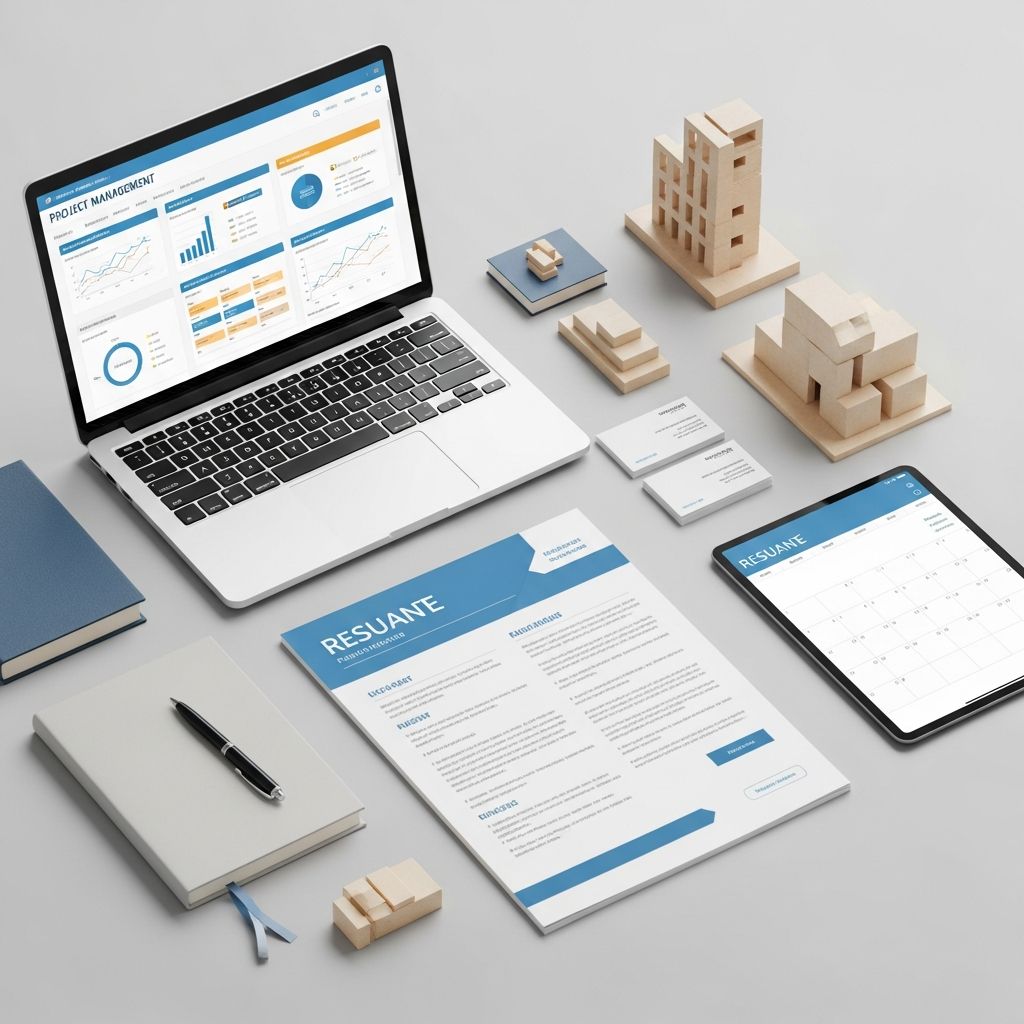
Constructing a Program Manager Resume That Captures Attention
The program management field demands professionals who can orchestrate complex initiatives, lead diverse teams, and deliver measurable results within constrained timelines and budgets. Your resume serves as your first opportunity to demonstrate these competencies to potential employers. A well-constructed resume doesn’t simply list your job duties—it tells a compelling narrative of your leadership journey, strategic accomplishments, and the tangible value you’ve brought to every organization you’ve served.
Creating a standout program manager resume requires understanding what hiring managers and recruiters actively seek. They’re looking for evidence of your ability to manage intricate, interconnected projects, your mastery of various methodologies, your technical proficiency with industry tools, and your capacity to inspire and guide cross-functional teams. This guide walks you through every component of an effective resume, from foundational sections to strategic enhancements that set you apart from competing candidates.
Core Components of Your Professional Profile
Establishing Your Foundation with Essential Sections
Every program manager resume should include fundamental sections that provide structure and clarity. These core elements create the framework upon which you’ll build a compelling professional narrative. The essential components include your contact information at the top, followed by a professional summary or objective statement, your employment history, educational background, technical proficiencies, and relevant certifications. These sections give recruiters quick access to the most important information while establishing your credibility in the field.
Beyond these basics, progressive program managers enhance their resumes with additional sections that provide richer context. A portfolio section showcasing specific projects you’ve led, an awards and recognition segment highlighting industry acknowledgments, a languages section demonstrating global communication capabilities, and a personal interests area that humanizes your professional profile all contribute to a more complete picture. These supplementary sections transform your resume from functional documentation into a strategic marketing tool that reflects your unique value proposition.
Identifying Information and Professional Accessibility
Begin your resume with clear, current contact information that makes it easy for hiring managers to reach you. Include your full name prominently, a professional email address, phone number, and city or region where you’re located. If you maintain an active LinkedIn profile, professional portfolio website, or GitHub repository that demonstrates your work, include these links. However, ensure that any online presence you link to reflects the same professional quality as your resume. Outdated or poorly maintained profiles can undermine your candidacy rather than enhance it.
Crafting Your Professional Summary or Objective
The Strategic Opening That Hooks Recruiters
Your professional summary or objective serves as the gateway to your complete resume. This concise section—typically three to four sentences—provides your first opportunity to make a memorable impression. A strong summary articulates your years of experience, highlights your area of specialization within program management, and emphasizes the most impressive achievements that define your career. Rather than stating obvious facts, your summary should communicate the specific outcomes you’ve delivered and the methodologies that have driven your success.
When composing this section, consider the specific programs you’ve managed and the distinctive contributions you’ve made. If you’ve successfully led multi-million-dollar initiatives that transformed organizational capabilities, that’s compelling information worth featuring. If you’ve implemented enterprise-wide process improvements using Agile methodologies that increased team productivity by measurable percentages, communicate that achievement. Your summary should immediately signal to the reader that you’re not just another program manager—you’re someone with proven expertise in delivering complex, strategic initiatives that drive business value.
Tailoring Your Introduction to Target Opportunities
Customize your professional summary for each position you pursue. Carefully review the job description and identify the specific competencies, industry focus, and organizational challenges the employer emphasizes. If the position requires expertise in technology program management within financial services, your summary should highlight relevant experience in that sector. If the role prioritizes change management capabilities, ensure your summary reflects your track record in successfully navigating organizational transformation. This targeted approach demonstrates that you’ve invested time in understanding the opportunity and that your background genuinely aligns with their needs.
Showcasing Your Professional Experience with Impact
Structuring Work History for Maximum Clarity and Persuasiveness
Your employment history represents the most critical section of your program manager resume. This is where you demonstrate your capabilities in action, translate your responsibilities into tangible achievements, and illustrate the progression of your career. Structure each position with the job title, organization name, employment dates, and a description of your responsibilities and accomplishments. Organize your positions in reverse chronological order, beginning with your most recent role, as this format immediately shows your current experience level and career trajectory.
The effectiveness of this section depends on how compellingly you articulate your impact. Rather than simply listing duties you performed, frame your experiences as problems you solved and outcomes you achieved. If you managed program budgets, specify the scale—”Oversaw $8.5 million annual budget” carries far more weight than “Managed program budget.” If you led teams, indicate their size and composition—”Led cross-functional team of 12 professionals across product, engineering, and operations” provides concrete context. If you implemented process improvements, quantify the results—”Reduced project delivery cycle time by 30% through implementation of streamlined project governance framework.”
Leveraging Action Verbs and Quantifiable Achievements
Begin each accomplishment statement with a powerful action verb that reflects your leadership and decision-making role. Verbs like “orchestrated,” “spearheaded,” “accelerated,” “optimized,” “transformed,” and “scaled” convey active leadership more effectively than passive language. Vary your verb choices across different bullet points to maintain reader engagement and demonstrate the range of your capabilities. Each action verb should authentically represent the work you performed—avoid exaggeration or inflated language that misrepresents your actual contributions.
Quantifiable metrics elevate your credibility and provide concrete evidence of your impact. Whenever possible, include numbers that illustrate the scale of your work and the outcomes you achieved. This might include budget figures, team sizes, project timelines, efficiency improvements, revenue generated, cost reductions, stakeholder satisfaction percentages, or process cycle time decreases. These metrics help recruiters quickly grasp the magnitude of your accomplishments and assess whether your experience level aligns with the position they’re filling.
Demonstrating Technical and Leadership Competencies
Hard Skills That Define Program Management Excellence
Program managers must master a diverse array of technical competencies that enable effective project orchestration and strategic planning. Your resume should highlight proficiency with industry-standard methodologies including Agile, Scrum, Waterfall, Lean, and Six Sigma frameworks. Include experience with project management and collaboration tools such as Microsoft Project, Jira, Asana, Monday.com, and Salesforce. Additionally, showcase skills in budget management and financial analysis, data visualization platforms like Tableau or Power BI, earned value management, risk assessment frameworks, and process optimization techniques.
Technical certifications significantly enhance your credibility. Project Management Professional (PMP) certification, Certified ScrumMaster (CSM) credentials, Program Management Professional (PgMP) designations, and Agile-related certifications demonstrate your commitment to mastering established best practices and maintaining current industry knowledge. If you hold relevant certifications, feature them prominently in a dedicated section or integrate them into your employment history where they’re most relevant to specific achievements.
Soft Skills That Distinguish Exceptional Program Leaders
While technical competencies matter, the interpersonal and leadership qualities you bring to program management often determine your effectiveness as a leader. Your resume should convey your capability in stakeholder relationship management, your skill in facilitating productive meetings and resolving conflicts, your talent for building and motivating cross-functional teams, and your ability to communicate complex information clearly to diverse audiences. Demonstrate your strategic thinking, your capacity to mentor and develop team members, and your aptitude for influencing decisions across organizational boundaries without direct authority.
Incorporate evidence of these soft skills through your achievement statements. Instead of simply stating “Strong leadership skills,” provide a concrete example: “Built and directed distributed team across four geographic regions, achieving 95% on-time delivery rate through clear communication protocols and collaborative problem-solving approaches.” This demonstrates leadership in action rather than making an unsubstantiated claim.
Positioning Your Educational Background and Credentials
Feature your educational credentials in a clearly organized section that includes your degree type, field of study, and the institution where you completed your degree. If you earned your degree from a highly prestigious institution or completed advanced degrees relevant to program management, consider emphasizing that. However, if your degree is several years old and you’ve accumulated significant professional experience, you might position education after your employment history to emphasize your practical expertise over academic credentials.
Include any professional development coursework, executive education programs, or specialized training that demonstrates your commitment to continuous learning in the field. If you’ve completed programs through prestigious institutions like universities or recognized professional organizations, these warrant inclusion as they signal your investment in staying current with evolving best practices and emerging trends in program management.
Strategic Considerations for Resume Format and Design
Choosing a Format That Supports Your Career Narrative
Reverse-chronological formatting represents the optimal choice for most program manager resumes. This format immediately showcases your most recent experience and current skill level, making it easy for recruiters to assess your trajectory and current capabilities. This approach also naturally highlights long-term engagements, which are common in program management roles where professionals oversee multi-year initiatives. The chronological structure allows recruiters to see your career progression clearly and understand how your responsibilities and impact have evolved over time.
Maintain consistent formatting throughout your document using professional fonts, appropriate spacing, and clear visual hierarchy. Limit your resume to one page if you have fewer than five years of experience, two pages if you have more extensive experience. Use white space strategically to improve readability—dense, cluttered resumes become difficult to scan quickly, which works against you when recruiters are reviewing dozens of applications.
Design Elements That Enhance Professional Presentation
While visual appeal matters, restraint in design typically serves program managers best. Conservative industries favor minimal color, simple graphic elements, and straightforward layouts that prioritize content clarity over aesthetic flourish. If you’re applying to positions in startup environments or creative organizations, you have more latitude to incorporate subtle design elements that reflect contemporary aesthetics. However, ensure that any design choices enhance readability and don’t distract from your content. Remember that your resume may be converted to different formats, uploaded to applicant tracking systems, or printed, so designs must remain functional across these various contexts.
Customization Strategies for Competitive Advantage
Aligning Your Resume with Specific Job Requirements
Generic resumes rarely compete effectively. Before applying for a position, thoroughly analyze the job description to identify specific skills, qualifications, methodologies, and accomplishments the employer emphasizes. Incorporate relevant keywords and terminology directly from the job posting throughout your resume. If the posting emphasizes “Agile transformation,” use that exact phrase rather than alternatives like “Agile implementation.” If the role requires “stakeholder engagement,” ensure your resume demonstrates this competency through specific examples.
Research the company’s current initiatives, challenges, and culture. Customize your professional summary and highlight achievements that demonstrate your ability to contribute meaningfully to their specific situation. If you can identify how your past experience aligns with their current strategic priorities, that connection strengthens your candidacy significantly. This customization approach requires more effort than submitting identical resumes to every opportunity, but it substantially improves your chances of advancement through initial screening processes.
Essential Competencies Program Managers Must Demonstrate
The following table outlines critical skills that program managers should showcase across their resumes:
| Technical Competencies | Leadership Capabilities | Strategic Competencies |
|---|---|---|
| Project management methodologies (Agile, Waterfall, Scrum) | Cross-functional team leadership and motivation | Strategic planning and roadmap development |
| Budget management and financial analysis | Stakeholder relationship development and maintenance | Organizational change management |
| Risk assessment and mitigation strategies | Conflict resolution and negotiation | Business case development and ROI analysis |
| Process optimization and continuous improvement | Team coaching and professional development | Technology roadmap alignment with business objectives |
| Data analytics and performance metrics tracking | Persuasive communication and presentation | Vendor and partner management |
Enhancing Your Resume with Strategic Additions
Building a Compelling Portfolio Section
A portfolio section distinguishes your resume by providing concrete evidence of your capabilities. Rather than simply stating your experience leading major initiatives, showcase specific program highlights with brief descriptions of your role, the challenges you addressed, the methodologies you applied, and the quantifiable outcomes you achieved. Include program names, your specific responsibilities, project scope, timeline, and most importantly, the measurable results. This transforms your resume from abstract claims into demonstrated expertise.
Awards, Recognitions, and Professional Affiliations
If you’ve received industry recognitions, awards for outstanding leadership or program delivery, or professional certifications, feature these prominently. Professional association memberships in organizations like the Project Management Institute (PMI) demonstrate your commitment to professional standards and community engagement. These additions provide third-party validation of your expertise and help differentiate you from candidates with similar base qualifications.
Critical Mistakes to Avoid
Avoid these common pitfalls that undermine otherwise strong resumes:
– Vague language: General statements like “responsible for managing projects” lack impact. Instead, specify program scope, outcomes, and your specific contributions.
– Excessive buzzwords: While industry terminology matters, excessive jargon makes your resume difficult to read and raises questions about whether you genuinely understand the concepts or are simply using trendy language.
– Inconsistent formatting: Professional presentation matters. Ensure consistent date formatting, bullet point styles, font selections, and spacing throughout your document.
– Outdated information: Verify that all contact information is current and all referenced skills remain relevant to your career focus. An old email address or outdated phone number prevents qualified employers from reaching you.
– Overstatement of achievements: While showcasing accomplishments is important, misrepresenting your role or inflating results damages your credibility if discovered during background verification.
Complementing Your Resume with a Tailored Cover Letter
Your resume opens the door, but a customized cover letter strengthens your candidacy significantly. Use your cover letter to tell the story behind your resume—explain why you’re passionate about program management, articulate how your experience specifically addresses the employer’s needs, and demonstrate your knowledge of their organization and strategic priorities. Your cover letter allows you to make connections between your background and their requirements that might not be immediately obvious from resume bullet points alone.
Frequently Asked Questions
Q: How far back should my resume extend in terms of employment history?
A: Generally, include the past 10-15 years of employment history for experienced professionals. For earlier positions, you may use a summary line like “Additional experience in project coordination roles” rather than listing every detail. Focus on positions most relevant to the program management opportunities you’re pursuing.
Q: Should I include a career objective statement if I have substantial experience?
A: For experienced professionals with 5+ years in program management, a professional summary highlighting your achievements and specialized expertise typically serves better than a career objective. Career objectives work better for early-career professionals or those transitioning into new fields.
Q: How should I address employment gaps in my resume?
A: Employment gaps don’t require explanation on your resume itself, but if they arise during interviews, be prepared with a brief, honest explanation. Focus your resume on showcasing the value of your work experience rather than dwelling on gaps. Consider using a functional or hybrid resume format if gaps are significant.
Q: What metrics matter most for program managers when quantifying achievements?
A: Emphasize metrics that demonstrate business impact: budget managed, time saved or improved cycle times, revenue generated, cost reductions, team size led, stakeholder satisfaction improvements, and on-time/on-budget delivery rates. These metrics communicate your effectiveness in the core responsibility areas of program management.
Q: How often should I update my resume?
A: Update your resume as you complete significant achievements, acquire new certifications, or gain relevant experience. Before applying for any position, customize your resume specifically for that opportunity. Maintain a master resume with comprehensive information, then create tailored versions for specific applications.
References
- Project Management Institute (PMI) — Salary Survey Reports — Project Management Institute. 2024. https://www.pmi.org/
- Bureau of Labor Statistics: Management Occupations Outlook — U.S. Department of Labor, Bureau of Labor Statistics. 2024-2025. https://www.bls.gov/ooh/management/all-managers.htm
- SHRM: Technical and Soft Skills Gap Analysis — Society for Human Resource Management. 2024. https://www.shrm.org/
- Agile Alliance: Agile Methodologies and Project Success — Agile Alliance. 2024. https://www.agilealliance.org/
- NCDA: Career Development Best Practices — National Career Development Association. 2024. https://www.ncda.org/

- Integrated M.A. in Applied Linguistics, University of Hyderabad
- 5+ years in editorial, instructional, SEO, and research-based writing
Sneha is a relationships and lifestyle writer with a strong foundation in applied linguistics and certified training in relationship coaching. She brings over five years of writing experience to theskillvault, crafting thoughtful, research-driven content that empowers readers to build healthier relationships, boost emotional well-being, and embrace holistic living. Her writing and insights reflect the belief that beauty, happiness, and wellness…