
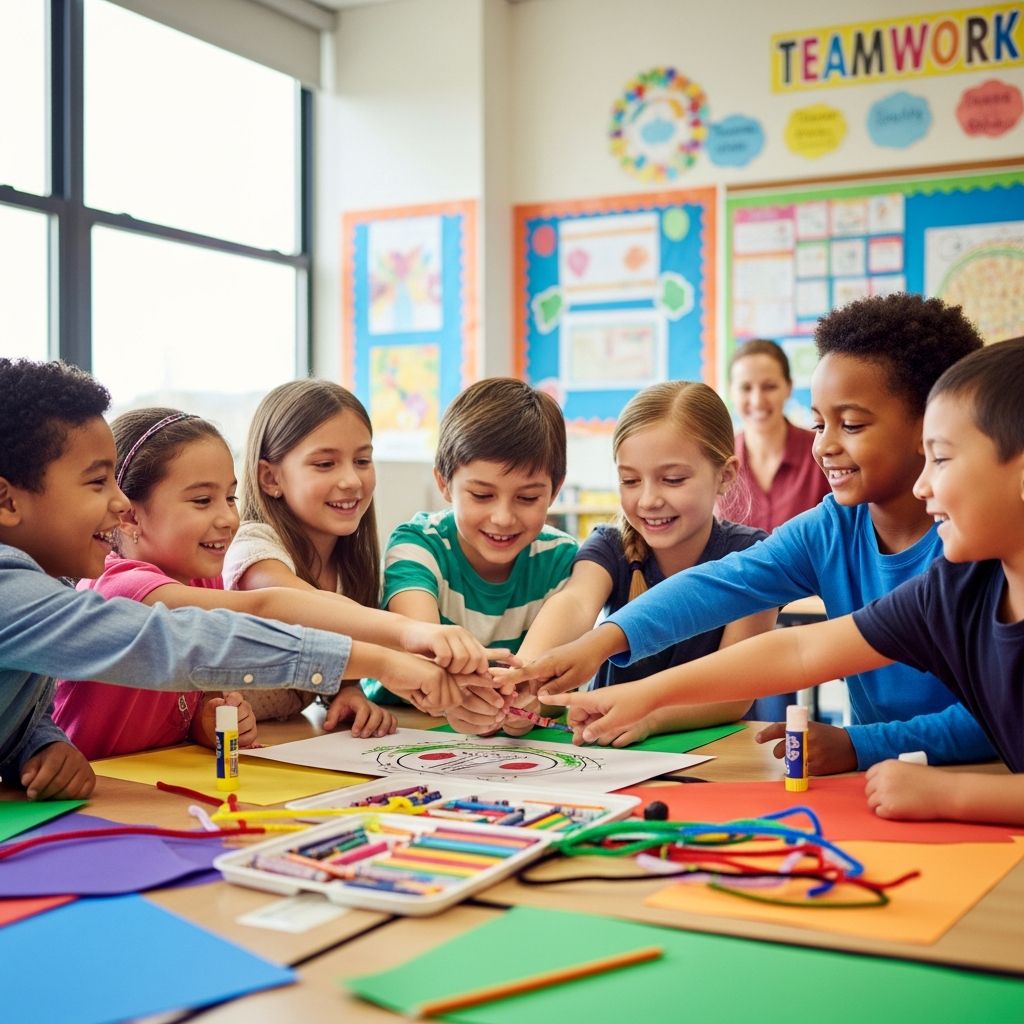
A vibrant classroom community transforms learning by making students feel valued, connected, and motivated. When educators prioritize relationships and shared experiences, academic performance improves alongside emotional well-being. Research shows that structured greetings alone can boost engagement and cut disruptions significantly. This article explores fresh approaches to create such environments, adaptable for all grade levels.
Starting Strong: The Power of Personal Connections from Day One
The foundation of any strong classroom lies in initial interactions. Begin by greeting every student individually at the door each morning. This simple act signals inclusion and sets a positive tone, leading to measurable gains in focus and fewer behavioral issues. Extend this by incorporating brief “speed meetings,” where pairs share quick prompts like “Share one fun fact about your weekend.” Rotate partners daily to build broad networks rapidly.
Physical setup matters too. Arrange desks in circles or clusters to encourage eye contact and collaboration, fostering a sense of equality. Display student work prominently and include diverse representation in wall decor to make the space welcoming for all backgrounds. These elements create psychological safety, essential for risk-taking in learning.
Collaborative Rule-Making: Empowering Students as Co-Creators
Rather than imposing rules, involve students in crafting them. Host a facilitated discussion on core values like respect and responsibility, then distill into 4-5 concise agreements posted visibly. This process builds ownership, making adherence more likely. For younger learners, use visuals or icons; for older ones, tie rules to real scenarios.
Revisit rules quarterly through anonymous feedback forms. Ask: “What norms help us most?” Adjust collectively to address evolving needs. This democratic approach teaches civic skills while maintaining structure, reducing misconduct as students internalize expectations.
Daily Rituals That Strengthen Ties
Consistent routines weave community into the fabric of each day. Implement short morning huddles (5-10 minutes) to preview the day, share gratitudes, or celebrate wins. These infuse social-emotional learning (SEL) naturally, equipping students to handle frustrations productively.
- Gratitude shares: Each student names one thing they’re thankful for, shifting focus to positivity.
- Compliment circles: Go around the room with peers offering specific praises, reinforcing kind behaviors.
- Weather checks: Quick mood barometers help teachers support struggling students early.
End days with reflective shout-outs, where 3-5 students receive peer or teacher recognition. This boosts morale and models appreciation, creating a cycle of positive reinforcement.
Team Challenges: Uniting Through Shared Purpose
Nothing bonds a group like collective success. Design class-wide goals tied to behavior or academics, such as “Perfect attendance week for extra recess.” Track progress on a visual chart, celebrating milestones with group rewards like game time.
For deeper impact, launch semester projects requiring cross-group cooperation, like a community garden or charity drive. Assign rotating roles—leader, recorder, presenter—to develop skills and interdependence. Debrief afterward: “What made our team strong?” This mirrors real-world teamwork, enhancing motivation.
| Goal Type | Example | Reward Idea | Expected Outcome |
|---|---|---|---|
| Behavior | Zero tardies for a week | Pizza party | Improved punctuality |
| Academic | 90% homework completion | Extra PE time | Higher responsibility |
| Kindness | 50 peer compliments logged | Class story time | Stronger empathy |
Amplifying Student Voices for True Inclusion
Empowerment flourishes when voices are heard. Use anonymous tools like digital suggestion boxes or weekly “wish cards” prompting “One thing I hope we improve.” Review responses in class meetings, implementing feasible ideas to demonstrate responsiveness.
Weekly forums (15-20 minutes) allow structured sharing: agenda items from students, teacher facilitates equitable turns. For virtual or large classes, polls and breakout rooms ensure participation. This not only resolves issues but teaches advocacy and listening.
Interactive Activities to Spark Lasting Friendships
Dynamic exercises accelerate bonding. Try “think-pair-share” for content discussions: individuals reflect, pair up, then share class-wide. This scaffolds participation, especially for shy students.
Incorporate biographical prompts: Students write and share early learning memories, posting online for peer responses. Common themes emerge, highlighting shared humanity. Games revealing similarities/differences, like “Find someone who…” bingo, build natural affinities.
- Job rotations: Weekly charts assign tasks (line leader, materials manager) in pairs, promoting trust and leadership.
- Storytelling pep talks: Pairs craft encouraging tales for each other, practicing positivity.
- Self-talk practice: Model and group-share affirming phrases to build resilience.
Sustaining Momentum Throughout the Year
Community requires ongoing nurturing. Monthly “community check-ins” survey satisfaction and connections. Use data to tweak strategies, like adding more pair work if isolation is noted.
Model vulnerability: Share your learning goals or challenges to humanize yourself, encouraging reciprocity. Foster diverse thinking by praising varied perspectives in discussions. Address conflicts restoratively—group circles for apologies and solutions—turning mishaps into growth.
Incorporate SEL explicitly via peer scaffolding: Pair experts with novices for mutual teaching, building confidence across abilities. Track long-term via journals: Students note weekly “community wins,” reviewing patterns for pride.
Overcoming Common Hurdles in Community Building
Challenges like resistance or diverse needs arise. Counter with patience: Start small, scale up. For reluctant participants, use low-stakes entry like written shares before verbal.
In inclusive settings, differentiate prompts for varying abilities. Virtual classes? Prep tech and hybrid activities like shared docs. Consistency trumps perfection—small daily efforts yield compounding results.
Frequently Asked Questions (FAQs)
How long until a classroom community forms?
Typically 4-6 weeks with daily intentional practices, though bonds deepen over months. Consistency accelerates progress.
What if some students don’t participate?
Offer private opt-ins initially, pair with buddies, and celebrate incremental involvement to build comfort gradually.
Can these work in large or online classes?
Yes—use breakouts, polls, and async tools like forums. Prep tech ensures smooth execution.
How do you measure success?
Observe engagement, survey belonging, track disruptions. Academic gains and peer support are key indicators.
What’s essential for preschool vs. high school?
Preschool: Visuals, jobs, play. High school: Voice, real-world goals, autonomy. Adapt to developmental stages.
Transform Your Classroom Today
Implementing even 2-3 strategies can shift dynamics profoundly. Prioritize relationships, and watch students flourish collaboratively. These methods, grounded in practice, promise inclusive, high-achieving spaces.
References
- 5 Steps to Establishing a Strong Classroom Community — Learning A-Z. 2023. https://www.learninga-z.com/site/resources/breakroom-blog/establish-strong-classroom-community-tasha-fisher
- 5 Strategies for Building Community in the Classroom — National Society of High School Scholars (NSHSS). 2023. https://www.nshss.org/resources/blog/blog-posts/5-strategies-to-build-community-in-the-classroom/
- Building a Thriving Classroom Community – Bond & Beyond — Faculty Focus. 2023. https://www.facultyfocus.com/articles/effective-classroom-management/building-a-thriving-classroom-community-bond-and-beyond/
- Creating a Sense of Classroom Community in Your Preschool — Brightwheel. 2023. https://mybrightwheel.com/blog/classroom-community
- Back to School: Why Creating Classroom Community is So Important — National Association for the Education of Young Children (NAEYC). 2023. https://www.naeyc.org/resources/blog/why-creating-classroom-community-so-important
- Building Community — Harvard Graduate School of Education. 2023. https://instructionalmoves.gse.harvard.edu/building-community
- Community Building in the Classroom — Columbia Center for Teaching and Learning. 2023. https://ctl.columbia.edu/resources-and-technology/teaching-with-technology/teaching-online/community-building/
- 10 Powerful Community-Building Ideas for the Classroom — Edutopia. 2019-02-05. https://www.edutopia.org/article/10-powerful-community-building-ideas/

- Integrated M.A. in Applied Linguistics, University of Hyderabad
- 5+ years in editorial, instructional, SEO, and research-based writing
Sneha is a relationships and lifestyle writer with a strong foundation in applied linguistics and certified training in relationship coaching. She brings over five years of writing experience to theskillvault, crafting thoughtful, research-driven content that empowers readers to build healthier relationships, boost emotional well-being, and embrace holistic living. Her writing and insights reflect the belief that beauty, happiness, and wellness…