
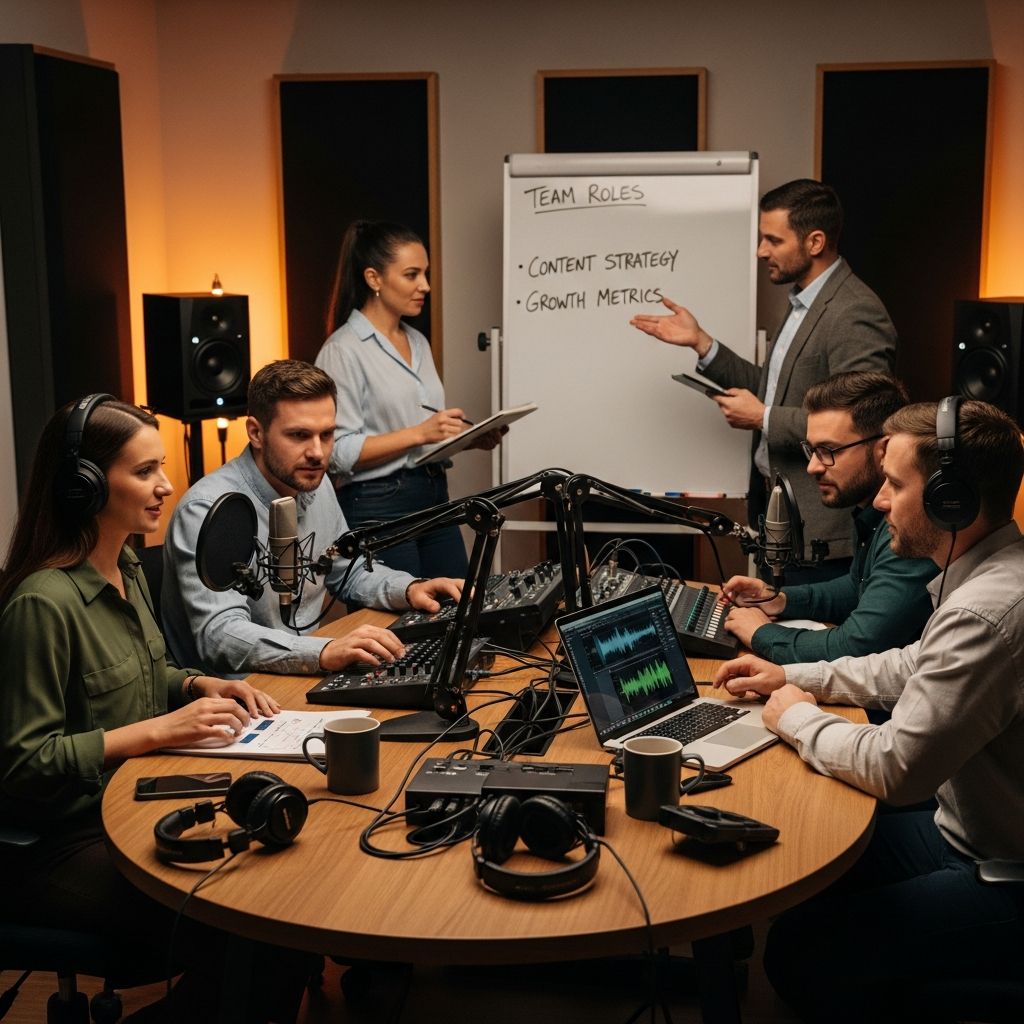
Building a Strong Foundation: Why Podcast Team Expansion Matters
As podcasting continues to evolve as a dominant medium for content consumption, the demand for quality audio productions has grown exponentially. Whether you’re launching a new show or scaling an established program, assembling the right team is critical to long-term success. A well-structured podcast team doesn’t just improve production quality—it allows hosts to focus on content creation while specialists handle technical, administrative, and promotional responsibilities. The difference between a solo operation and a coordinated team often determines whether a podcast can sustain momentum, maintain consistency, and ultimately build a loyal audience.
Expanding your podcast operations requires strategic planning and a clear understanding of which roles will have the most immediate impact on your show’s development. Rather than hiring indiscriminately, successful podcast creators take time to assess their current workflows, identify bottlenecks, and recruit specialists who address specific gaps.
Understanding the Core Production Roles
Every functional podcast team requires individuals who handle distinct responsibilities across pre-production, recording, post-production, and distribution phases. Understanding these roles helps you determine which positions to fill first and what qualities to prioritize during recruitment.
The Executive Leadership Position
At the helm of any growing podcast operation sits an executive producer or show leader who oversees the entire production ecosystem. This individual maintains the creative vision, makes strategic decisions about content direction, manages the team’s workflow, and ensures all moving parts operate cohesively. They serve as the central decision-maker when conflicts arise, arbitrate between different team members’ priorities, and keep everyone aligned on long-term objectives. This role demands organizational excellence, communication skills, and the ability to balance creative ambitions with practical constraints.
Production Coordination and Execution
Producers form the operational backbone of podcast production. They translate the executive vision into actionable workflows by managing recording schedules, coordinating guest logistics, preparing episode outlines, and supervising the post-production pipeline. A skilled producer anticipates problems before they occur, maintains detailed production calendars, communicates consistently with all team members, and ensures episodes release on schedule without quality compromises. This role combines project management discipline with creative problem-solving abilities.
Audio Engineering and Technical Mastery
Quality audio separates professional podcasts from amateur productions. Audio engineers handle equipment setup, recording sessions, sound mixing, noise removal, and audio editing. They ensure consistent sound levels, manage multiple microphone inputs during remote interviews, apply appropriate compression and equalization, and deliver polished final mixes. As technology advances, audio engineers increasingly need familiarity with various recording software, remote collaboration platforms, and emerging audio enhancement tools.
Content Development and Research
Researchers and writers provide the intellectual foundation for compelling episodes. They conduct background research on topics and guests, fact-check claims before recording, develop talking points for interviews, write episode descriptions and show notes, and create blog content or social media scripts. This role requires strong research skills, attention to detail, and the ability to synthesize complex information into accessible formats for both hosts and audiences.
Audience Growth and Outreach
Outreach managers identify potential guests, negotiate appearance agreements, manage guest communications before and after episodes, and maintain relationships that lead to future collaboration opportunities. They also coordinate with sponsors, handle press inquiries, and develop strategies for expanding the show’s reach. This position requires interpersonal skills, persistence in follow-ups, and a genuine enthusiasm for connecting people and ideas.
Administrative Operations
Coordinators and administrators handle the logistical details that keep production running smoothly. They schedule recording sessions, manage publishing deadlines, coordinate across team members, handle email management, organize guest details, and ensure nothing falls through administrative cracks. While sometimes overlooked, this role prevents expensive delays and keeps the entire operation functioning effectively.
Identifying Your Immediate Hiring Priorities
Not every podcast needs every role simultaneously. The most effective approach involves assessing your current bottlenecks and hiring strategically based on where additional hands will yield the greatest return.
Evaluating Your Current Workload
Begin by honestly assessing how you currently spend your time. Are you spending 70% of your week on administrative tasks when you should be developing content? Are recording sessions suffering because you’re simultaneously trying to edit episodes? Is guest outreach falling behind because you’re managing too many responsibilities? Identify which activities consume the most time but aren’t your core strength or primary responsibility.
Starting with Operational Support
Many successful podcasts begin team expansion by hiring administrative support—either a coordinator or production assistant. This role alleviates scheduling headaches, guest communication burdens, and publishing logistics. By removing administrative friction, you and other team members gain mental space to focus on creative and technical work. This decision often provides immediate quality-of-life improvements while enabling subsequent team growth.
Building Technical Capability
If you’re currently handling audio editing and mixing yourself, hiring a dedicated audio engineer can dramatically improve production quality and free significant time from your schedule. Even if you don’t consider audio engineering your weakness, a specialist often produces superior results compared to generalists attempting to juggle multiple responsibilities. High-quality audio is one of the most immediately noticeable improvements to audience experience.
Expanding Creative Output
Once administrative and technical foundations strengthen, consider adding researchers or writers who expand your content production capacity. These roles enable longer research periods, higher-quality guest preparation, and more sophisticated show notes and promotional content—all of which contribute to audience growth and retention.
Recruitment Strategies for Building Your Team
Understanding Contractor Versus Employee Models
Most podcasts beginning team expansion use independent contractors rather than full-time employees. Freelancers offer flexibility, lower overhead costs, and the ability to scale team size based on production demands. If your podcast doesn’t produce daily content or requires highly specialized skills only occasionally, contractor arrangements make financial sense. However, some roles—particularly executive producers or core production positions—may eventually transition to employee status as your show scales.
Sourcing Qualified Candidates
Multiple platforms facilitate podcast team recruitment. Specialized job boards attract candidates specifically interested in audio production work. General freelance platforms offer broad candidate pools with varied skill sets. Podcast production agencies can provide vetted professionals for specific roles. Personal networks and industry referrals often yield candidates already familiar with podcast workflows and culture. Industry conferences and podcasting communities are valuable resources for identifying people passionate about the medium.
Evaluating Skills and Experience
Look beyond surface credentials when evaluating candidates. Someone with extensive podcast production experience may bring valuable context about industry best practices, potential pitfalls, and workflow optimization. However, talented generalists from adjacent fields sometimes bring fresh perspectives and strong fundamental skills that transfer well. Consider requesting portfolio samples, listening to shows candidates have worked on, and conducting trial projects before committing to longer-term arrangements.
Assessing Cultural and Communication Fit
Technical skills matter, but team cohesion matters equally. Since podcast production involves coordinated effort across multiple specialists, look for candidates who communicate clearly, respond promptly to messages, and approach problems collaboratively. Someone technically brilliant but difficult to work with creates more problems than solutions. Ask about how candidates handle disagreements, communicate across time zones, and approach feedback on their work.
Structuring Your Expanded Team for Success
Defining Clear Role Parameters
Ambiguity about responsibilities creates inefficiency and resentment. When onboarding new team members, provide detailed job descriptions outlining specific duties, success metrics, communication expectations, and how their role interconnects with other positions. Clarify decision-making authority—who decides when something is finished? Who resolves conflicts between team members’ priorities?—and establish escalation processes for situations outside normal parameters.
Establishing Communication Protocols
Distributed teams require intentional communication structures. Establish regular check-in meetings, use project management tools to track progress and deadlines, and create shared documentation about processes, standards, and institutional knowledge. Decide which communications require synchronous meetings versus asynchronous updates, and respect team members’ time zones and working preferences when scheduling collaborative sessions.
Creating Workflow Documentation
Document your production processes, technical specifications, brand guidelines, and quality standards. This documentation accelerates onboarding for new team members and prevents knowledge from residing solely in one person’s head. As your team grows, this institutional documentation becomes increasingly valuable for maintaining consistency and enabling team members to work independently without constant direction.
Scaling Strategically as Your Show Grows
Recognizing When to Add Capacity
Team expansion isn’t a one-time event but an ongoing process as your podcast scales. Monitor whether current team members express being overwhelmed, whether deadlines become consistently tight, or whether quality suffers due to time constraints. These signals indicate readiness for additional hiring. However, avoid hiring reactively in crisis moments; instead, plan team expansion based on anticipated growth trajectories.
Building Depth in Key Areas
As your podcast grows, consider whether single specialists in important roles create bottleneck risks. If your show’s success depends entirely on one audio engineer or producer, plan succession and cross-training strategies. Building redundancy in critical functions ensures operational continuity if team members become unavailable or transition to other opportunities.
Investing in Team Development
Successful podcasters invest in their teams’ professional growth. This might involve providing access to training resources, paying for industry conference attendance, or allocating time for skill development. Teams that grow professionally tend to produce higher-quality work and remain engaged with their projects long-term. The investment in development pays dividends through improved output and reduced turnover.
Compensation and Budget Considerations
Understanding Market Rates
Research typical compensation for various podcast production roles in your market. Rates vary substantially based on experience level, geographic location, and project scope. Someone with extensive podcast production experience commands higher rates than someone transitioning from general audio work. Understanding prevailing rates helps you attract quality candidates while budgeting realistically for team expansion.
Balancing Quality and Cost
Sometimes hiring less experienced candidates at lower rates and providing mentorship produces better long-term results than paying premium rates for specialists who may not perfectly fit your show’s needs. Conversely, some roles benefit from experienced professionals who work efficiently and produce superior results despite higher costs. Evaluate each position’s impact on your bottom line and audience experience.
Structuring Payment and Terms
Establish clear payment schedules—whether per-project, hourly, or monthly retainer arrangements. Specify payment timing, invoice procedures, and any revisions included in quoted rates. Clear financial terms prevent misunderstandings that damage professional relationships and create operational disruptions.
Common Questions About Podcast Team Building
Q: What’s the minimum team needed to produce a professional podcast?
A: At minimum, you need someone handling hosting duties, someone managing production logistics, and someone handling audio engineering and editing. Many solo creators handle multiple roles initially, but this limits scalability and quality. A sustainable team typically includes at least a host, producer, and audio engineer, with additional specialists added as budget allows.
Q: Should I hire full-time employees or use freelancers?
A: Most podcasts begin with freelancers, which offers flexibility and lower fixed costs. As your show stabilizes and revenue grows, transitioning core team members to employee status can improve retention and team cohesion. The ideal structure depends on your revenue model, production frequency, and growth trajectory.
Q: How do I manage remote podcast teams effectively?
A: Establish clear communication protocols using project management tools, schedule regular check-ins, document processes thoroughly, and use asynchronous communication where possible to accommodate time zones. Trust and clarity about expectations are particularly important in remote team structures.
Q: What qualities should I prioritize when hiring podcast team members?
A: Look for reliability, clear communication skills, collaborative attitudes, and genuine interest in podcast production. Technical skills matter, but they’re easier to develop than fundamental professionalism and communication abilities. A reliable team member who communicates clearly outperforms a technically brilliant individual who’s difficult to work with.
Q: How can I measure whether team expansion improved my podcast?
A: Track metrics like episode consistency and release timeliness, audio quality improvements, audience growth rates, and your personal workload reduction. Additionally, assess qualitative improvements in content depth, guest diversity, and overall production polish. Compare these metrics before and after hiring to quantify the expansion’s impact.
References
- How to Build the Right Podcast Team: A Definitive Guide — Waveroom. 2024. https://www.waveroom.com/blog/how-to-build-the-right-podcast-team/
- Podcast Roles and Responsibilities — Caspian Studios. 2024. https://www.caspianstudios.com/caspian-blog/podcast-roles-and-responsibilities
- How to Build a Podcast Team (Team Roles and Tips) — Castos. 2024. https://castos.com/how-to-build-a-podcast-team/
- Building a Podcast Team: 7 Essential Production Roles — Podcast.co. 2024. https://blog.podcast.co/create/podcast-team
- From Solo to Scaled: How a Podcast Producer Can Build the Right Podcast Team — Libsyn. 2024. https://libsyn.com/blog/from-solo-to-scaled-how-a-podcast-producer-can-build-the-right-podcast-team/
- Building and Managing a Podcast Production Team — Modern Stoa. 2024. https://modernstoa.co/building-and-managing-a-podcast-production-team/
- The Ultimate Guide to Writing a Podcast Producer Job Description — C9Staff. 2024. https://c9staff.com/mastering-the-role-the-ultimate-guide-to-writing-a-podcast-producer-job-description/

Medha Deb is an editor with a master's degree in Applied Linguistics from the University of Hyderabad. She believes that her qualification has helped her develop a deep understanding of language and its application in various contexts. Medha specializes in the areas of beauty, health, sports, and wellness and is committed to ensuring that the content on the website is…