
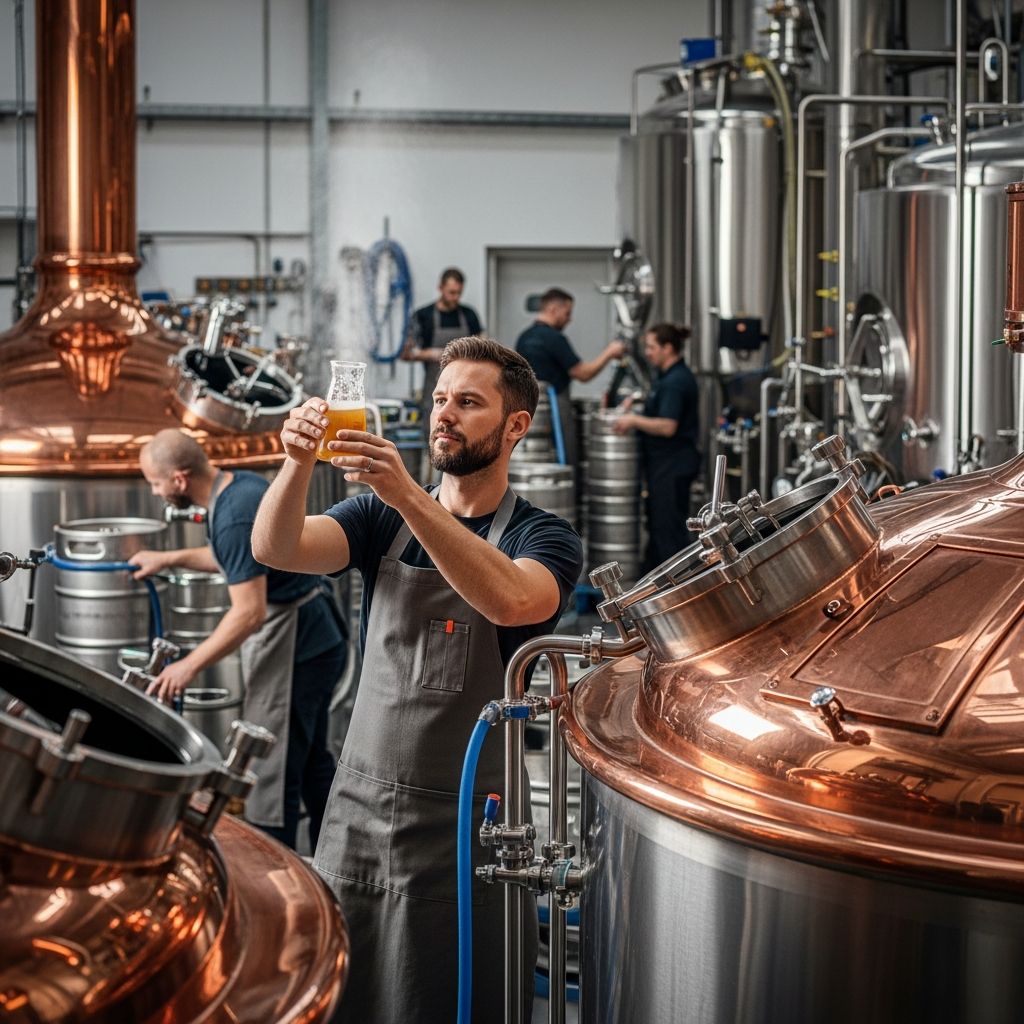
Building a Thriving Brewery: From Vision to Execution
The craft beer industry has undergone remarkable transformation over the past decade, shifting from a niche market driven purely by innovation and novelty to a mature sector requiring strategic business acumen, operational excellence, and genuine understanding of evolving consumer preferences. For aspiring brewers and beverage entrepreneurs, success now demands more than exceptional brewing skills—it requires vision, adaptability, and the willingness to embrace change while maintaining authentic connections to craft traditions. The path to building a thriving brewery involves navigating consolidation pressures, understanding shifting consumer demands, and leveraging both tradition and modern technology to create lasting value.
Understanding the Current Market Landscape
Today’s brewing environment presents both significant challenges and unprecedented opportunities. The consolidation wave sweeping through craft brewing has fundamentally altered distribution dynamics, with major retailers and distributors streamlining their offerings and reducing shelf space for emerging brands. This reality underscores the importance of differentiation and establishing direct consumer relationships rather than relying solely on traditional distribution channels.
Successful brewers recognize that the era of extreme experimentation and novelty for novelty’s sake has given way to consumer demand for quality, consistency, and meaningful product experiences. Rather than pursuing increasingly outrageous flavor combinations or alcohol profiles, the market increasingly rewards breweries that focus on approachable, well-crafted products that deliver reliable satisfaction. This shift represents a maturation of consumer palates and spending priorities, requiring brewers to recalibrate their marketing strategies and product development approaches.
Market Dynamics and Consumer Behavior
Understanding your consumer base has become absolutely critical. Contemporary beer drinkers exhibit diverse preferences that defy simple categorization. A significant portion of the market now prioritizes health-conscious options, with approximately one-third of surveyed consumers planning to choose healthier beverages and twenty-five percent aiming to moderate their alcohol consumption. Simultaneously, a substantial segment embraces premiumization, with about twenty percent of consumers willing to pay higher prices for superior quality and unique experiences.
The explosive growth of non-alcoholic beer demonstrates this trend’s significance—experiencing a remarkable 33.7% year-over-year growth in on-premise settings, far outpacing traditional beer sales. Non-alcoholic IPAs and stouts have particularly resonated with consumers, with sales increasing over 170% and 130% respectively. These statistics reveal that growth opportunities exist not through chasing extreme products but through quality execution across diverse product categories.
Diversification as Strategic Necessity
Progressive breweries increasingly recognize that survival and growth require expanding beyond traditional beer offerings. This diversification strategy serves multiple purposes: it captures different consumer segments, reduces dependency on a single product category, and positions breweries as comprehensive beverage destinations rather than single-category producers.
Beyond Beer: Building a Portfolio
Successful modern breweries function as total beverage companies, offering complementary products alongside their core beer selection. Ready-to-drink beverages, particularly canned cocktails and hard seltzers, represent significant growth categories, with RTDs gaining market share and becoming increasingly popular in high-energy venues. Hard sodas and flavored malt beverages maintain strong momentum, driven by consumer appetite for nostalgic flavors, brand collaborations, and innovative combinations that traditional beer cannot easily replicate.
This expansion strategy provides multiple advantages. It allows breweries to serve health-conscious consumers seeking lower-alcohol or non-alcoholic options. It enables capturing occasions and demographics that traditional beer doesn’t reach. It creates opportunities for cross-selling and bundled experiences. Perhaps most importantly, it demonstrates to investors, employees, and consumers that the brewery views itself as forward-thinking and responsive to market evolution rather than rigidly committed to outdated categories.
Ingredient Innovation and Supplier Relationships
The relationship between breweries and hop producers has evolved significantly, with suppliers introducing sophisticated products designed to enhance and differentiate beer quality. Modern hop additives like potent aromatic amplifiers and concentrated flavor boosters enable brewers to achieve complex flavor profiles while maintaining consistency and reducing reliance on expensive fruit purees or specialty ingredients. These innovations demonstrate how strategic partnerships with suppliers can unlock creative possibilities while improving operational efficiency.
Creating Meaningful Consumer Experiences
In an era of market saturation and distribution challenges, the breweries that thrive are those that build direct relationships with consumers through memorable experiences and authentic storytelling. The on-premise environment—taprooms, breweries, and hospitality venues—has become a critical competitive advantage for breweries willing to invest in creating destinations rather than simply producing products.
The Taproom as Community Hub
Modern successful taprooms function as far more than beer distribution points. They serve as educational spaces, social gathering places, and brand ambassadors. Family-friendly environments with diverse offerings including non-beer beverages enable breweries to welcome broader demographics. Educational flights, guided tastings, and brewery talks engage curious consumers and build loyalty. Unique experiences—whether seasonal celebrations, collaborative events, or behind-the-scenes production tours—create emotional connections that transcend simple product transactions.
This experiential approach proves particularly valuable as breweries contend with distribution pressures and competition from ready-to-drink alternatives. The physical location becomes a defensible advantage that large competitors cannot easily replicate, and it generates word-of-mouth marketing and social media content organically.
Digital Integration and Direct-to-Consumer Channels
While physical experiences remain valuable, breweries increasingly recognize that digital infrastructure and direct-to-consumer capabilities are essential for sustainable growth. E-commerce platforms, subscription programs, online ordering with local delivery, and digital loyalty programs eliminate intermediaries, improve profit margins, and provide valuable consumer data that informs product development and marketing strategies.
Digital channels allow breweries to reach consumers beyond geographic limitations imposed by distribution agreements. They enable personalized marketing and product recommendations, building stronger relationships with core consumers. They reduce dependency on retail and distributor relationships that may be increasingly constrained. For growth-oriented breweries, investing in robust digital capabilities represents a strategic imperative, not merely a supplementary channel.
Quality and Consistency as Competitive Foundations
Perhaps counterintuitively, as the market becomes more sophisticated, consumers increasingly value reliability and consistency. The days when consumers might tolerate variable quality in exchange for supporting a local brewery have passed. Modern consumers expect craft breweries to deliver consistent quality comparable to established brands, while also offering unique character and flavor that justify premium pricing.
This reality has profound implications for brewery operations. It demands rigorous quality control protocols, consistent ingredient sourcing, and disciplined production processes. It requires ongoing investments in equipment, training, and process improvement. It means that even small breweries must operate with operational sophistication previously associated with much larger enterprises.
Navigating Industry Consolidation and Competition
The craft beer industry’s consolidation wave has created a bifurcated market where very large and very small breweries thrive while mid-sized producers face significant pressures. This consolidation reflects the economic realities of scale, distribution efficiency, and brand recognition in increasingly crowded markets.
Strategic Positioning in a Consolidated Market
Breweries must choose strategic positions carefully. Some embrace hyperlocal strategies, building deep community relationships and remaining independent. Others pursue regional expansion through quality reputation and direct consumer relationships. Still others find acquisitions by larger players provide capital for growth and expanded distribution. There is no universal right answer—success depends on clear-eyed assessment of market position, competitive advantages, and resources.
Successful brewers recognize that attempting to compete on the terms established by large competitors is rarely viable. Instead, they identify underserved consumer segments, geographic niches, or experience models where their scale and authenticity become advantages rather than liabilities.
Emerging Opportunities and Future Directions
Despite acknowledged headwinds, the beer industry continues generating meaningful opportunities for entrepreneurs willing to innovate thoughtfully and execute with excellence. The growth of no-alcohol ready-to-drink beverages, the continued expansion of non-alcoholic craft beer options, and the resurgence of draft beer in on-premise settings all signal areas where growth potential exceeds mature market segments.
Technology integration offers additional possibilities. Artificial intelligence applications in recipe optimization, real-time fermentation monitoring, and predictive analytics enable breweries to improve quality while reducing waste and costs. Digital tasting experiences and augmented reality applications create novel consumer engagement opportunities. Same-day delivery and advanced e-commerce platforms expand market reach without proportional increases in overhead.
Building Sustainable Brewery Operations
Long-term success requires more than capitalizing on trends—it demands building sustainable operational models that can weather market fluctuations and maintain quality through growth phases.
Scaling Without Compromising Quality
Breweries face a fundamental challenge as they grow: maintaining the quality and character that built their reputation while achieving efficiency improvements necessary for profitability. This requires thoughtful decisions about production methods, ingredient sourcing, and operational philosophy. Some breweries successfully scale through careful process documentation and disciplined quality protocols. Others maintain smaller production volumes to preserve artisanal character. The key is intentionality rather than reactive growth.
Building Strong Organizational Culture
Breweries are fundamentally people-driven businesses where organizational culture influences product quality, consumer experience, and operational efficiency. Successful brewery founders and leaders invest deliberately in building teams aligned with brewery values, committed to quality, and capable of representing the brand authentically in consumer interactions. This cultural investment becomes increasingly important as breweries grow and the founder cannot maintain direct involvement in all operations.
Frequently Asked Questions
Q: What are the most significant challenges facing craft breweries today?
A: Contemporary challenges include distribution consolidation reducing shelf space for smaller brands, increased competition from ready-to-drink alternatives, consumer preference shifts toward health-conscious options, and the capital requirements necessary to maintain quality while scaling operations. Success requires adaptation through diversification, direct consumer relationships, and differentiated positioning.
Q: How can new breweries compete against established players?
A: Rather than competing on distribution or scale, emerging breweries succeed by identifying underserved consumer segments, building authentic community relationships, investing in memorable taproom experiences, developing strong digital capabilities, and maintaining uncompromising quality standards. Strategic positioning in geographic niches or specific consumer segments often proves more viable than broad market competition.
Q: What role do non-alcoholic beers play in brewery portfolios?
A: Non-alcoholic beers represent one of the fastest-growing segments, driven by health-conscious consumers and those moderating alcohol consumption. For breweries, offering quality non-alcoholic options expands addressable market, captures new consumption occasions, and demonstrates commitment to evolving consumer preferences. Many successful breweries now feature non-alcoholic versions of flagship styles.
Q: How important is digital capability for modern breweries?
A: Digital capabilities have become essential rather than supplementary. E-commerce platforms, subscription programs, digital loyalty systems, and online marketing enable breweries to build direct consumer relationships, improve profit margins by reducing intermediaries, access consumer data for product refinement, and reach audiences beyond geographic distribution constraints. Breweries without strong digital infrastructure face significant competitive disadvantages.
Q: What opportunities exist in the current market for entrepreneurs?
A: Significant opportunities exist in non-alcoholic and lower-ABV products, ready-to-drink beverages, premium/experiential offerings, hyperlocal community-focused models, and innovative taproom experiences. Additionally, breweries with sophisticated direct-to-consumer capabilities and digital integration can compete effectively despite distribution challenges. Success requires identifying specific market gaps and executing with excellence rather than attempting to compete broadly.
References
- Beer Market 2025 Forecasts and Trends — Ohio Beverage. 2025. https://www.ohbev.com/blog/beer-market-forecasts-and-trends
- 6 Beer Industry Trends to Watch in 2025 — SevenFifty Daily. 2025. https://daily.sevenfifty.com/6-beer-industry-trends-to-watch-in-2025/
- Navigating the U.S. On-Premise Beer Consumer in 2025: Key Insights for Craft Brewers — Craft Brewing Business. 2025. https://www.craftbrewingbusiness.com/featured/navigating-the-u-s-on-premise-consumer-in-2025-key-insights-for-craft-brewers/
- Craft Beer Production in the US Industry Analysis, 2025 — IBISWorld. 2025. https://www.ibisworld.com/united-states/industry/craft-beer-production/4302/
- The 11 Craft Beer Trends to Watch in 2025 — Hop Culture. 2025. https://www.hopculture.com/top-craft-beer-trends-2025/

- Integrated M.A. in Applied Linguistics, University of Hyderabad
- 5+ years in editorial, instructional, SEO, and research-based writing
Sneha is a relationships and lifestyle writer with a strong foundation in applied linguistics and certified training in relationship coaching. She brings over five years of writing experience to theskillvault, crafting thoughtful, research-driven content that empowers readers to build healthier relationships, boost emotional well-being, and embrace holistic living. Her writing and insights reflect the belief that beauty, happiness, and wellness…