
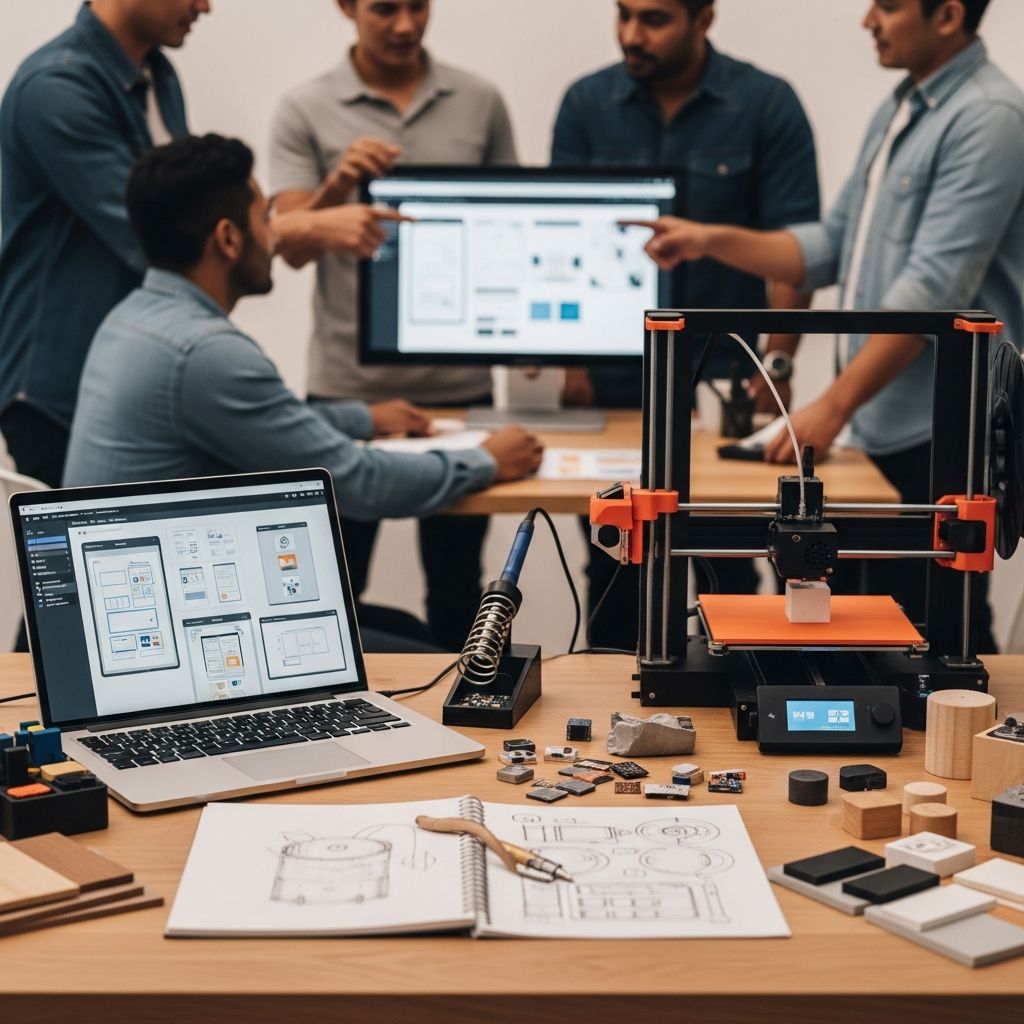
Creating products that not only meet needs but inspire genuine enthusiasm requires a deliberate approach rooted in understanding human desires and behaviors. This guide explores proven methodologies to develop offerings that foster loyalty and widespread adoption.
Understanding Core User Challenges First
The foundation of any successful product lies in pinpointing precise problems that potential users face daily. Rather than starting with a flashy idea, creators must immerse themselves in the realities of their target audience to identify unmet needs.
- Conduct thorough problem exploration: Engage directly with individuals experiencing the issue through interviews and observations to grasp nuances that surveys might miss.
- Prioritize painful, widespread issues: Focus on challenges that affect many people and for which they are willing to pay solutions, ensuring a viable market from the outset.
- Avoid solution bias: Resist jumping to features; instead, map out the emotional and practical impacts of the problem on users’ lives.
By centering efforts on authentic pain points, products become indispensable tools rather than novel gadgets. This user-first mindset aligns development with real-world demands, increasing the chances of organic growth and retention.
Deep Dive into Market Research Techniques
Robust market research illuminates the path forward, revealing what users truly value before investing resources in development. This step transforms assumptions into data-driven insights.
| Method | Purpose | Best Practices |
|---|---|---|
| Customer Interviews | Uncover qualitative insights | Aim for 20-30 sessions; ask open-ended questions |
| Surveys & Polls | Quantify demand | Target 100+ responses; use scaled ratings |
| Competitor Analysis | Identify gaps | Review reviews, pricing, and features across top players |
| Trend Monitoring | Spot emerging needs | Track industry reports and social discussions |
Integrating these techniques early prevents costly pivots later. For instance, analyzing competitor shortcomings highlights opportunities to deliver superior value, such as faster performance or simpler interfaces.
Validating Ideas with Minimal Risk Experiments
Before full-scale building, test concepts through low-cost experiments to gauge interest and refine direction. This validation phase acts as a safety net, filtering out unviable ideas swiftly.
- Landing Page Tests: Create a simple page describing the product and measure sign-up rates for a waitlist.
- Ad Campaigns: Run targeted ads directing to a mock sales page; track click-through and conversion metrics.
- Prototype Sharing: Share basic wireframes or demos with a small user group for initial reactions.
Success metrics might include a 10-20% conversion rate on pre-launch interest forms, signaling strong demand. These experiments not only validate but also build an early email list for launch outreach.
Prioritizing Features for Maximum Impact
With insights in hand, prioritize features using structured frameworks to focus on high-value elements. A weighted scoring model proves effective here, balancing user benefit against implementation feasibility.
Assign scores (1-10) across criteria like user impact, effort required, and confidence in success, then calculate totals to rank ideas. This ensures the minimum viable product (MVP) delivers core value without unnecessary complexity.
| Feature | Impact (x3) | Effort (x1) | Total Score |
|---|---|---|---|
| Core Functionality | 10 | 5 | 35-5=30 |
| Nice-to-Have UI | 7 | 2 | 21-2=19 |
| Advanced Analytics | 8 | 8 | 24-8=16 |
This methodical approach keeps teams aligned and resources optimized, leading to products that launch strong and scale effectively.
Harnessing Continuous User Feedback Loops
Feedback isn’t a one-time event; it’s an ongoing cycle that refines products post-launch. Embedding user voices at every stage—from ideation to iteration—ensures relevance and delight.
- Early Prototyping: Share rough versions with beta testers for candid input.
- In-App Tools: Integrate surveys and Net Promoter Score (NPS) prompts for real-time sentiment.
- Community Building: Foster forums or Discord channels for organic discussions and suggestions.
Act on feedback swiftly: categorize into quick wins, major enhancements, and long-term roadmap items. This responsiveness builds trust and turns users into advocates.
Applying Design Thinking for Empathetic Innovation
Design thinking provides a structured yet flexible framework: empathize, define, ideate, prototype, and test. This human-centered process sparks creativity while grounding ideas in user realities.
Begin with empathy mapping to visualize user thoughts, feelings, and actions. During ideation, employ techniques like ‘worst idea’ brainstorming to overcome mental blocks and generate diverse concepts. Rapid prototyping then brings ideas to life for testing, closing the loop with actionable learnings.
Building for Retention and Long-Term Love
True product love emerges from sustained use, not initial hype. Prioritize retention through intuitive onboarding, reliable performance, and continuous improvements that anticipate evolving needs.
- Seamless Onboarding: Guide new users to their first ‘aha’ moment within minutes.
- Habit Formation: Incorporate streaks, reminders, and rewards to encourage daily engagement.
- Evolving Features: Use analytics to identify drop-off points and iterate accordingly.
Products that retain users 30-50% beyond the first month often achieve viral growth via word-of-mouth, compounding success over time.
Standing Out in Competitive Landscapes
In crowded markets, differentiation comes from unique positioning, compelling branding, and sustainable practices. Memorable names, authentic storytelling, and eco-friendly sourcing resonate with conscious consumers.
Study competitors not to copy, but to carve a niche—perhaps by targeting underserved sub-segments or offering superior service levels.
Frequently Asked Questions (FAQs)
What is the most common mistake in product development?
Building solutions without validating the underlying problem, leading to products that solve non-existent needs.
How many users should you interview for research?
Start with 20-30 diverse representatives from your target audience for rich, actionable insights.
What’s a quick way to test market demand?
Launch a simple landing page with ads and track pre-signup conversions to gauge interest.
Why prioritize features with a scoring model?
It ensures focus on high-impact elements first, maximizing MVP value with limited resources.
How do you turn users into loyal fans?
Through consistent feedback integration, rapid iterations, and experiences that exceed expectations.
Team Dynamics for Product Success
A passionate team builds superior products. Hire for problem-solving aptitude and user empathy, foster a culture of experimentation, and align everyone around the user vision. Leaders who model feedback-seeking behaviors inspire innovation at all levels.
Incentivize cross-functional collaboration between design, engineering, and marketing to holistically address user journeys. Regular retrospectives keep momentum high and adaptations nimble.
References
- 13 Ways to Build Products People Will Buy — Discuss.io. 2023-05-15. https://www.discuss.io/blog/13-ways-to-build-products-people-will-buy/
- How to Build a Product People Love – Insights from Phil Libin — Founder Institute. 2022-11-10. https://fi.co/insight/how-to-build-a-product-people-love-insights-from-phil-libin
- Create Products Customers Crave: Design Thinking 101 — Voxpopme. 2024-03-22. https://www.voxpopme.com/learn/blog/design-thinking/

- Integrated M.A. in Applied Linguistics, University of Hyderabad
- 5+ years in editorial, instructional, SEO, and research-based writing
Sneha is a relationships and lifestyle writer with a strong foundation in applied linguistics and certified training in relationship coaching. She brings over five years of writing experience to theskillvault, crafting thoughtful, research-driven content that empowers readers to build healthier relationships, boost emotional well-being, and embrace holistic living. Her writing and insights reflect the belief that beauty, happiness, and wellness…