
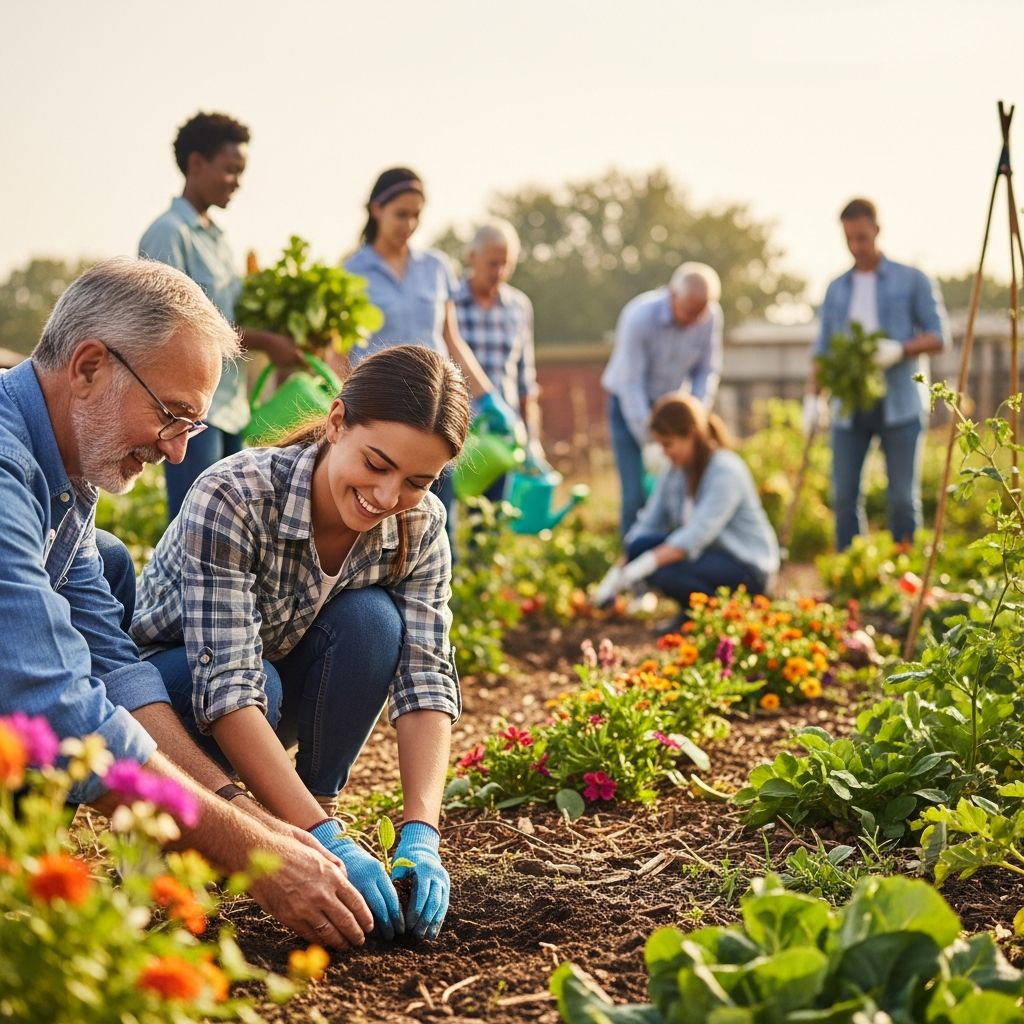
Volunteering is often seen as an unquestionably good thing: you donate your time, help people in need, and feel better about yourself. Yet when you look closely, some kinds of volunteering create far more value than others, and a few can even do unintended harm. This guide explains how to choose and shape your volunteering so that it genuinely helps others, fits your skills, and strengthens your long-term impact on the world.
Why Volunteering Matters More Than You Think
At its best, volunteering can benefit three groups at the same time:
- People and causes you serve directly
- You, through better health, skills, and networks
- Society as a whole, by building social trust and problem-solving capacity
Large-scale reviews of volunteering show that people who volunteer regularly tend to report higher life satisfaction, better quality of life, and lower depression than similar non-volunteers, even after accounting for demographics and baseline health. Volunteering is also associated with improved functioning and reduced mortality in older adults, particularly when it involves ongoing, meaningful roles. These benefits make it worth taking seriously not just as a hobby, but as a strategic part of a life aimed at doing good.
The Hidden Differences Between Volunteer Opportunities
Not all volunteering is equal. Two roles that both feel helpful on the surface can differ dramatically in how much they achieve. Key differences include:
- Type of contribution: Are you doing simple tasks almost anyone could do, or applying skills that are hard to replace?
- Scale of effect: Does your work help a handful of people, or does it shift systems, policies, or technologies that affect thousands?
- Evidence of impact: Is there serious evaluation of results, or mainly stories and feel-good marketing?
- Fit with your strengths: Do you bring unique knowledge, connections, or experience, or are you mainly filling time?
- Long-term leverage: Does this role build expertise, credibility, or relationships that could multiply your impact later?
Recognizing these differences helps you move beyond the question “Is this good?” to the more powerful question: “Is this one of the best ways I could be helping right now?”
Clarify Your Main Goal Before You Sign Up
Volunteering can serve several distinct goals. You do not have to pick only one, but it is helpful to know which is primary for you at a given time:
| Primary goal | What you optimize for | Typical good choices |
|---|---|---|
| Maximize social impact | Biggest, most evidence-backed difference for others | Skilled roles in high-need, high-leverage causes |
| Explore career options | Learning, skill tests, and insider perspective | Roles similar to jobs you might want later |
| Improve your mental & physical health | Connection, meaning, and routine | Regular, social, locally embedded activities |
| Build community & belonging | Relationships and shared identity | Group projects, local mutual aid, civic groups |
Research suggests that people who continue volunteering long term tend to combine impact and personal benefits: they feel appreciated, see results, and also grow socially or professionally. When you understand your main goal, you can choose roles more deliberately and avoid frustration on both sides.
How Volunteering Affects Your Health and Well-Being
Volunteering is not just good for recipients; it can be good for you as well. Large longitudinal studies and health system reviews point to several recurring effects:
- Better mental health: Regular volunteering is associated with lower depression, less social isolation, and higher life satisfaction compared with non-volunteers, even after controlling for background factors.
- Improved physical health: For older adults, volunteering is linked to improved functioning and reduced mortality risk, especially when it involves moderate physical activity and social engagement.
- Lower stress and anxiety: Mental health organizations report that structured helping roles can buffer stress, give a sense of purpose, and replace rumination with constructive focus.
- Stronger sense of meaning: Volunteers commonly report that helping others makes their own difficulties feel more manageable and gives life a clearer direction.
These benefits are strongest when people volunteer regularly, feel that their work is valued, and see some concrete results. Sporadic or token roles usually help less. If you are struggling with burnout or mental health, gentle, stable, low-pressure roles with clear boundaries can be especially valuable.
Volunteering as a Strategic Career Move
Many people treat volunteering as something separate from their professional life, but that can be a missed opportunity. When chosen well, volunteering can be a low-risk way to test a new field, build credibility, and expand your network.
Ways Volunteering Can Help Your Career
- Skill development: You can practice leadership, project management, public speaking, data analysis, or fundraising on real problems, sometimes faster than in traditional jobs.
- Experience signals: Surveys from national service agencies have found that candidates with relevant volunteer experience are more likely to be hired than those without it, holding other factors constant.
- Access to hidden opportunities: By collaborating with staff, partners, and other volunteers, you often hear about roles and projects before they are advertised.
- Career testing: Short volunteer projects are a relatively low-cost way to explore whether you actually enjoy day-to-day work in a field you are considering.
Making It Strategic Rather Than Random
To use volunteering as a serious career tool, ask yourself:
- “If this goes well, which specific doors might it open?”
- “What concrete responsibilities do I want on my CV in six to twelve months?”
- “Whose trust or recommendation would be especially valuable to earn here?”
Then look for roles that move you toward those answers: for example, taking on a defined project with clear deliverables, or a role with regular supervision and feedback.
Choosing High-Impact Volunteer Roles
Once you know why you want to volunteer, the next question is where you can do the most good. A few principles help you prioritize:
1. Focus on Problems That Are Large, Neglected, and Solvable
From an impact perspective, you usually help more when you work on issues that:
- Affect many people or create very severe harm
- Receive relatively little attention or funding compared with their scale
- Have realistic interventions that individuals and organizations can pursue
Examples might include global health, pandemic preparedness, climate resilience, mental health, or improving institutions in low-income regions. International and academic bodies frequently highlight volunteerism as a key mechanism for advancing the Sustainable Development Goals by mobilizing people and building resilience.
2. Look for Roles With Leverage
Some contributions create ripple effects far beyond the immediate task. High-leverage volunteer roles often involve:
- Organization-building: Helping a promising nonprofit develop systems, data, or strategy it will use for years
- Policy or advocacy: Supporting evidence-based campaigns that can change rules for many people at once
- Education and training: Enabling others to become more effective changemakers through teaching or mentoring
- Technical advice: Applying rare expertise (e.g., statistics, law, software, epidemiology) to improve decisions and programs
3. Match Tasks to Your Comparative Advantage
Your time is most valuable where you have a clear comparative advantage compared with other available volunteers. Consider your:
- Existing skills and professional background
- Personal networks or cultural knowledge
- Ability to commit consistently over time
- Unusual constraints (e.g., language, location, schedule)
If you have scarce expertise, seek roles that make intensive use of it rather than defaulting to basic tasks. If you are earlier in your career, you might prioritize roles that allow you to learn quickly and take on growing levels of responsibility.
Questions to Ask Before You Commit
To avoid frustration and to maximize your impact, have a candid conversation with the organization before you start. Helpful questions include:
- Impact & evidence
- “What specific outcomes are you aiming for, and how do you know if they are happening?”
- “Do you track any data or conduct evaluations of your programs?”
- Role clarity
- “What will my responsibilities be week to week?”
- “Who will supervise me, and how often will we check in?”
- Training and support
- “What training do volunteers receive before starting?”
- “What happens if I encounter a situation I do not feel qualified to handle?”
- Boundaries and expectations
- “What time commitment do you expect, and for how long?”
- “Are there any tasks I will not be asked to do?”
Organizations that are clear about their goals, collect at least basic data, and respect your boundaries are more likely to use your time well and keep you safe.
Common Pitfalls and How to Avoid Them
Some forms of volunteering underperform or even backfire despite good intentions. Watch out for:
- Unnecessary or poorly designed projects: Short-term projects that displace local workers, create dependency, or ignore local expertise.
- Roles without accountability: Positions where no one checks whether promised outcomes are delivered, making real learning and improvement difficult.
- Emotional overextension: Intense helping roles without proper training or support can contribute to burnout or vicarious trauma.
- Tokenism: Symbolic activities that generate good publicity but little measurable benefit to beneficiaries.
You do not need perfect data to avoid these pitfalls. Basic due diligence—asking critical questions, talking to multiple stakeholders, and checking whether the organization learns from mistakes—goes a long way.
Designing a Personal Volunteering Strategy
Instead of treating volunteering as a random collection of activities, you can design a simple strategy for the next one to three years.
Step 1: Map Your Constraints and Resources
- How many hours per week or month can you realistically commit?
- Can you reliably show up on specific days or only flexibly?
- Do you have savings or financial flexibility that allow for more intensive roles or part-time service?
- What skills, experiences, or connections could be especially helpful to others?
Step 2: Choose One or Two Priority Themes
Based on your values and the world’s needs, choose one or two themes where you aim to build depth. Examples:
- Global health and development
- Mental health and suicide prevention
- Local environmental resilience
- Evidence-based education support
Focusing allows your knowledge, network, and credibility to compound over time, which can radically increase your long-term impact.
Step 3: Plan for Learning and Feedback
Every few months, ask:
- “What have I actually helped to achieve?”
- “What have I learned about the issue and about myself?”
- “What could I change to make my time more useful?”
Seek honest feedback from staff, peers, and beneficiaries if possible. Over time, use what you learn to move into roles where you are more trusted, more skilled, and more central to important decisions.
Frequently Asked Questions (FAQs)
Q: How many hours a week do I need to volunteer for it to be worthwhile?
A: Even a couple of hours a month can make a difference if you are doing something well-targeted and reliable. Health and well-being benefits tend to be stronger with regular, ongoing involvement rather than one-off events, but there is no universal minimum; consistency and fit matter more than raw hours.
Q: Can volunteering replace a paying job on my CV?
A: For some fields, substantial, structured volunteer roles can carry weight similar to entry-level jobs, especially if you own significant responsibilities or deliver concrete outcomes. Employers generally care more about what you achieved and learned than whether you were paid, though long-term paid roles still signal reliability and selection in competitive contexts.
Q: Is it selfish to think about my own career or health when I volunteer?
A: Not necessarily. Evidence suggests that when volunteers feel appreciated, learn skills, and experience personal growth, they are more likely to continue helping and to contribute more over time. Aligning your volunteering with your long-term career and well-being can therefore increase your total lifetime impact.
Q: What if I only have time for short-term or irregular volunteering?
A: In that case, prioritize roles where short bursts of work are genuinely useful, such as discrete research projects, technical consulting, remote tasks with flexible deadlines, or event-specific support. Be honest about your availability so organizations can design roles that match your schedule instead of relying on you for ongoing critical tasks.
Q: How do I know if an organization is using volunteers ethically and effectively?
A: Look for clear role descriptions, appropriate training, basic impact data (even simple outcome tracking), and a culture where volunteers can ask questions and decline tasks. Reputable organizations usually have screening processes, supervision, and policies to protect both beneficiaries and volunteers; the absence of these is a warning sign.
References
- The Impact of Volunteering and Its Characteristics on Well-being After State Pension Age — Mak, H. W., Coulter, R., & Fancourt, D., Social Science & Medicine. 2021-02-01. https://pmc.ncbi.nlm.nih.gov/articles/PMC7887733/
- Measurement and Impact: Finding Evidence Volunteering is Good for Society and Good for You — International Association for Volunteer Effort (IAVE). 2021-01-01. https://www.iave.org/iavewp/wp-content/uploads/2021/02/Measurement-and-Impact-Finding-Evidence-Volunteering-is-Good-for-Society-and-Good-for-You.pdf
- Exploring the Effects of Volunteering on the Social, Mental, and Physical Health and Well-Being of Volunteers — Khan, A. et al., Healthcare. 2023-04-20. https://pmc.ncbi.nlm.nih.gov/articles/PMC10159229/
- Helping people, changing lives: 3 health benefits of volunteering — Mayo Clinic Health System. 2022-08-19. https://www.mayoclinichealthsystem.org/hometown-health/speaking-of-health/3-health-benefits-of-volunteering
- How Strategic Volunteering Can Positively Impact Your Career — Walden University. 2020-09-10. https://www.waldenu.edu/resource/how-strategic-volunteering-can-positively-impact-your-career
- Benefits of Community Service — Western Connecticut State University, Center for Community Engagement. 2023-01-01. https://www.wcsu.edu/community-engagement/benefits-of-volunteering/
- How Volunteering Improves Mental Health — National Alliance on Mental Illness (NAMI). 2022-02-01. https://www.nami.org/Blogs/NAMI-Blog/February-2022/How-Volunteering-Improves-Mental-Health

- Integrated M.A. in Applied Linguistics, University of Hyderabad
- 5+ years in editorial, instructional, SEO, and research-based writing
Sneha is a relationships and lifestyle writer with a strong foundation in applied linguistics and certified training in relationship coaching. She brings over five years of writing experience to theskillvault, crafting thoughtful, research-driven content that empowers readers to build healthier relationships, boost emotional well-being, and embrace holistic living. Her writing and insights reflect the belief that beauty, happiness, and wellness…