
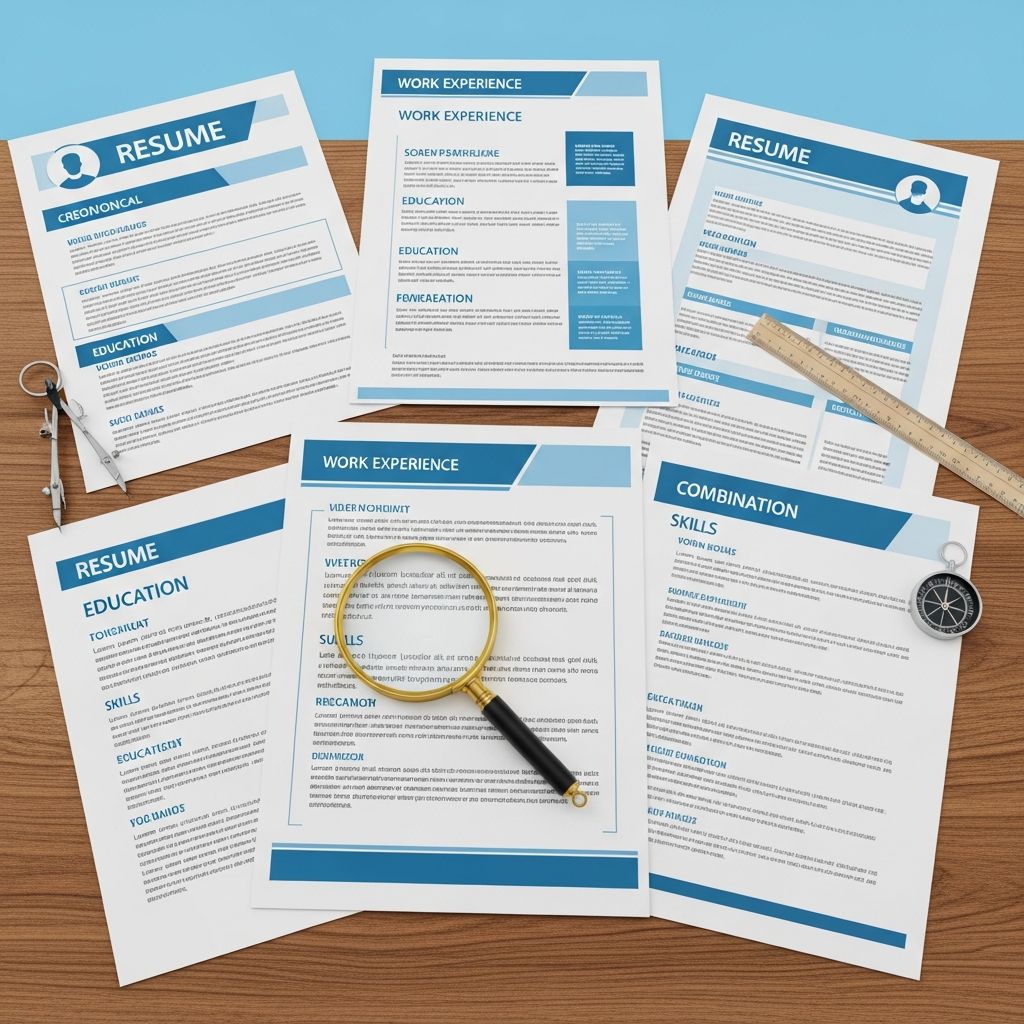
Understanding Resume Formats and Their Strategic Value
Your resume serves as the primary tool for communicating your professional capabilities to potential employers. The format you choose significantly influences how hiring managers perceive your qualifications and career trajectory. While content remains essential, the structural approach you adopt can either highlight your strengths or inadvertently downplay your achievements. Understanding the different resume formats available empowers you to make strategic decisions that align with your unique career situation and professional goals.
The job market has evolved considerably, with employers now expecting candidates to demonstrate not only their work history but also their ability to thoughtfully present information in a manner that facilitates quick assessment. Rather than adopting a one-size-fits-all approach, successful job seekers tailor their resume structure to emphasize the aspects of their background most relevant to their target positions.
The Chronological Approach: Emphasizing Career Progression
The chronological format remains the most widely recognized resume structure in contemporary hiring practices. This approach organizes your professional experience in reverse chronological order, with your most recent position appearing at the top of the work history section. The format typically includes a professional summary, followed by detailed descriptions of your roles, responsibilities, and accomplishments arranged from newest to oldest employment.
This structure excels at demonstrating clear career progression and development within a particular industry or field. Employers appreciate the straightforward narrative it provides, allowing them to quickly identify the trajectory of your professional growth. The chronological format also makes it easy for hiring managers to understand how your most recent experience directly relates to the position they are attempting to fill.
Ideal Applications for Chronological Resumes
The chronological format works particularly well in several scenarios. Consider this approach if you possess a consistent work history without significant gaps in employment. Additionally, if you have advanced steadily within your field or organization, demonstrating promotions and increasing responsibilities, the chronological format showcases this upward movement effectively. Candidates with strong credentials from well-regarded employers often benefit from this format, as the reverse chronological listing draws attention to these prominent positions early in the document.
Industries such as finance, law, education, and healthcare often prefer chronological resumes because they value demonstrating sustained professional experience and credentials. If you are applying to positions where employers specifically request a traditional format or where industry norms favor this structure, the chronological approach aligns with hiring expectations.
Limitations to Consider
However, the chronological format presents challenges for certain job seekers. If your career features employment gaps—whether due to further education, personal circumstances, or other reasons—a chronological resume may inadvertently draw attention to these gaps rather than contextualizing them. Similarly, if you are transitioning between industries or roles, the chronological approach may not effectively demonstrate the transferable skills connecting your previous positions to your target opportunity.
The Skills-Based Approach: Prioritizing Capabilities Over Timeline
Functional resumes, also termed skills-based resumes, represent a fundamentally different organizational philosophy. Rather than anchoring the document to employment dates and job titles, functional resumes prioritize your professional capabilities, competencies, and areas of expertise. This format dedicates substantial space to detailed skill categories, with each category supported by specific examples of how you have applied or demonstrated those skills.
A functional resume typically begins with a professional summary, followed by an expanded section organized around three to four relevant skill areas. Each skill category includes concrete examples of accomplishments or instances where you utilized that capability. An employment history section appears later, often condensed to include only job titles, employer names, and dates of employment without extensive descriptions under each position.
Strategic Advantages of the Functional Format
The functional format proves particularly valuable for career changers who wish to emphasize the relevance of their existing skills to a new industry or role. By organizing around capabilities rather than positions, you demonstrate competency in areas directly applicable to your target position, even if your previous job titles suggest limited direct experience.
This format also serves professionals with non-traditional career paths or those with employment gaps. Rather than requiring explanation for gaps in the chronological employment timeline, the functional format simply omits specific dates and instead focuses on the substantive value you bring to potential employers. Individuals returning to the workforce after extended absence can effectively use this approach to redirect focus toward relevant capabilities rather than when those capabilities were last formally employed.
Potential Drawbacks
Despite its advantages, the functional format carries some considerations. Many experienced hiring managers and applicant tracking systems (ATS) expect traditional chronological employment histories and may view skills-focused layouts with some skepticism. Some employers interpret the functional approach as an attempt to obscure or minimize work experience, potentially raising red flags during the screening process.
Additionally, if your actual employment history is impressive and relevant to your target positions, relegating it to a secondary position in a functional resume may underutilize one of your strongest assets. The functional approach works best when your capabilities genuinely matter more than where or when you developed them.
The Hybrid Approach: Balancing Skills and Experience
The combination resume, also referred to as a hybrid resume, synthesizes the most effective elements of both chronological and functional formats. This structure emphasizes your skills and accomplishments while simultaneously providing a comprehensive chronological overview of your employment history. The resume typically opens with a professional summary, followed by a detailed skills section organized by capability areas, and concludes with a reverse chronological employment history.
The combination format allows you to lead with your strongest qualifications—often your most relevant skills and achievements—while maintaining the credibility and transparency that comes from a complete employment timeline. This dual emphasis appeals to both hiring managers seeking immediate evidence of capability and those desiring a full understanding of your professional background.
When to Leverage the Combination Format
The combination approach works exceptionally well if you possess both extensive relevant experience and specialized technical or professional skills requiring emphasis. Candidates making modest career transitions—moving to a similar role within a different industry, for instance—benefit from this format’s ability to highlight transferable skills while demonstrating substantial work experience.
Professionals with diverse skill sets developed across multiple roles often find the combination format ideal for showcasing the breadth of their capabilities. If your background includes varied responsibilities that collectively demonstrate competency across several skill domains, the combination format creates space for both detailed skill presentation and clear employment chronology.
Optimizing the Combination Structure
Successfully executing a combination resume requires strategic balance. Your skills section should remain comprehensive yet focused on capabilities directly relevant to your target position. Meanwhile, your employment history should provide sufficient detail to contextualize your experience without becoming excessively lengthy. The most effective combination resumes prioritize information according to relevance, placing your most important qualifications and accomplishments where hiring managers will encounter them first.
Making Your Selection: A Decision Framework
Choosing between these formats requires honest assessment of your career situation and strategic thinking about how you want hiring managers to evaluate your background. Consider the following framework as you make your decision:
- Evaluate your employment history: Do you have consistent, relevant experience without gaps? A chronological format showcases this strength effectively. Does your history include employment gaps or career transitions? The functional or combination format may serve you better.
- Assess the relevance of your experience: How directly does your background align with your target position? If alignment is strong and you wish to emphasize career progression, chronological works well. If you possess relevant skills developed across diverse roles, combination or functional approaches highlight this transferability.
- Consider industry expectations: Research what format employers in your target field typically prefer. Conservative industries often expect chronological formats, while creative fields may welcome more innovative approaches.
- Identify your strongest selling points: Are you most compelling because of impressive job titles and progression (chronological advantage), specific skills applicable to your target role (functional advantage), or a balance of both (combination advantage)?
Additional Specialized Formats for Specific Contexts
Beyond the three primary formats, certain contexts require specialized resume structures. Federal government positions, for instance, require federal resumes that differ significantly from traditional formats, often spanning two to six pages with detailed experience sections and sector-specific information such as GS grades and security clearance status. Academic positions frequently require curriculum vitae (CV) formats that comprehensively document publications, research, teaching experience, and professional service.
Targeted resumes represent another valuable approach, particularly in competitive job markets. This format adapts the structure of your primary resume—whether chronological, functional, or combination—to specifically address the requirements and language presented in individual job postings. By carefully studying job descriptions and reflecting your most relevant qualifications prominently, you increase the likelihood that both hiring managers and automated screening systems identify you as a strong candidate match.
Optimizing Your Chosen Format for Modern Recruitment
Regardless of which format you select, several contemporary best practices apply universally. Hiring managers spend minimal time reviewing each resume, typically conducting an initial scan in seconds before deciding whether to read more thoroughly. Structure your chosen format to facilitate quick scanning, using clear section headings, bullet points for accomplishments, and appropriate white space to guide the reader’s eye to key information.
Modern recruitment increasingly relies on applicant tracking systems (ATS) that parse resumes to identify keywords matching job descriptions. Your selected format should accommodate this automated screening without compromising human readability. Avoid excessive formatting, graphics, or unusual fonts that may confuse parsing systems, while maintaining professional visual presentation for human reviewers.
Ensure your resume clearly demonstrates the specific value you bring to a position, regardless of format. Rather than simply listing duties or describing roles, emphasize accomplishments, quantifiable results, and the impact you generated in previous positions. This approach works within any format and significantly enhances your resume’s persuasive power.
Frequently Asked Questions
Q: Can I use multiple resume formats when applying to different positions?
A: Yes, and this is often a strategic advantage. Tailoring your resume format to each opportunity allows you to emphasize the aspects of your background most relevant to each specific role. Just ensure you maintain consistency in professional quality and accuracy across all versions.
Q: Is the chronological resume truly preferred by all employers?
A: While chronological resumes remain most common and are preferred by many traditional employers, this preference varies by industry, company culture, and specific hiring manager preferences. Research your target employer and industry to understand their expectations.
Q: How long should my resume be regardless of format?
A: For most positions, one page is ideal for early-career professionals, while two pages is standard for more experienced candidates. Federal positions may exceed this guideline, but general job market expectations favor conciseness.
Q: Should I include an employment history section if using a functional resume?
A: Yes, including a condensed employment history section adds credibility and transparency, even in a functional format. This section can be brief but should verify your work history without detailed descriptions.
Q: What if my most recent position seems irrelevant to my target role?
A: Consider using a combination or functional format that allows you to lead with relevant skills and accomplishments rather than your most recent position. You can still include the position in your employment history while emphasizing more applicable experience in your skills section.
References
- Types of Resumes & Who Should Use Them — Resume Genius. Retrieved January 18, 2026. https://resumegenius.com/blog/resume-help/types-of-resumes
- 7 Types of Resumes To Use in Your Job Search (Plus Tips) — Indeed Career Advice. Retrieved January 18, 2026. https://www.indeed.com/career-advice/resumes-cover-letters/types-of-resumes
- Exploring Three Common Resume Formats: Which One Fits You Best? — Miller-Motte Educational Services. Retrieved January 18, 2026. https://www.miller-motte.edu/blog/general/exploring-three-common-resume-formats/
- Resume Formats — UC Davis Human Resources. Retrieved January 18, 2026. https://hr.ucdavis.edu/departments/learning/toolkits/career-dev/action/resumes-formats

Medha Deb is an editor with a master's degree in Applied Linguistics from the University of Hyderabad. She believes that her qualification has helped her develop a deep understanding of language and its application in various contexts. Medha specializes in the areas of beauty, health, sports, and wellness and is committed to ensuring that the content on the website is…