
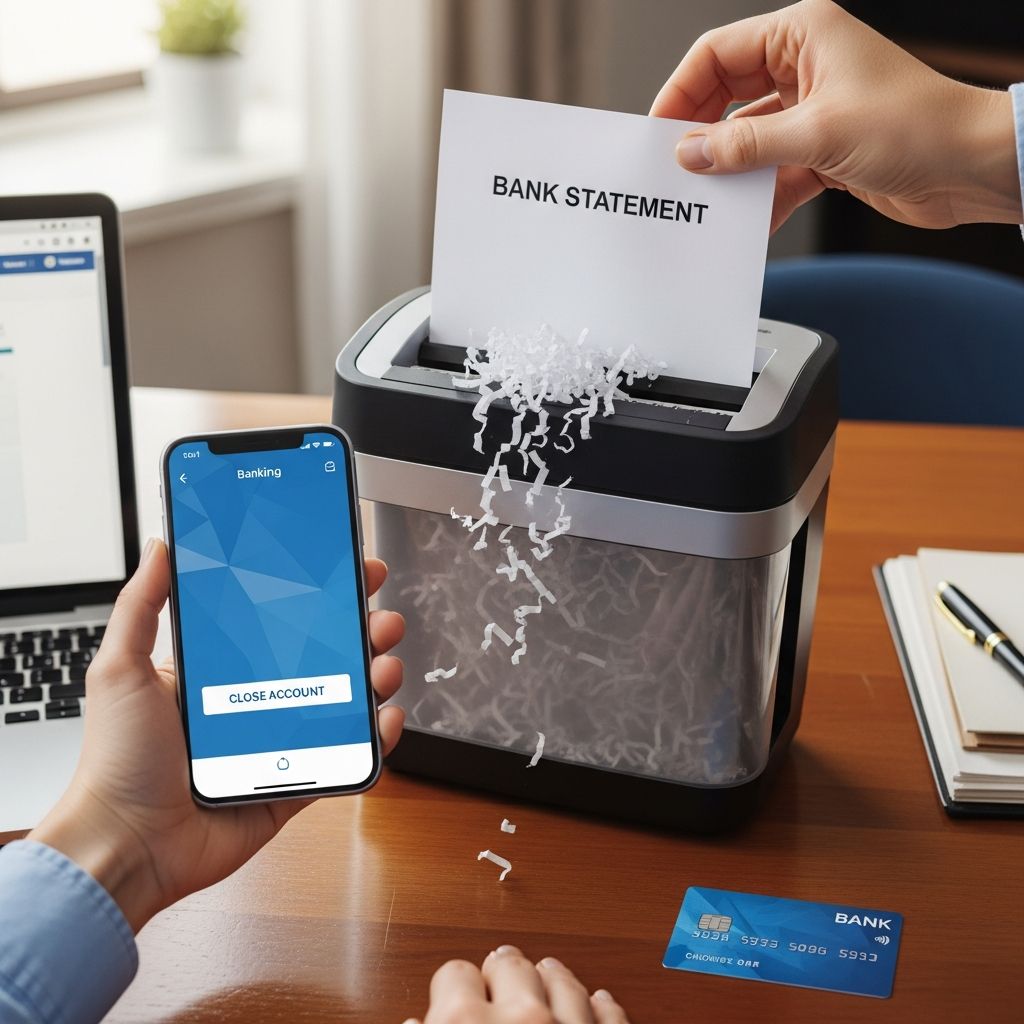
Understanding the Importance of Proper Account Closure
Deciding to close a bank account is a common step in managing personal finances, whether you’re switching banks, consolidating accounts, or simply no longer need a particular account. While the act of closing an account may seem simple, doing it incorrectly can lead to unexpected fees, bounced payments, and even damage to your banking history. A well-planned closure protects your credit, avoids unnecessary charges, and ensures a smooth transition to your new financial setup.
Why Closing an Account Isn’t Just a One-Step Task
Many people assume that closing a bank account is as easy as logging in and clicking a button. In reality, it’s a multi-step process that involves more than just the bank’s side of things. Your account is likely tied to recurring payments, direct deposits, and possibly even overdraft protection or linked savings accounts. If these connections aren’t properly severed or transferred, you risk:
- Missed bill payments and late fees
- Returned checks or declined transactions
- Overdraft charges on a closed account
- Difficulty opening new accounts in the future due to negative banking history
Because of these risks, it’s essential to treat account closure as a structured process rather than a single action.
Step 1: Prepare Your New Account Before Closing the Old One
Before you even think about closing your current account, make sure you have a new one ready to take over. This includes:
- Opening a new checking or savings account at your chosen bank or credit union
- Verifying that the new account is fully active and can receive deposits
- Setting up online and mobile banking access for the new account
Having a new account in place ensures that any remaining funds, direct deposits, and automatic transfers have a destination. It also gives you a buffer in case something goes wrong during the transition.
Step 2: Identify and Update All Automatic Transactions
One of the most critical steps in closing an account is identifying every automatic payment, subscription, and direct deposit linked to it. Start by reviewing several months of bank statements to catch recurring transactions that might not be top of mind. Common examples include:
- Rent or mortgage payments
- Utility bills (electricity, water, internet)
- Streaming services and subscriptions
- Insurance premiums
- Loan payments
- Payroll direct deposit
- Retirement or investment contributions
Once you’ve compiled a complete list, contact each payee or employer to update your banking information. Provide the new account number and routing number, and confirm that the change has been processed. Keep a record of these updates, including dates and confirmation numbers, for your own reference.
Step 3: Clear All Pending and Outstanding Items
Before requesting closure, your account should be in good standing with no pending or outstanding items. This means:
- All checks you’ve written have cleared
- All automatic payments have been processed
- All deposits, including direct deposits and transfers, have posted
- There are no holds or pending authorizations on the account
Many banks will not allow you to close an account that is overdrawn or has unresolved issues. If your balance is negative, you’ll need to deposit enough funds to bring it to zero or positive before closure can proceed. Similarly, if there are legal holds, liens, or funds pledged as collateral, those must be resolved first.
Step 4: Decide on the Closure Method That Works for You
Banks and credit unions offer several ways to close an account, and the best method depends on your institution and personal preference. Common options include:
- In-person at a branch: Often the most reliable method, especially for joint accounts or complex situations.
- By phone: Many institutions allow account closure over the phone with proper verification.
- Online or via mobile app: Some banks let you initiate or complete closure through digital channels.
- By mail: In certain cases, you may need to send a written request, sometimes including a signed letter.
Check your bank’s account agreement or customer service resources to understand which methods are available and what documentation is required. For joint accounts, both account holders may need to be involved, depending on the bank’s policy.
Step 5: Transfer or Withdraw Remaining Funds
Once all transactions have cleared, decide what to do with any remaining balance. You have a few options:
- Transfer the funds electronically to your new account
- Withdraw the balance in cash (if the amount is small and the bank allows it)
- Request a check from the bank for the remaining balance
Most banks will not close an account with a positive balance until the funds are removed. Be aware that some institutions may charge a fee if they have to mail you a check after closure, so it’s usually better to handle this step yourself before finalizing the closure.
Step 6: Formally Request Account Closure
When you’re ready, formally request that the bank close the account. If you’re doing this in person or by phone, be clear and direct:
- State that you want to close the account permanently
- Provide your full name, account number, and any other required identification
- Confirm that the account has a zero or positive balance and no pending issues
If the bank requires a written request, draft a simple letter that includes:
- Your full name and address
- Account number and type (checking, savings, etc.)
- A clear statement that you are requesting permanent closure
- Your signature (and any co-owner’s signature, if applicable)
Send the letter via a trackable method, such as certified mail, so you have proof of delivery.
Step 7: Obtain Written Confirmation of Closure
One of the most important but often overlooked steps is getting written confirmation that your account has been closed. According to the Consumer Financial Protection Bureau, it’s a good practice to request a confirmation note from the bank1.
This confirmation serves as official proof that the account is no longer active. It can be invaluable if:
- The bank later claims the account is still open
- You’re asked to prove that you no longer have an account with that institution
- You need to resolve any disputes or errors related to the closed account
Ask the bank to send the confirmation by mail or email, and keep it in a secure place along with your other important financial documents.
Step 8: Cancel or Destroy Account-Related Items
After the account is officially closed, take steps to prevent accidental or fraudulent use of account-related items:
- Cut up and destroy any debit cards associated with the account
- Shred or securely dispose of unused checks
- Remove the account from any saved payment methods in online shopping accounts
- Update any apps or services that used the account for payments or transfers
Even if the account is closed, old cards and checks can still be used in some situations, so it’s safer to destroy them promptly.
Special Considerations for Joint and Business Accounts
Closing a joint personal account or a business account often involves additional requirements:
- Joint accounts: Some banks require all account holders to be present or to sign the closure request. Others may allow one owner to close the account, but it’s best to check the specific policy.
- Business accounts: These may require business identification documents, tax IDs, and signatures from authorized individuals. The process can be more complex and may take longer.
- Certificates of deposit (CDs): Closing a CD before maturity typically results in an early withdrawal penalty, so review the terms carefully before closing.
Always contact the bank directly to understand the exact requirements for these types of accounts.
What to Watch Out For: Common Pitfalls
Even with careful planning, some issues can still arise. Be aware of these common pitfalls:
- Overlooked automatic payments: A forgotten subscription or utility bill can cause a payment to bounce after closure.
- Outstanding checks: Checks that haven’t cleared can lead to overdraft fees or returned check fees.
- Insufficient balance: Closing an overdrawn account may require paying off the negative balance and any associated fees.
- No written confirmation: Without proof of closure, you may face difficulties if the bank later claims the account is still active.
- Reopening by the bank: In some cases, if a payment is attempted on a closed account, the bank may temporarily reopen it, which can lead to confusion and fees.
By being thorough and proactive, you can avoid most of these issues.
Sample Timeline for a Smooth Account Closure
To help you plan, here’s a realistic timeline for closing a bank account:
| Timeframe | Action |
|---|---|
| 4–6 weeks before closure | Open new account and set up direct deposit and online access |
| 3–4 weeks before closure | Review statements and list all automatic payments and deposits |
| 2–3 weeks before closure | Update payees and employers with new account information |
| 1–2 weeks before closure | Monitor account for pending transactions and ensure balance is zero or positive |
| Day of closure | Transfer remaining funds and formally request account closure |
| Within 1–2 weeks after closure | Receive and save written confirmation of closure |
Frequently Asked Questions (FAQs)
Can I close my bank account online?
Many banks allow account closure online or through their mobile app, but policies vary. Some institutions may require a phone call, in-person visit, or even a written request. Check your bank’s account agreement or contact customer service to confirm what options are available.
What happens if I close an account with a negative balance?
If your account is overdrawn, most banks will not allow you to close it until the balance is brought to zero or positive. You may need to deposit funds to cover the negative balance and any associated fees before closure can be processed.
Do I need to cancel automatic payments myself?
Yes, it’s your responsibility to update or cancel automatic payments and direct deposits. The bank will close the account, but it won’t automatically redirect your payments to a new account. Failing to update these can result in bounced payments and fees.
How long should I keep statements from a closed account?
It’s a good idea to keep bank statements for at least one to three years, especially if they relate to taxes, major purchases, or disputes. Many banks charge a fee to retrieve documents from closed accounts, so having your own copies can save time and money.
Can a bank reopen a closed account?
In some cases, yes. If a payment or deposit is attempted on a closed account, the bank may temporarily reopen it to process the transaction. This is why it’s important to update all automatic transactions and obtain written confirmation of closure.
Is there a fee to close a bank account?
Most banks do not charge a fee just for closing an account, but there may be fees related to the process, such as fees for mailing a check after closure or for retrieving documents later. Always review your account agreement to understand any potential charges.
References
- Can I close my account whenever I want? — Consumer Financial Protection Bureau. Accessed 2025. https://www.consumerfinance.gov/ask-cfpb/can-i-close-my-account-whenever-i-want-en-957/
- How to Close a Bank Account Online: Tips & Procedures — PNC Insights. 2024. https://www.pnc.com/insights/personal-finance/spend/close-bank-account-online.html
- Closing a Bank Account — Northwest Bank Financial Wellness Center. 2024. https://financialwellnesscenter.northwest.bank/money-management/banking/article/closing-a-bank-account

- Integrated M.A. in Applied Linguistics, University of Hyderabad
- 5+ years in editorial, instructional, SEO, and research-based writing
Sneha is a relationships and lifestyle writer with a strong foundation in applied linguistics and certified training in relationship coaching. She brings over five years of writing experience to theskillvault, crafting thoughtful, research-driven content that empowers readers to build healthier relationships, boost emotional well-being, and embrace holistic living. Her writing and insights reflect the belief that beauty, happiness, and wellness…