
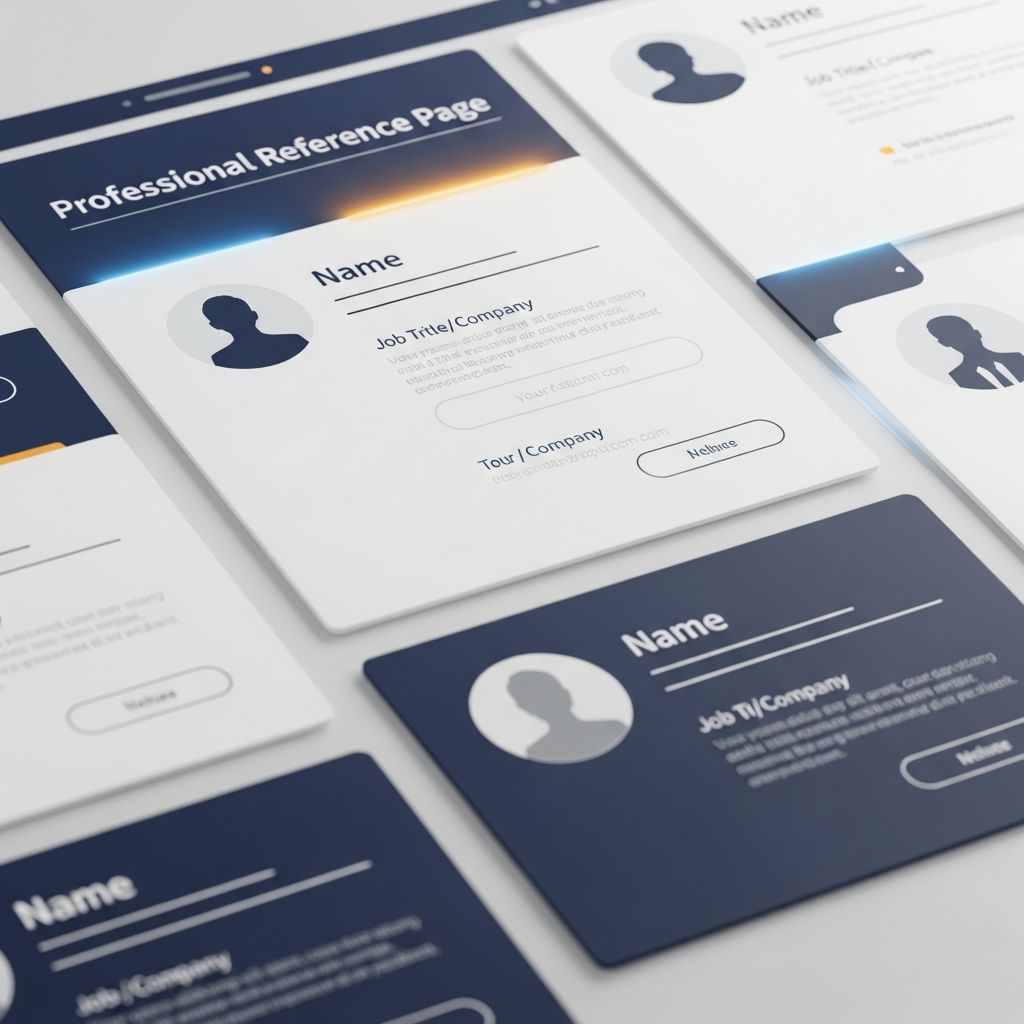
Understanding the Purpose and Impact of Your Reference Page
Your professional reference page serves as a critical component of your job application strategy, functioning as a bridge between your resume and potential employers’ decision-making process. This document provides verifiable evidence of your work ethic, skills, and professional character through the voices of people who have directly observed your performance. When crafted thoughtfully, a reference page can distinguish you from other candidates by offering tangible proof of your capabilities and reliability.
The reference page operates differently from your resume or cover letter because it introduces third-party validation into your application materials. Rather than making claims about yourself, you’re allowing respected colleagues and supervisors to substantiate your qualifications. This external perspective carries significant weight in hiring decisions, particularly when candidates have similar educational backgrounds or experience levels. Employers use reference checks not merely as formality but as opportunities to learn details about your interpersonal skills, reliability, work quality, and cultural fit that may not be apparent from written materials alone.
Strategic Selection of Your Professional References
Identifying the right people to serve as your references requires careful consideration beyond simply listing anyone who knows you professionally. The quality and relevance of your references directly impact how effectively they communicate your suitability for specific positions. Your selection strategy should align with the particular role you’re pursuing and the skills the employer values most.
Categories of Ideal Reference Candidates
The most compelling references typically come from individuals who have supervised or closely collaborated with you in professional settings. Direct supervisors or managers represent the gold standard because they can speak authoritatively about your job performance, productivity, and workplace behavior. These individuals have observed your work firsthand over extended periods, allowing them to provide specific examples of your accomplishments and strengths.
Peer references from current or former colleagues offer valuable perspectives on your collaboration skills and ability to work within team environments. These references can highlight your interpersonal strengths and how you contribute to collective success. Similarly, references from people you’ve supervised or mentored demonstrate your leadership capabilities and ability to develop others professionally.
For those earlier in their careers or transitioning fields, academic advisors and professors can provide meaningful endorsements based on your intellectual capabilities and work ethic. Professional mentors outside your direct work chain can also serve effectively, particularly if they’ve observed your growth over time and can speak to your commitment to professional development.
Critical Considerations When Choosing References
Timing matters significantly in reference selection. When possible, prioritize recent connections who have fresh perspectives on your current capabilities rather than supervisors from positions held many years ago. Recency reinforces that your skills remain current and relevant to contemporary workplace challenges.
Consider the relevance of each potential reference to the position for which you’re applying. If you’re pursuing a technical role requiring specialized knowledge, including a reference who can specifically address your technical competencies strengthens your candidacy. Conversely, for positions emphasizing leadership or communication, references who can substantiate these particular skills prove more valuable than those commenting on unrelated abilities.
Diversify your reference pool by including perspectives from different professional relationships. Including only former managers risks providing a one-dimensional view of your capabilities. Incorporating a peer reference or client perspective broadens the picture of your professional contributions.
Always obtain explicit permission from potential references before including them on your list. Inform them of the positions for which you’ll list them as references and provide context about the roles and organizations involved. This preparation allows references to tailor their responses and ensure they’re genuinely willing to advocate for you enthusiastically.
Formatting Your Reference Page for Maximum Impact
Professional presentation of your reference page mirrors the importance of resume and cover letter formatting. A well-organized, clearly structured reference page demonstrates attention to detail and professionalism. Your formatting choices should create immediate clarity about the information presented while maintaining visual consistency with your other application materials.
Essential Elements of Professional Structure
Begin your reference page with your complete name positioned prominently at the top, followed by your current contact information. Include your phone number and email address, and optionally your physical address. This information ensures that if your reference page becomes separated from your other application materials, employers can still contact you directly.
Title your document clearly with a header such as “Professional References” or “References for [Your Name].” This simple addition prevents confusion about the document’s purpose and maintains organizational clarity.
For each reference, include the person’s full name, professional title, company or organization name, complete contact information including phone number and email address, and a brief statement explaining your professional relationship and context. This contextual information helps employers understand the reference’s basis for evaluating you and the relevance of their perspective.
Design and Presentation Standards
Maintain consistent formatting throughout your reference page by using the same font type and size for all references. Standard professional fonts such as Arial, Calibri, or Times New Roman in 10- to 12-point sizes provide optimal readability. Set margins between one and 1.5 inches on all sides, matching the margins on your resume for visual cohesion.
Organize references in prioritized order, placing those who can provide the most compelling endorsement or most relevant perspective at the top. If one reference directly supervised you in a role closely related to the position you’re seeking, that person should typically appear first on your list.
Ensure consistent information provision across all references. If you include street addresses for some references, include them for all others. This consistency demonstrates thoroughness and helps employers recognize that information omissions are intentional rather than careless oversights.
Optimal Quantity and Reference Selection Strategy
While some employers specify the exact number of references they require, many leave this decision to candidates. Standard practice involves providing three to five references, balancing comprehensive representation with practical manageability.
Three references serve as the minimum and often suffice for most positions, providing adequate perspective without overwhelming employers with excessive contacts. Five references represent an upper boundary; exceeding this number risks appearing to provide redundant perspectives or suggesting excessive inflation of reference importance.
If you possess fewer than three strong professional references, focus on quality over quantity. A single compelling reference from a respected supervisor outweighs two mediocre references. Consider whether mentors, academic advisors, or community leaders familiar with your professional capabilities might serve as appropriate alternatives if you lack traditional employment history.
Sample Reference Page Template and Organization
To illustrate effective reference page construction, consider the following organizational approach:
| Element | Placement | Details |
|---|---|---|
| Your Name | Top Center | Full name in larger font or bold |
| Your Contact Information | Below Name | Phone, email, optional address |
| Page Title | Centered, Below Contact | “Professional References” or similar |
| Reference Information | Remaining Space | Name, title, company, contact details, relationship description |
Each reference entry should occupy approximately 4-6 lines of text, providing sufficient information without excessive whitespace. Separate each reference with a single line break for visual clarity and easy scanning.
Customizing References for Specific Opportunities
While maintaining a master list of five to seven potential references provides convenience, strategically customizing your reference page for particular positions significantly enhances its effectiveness. Different roles emphasize different skills and require different types of validation.
For positions emphasizing leadership and team management, prioritize references who can address your supervisory capabilities and ability to develop others. Reorder your list so that a reference from someone you supervised appears before other options. For technical roles, ensure your reference list includes someone who can specifically validate your technical expertise and problem-solving abilities.
When applying for positions in different industries or functional areas, you might adjust which references appear on your list based on their expertise and ability to speak to relevant capabilities. Someone with experience in your target industry carries added weight compared to a reference from an unrelated field, even if the latter person supervised you more recently.
Common Mistakes to Avoid in Reference Page Development
Many candidates undermine their reference pages through preventable errors. Including family members as references represents one of the most common mistakes, as employers generally prefer objective third parties rather than relatives who obviously provide biased endorsements. Similarly, including personal friends without professional work context weakens your reference list’s credibility.
Failing to obtain advance permission from potential references creates awkward situations when employers contact them unexpectedly. References caught off guard may provide hesitant or incomplete endorsements, inadvertently damaging rather than strengthening your candidacy.
Inconsistent or incomplete contact information forces employers to invest additional effort locating your references, potentially discouraging thorough reference checks. Providing outdated phone numbers or email addresses that bounce back creates negative impressions of your organizational skills.
Overloading references with explanation or attempting to influence their responses compromises their credibility as independent evaluators. Provide context about the position but allow references to determine their own commentary based on their genuine observations.
Frequently Asked Questions About Professional References
Should I include my reference page with my initial application, or only when requested?
Generally, submit your reference page only when specifically requested during the application process or interview stage. Including it unprompted with your resume and cover letter consumes space better devoted to highlighting your own qualifications. However, having your reference page prepared and ready to provide immediately when asked demonstrates organization and professionalism.
How should I handle references if I’ve been unemployed or away from the workforce?
In such situations, expand your reference pool beyond direct supervisors to include academic advisors, volunteer coordinators, professional association colleagues, or mentors. These individuals can speak to your capabilities, work ethic, and commitment to professional development even without recent employment history. Be transparent with employers about the context surrounding your references.
Can I use the same reference for multiple job applications?
Absolutely. Most professionals understand they may serve as references for multiple opportunities. However, maintain courtesy by updating references about new positions for which you’re listing them, particularly if significant time has elapsed since previous notifications.
What should I do if a potential reference declined to recommend me?
Respectfully accept their declining and thank them for considering. Never pressure someone uncomfortable providing a reference, as reluctant references often provide lukewarm endorsements that harm rather than help your candidacy. Identify alternative references instead.
Should reference pages differ in format from my resume?
Your reference page should maintain visual and stylistic consistency with your resume and cover letter, using matching fonts, margins, and design elements. However, the organizational structure differs because your reference page focuses on reference information rather than your accomplishments.
References
- Reference List Format — UC Davis Human Resources. Accessed December 2025. https://hr.ucdavis.edu/departments/learning/toolkits/career-dev/action/refs-templates
- Sample Reference List for Employment — PennWest Career Center. 2022. https://career.pennwest.edu/blog/2022/08/10/sample-reference-list-for-employment/
- Sample Reference Page for Employment — Indeed.com. Updated June 9, 2025. https://www.indeed.com/career-advice/resumes-cover-letters/writing-a-professional-reference-page-for-employment
- How to List Resume References: A Job Seeker’s Guide + Sample — Coursera. https://www.coursera.org/articles/how-to-list-resume-references
- Reference Sheets — Purdue OWL. https://owl.purdue.edu/owl/job_search_writing/resumes_and_vitas/reference_sheets.html
- References — Harvard Law School. https://hls.harvard.edu/bernard-koteen-office-of-public-interest-advising/opia-job-search-toolkit/references/

- Integrated M.A. in Applied Linguistics, University of Hyderabad
- 5+ years in editorial, instructional, SEO, and research-based writing
Sneha is a relationships and lifestyle writer with a strong foundation in applied linguistics and certified training in relationship coaching. She brings over five years of writing experience to theskillvault, crafting thoughtful, research-driven content that empowers readers to build healthier relationships, boost emotional well-being, and embrace holistic living. Her writing and insights reflect the belief that beauty, happiness, and wellness…