
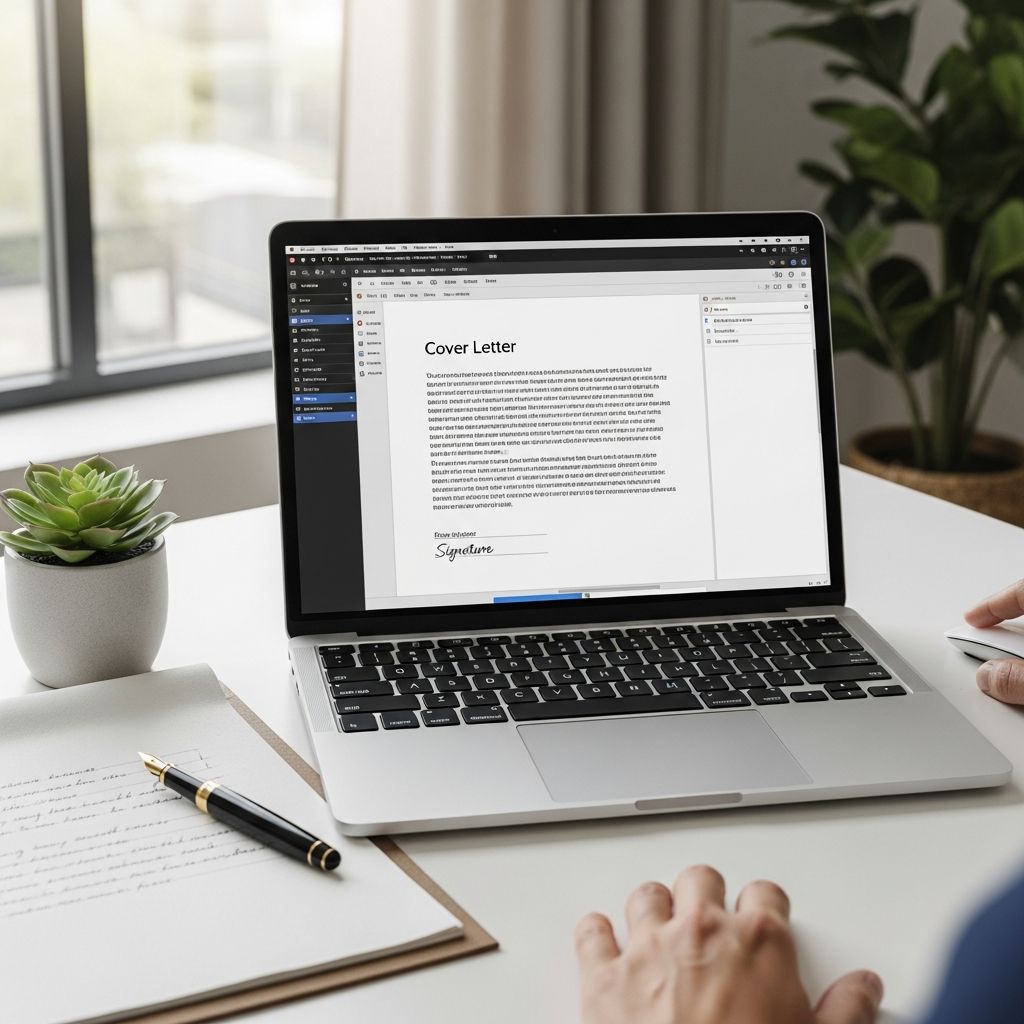
Your cover letter closing is the last thing a hiring manager reads before deciding whether to move you forward. A vague or weak ending can undo an otherwise strong letter, while a clear, confident close can reinforce your value and make your application more memorable.
This guide walks you through what to say in the final sentences, how to structure your closing paragraph, which sign-offs work best, and common mistakes to avoid—so you can finish strong every time.
Why the Closing Paragraph Matters More Than You Think
The closing of a cover letter is not just a polite formality. It serves several important functions that career centers and hiring experts consistently highlight:
- Restates your fit for the role in a concise way, reinforcing your main message.
- Signals professionalism through tone, structure, and the way you sign off.
- Guides the next step by inviting conversation, often in the form of an interview request.
- Leaves a final emotional impression—enthusiastic, thoughtful, and confident, not desperate or generic.
Career services, such as MIT’s, explicitly recommend using the last paragraph to restate interest, remind the reader why you are a strong candidate, and thank them for their consideration. Done well, this short section can tie your entire letter together.
The Core Ingredients of a Strong Cover Letter Ending
Most effective cover letter closings include the same essential elements, in some form, regardless of industry or seniority level.
| Element | Purpose | What it might sound like |
|---|---|---|
| Brief value recap | Reminds the reader why you are qualified. | “With my experience in X and Y, I’m prepared to help your team achieve Z.” |
| Company focus | Shows you care about their goals, not just any job. | “I’m excited by your mission to… and would love to contribute to…” |
| Forward-looking statement | Signals interest in a conversation or interview. | “I would welcome the opportunity to discuss…” |
| Gratitude | Recognizes the time spent reviewing your application. | “Thank you for your time and consideration.” |
| Professional sign-off | Closes the letter with standard business etiquette. | “Sincerely,” “Best regards,” “Respectfully,” etc. |
Step-by-Step: How to Write Your Closing Paragraph
Use the following sequence as a template you can adapt to almost any role.
1. Start with a concise value reminder
Open your last paragraph by reconnecting your experience to the role. This should be one tight sentence, not a full recap of your whole career.
- Reference the job title directly.
- Mention one or two relevant strengths you bring.
- Connect those strengths to a likely impact on the team.
Think of this as your closing argument: What do you most want them to remember about you?
2. Pivot to the employer’s needs
Shift the focus away from what you want and toward what the employer needs. Research on recruitment consistently shows that employers respond best when candidates demonstrate understanding of the organization’s goals, not just their own.
- Reference the company’s mission, products, or recent initiatives.
- Use wording that reflects their language and culture when appropriate.
- Frame your skills as a way to advance their priorities.
3. Add a clear, polite call to action
A strong closing does not demand an interview, but it does gently encourage next steps. Career guides from both universities and professional platforms advise requests such as an opportunity to discuss your qualifications further.
- Express interest in speaking with them.
- Use confident but respectful language (avoid “if you’re not too busy…”).
- Keep it to one sentence.
4. Close with thanks
Thanking the reader for their time is standard practice in professional correspondence and is recommended in most cover letter guidelines. One short sentence is enough.
Combine this with your call to action, or keep it separate if you prefer a slightly more formal tone.
5. Choose a professional complimentary close
Your sign-off should match the level of formality of a business letter. Guides from Indeed and university writing centers consistently advise traditional options such as “Sincerely,” “Best regards,” or “Respectfully.”
Appropriate sign-offs include:
- Sincerely,
- Best regards,
- Regards,
- Respectfully,
- Thank you, (when the body already includes appreciation)
Below your sign-off, include your full name, and if it is not obvious elsewhere in your application, a phone number and email address.
Sample Closing Paragraph Templates You Can Customize
Use these as starting points; swap in details that match your experience and the specific job posting.
General professional role
“With my background in [primary skill or field] and experience delivering [key outcome], I am ready to contribute to [company name] as a [job title]. I would welcome the opportunity to discuss how my skills can support your team’s goals. Thank you for your time and consideration.”
Entry-level or recent graduate
“My academic training in [field], combined with hands-on experience in [projects, internships, or activities], has prepared me to add value as a [job title] at [company name]. I am enthusiastic about the chance to learn from your team and contribute to [specific initiative or mission]. I look forward to the possibility of speaking with you and appreciate your consideration.”
Career changer
“Although my background is in [previous field], my experience with [transferable skills] and proven ability to [relevant accomplishment] position me to succeed in the [job title] role. I am excited about applying these strengths to support [company name]’s work in [area]. Thank you for reviewing my application; I would be pleased to discuss my fit in more detail.”
When you know the organization well
“Having followed [company name]’s work on [product, program, or mission], I am eager to bring my experience in [skill area] to your [department or team]. I would value the opportunity to share how my background aligns with your upcoming priorities. Thank you very much for your time and consideration.”
Matching Your Closing Tone to the Company
While the core structure of a good closing is consistent, your tone should reflect the organization’s culture.
- Conservative industries (finance, law, government)
Use more formal phrasing, avoid contractions, and choose traditional sign-offs like “Sincerely.” - Creative or startup environments
You can sound slightly more conversational and show personality, while remaining professional. - Nonprofits and mission-driven organizations
Highlight alignment with the mission and impact, and express sincere enthusiasm for the cause.
To calibrate your tone, review the company’s website, job posting language, and any public-facing materials such as reports or press releases.
Common Mistakes in Cover Letter Closings (and How to Fix Them)
Even strong candidates fall into predictable traps in the last few lines of their letters. Avoid these pitfalls to keep your closing polished and effective.
- Sounding apologetic or uncertain
Phrases like “I know you’re very busy” or “I hope I’m not bothering you” can undercut your credibility. Instead, focus on your value and interest in the conversation. - Being overly casual
Avoid slang, emojis, or closings such as “Cheers” or “Talk soon” in formal applications. Stick to business-appropriate language recommended by career centers and hiring platforms. - Making demands
Statements like “I will call you next week to schedule an interview” can appear presumptuous. Instead, express that you would welcome the opportunity or are available to discuss further. - Repeating your entire letter
The closing paragraph should recap only the most important point or two, not duplicate earlier content. Aim for three to five concise sentences. - Leaving out a call to action
Simply ending with “Thank you” misses the chance to guide the next step. Include at least one sentence that indicates your interest in discussing your qualifications.
Formatting Your Final Lines for Maximum Clarity
How your closing looks on the page matters as much as what it says. Professional formatting improves readability and signals attention to detail.
- Insert one blank line between your closing paragraph and the complimentary close.
- Type your sign-off, followed by a comma (for example, “Sincerely,”).
- Leave a few blank lines (for a handwritten signature in printed versions), then type your full name.
- Optionally add your contact information under your name if it is not included in your header.
Many university career offices and writing labs emphasize these conventions to align with standard business letter formats.
Quick Checklist: Before You Hit “Send”
Use this list to review your closing paragraph and signature in under a minute.
- Have you restated your fit for the specific role in one clear sentence?
- Do you reference the company or its goals, not just your own?
- Is there a polite call to action that opens the door to an interview?
- Did you thank the reader for their time or consideration?
- Is your sign-off professional and appropriate to the industry?
- Have you double-checked for typos, especially in the hiring manager’s name and company name?
Frequently Asked Questions About Cover Letter Closings
Q: What is the best way to end a cover letter?
A: A strong ending briefly reinforces your fit, shows enthusiasm for the organization, includes a respectful call to discuss your qualifications, thanks the reader, and uses a professional sign-off such as “Sincerely” or “Best regards.”
Q: How long should my closing paragraph be?
A: Aim for three to five sentences. That is typically enough to recap your key value, reference the company, invite next steps, and express thanks without repeating your entire letter.
Q: Is it okay to ask directly for an interview?
A: Yes, as long as you phrase it politely and without entitlement. For example, many career resources recommend language like “I would welcome the opportunity to discuss my qualifications further” or “I look forward to the possibility of speaking with you.”
Q: Can I reuse the same closing for every application?
A: You can reuse a basic structure, but you should customize details for each role—especially the job title, company name, and how your strengths match that organization’s needs. Tailored letters are more likely to receive responses.
Q: Which sign-offs should I avoid?
A: Avoid overly casual or personal closings such as “Cheers,” “Yours,” “Take care,” or anything with emojis. Stick with neutral, business-appropriate options: “Sincerely,” “Best regards,” “Regards,” or “Respectfully.”
Q: Do I need to include my phone number in the closing?
A: It is not required if your contact details appear in your header or resume, but adding a phone number and email under your name can make it easier for the hiring manager to reach you, especially if your letter is printed or forwarded.
References
- How to write an effective cover letter (with samples) — MIT Career Advising & Professional Development. 2024-01-05. https://capd.mit.edu/resources/how-to-write-an-effective-cover-letter/
- Cover Letter Closings — Purdue Online Writing Lab. 2023-09-15. https://owl.purdue.edu/owl/job_search_writing/job_search_letters/cover_letters_3_writing_your_cover_letter/cover_letter_closings.html
- How to End a Cover Letter: Strategies and Examples — Grammarly. 2023-10-12. https://www.grammarly.com/blog/resumes-cover-letters/end-cover-letter/
- How To Close a Cover Letter (With Examples and Tips) — Indeed Career Guide. 2024-02-20. https://www.indeed.com/career-advice/resumes-cover-letters/how-to-close-a-cover-letter-examples
- How to End a Cover Letter (Examples & Tips) — My Perfect Resume Career Center. 2023-06-14. https://www.myperfectresume.com/career-center/cover-letters/how-to/end-a-cover-letter
- How to Close a Cover Letter — LiveCareer. 2023-08-09. https://www.livecareer.com/resources/cover-letters/how-to/write/closers

- Integrated M.A. in Applied Linguistics, University of Hyderabad
- 5+ years in editorial, instructional, SEO, and research-based writing
Sneha is a relationships and lifestyle writer with a strong foundation in applied linguistics and certified training in relationship coaching. She brings over five years of writing experience to theskillvault, crafting thoughtful, research-driven content that empowers readers to build healthier relationships, boost emotional well-being, and embrace holistic living. Her writing and insights reflect the belief that beauty, happiness, and wellness…