
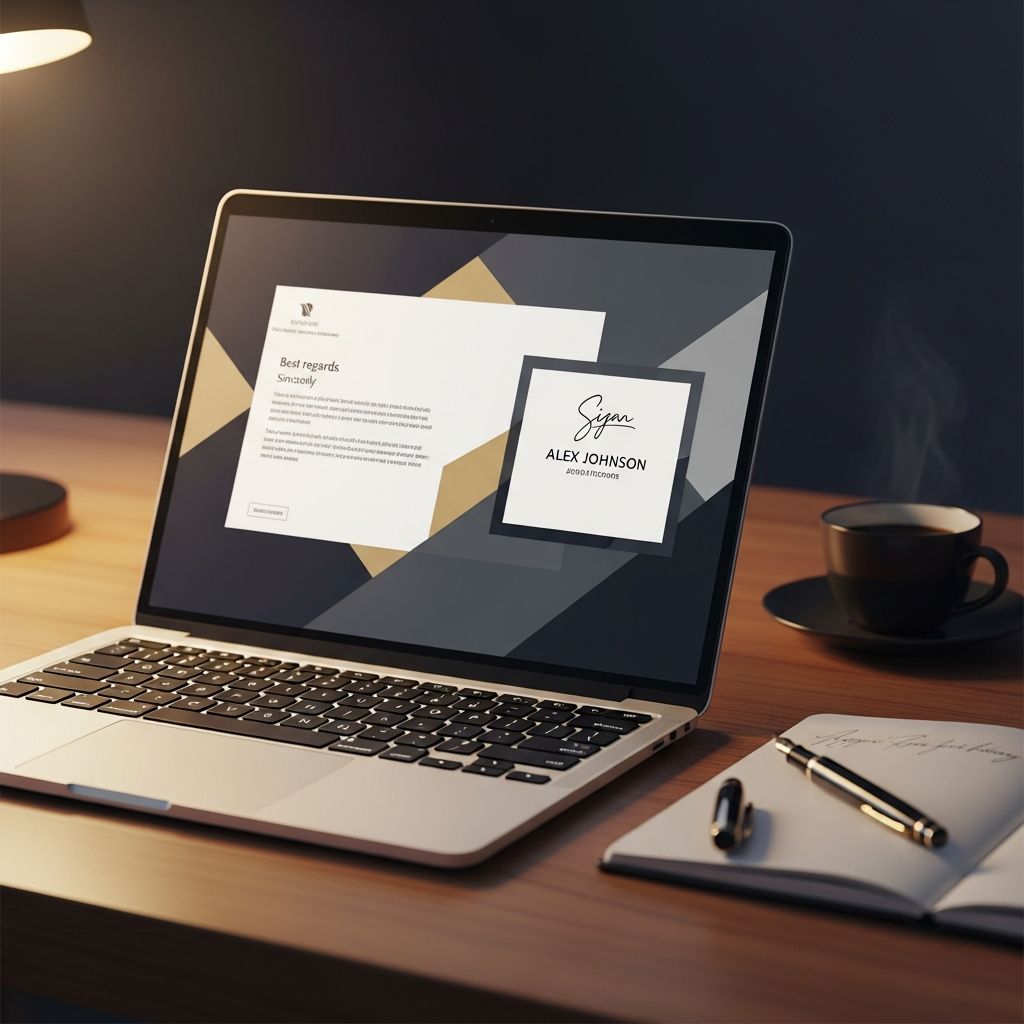
How you end an email is often the last impression you leave with a reader. A strong sign-off can reinforce your message, encourage a response, and convey professionalism, while a careless closing can feel abrupt, confusing, or even rude. This guide explains how to choose the right email sign-off for different situations, with practical examples and simple rules you can apply immediately.
Why Your Email Sign-Off Matters More Than You Think
In professional communication, the ending of your email does more than simply mark that you are done writing. It helps the recipient interpret your tone and intentions. Communication research shows that written messages are prone to misinterpretation because we lack facial expressions, voice, and context, so people rely heavily on wording to infer tone and intent. A consistent and appropriate sign-off acts as a small but important cue of professionalism and respect.
Across workplaces, employers increasingly expect clear, polite written communication as a basic professional skill, especially in remote and hybrid teams where email remains central to everyday collaboration. Choosing a fitting sign-off is a simple way to meet those expectations.
Core Principles for Choosing the Right Sign-Off
Before picking specific phrases, keep these guiding principles in mind:
- Match the formality to the recipient and context.
- Align with your relationship (first contact, colleague, client, senior leader).
- Reflect your message (request, thanks, update, apology, follow-up).
- Aim for clarity and brevity over creativity or humor in professional settings.
- Stay consistent with your overall brand and workplace culture.
When in doubt, err on the slightly more formal side. You can always relax your sign-off later as the relationship develops.
Comparing Levels of Formality: At a Glance
| Formality Level | Example Sign-Offs | Best For |
|---|---|---|
| Highly formal | “Sincerely,” “Respectfully,” “Yours faithfully” | Legal, official, or first contact with senior leaders |
| Standard professional | “Best regards,” “Kind regards,” “Thank you” | Everyday business emails, clients, partners |
| Semi-casual | “Best,” “Thanks,” “All the best” | Colleagues, ongoing projects, friendly clients |
| Casual | “Cheers,” “Talk soon,” “Take care” | Close teammates, internal informal communication |
Formal and Professional Sign-Offs (Use-Anywhere Closings)
These are safe choices for most business emails and are especially useful when you do not yet know the recipient well. Business writing guides and corporate communication resources consistently recommend neutral, professional closings such as “Sincerely” and “Regards” for formal correspondence.
Reliable Formal Closings
- Sincerely,
- Yours sincerely,
- Respectfully,
- Best regards,
- Kind regards,
Use these when emailing:
- Potential employers or recruiters
- New clients or vendors
- Senior leaders and executives
- People in other organizations you do not know personally
These closings signal professionalism, politeness, and a neutral tone, making them appropriate in most cultures and industries.
Polite Closings for Requests and Follow-Ups
When you are asking for something—information, a decision, a favor—your sign-off can help soften the request and encourage a response. Communication experts note that expressing gratitude clearly and directly can improve cooperation and build stronger professional relationships.
Closings That Emphasize Gratitude
- Thank you,
- Thank you for your time,
- Thank you for your help,
- Many thanks,
- With appreciation,
Closings That Encourage a Reply
- Looking forward to your response,
- I look forward to hearing from you,
- I appreciate your feedback,
- Thank you in advance, (use sparingly, as it can feel presumptive)
Choose a phrase that matches what you are asking for. If you only need a quick confirmation, a simple “Thanks” may be enough. For larger favors or time-consuming requests, a more explicit expression of gratitude shows respect for the recipient’s effort.
Friendly but Professional: Everyday Work Sign-Offs
For colleagues you email regularly or for ongoing projects, you can relax your tone slightly while remaining professional. Internal communication guidelines often recommend consistent, neutral sign-offs to keep messages clear and efficient.
Balanced, Neutral Closings
- Best,
- All the best,
- Warm regards,
- Thanks,
- Talk soon,
These are especially useful when:
- You know the person moderately well but not socially.
- The topic is routine (updates, next steps, quick questions).
- You want to sound approachable without being overly casual.
Casual Closings for Close Colleagues
Some teams communicate in a relaxed style, especially in creative or startup environments. In those cases, an informal sign-off can reinforce rapport. However, always consider the least casual person on the thread; if a client or senior leader is copied, default to a more professional closing.
Light and Conversational Closings
- Cheers,
- Take care,
- See you soon,
- Talk later,
- Have a great day,
These sign-offs work best in one-to-one internal messages with teammates you know well, or when your organization explicitly embraces informal communication.
Situation-Specific Sign-Offs
Beyond general tone, your sign-off can be tailored to the specific purpose of your email.
Job Applications and Career Outreach
In job search or networking outreach, professionalism is essential. Career services and employer resources commonly recommend straightforward, respectful closings for these emails.
- Sincerely,
- Best regards,
- Kind regards,
- Thank you for your consideration,
Networking and Informational Interviews
Here, you want to be warm and appreciative, without being overly familiar.
- With appreciation,
- Thank you again for your time,
- Best regards,
- Warm regards,
Customer or Client Communication
For clients, your sign-off should combine professionalism with service-oriented language.
- Best regards,
- Kind regards,
- Thank you for your business,
- We appreciate your partnership,
Apologies and Sensitive Topics
When delivering an apology or bad news, your closing should reinforce sincerity and respect.
- Sincerely,
- With respect,
- Thank you for your understanding,
- With sincere apologies,
Sign-Offs to Avoid in Professional Emails
Some closings work well in personal messages but send the wrong signal at work. Communication training materials frequently caution against using overly intimate or slang-heavy closings in professional settings.
Overly Intimate or Emotional Closings
- Love,
- Hugs,
- XO,
These can feel unprofessional or inappropriate outside of close personal relationships.
Slang, Text-Speak, or Jokes
- Thx,
- Later,
- Peace out,
- See ya,
These sign-offs may be fine with friends but can undermine your credibility in business communication, especially with people who do not share your sense of humor or cultural references.
Formatting Your Email Ending Correctly
A good sign-off is more than just the phrase you choose; it also includes how you present your name and contact details. Professional email guidance from universities and large organizations typically suggests clear, consistent formatting.
Basic Structure of a Professional Email Ending
- Line 1: Closing phrase (e.g., Best regards,)
- Line 2: Blank line (optional but cleaner)
- Line 3: Your full name
- Line 4: Job title
- Line 5: Company or organization
- Line 6: Phone number or relevant contact details
Keep your signature simple and easy to scan. Avoid excessive colors, fonts, or images unless your organization has a standard template.
Adapting Sign-Offs for Global and Remote Teams
In international or remote teams, cultural differences and time zones add complexity. What sounds friendly in one culture may seem too casual or abrupt in another. Studies on intercultural business communication highlight that people from different regions may interpret the same phrase differently, especially in written formats.
When working with global colleagues or clients:
- Favor clear, neutral closings like Best regards or Kind regards.
- Avoid idioms, regional slang, or humor in the sign-off.
- Consider omitting references to specific days or holidays if you are unsure of local practices.
Quick Checklist: How to Pick a Sign-Off in Seconds
When you are finishing an email, run through this short checklist:
- Who am I writing to? (job title, seniority, familiarity)
- Why am I writing? (request, update, introduction, thanks, apology)
- How formal is this context? (first contact, internal chat, client note)
- What emotion do I want to convey? (gratitude, optimism, neutrality)
Then choose from a small personal toolkit of go-to sign-offs—perhaps one formal, one neutral, and one friendly—that you use consistently.
Frequently Asked Questions (FAQs)
Q: What is the safest professional email sign-off if I am unsure?
A: Best regards, or Kind regards, are widely accepted as safe, professional closings in most business contexts and cultures.
Q: Is it acceptable to use the same sign-off in every email?
A: Yes, consistency is helpful. Many professionals rely on one or two standard closings and adjust only for very formal, very casual, or sensitive messages.
Q: Should I include my full email signature in every reply?
A: Include your full signature in first messages or when emailing new contacts. For quick internal replies, you can often use just your name and closing, unless your organization prefers full signatures in all correspondence.
Q: Can I use emojis in my sign-off?
A: Use emojis sparingly and only where you are certain the culture, industry, and specific relationship support a casual tone. Avoid emojis in job search, client, or executive emails.
Q: How should I end an email when there is no clear next step?
A: Choose a neutral closing such as Best, or All the best,. If you are hoping for a response, you can add a gentle prompt like Looking forward to hearing from you, before your sign-off.
References
- Interpersonal Communication and You — U.S. Department of State, Office of English Language Programs. 2015-01-01. https://americanenglish.state.gov/resources/interpersonal-communication-and-you
- Professional Communication — University of North Carolina at Chapel Hill, Writing Center. 2023-06-01. https://writingcenter.unc.edu/tips-and-tools/professional-writing
- Business Letters — Purdue University Online Writing Lab. 2022-09-01. https://owl.purdue.edu/owl/subject_specific_writing/professional_technical_writing/business_letters/index.html
- Email Etiquette — University College London, UCL Communications. 2022-03-15. https://www.ucl.ac.uk/students/support-and-wellbeing/guides/email-etiquette
- Business Writing: Email — University of Wisconsin–Madison Writing Center. 2023-02-01. https://writing.wisc.edu/handbook/assignments/business-and-professional-writing-email
- Gratitude and Prosocial Behavior — Adam M. Grant & Francesca Gino, Journal of Personality and Social Psychology. 2010-03-01. https://doi.org/10.1037/a0016983

- Integrated M.A. in Applied Linguistics, University of Hyderabad
- 5+ years in editorial, instructional, SEO, and research-based writing
Sneha is a relationships and lifestyle writer with a strong foundation in applied linguistics and certified training in relationship coaching. She brings over five years of writing experience to theskillvault, crafting thoughtful, research-driven content that empowers readers to build healthier relationships, boost emotional well-being, and embrace holistic living. Her writing and insights reflect the belief that beauty, happiness, and wellness…