
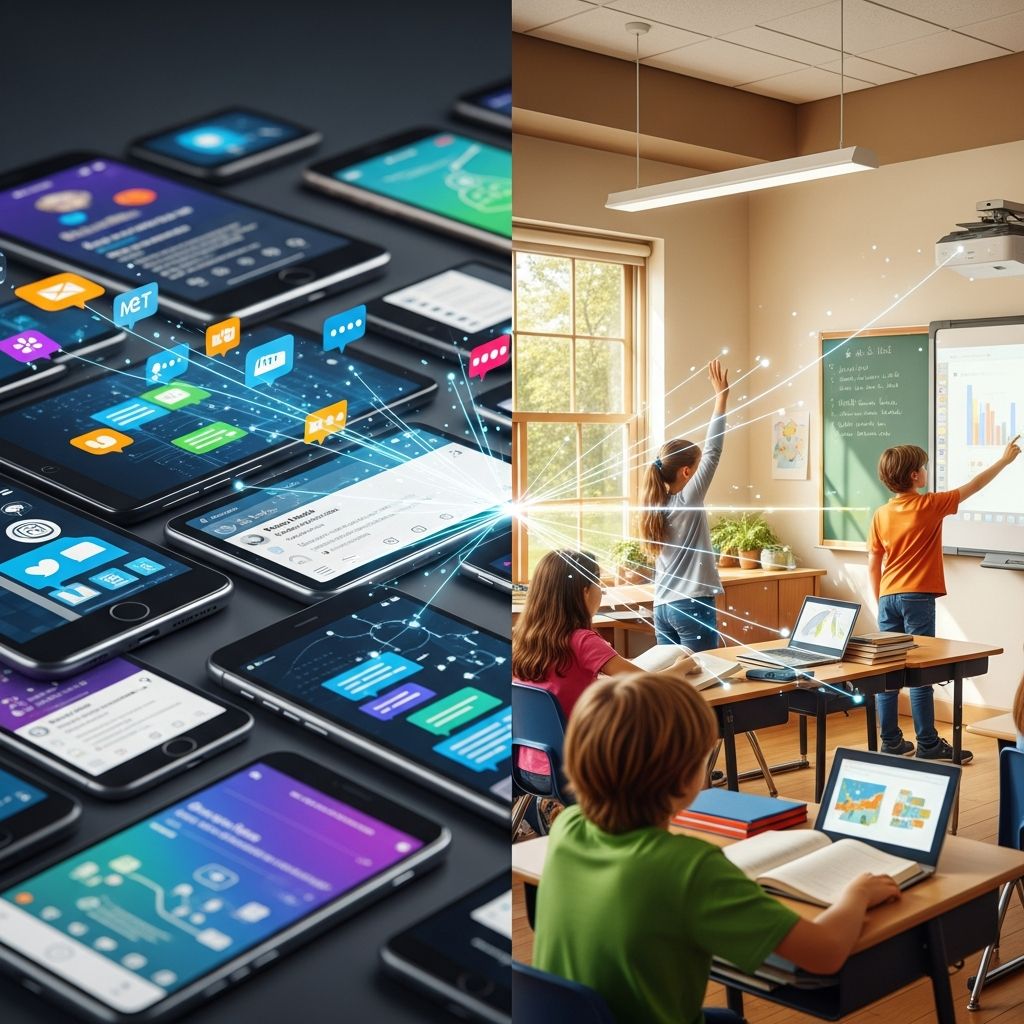
Understanding Gen Z as Digital Learners
Generation Z, born between 1997 and 2012, represents the first cohort to grow up entirely within a digitally connected world. Unlike previous generations who adapted to technology, Gen Z has never known life without constant digital access. This fundamental difference shapes how they perceive information, interact with peers, and approach learning itself. For these students, the line between traditional education and digital engagement has become increasingly blurred, creating both opportunities and challenges for modern educators.
The relationship Gen Z maintains with technology extends far beyond casual consumption. These students are not passive observers of digital content; they are active creators and participants in online communities. Whether through TikTok videos, Instagram stories, Discord discussions, or YouTube tutorials, Gen Z students constantly produce, share, and consume educational material. Understanding this behavior is essential for teachers seeking to connect with contemporary learners and create classroom environments that resonate with their natural inclinations.
The Shift from Traditional to Platform-Based Learning
Contemporary students increasingly view platforms like YouTube, Reddit, and Instagram as legitimate educational resources rather than mere entertainment channels. A significant portion of Gen Z students identify YouTube specifically as their preferred learning method, with 59% citing video platforms as their go-to resource for acquiring new knowledge. This preference reflects a broader shift in how information is packaged, consumed, and internalized by digital natives.
The appeal of these platforms lies in their flexibility, accessibility, and format diversity. Rather than adhering to rigid schedules and standardized curricula, Gen Z learners can access educational content on demand, pause and review materials at their own pace, and engage with diverse perspectives and teaching styles. This autonomy aligns with the learning preferences of a generation that values choice, personalization, and authentic connection.
Additionally, 80% of Gen Z students actively prefer collaborative learning environments over individualistic approaches. Social media platforms naturally facilitate this preference by enabling peer-to-peer interaction, group project collaboration, and shared knowledge creation. When educators recognize and leverage this inclination, they tap into powerful motivational forces that enhance both engagement and retention.
Creating Classroom Environments That Reflect Digital Culture
Successful integration of social media in educational settings requires more than simply adopting platforms; it demands a fundamental reimagining of classroom culture and pedagogical approaches. Educators who wish to meaningfully engage Gen Z must develop intentional strategies that transform social media from a distraction into a purposeful educational tool.
Establishing Clear Expectations and Community Guidelines
The foundation for effective social media integration begins with collaborative development of classroom guidelines. Rather than imposing rules from above, educators should involve students in determining appropriate usage, digital etiquette standards, and behavioral expectations. This participatory approach accomplishes multiple objectives simultaneously: it clarifies boundaries, builds student ownership of the learning environment, and teaches practical lessons about digital citizenship.
During these discussions, teachers and students can address desired uses of social platforms, clarify the educational purposes behind their integration, and establish shared understanding about professional versus personal online behavior. This collaborative process transforms guidelines from external regulations into internalized community values.
Connecting Content to Real-World Applications
Gen Z learners demonstrate heightened motivation when they perceive direct connections between classroom material and real-world utility. Educators should deliberately highlight how social media skills—content creation, audience analysis, community engagement, and digital communication—translate into professional competencies valued across industries. When students understand that mastering these platforms serves their long-term development, engagement naturally increases.
Beyond professional applications, teachers can guide students in recognizing how social media practices reflect broader communication principles, cultural dynamics, and societal trends. This critical engagement transforms social media from background fixture into subject worthy of serious academic analysis.
Platforms That Resonate With Gen Z Learners
Different social platforms serve distinct educational purposes and appeal to different student preferences. Understanding platform-specific strengths enables educators to make intentional choices about which tools best serve their pedagogical objectives.
| Platform | Primary Educational Use | Key Strengths | Gen Z Adoption Rate |
|---|---|---|---|
| YouTube | Video-based instruction, tutorials, lectures | Visual learning, on-demand access, diverse content creators | 59% prefer for learning |
| Visual storytelling, project documentation, community building | Creative expression, multimedia format, peer interaction | High engagement among Gen Z | |
| TikTok | Microlearning, trend participation, creative projects | Short-form content, trend-based learning, high creativity | 25% of users age 10-19; 60% under 30 |
| Discord | Community discussions, peer support, study groups | Real-time communication, organized channels, accessible support | Growing platform for Gen Z |
| Discussion forums, resource aggregation, peer learning | Anonymous participation, curated communities, diverse expertise | Strong for specialized learning communities |
Transforming Students Into Content Creators
One of the most powerful approaches to social media integration involves repositioning students from passive consumers to active creators. When Gen Z students move beyond consuming educational content to producing it, their engagement deepens significantly. This shift fosters ownership of learning, develops communication skills, and creates authentic audiences for student work.
Practical strategies for facilitating student content creation include establishing student-run social media teams within schools, where different students assume responsibility for researching, shooting, editing, and publishing content. Rather than requiring all teachers to master content creation themselves, this approach distributes responsibilities among students with varying interests and skills.
Even without formal teams, individual teachers can incorporate content creation through targeted assignments: asking students to document “a day in my life” through multimedia, having drama or music departments record behind-the-scenes footage, or encouraging students to produce video tutorials explaining concepts to peers. These approaches align with authentic interests while serving clear educational objectives.
Notably, 47% of Gen Z students actively create original content, while 60% participate in trending challenges with peers. Teachers can harness these natural inclinations by framing assignments around trending formats, thereby meeting students where their creative energy already flows.
Interactive Engagement Over Passive Consumption
Gen Z fundamentally rejects passive learning models. This generation expects to engage actively with content, challenge ideas, interact with peers, and participate meaningfully in their educational experience. When educators rely on one-directional information delivery, they lose Gen Z students’ attention and motivation.
Effective classrooms incorporate interactive elements such as polls, quizzes, discussion prompts, and multimedia content that invite participation. Strategic integration of trending formats—including memes when appropriate—demonstrates cultural awareness while creating genuine engagement. The key lies in striking intentional balance between traditional pedagogical approaches and contemporary digital tools.
Interactive content serves multiple purposes simultaneously: it maintains attention, facilitates assessment of student understanding, creates opportunities for peer learning, and demonstrates respect for Gen Z’s preferences regarding how they prefer to process information. Rather than viewing interactivity as a distraction, educators should recognize it as alignment with how young people’s brains have been trained to process information.
Building Community Identity Through Shared Digital Spaces
Classrooms that successfully integrate social media develop distinctive community identities expressed through digital means. This might involve creating unique hashtags, establishing group names that capture collective learning journeys, or developing branded visual themes. These community markers serve important psychological and social functions, fostering belonging and group cohesion.
When students feel genuine community connection to their learning environment, their motivation, persistence, and academic success all increase. Digital spaces provide contemporary venues for expressing community identity in ways that resonate authentically with Gen Z values around creative expression and authentic connection.
Teachers can facilitate community identity development by collaboratively deciding on community markers, encouraging students to incorporate these elements into their contributions, and celebrating instances where community symbols appear organically in student-generated content. This organic integration of community identity creates sustained investment in the learning environment.
Knowledge Sharing as Collaborative Practice
Rather than viewing social media as potential distraction from learning, educators can reframe these platforms as spaces for knowledge aggregation and peer teaching. Encouraging students to share relevant articles, resources, personal insights, and learning discoveries creates a collective knowledge repository that benefits the entire learning community.
This approach transforms social media into a dynamic reference system while validating student contributions as legitimate educational resources. When peers recognize each other’s expertise and contributions, intrinsic motivation increases. Students become invested in sharing high-quality resources because they know their recommendations will reach engaged audiences.
Teachers can structure this practice through targeted assignments: asking students to identify and share resources related to current units, requiring peer review of recommended materials, or having students contribute annotations explaining why they consider particular resources valuable. These structures transform casual sharing into deliberate pedagogical practice.
Addressing Concerns While Capitalizing on Strengths
Some educators express legitimate concerns about social media integration, particularly regarding informal online communication, potential for distraction, and challenges around implementation. Rather than dismissing social media entirely, a balanced approach acknowledges these concerns while capitalizing on demonstrated educational benefits.
Implementing social-emotional learning (SEL) curricula specifically helps students develop self-awareness regarding their social media consumption and its effects. Teaching social awareness and empathy through digital contexts enables students to engage meaningfully with diverse perspectives while mitigating negative impacts of social media exposure.
When educators combine thoughtful social media integration with explicit instruction around digital wellness and critical media literacy, they equip students with skills for navigating contemporary culture responsibly. This approach treats social media not as inherently problematic but as a powerful tool requiring skillful management.
Aligning Digital Activities With Learning Objectives
Intentional educators ensure that every social media activity directly connects to clearly defined learning objectives. Rather than incorporating platforms for novelty’s sake, purposeful integration means every digital activity serves specific educational goals. This alignment ensures that social media functions as genuine instructional tool rather than distraction masquerading as pedagogy.
Before incorporating any social media activity, teachers should explicitly identify which learning objectives it serves, how it will be assessed, and what makes this particular platform superior to alternative approaches. This intentionality prevents the common pitfall of technology adoption without pedagogical purpose.
Practical Implementation Strategies for Educators
Translating theory into practice requires concrete strategies that educators can implement with varying levels of technical sophistication and resource availability:
- Establish consistent class hashtags for project documentation, discussion threads, and resource sharing across all student work
- Create closed class accounts on one or more platforms where all content remains contained within the learning community
- Develop video tutorials or microlearning content specifically addressing curriculum standards, then share through student-preferred platforms
- Host live Q&A sessions or office hours through platforms where students naturally congregate
- Organize peer-teaching projects where students create explanatory content for younger students or different sections
- Facilitate discussions about trending topics, analyzing how current events connect to curriculum content
- Invite guest speakers to present through platforms accessible to and familiar with Gen Z
- Design assessments that require multimedia components, leveraging students’ natural content-creation skills
Frequently Asked Questions
Q: How can educators ensure social media integration maintains academic rigor?
A: By maintaining clear alignment between platform use and explicitly defined learning objectives, establishing consistent assessment criteria for digital work, and requiring critical analysis alongside creative participation. Academic rigor is determined by learning goals and assessment approaches, not by the medium through which instruction occurs.
Q: What safeguards should educators implement when integrating social media?
A: Develop clear community guidelines collaboratively with students, maintain closed or private class accounts, establish expectations around digital citizenship and respectful communication, teach critical media literacy, implement consistent monitoring, and provide pathways for reporting concerns. Clear boundaries combined with explicit instruction creates safe digital learning environments.
Q: How can teachers incorporate social media without requiring students to maintain personal accounts?
A: Educators can use closed class accounts managed by the school, create class-specific platforms, or utilize platforms that don’t require personal participation. Additionally, some assignments can involve analysis of existing content without requiring student account creation.
Q: What training do educators need to effectively integrate social media?
A: Teachers benefit from professional development addressing platform-specific features, content creation basics, digital citizenship instruction, privacy and safety protocols, and pedagogical approaches to integrating technology meaningfully. Many platforms offer free educator resources specifically designed for classroom implementation.
Q: How does social media integration support students who learn differently?
A: Social media’s multimedia format—combining video, text, audio, and visual elements—accommodates diverse learning modalities. The flexibility and customization available through digital platforms enable differentiation that supports students with varying abilities, learning styles, and accessibility needs.
References
- Social Media in Education for Gen Z — Dr. Reddy’s Foundation. Accessed April 2026. https://drreddysfoundation.org/social-media-in-education-for-gen-z/
- From Likes to Learning: Enhancing Classroom Culture through Social Media Engagement — Faculty Focus. Accessed April 2026. https://www.facultyfocus.com/articles/effective-classroom-management/from-likes-to-learning-enhancing-classroom-culture-through-social-media-engagement/
- Social Media Used and Teaching Methods Preferred by Generation Z — National Center for Biotechnology Information. Accessed April 2026. https://pmc.ncbi.nlm.nih.gov/articles/PMC7664855/
- How to Incorporate Gen Z Students in Your School’s Social Media — Finalsite. Accessed April 2026. https://www.finalsite.com/blog/p/~board/b/post/how-to-incorporate-gen-z-students-school-social-media
- Engaging Gen Z in the Classroom: Not Just a Screen Saga — McGraw Hill Education. 2024. https://www.mheducation.com/highered/blog/2024/06/engaging-gen-z-in-the-classroom-not-just-a-screen-saga.html
- Gen Z Learning Style: How to Adapt Teaching Methods for Digital Natives — EI Partnerships. Accessed April 2026. https://eimpartnerships.com/articles/gen-z-learning-style-how-to-adapt-teaching-methods-for-digital-natives
- The Importance of Digital Learning: Gen Z and Gen Alpha in the Classroom — Michigan Virtual. Accessed April 2026. https://michiganvirtual.org/blog/the-importance-of-digital-learning-gen-z-and-gen-alpha-in-the-classroom/

- Integrated M.A. in Applied Linguistics, University of Hyderabad
- 5+ years in editorial, instructional, SEO, and research-based writing
Sneha is a relationships and lifestyle writer with a strong foundation in applied linguistics and certified training in relationship coaching. She brings over five years of writing experience to theskillvault, crafting thoughtful, research-driven content that empowers readers to build healthier relationships, boost emotional well-being, and embrace holistic living. Her writing and insights reflect the belief that beauty, happiness, and wellness…