
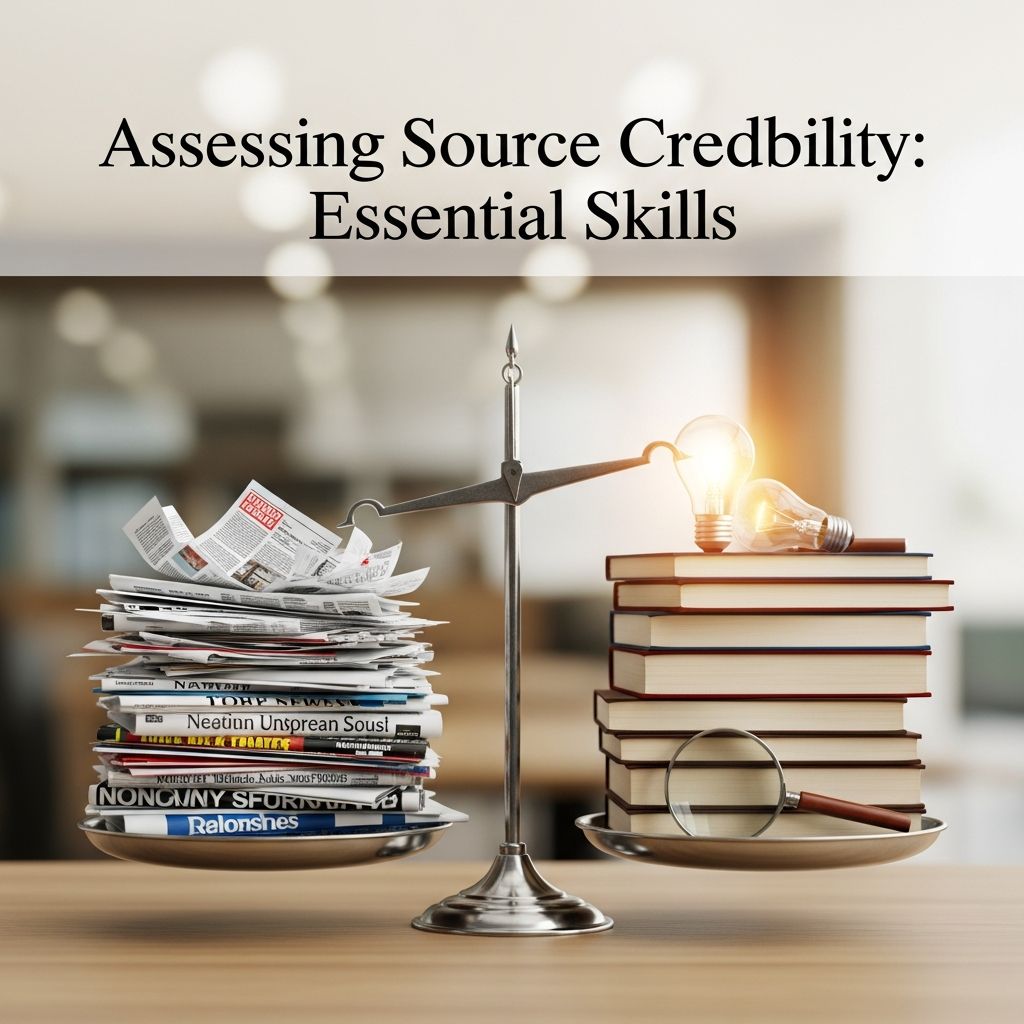
In an era flooded with information, discerning trustworthy sources is crucial for informed decision-making, academic success, and avoiding misinformation. This guide equips you with practical tools to evaluate content rigorously.
Understanding Credibility in Information
Credibility refers to the quality of being believable and worthy of trust, rooted in objective facts rather than opinions or unverified claims. Reliable sources provide verifiable evidence, undergo expert scrutiny, and maintain transparency. Without these, information risks spreading errors or biases that mislead users.
Key foundations include demonstrable evidence, expert authorship, and institutional backing. For instance, peer-reviewed journals represent high-trust environments where content is vetted by field specialists. Recognizing these markers prevents reliance on low-quality material like ad-sponsored blogs.
Core Criteria for Source Evaluation
Evaluate sources using established criteria to gauge reliability systematically. These factors help distinguish high-quality content from dubious claims.
- Author Expertise: Verify the writer’s qualifications, such as academic degrees, professional experience, or publication history in reputable outlets. Cross-check credentials via academic databases or institutional profiles.
- Publisher Reputation: Trusted publishers like universities (.edu) or peer-reviewed journals uphold strict standards. Government sites (.gov) offer authoritative data.
- Objectivity and Bias: Assess if content presents balanced views or pushes an agenda. Check funding disclosures for potential influences.
- Accuracy and Verification: Claims must be supported by data, citations, and reproducible methods. Corroborate with multiple independent sources.
- Relevance and Timeliness: Ensure the information fits your needs and is current, especially in fast-evolving fields like technology or health.
Popular Frameworks for Critical Analysis
Structured methods simplify evaluation. Adopt these proven frameworks to make assessments consistent and thorough.
CRAAP Test: A Comprehensive Checklist
The CRAAP Test, developed by information professionals, examines sources across five dimensions.
| Criterion | Key Questions | Indicators of Credibility |
|---|---|---|
| Currency | When was it published? Is it updated regularly? | Recent publication date; active maintenance for dynamic topics. |
| Relevance | Does it match your research needs? Suitable depth? | Directly addresses query; appropriate for audience level. |
| Authority | Who is the author/publisher? Credentials? | Expert affiliations; verifiable expertise. |
| Accuracy | Supported by evidence? Error-free? | Citations to primaries; peer-reviewed. |
| Purpose | Why does it exist? Inform or sell? | Objective tone; no hidden agendas. |
5Ws Method: Questioning the Source
This approach prompts critical inquiry.
- Who: Author and publisher? Expert status?
- What: Claims made? Evidence provided?
- Where: Published? Reputable platform?
- Why: Intent? Objective or persuasive?
- How: Compares to peers? Consistent findings?
SMART Check for News and Media
Ideal for journalism, SMART focuses on:
- Source reliability
- Motive behind content
- Author authority
- Review for falsehoods
- Two-source validation
Spotting Red Flags in Unreliable Sources
Common pitfalls signal low trustworthiness. Train yourself to identify them swiftly.
- Sensational Language: Exaggerated headlines or emotional appeals prioritize clicks over facts.
- Missing Citations: Unsupported assertions without references undermine validity.
- Excessive Self-Promotion: Content pushing products or services often sacrifices objectivity.
- Poor Design/Errors: Spelling mistakes, broken links, or outdated layouts indicate neglect.
- Anonymous Authorship: No byline or vague credentials erodes confidence.
Low-trust categories include user-generated forums, commercial sites, or unverified social media, where validation is challenging.
Practical Steps for Online Source Vetting
Digital content demands lateral reading: exit the page to investigate externally.
- Google the author or site for reputation checks.
- Search key claims on fact-checking sites or academic databases.
- Examine links and references for quality.
- Use tools like browser extensions for quick domain ratings.
- Compare across diverse outlets for consensus.
For academic work, prioritize primary sources (original data) over secondary interpretations.
Evaluating Different Source Types
| Type | Trust Level | Best Uses | Cautions |
|---|---|---|---|
| Peer-Reviewed Journals | High | Scholarly research | Paywalls; technical jargon |
| Government Reports | High | Statistics, policy | Potential political bias |
| News from Major Outlets | Medium-High | Current events | Editorial slant |
| Blogs/Personal Sites | Low-Medium | Opinions | Verify author |
| Social Media | Low | Trends | High misinformation risk |
Building Habits for Lifelong Discernment
Integrate evaluation into routines: question assumptions, diversify sources, and reflect on personal biases. Consult librarians or professors for guidance. Over time, these skills enhance critical thinking across contexts—from essays to everyday news consumption.
In research, track retractions via databases like Retraction Watch. For evolving topics, prioritize post-2024 updates given rapid changes.
Frequently Asked Questions (FAQs)
What makes a source peer-reviewed?
Peer-reviewed sources are examined by independent experts before publication, ensuring rigor and accuracy. Check journal guidelines for confirmation.
How do I detect bias quickly?
Look for loaded language, one-sided arguments, or undeclared funding. Balance with opposing views.
Are .edu sites always reliable?
Mostly yes, due to academic standards, but student work may lack oversight. Verify author credentials.
Can older sources be credible?
Yes, for foundational concepts, but cross-check with recent studies for updates.
What’s lateral reading?
Opening new tabs to research the source’s reputation independently, rather than reading deeply first.
References
- The Research Process: Evaluate a source’s trustworthiness — University of Sioux Falls LibGuides. 2023. https://usiouxfalls.libguides.com/the-research-process/evaluate-sources
- How to Know if a Source Is Credible — Purdue Global. 2023-10-12. https://www.purdueglobal.edu/blog/online-learning/credible-academic-sources/
- FAQ: How do I know if my sources are credible/reliable? — University of Washington Libraries. 2024. https://guides.lib.uw.edu/research/faq/reliable
- How To Do Research: Evaluating Information — Columbia Southern University Library. 2023. https://libguides.columbiasouthern.edu/howtodoresearch/evaluating
- Checking your Sources — Stanford Law School Libraries. 2024. https://guides.law.stanford.edu/c.php?g=1255722&p=9200578

Medha Deb is an editor with a master's degree in Applied Linguistics from the University of Hyderabad. She believes that her qualification has helped her develop a deep understanding of language and its application in various contexts. Medha specializes in the areas of beauty, health, sports, and wellness and is committed to ensuring that the content on the website is…