
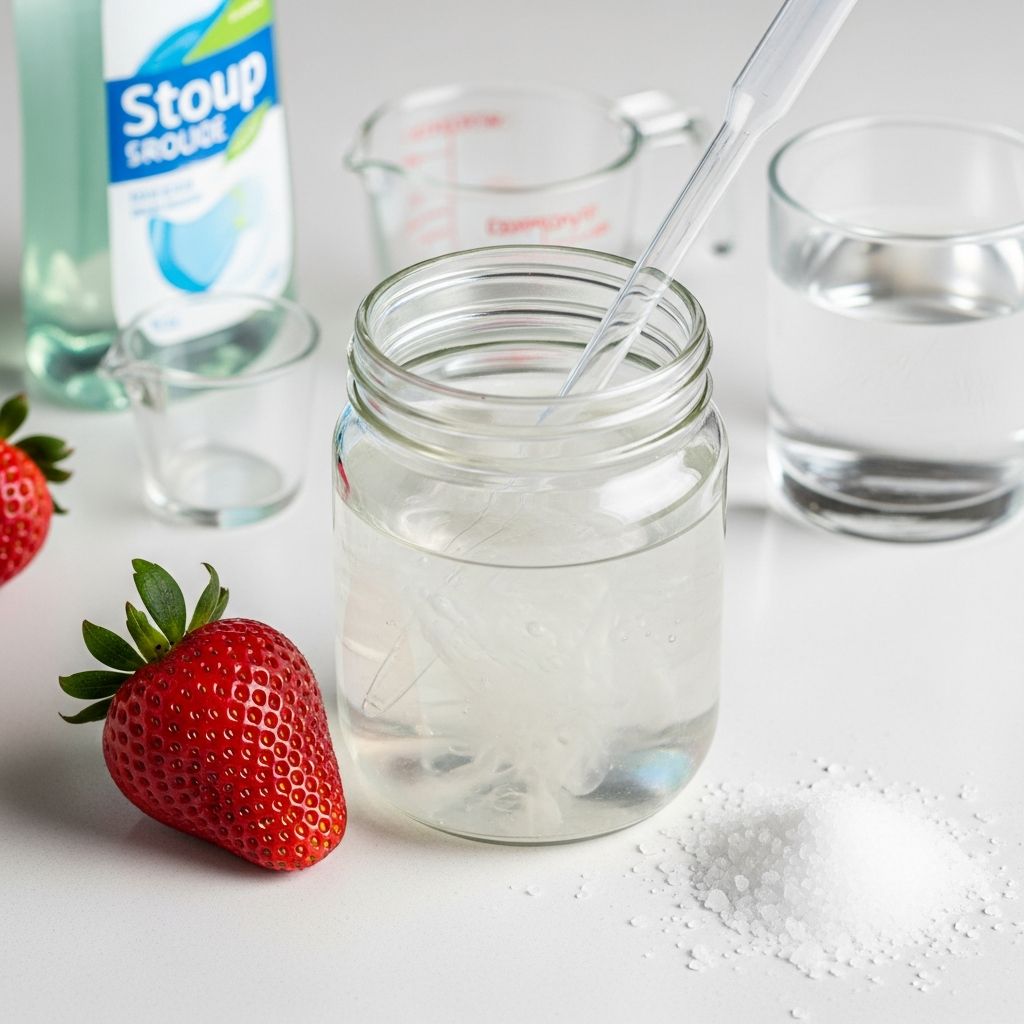
Deoxyribonucleic acid, or **DNA**, forms the genetic blueprint of all living organisms. Extracting it at home reveals this microscopic wonder in a visible, stringy form. These experiments use common household items to break open cells, dissolve barriers, and precipitate DNA strands. Suitable for students, families, and science enthusiasts, they demonstrate core biology principles without specialized equipment.
Why Extract DNA? The Science Behind It
DNA resides inside cell nuclei, protected by membranes made of lipids and proteins. Extraction involves three key steps: mechanical disruption to release cells, chemical lysis to break membranes, and precipitation to isolate DNA. Salt neutralizes charges on DNA molecules, allowing them to clump; detergents like dish soap dissolve lipid membranes; and cold alcohol, being immiscible with water, forces DNA out of solution as white strands.
These methods scale from single cells to tissues. Human cheek cells provide personal DNA, while fruits like strawberries (with eight chromosome sets) yield abundant visible amounts. Experiments build understanding of genomics, cell structure, and biochemistry.
Gathering Essential Materials
Most supplies are kitchen staples, with alcohol available at pharmacies. Always wear safety goggles and gloves; supervise children. Core items include:
- Salt (sodium chloride) for DNA stabilization
- Dish soap or detergent for cell lysis
- Cold rubbing alcohol (70-95% isopropyl or ethanol, chilled)
- Distilled or tap water
- Clear containers (cups, test tubes, or bags)
- Strainers, coffee filters, or cheesecloth
- Spatula, skewer, or toothpick for spooling DNA
Optional: Food coloring for visibility in some demos, freezer for alcohol chilling.
Method 1: Strawberry DNA Extraction
Strawberries are ideal due to high DNA content and soft texture. This yields the most DNA for beginners.
- Mash 2-3 ripe strawberries in a resealable plastic bag for 2 minutes until liquefied. This ruptures cell walls.
- Prepare extraction solution: Mix 2 tsp dish detergent, 1 tsp salt, and 1/2 cup water in a cup. Stir gently.
- Add solution to bag, seal, and massage softly for 1 minute. Avoid excess bubbles.
- Filter mixture through coffee filter into a clean cup. Collect ~1/4 cup filtrate.
- Tilt cup and slowly layer equal volume cold alcohol. Let sit 3-5 minutes undisturbed.
- Observe white, snot-like strands at interface—the strawberry **DNA**! Spool with toothpick.
Tips: Use frozen berries for easier mashing. DNA stores in alcohol in freezer for days.
Method 2: Banana DNA Extraction
Bananas provide tougher plant cells, introducing filtration challenges.
- Peel and chop 1 banana, place in bag, and squash to pulp.
- Mix 4 tsp salt, 2 tsp dish soap in 1/2 cup warm water.
- Pour into bag, seal, and mix gently 10 minutes.
- Strain through coffee filter or sieve into glass over black background for contrast.
- Adult adds chilled vodka or rubbing alcohol down side. White strands precipitate within minutes.
- Skewer to collect banana DNA.
Warm water aids soap action; black backdrop enhances visibility.
Method 3: Human Cheek Cell DNA
Extract your own DNA noninvasively.
- Dissolve 1-2 tbsp salt in 1/2 cup water. Swish 10ml in mouth 30-60 seconds, scraping cheeks. Spit into cup.
- Add 2-3 drops clear dish soap. Gently invert to mix.
- Tilt and layer 20 drops chilled alcohol (45-degree angle to avoid mixing).
- Cap, slowly invert 3 times. Wait 1-5 minutes.
- Milky strands form in alcohol layer—your **DNA**! Wind on skewer.
Cleaner mouth yields purer sample. Higher alcohol concentration improves yield.
Method 4: Pea or Vegetable DNA
Use green split peas or spinach for plant variety.
- Blend 1/2 cup peas with 1/4 tsp salt, 1/3 cup water until soupy.
- Strain into cup.
- Add equal dish soap, mix gently.
- Filter again if chunky.
- Layer cold alcohol. Collect strands.
Blender simulates industrial homogenization.
Comparing Extraction Methods
| Source | Yield | Difficulty | Key Challenge | Best For |
|---|---|---|---|---|
| Strawberry | High | Easy | Filtration | Beginners |
| Banana | Medium | Medium | Mashing | Plant cells |
| Human Cheek | Low | Easy | Small volume | Personal DNA |
| Pea | Medium | Medium | Blending | Advanced |
Safety Precautions and Best Practices
Alcohol is flammable—avoid flames. Soap irritates eyes; use goggles. Do not ingest solutions. Dispose as regular waste. For purity, use distilled water and clear soap. Chill alcohol 2+ hours for best precipitation.
Troubleshooting:
- No strands? Check alcohol coldness, add more slowly.
- Cloudy? Improve filtration.
- Low yield? Increase starting material.
Real-World Applications and Extensions
Home extractions mirror lab techniques like phenol-chloroform but simplified. In forensics, PCR amplifies trace DNA; medicine uses it for diagnostics. Extend by quantifying via image analysis or testing preservatives. Combine with microscopy for stained nuclei views.
These projects teach genomics accessibly, inspiring careers in biotech.
Frequently Asked Questions
Is the extracted material pure DNA?
No, it’s genomic DNA with RNA/proteins. Visible due to clumping.
Can I eat the fruits after?
Discarded mixtures contain soap—do not consume.
How long does extracted DNA last?
In alcohol at -20°C, months to years.
Why cold alcohol?
Cold reduces solubility; alcohol dehydrates DNA strands.
Works with other foods?
Yes, try kiwi, liver (animal DNA caution), or broccoli.
References
- How to Extract DNA At Home | Kids Science Fair Project — Home Science Tools. Accessed 2026. https://learning-center.homesciencetools.com/article/how-to-extract-dna-at-home/
- How to extract your own DNA at home — Instructables. Accessed 2026. https://www.instructables.com/How-to-extract-your-own-DNA-at-home/
- Extracting your own DNA at home — Myriad Genetics (YouTube). Accessed 2026. https://www.youtube.com/watch?v=fQo4bqV29Gs
- Science at home: How to extract DNA from a banana — Oxford Owl. Accessed 2026. https://home.oxfordowl.co.uk/science-at-home-how-to-extract-dna-from-a-banana/
- Strawberry DNA Extraction — National Human Genome Research Institute (genome.gov). 2023. https://www.genome.gov/about-genomics/teaching-tools/strawberry-dna-extraction
- How To Extract DNA From Anything Living — Learn.Genetics (University of Utah). Accessed 2026. https://learn.genetics.utah.edu/content/labs/extraction/howto/

- Integrated M.A. in Applied Linguistics, University of Hyderabad
- 5+ years in editorial, instructional, SEO, and research-based writing
Sneha is a relationships and lifestyle writer with a strong foundation in applied linguistics and certified training in relationship coaching. She brings over five years of writing experience to theskillvault, crafting thoughtful, research-driven content that empowers readers to build healthier relationships, boost emotional well-being, and embrace holistic living. Her writing and insights reflect the belief that beauty, happiness, and wellness…