
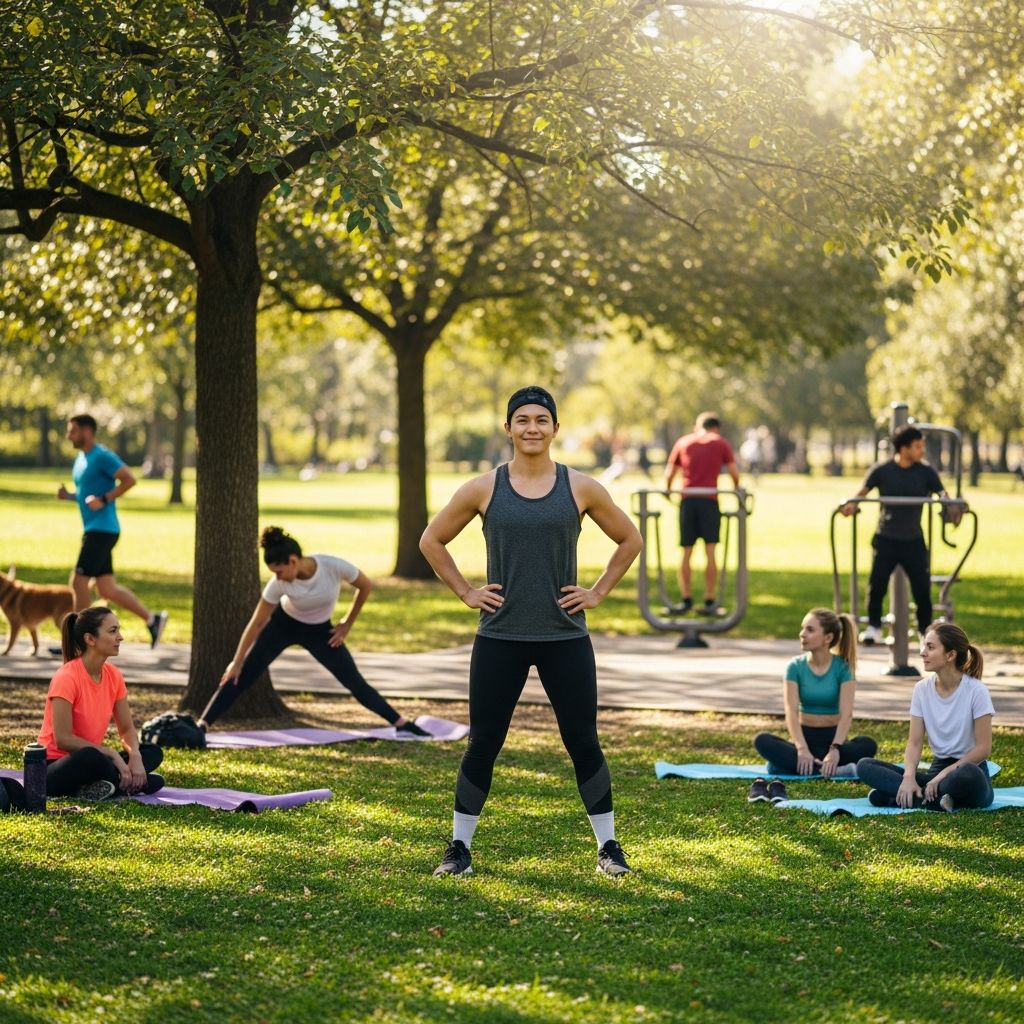
Why Public Exercise Feels So Intimidating
For many people, the idea of working out in a gym, park, or fitness class triggers a wave of discomfort. It’s not just about physical effort; it’s about being seen. The fear of judgment, comparison, or simply feeling out of place can be enough to keep someone from stepping into a fitness space at all.
This hesitation is more common than most realize. Research in health psychology shows that social anxiety and self-consciousness are among the top barriers to regular physical activity, especially in shared environments1. The concern isn’t usually about the workout itself, but about how others might perceive performance, appearance, or fitness level.
Understanding this is the first step: the discomfort is normal, and it’s not a reflection of your worth or ability. It’s a mental hurdle, not a physical limitation. And like any mental barrier, it can be worked through with the right mindset and strategies.
Reframing How You See Public Exercise
Most people who feel anxious about exercising in public are operating under a few unhelpful assumptions:
- “Everyone is watching me.”
- “I’m not fit enough to be here.”
- “If I make a mistake, people will judge me.”
These thoughts are rarely accurate. In reality, most people in a gym or park are focused on their own workouts, not on others. They’re not analyzing your form, outfit, or pace. They’re thinking about their own goals, music, or breathing.
One helpful mental shift is to view public exercise not as a performance, but as participation. You’re not there to impress anyone; you’re there to take care of yourself. When you reframe it this way, the pressure to be “perfect” or “impressive” fades, and the focus returns to your own health and well-being.
Start Small: Lower the Stakes
Trying to jump straight into a crowded gym or a high-intensity class can feel overwhelming. A more sustainable approach is to start in lower-pressure environments and gradually increase exposure.
Consider these small, manageable steps:
- Take a walk in a quiet park or neighborhood path.
- Do a short home workout with the curtains open, getting used to the idea of being visible.
- Visit a gym during off-peak hours when it’s less crowded.
- Try a beginner-friendly class or a small group session instead of a large, advanced one.
Each of these steps helps your brain associate public exercise with safety and control, rather than threat and judgment. Over time, what once felt intimidating becomes routine.
Focus on Function, Not Appearance
One of the biggest sources of anxiety is the fear of not looking “fit enough.” This often ties into body image concerns and the pressure to meet certain aesthetic standards.
A powerful antidote is to shift your attention from how you look to what your body can do. Instead of thinking, “Do I look strong?” try asking, “How strong do I feel?” or “How much better can I move today than I could last week?”
When you focus on function—strength, endurance, flexibility, balance—you’re measuring progress in ways that matter more than appearance. This mindset:
- Reduces comparison with others
- Increases motivation based on real progress
- Makes exercise feel more meaningful and less performative
For example, instead of worrying about how many reps someone else is doing, focus on whether you’re using proper form, breathing steadily, and challenging yourself in a way that feels sustainable.
Use Preparation to Build Comfort
Anxiety often spikes when we feel unprepared. The more you can plan and practice, the more in control you’ll feel when you’re in a public space.
Here are a few practical ways to prepare:
- Learn basic exercises at home first (e.g., squats, lunges, push-ups, planks) so you’re not learning everything in front of others.
- Research the gym or class layout in advance so you know where equipment is and what to expect.
- Plan your outfit ahead of time so you’re not stressed about what to wear.
- Write down a simple workout plan (e.g., 3 sets of 10 reps on 3 machines) so you’re not standing around wondering what to do.
Preparation doesn’t eliminate all anxiety, but it reduces the unknowns that fuel it. When you know what you’re going to do and how to do it, the environment feels less intimidating.
Practice Self-Compassion in the Moment
Even with preparation, there will be moments when you feel self-conscious or awkward. That’s completely normal. The key is how you respond to those feelings.
Instead of criticizing yourself (“I look so out of place,” “I’m doing this wrong”), try speaking to yourself as you would to a friend:
- “It’s okay to feel nervous. This is new for me.”
- “I’m doing this for my health, and that’s what matters.”
- “Everyone starts somewhere. I’m proud of myself for showing up.”
Research in clinical psychology shows that self-compassion reduces anxiety and increases resilience in challenging situations2. When you treat yourself with kindness, you’re less likely to avoid the situation altogether, and more likely to keep coming back.
Build a Supportive Environment
Where and how you exercise can make a big difference in how comfortable you feel. If possible, choose environments that feel welcoming and non-judgmental.
Consider these options:
- Smaller, community-focused gyms or studios
- Beginner-friendly classes with clear instruction
- Outdoor fitness groups or walking clubs
- Exercising with a trusted friend or family member
Having even one supportive person with you can dramatically reduce anxiety. They don’t need to do the same workout; just knowing someone is there can make the space feel safer.
Use Mindfulness to Stay Present
When we’re anxious, our minds tend to jump to the future (“What if I embarrass myself?”) or replay the past (“I did that wrong”). Mindfulness helps bring attention back to the present moment, where the actual experience is happening.
Simple mindfulness techniques during exercise:
- Focus on your breath: Notice the rhythm of inhaling and exhaling.
- Pay attention to your body: Feel your feet on the ground, your muscles working, your heart rate.
- Notice your surroundings: Observe sounds, lights, and movements without judgment.
When you’re fully present, you’re less likely to get caught in a loop of negative thoughts. You’re also more likely to enjoy the physical sensations of movement, which can make exercise feel more rewarding.
Track Progress Beyond the Mirror
Confidence grows when you see that your efforts are paying off. But if you only measure progress by how you look, you may miss many of the real benefits of exercise.
Consider tracking these non-appearance-based markers:
| Area | What to Track |
|---|---|
| Strength | Increased weights, more reps, better form |
| Endurance | Longer workouts, less breathlessness, faster recovery |
| Mood & Energy | Improved sleep, reduced stress, more daily energy |
| Consistency | Number of workouts per week, showing up even when tired |
When you see progress in these areas, it reinforces the idea that you’re capable and that your efforts matter. This internal validation is far more powerful than external approval.
Normalize Imperfection
Many people avoid public exercise because they feel they need to be “good” at it first. But fitness is a skill, and like any skill, it improves with practice.
Everyone in a gym or class was once a beginner. Everyone has had moments of awkwardness, confusion, or fatigue. The difference is that they kept going, even when it felt uncomfortable.
Instead of waiting until you feel “ready,” try adopting the mindset:
- “I don’t have to be perfect; I just have to show up.”
- “It’s okay to learn in public.”
- “My worth isn’t tied to how fast, strong, or fit I am.”
When you normalize imperfection, you free yourself from the pressure to perform and open the door to real, sustainable progress.
Create a Personal “Why” Statement
When anxiety is high, it’s easy to lose sight of why you’re exercising in the first place. A clear, personal “why” can serve as an anchor during tough moments.
Ask yourself:
- Why is movement important to me?
- How do I want to feel in my body and mind?
- What long-term benefits am I working toward (e.g., more energy, better health, reduced stress)?
Then, write a short statement like:
“I exercise to feel strong, energized, and in control of my health. I show up for myself, not for anyone else’s approval.”
Keep this statement visible—on your phone, in your journal, or on a sticky note—and revisit it when motivation is low or anxiety is high.
Gradually Expand Your Comfort Zone
Confidence isn’t built overnight. It’s built through repeated, manageable exposure to what once felt scary.
Think of your comfort zone like a circle. Right now, certain activities (e.g., walking in a park) are inside the circle, while others (e.g., a crowded gym class) are outside. The goal isn’t to jump straight to the outer edge, but to slowly expand the circle over time.
A simple way to do this:
- Start with one low-pressure activity (e.g., a 10-minute walk in a quiet area).
- Once that feels comfortable, add a slightly more challenging step (e.g., a 20-minute walk in a busier park).
- Gradually introduce new environments (e.g., a small gym, a beginner class).
Each step reinforces the message: “I can handle this.” Over time, what once felt impossible becomes part of your routine.
FAQs: Common Questions About Exercising in Public
Why do I feel so self-conscious when I exercise around others?
Self-consciousness often comes from fear of judgment, comparison, or feeling like you don’t belong. These feelings are common and usually based more on perception than reality. Most people are focused on their own workouts, not on you.
How can I stop worrying about what others think?
Remind yourself that others are not paying as much attention as you think. Focus on your own goals, use mindfulness to stay present, and practice self-compassion when negative thoughts arise.
What if I don’t know what I’m doing?
It’s completely normal to feel unsure, especially at first. Learn basic movements at home, ask for help from staff or instructors, and remember that everyone was a beginner once. Showing up is the most important step.
Should I go to the gym alone or with a friend?
Both can work. A friend can provide support and reduce anxiety, but going alone can also build independence and confidence. Start with what feels most manageable for you.
How long does it take to feel comfortable exercising in public?
There’s no set timeline. For some, it takes a few weeks; for others, a few months. Consistency and small, gradual steps are more important than speed. Focus on progress, not perfection.
References
- Physical activity and mental health: Public perceptions and barriers — World Health Organization. 2022. https://www.who.int/publications/i/item/9789240051633
- Self-compassion and psychological well-being — Neff, K.D. & Germer, C.K. American Psychological Association. 2018. https://www.apa.org/monitor/2018/04/ce-corner
- Exercise and self-esteem: A meta-analysis — Ekeland, E., Heian, F., Hagen, K.B. Cochrane Database of Systematic Reviews. 2005, updated 2020. https://www.cochranelibrary.com/cdsr/doi/10.1002/14651858.CD003664.pub2/full

- Integrated M.A. in Applied Linguistics, University of Hyderabad
- 5+ years in editorial, instructional, SEO, and research-based writing
Sneha is a relationships and lifestyle writer with a strong foundation in applied linguistics and certified training in relationship coaching. She brings over five years of writing experience to theskillvault, crafting thoughtful, research-driven content that empowers readers to build healthier relationships, boost emotional well-being, and embrace holistic living. Her writing and insights reflect the belief that beauty, happiness, and wellness…