
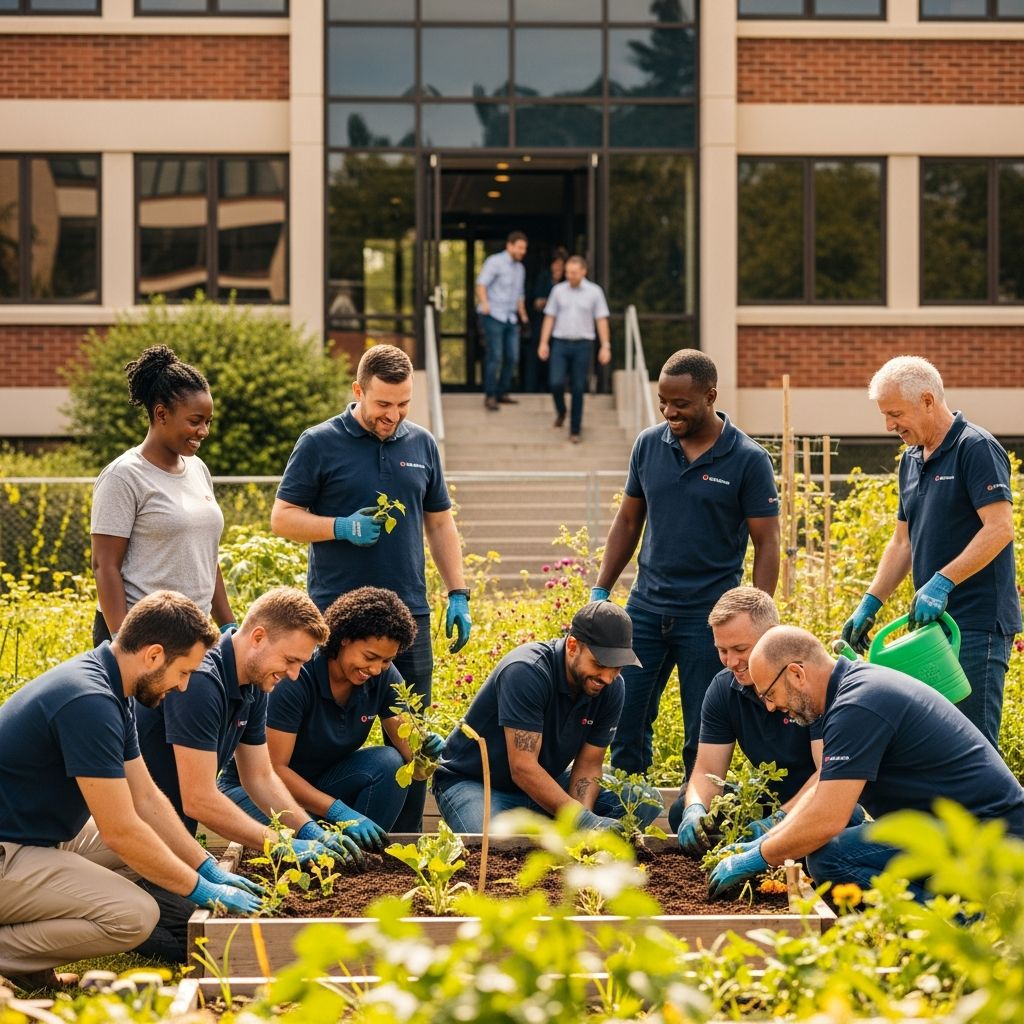
Choosing an employer is no longer just about salary and title. Increasingly, people want to work for companies that give back to their communities, protect the environment, and treat people fairly. Research on younger workers shows that many are willing to accept lower pay if their employer has a strong social or environmental purpose, making corporate responsibility a real factor in talent attraction and retention.
This guide explains what meaningful community impact looks like, highlights common ways companies contribute, and shows you how to spot mission-driven employers during your job search.
Why Community-Minded Employers Stand Out
Corporate support for communities is often discussed under the umbrella of Corporate Social Responsibility (CSR) or broader ESG (environmental, social, and governance) practices. CSR typically covers four major areas: environmental, ethical, philanthropic, and economic responsibility.
For job seekers, companies that engage seriously in these areas often offer:
- Higher employee engagement because people see their work contributing to a larger purpose.
- Stronger reputations, which can make your resume more attractive later in your career.
- More inclusive cultures, especially when social good efforts are paired with diversity, equity, and inclusion initiatives.
When a company invests in its community, it signals that it is thinking long-term about stakeholders, not just short-term profit.
What “Giving Back” Can Look Like in Practice
Community impact programs vary widely, but most fall into a few recognizable categories. Understanding these will help you evaluate employers more clearly.
1. Employee Volunteering and Service Programs
Many organizations encourage staff to donate their time and skills to local or global causes. Structured volunteering programs are often a sign that community engagement is not an afterthought.
- Volunteer Time Off (VTO): Paid hours employees can use to volunteer with nonprofits or schools.
- Organized days or weeks of service: Company-wide events where teams volunteer together, often supporting multiple nonprofits across locations.
- Skills-based volunteering: Employees use professional skills (IT, legal, marketing, data) to help organizations that could not otherwise afford that expertise.
These programs matter because they amplify impact: employees contribute to causes they care about while building teamwork and leadership skills.
2. Matching Gifts and Employee-Driven Giving
Another common way companies support communities is by matching employee donations to charities, often dollar-for-dollar up to a yearly cap.
- Employees choose organizations they care about, and the company multiplies their contributions.
- Some employers extend matching to volunteer hours, donating money based on the time employees spend volunteering.
- Automated platforms make it easier for employees to request matches and track impact.
Matching programs show that the organization respects employees’ values instead of forcing a narrow set of corporate causes.
3. Philanthropy, Grants, and Foundations
Large organizations often create a formal foundation or dedicated budget for philanthropy. These programs can include:
- Corporate foundations that award grants to nonprofits or schools.
- Community investment funds focused on housing, food security, education, or climate resilience.
- Emergency and disaster support for communities affected by crises.
Harvard Business School analysis notes that some companies embed philanthropy directly into their business model, committing a portion of product, equity, or employee time to community causes from day one.
4. Environmental and Climate Commitments
Environmental responsibility is one of the most visible forms of community impact. According to IBM, CSR often includes commitments such as using recycled materials, cutting emissions, or supporting renewable energy. Companies may:
- Set net-zero or carbon-neutral targets and invest in clean energy.
- Redesign products and packaging to reduce waste and improve recyclability.
- Support conservation, reforestation, or biodiversity initiatives in regions where they operate.
These actions help protect the health and resilience of communities, especially those already affected by pollution or climate change.
5. Ethical Sourcing, Fair Labor, and Inclusive Hiring
Companies can also support communities by changing how they source, manufacture, and hire. Common approaches include:
- Ethical supply chains: Auditing suppliers for labor standards, worker safety, and environmental practices.
- Support for small or minority-owned businesses: Prioritizing diverse suppliers and local purchasing.
- Fair-chance or inclusive hiring: Opening opportunities to candidates with nontraditional backgrounds or justice involvement, and supporting them with training.
These practices turn community support into an integral part of day-to-day operations rather than sporadic donations.
How Community Impact Benefits Your Career
Working for a company that gives back is not just morally satisfying; it can also be a strategic career move.
| Benefit | What It Means for You |
|---|---|
| Skill development | Volunteering and pro bono projects can sharpen leadership, communication, and technical skills you can showcase on your resume. |
| Networking | Cross-functional volunteer teams expose you to colleagues, mentors, and nonprofit leaders you might not otherwise meet. |
| Purpose and motivation | Knowing your work contributes to a mission beyond profit can improve engagement and reduce burnout. |
| Reputation | Experience at a respected, socially responsible employer can increase your credibility with future organizations. |
How to Research Whether a Company Really Gives Back
Company marketing materials can make almost any organization look community-focused. To figure out whether impact runs deeper than slogans, use the following steps.
1. Start With Public CSR and Impact Reports
Many organizations publish annual CSR, sustainability, or impact reports that provide detailed information about their initiatives, goals, and progress. Look for:
- Specific, measurable goals (e.g., emissions reduction targets, number of volunteers or training participants).
- Year-over-year data that shows whether they are improving over time, not just launching one-off campaigns.
- Descriptions of programs tied to the core business (for example, a tech firm supporting digital skills training).
Vague language without numbers or examples can indicate that community work is more performative than real.
2. Check for Recognized Frameworks and Standards
Credible community impact programs are often aligned with external standards or certifications. While details vary, you might see references to:
- UN Sustainable Development Goals (SDGs) as a framework for impact areas.
- Global Reporting Initiative (GRI) or similar guidelines in sustainability reporting.
- Industry-specific environmental standards or safety certifications.
Using recognized frameworks helps ensure that impact data is more comparable and less self-serving.
3. Look Beyond Donations to Business Practices
IBM notes that modern CSR includes not just philanthropy, but also operational choices such as product design, energy use, and labor practices. When researching an employer, ask:
- How do they treat workers in their offices, warehouses, factories, or partner sites?
- Do they share supplier codes of conduct or audit results where relevant?
- Are community programs integrated into performance metrics or leadership goals, or are they isolated in a small team?
Organizations that embed impact into strategy are more likely to sustain their commitments even in difficult times.
4. Pay Attention to Employee Perspectives
Beyond polished reports, current and former employees often provide valuable context:
- Read reviews and commentary about culture, volunteer programs, and work-life balance.
- Search for employee blog posts or social media posts about volunteer experiences or company initiatives.
- Look for internal groups (like employee resource groups) that partner with communities or nonprofits.
If employees rarely mention community work, it may not be central to their day-to-day experience.
5. Ask Targeted Questions in Interviews
During interviews, you can respectfully explore how the company views its role in the community. Consider questions like:
- “Can you share an example of how this team has participated in community initiatives?”
- “Do employees receive paid time or support for volunteering?”
- “How does leadership measure the impact of social or environmental programs?”
- “Are employees involved in choosing which causes the company supports?”
Interviewers’ level of detail and enthusiasm can reveal how authentic and accessible these programs are.
Signs of a Strong, Authentic Community Impact Strategy
Once you start comparing employers, look for patterns that distinguish mature, thoughtful programs from surface-level marketing.
- Alignment with business strengths: The company uses what it does best (technology, logistics, product design, data) to tackle real problems.
- Long-term partnerships: Rather than scattering small donations, it builds sustained relationships with community organizations and tracks long-term results.
- Employee empowerment: Staff can propose projects, join councils, or steer grant-making, and impact work is inclusive across roles and locations.
- Transparency: Reports include challenges and areas for improvement, not just success stories.
- Global and local balance: Multinational companies support both broad global initiatives and hyperlocal efforts near offices, warehouses, and plants.
Practical Steps for Job Seekers Who Care About Giving Back
If community impact is a priority for you, integrate it into every stage of your job search—from the companies you target to the offers you accept.
1. Build a Target List of Impact-Oriented Employers
Start by listing organizations known for:
- Publishing regular CSR or sustainability reports.
- Being covered in credible articles about CSR or social innovation.
- Receiving awards or recognition for community or environmental leadership from established institutions.
Then narrow your list based on roles that match your skills and interests.
2. Highlight Your Own Community Involvement
Employers that give back often value candidates who already demonstrate a commitment to service. You can:
- Add a “Volunteer Experience” section to your resume with clear, outcome-focused bullet points.
- Mention leadership roles in nonprofits, mutual aid groups, or campus organizations.
- Describe how community experiences shaped your professional skills or career goals in your cover letter.
This signals that you will be an engaged participant in their programs, not just a passive beneficiary.
3. Evaluate Offers Through a Community Lens
When comparing offers, consider including community impact alongside salary, benefits, and growth potential. Ask yourself:
- Which employer shows the clearest, most credible commitment to social and environmental issues?
- Where will I have the greatest opportunity to participate in, lead, or even shape impact initiatives?
- Which organization’s mission and values resonate most with the kind of change I want to support?
There is no single right answer—some people prioritize climate action, others focus on education, equity, or local engagement. The key is finding alignment between your values and the employer’s actions.
Frequently Asked Questions (FAQs)
Q: What exactly is Corporate Social Responsibility (CSR)?
CSR is a company’s voluntary commitment to manage its social, environmental, and economic impacts in a responsible way, going beyond legal requirements. It can include philanthropy, ethical labor practices, environmental initiatives, and community engagement.
Q: How is CSR different from ESG?
CSR is often used to describe voluntary community and environmental programs, while ESG (environmental, social, and governance) refers to a broader set of measurable factors used by investors to evaluate how responsibly a company operates.
Q: Do small companies really have the capacity to give back?
Yes. Even with limited budgets, smaller organizations can support communities through flexible volunteering policies, partnerships with local nonprofits, ethical purchases from local suppliers, or pro bono services that draw on their expertise.
Q: Are community programs ever just marketing?
Some initiatives are primarily promotional, but you can usually spot this when goals are vague, employee involvement is limited, and there is little transparent data about outcomes. Robust programs tend to share clear metrics, long-term commitments, and alignment with the core business.
Q: How can I participate if my employer has no formal CSR program?
You can propose small, practical steps such as a volunteer day, a donation drive, or a pilot matching-gift initiative. Pointing to examples from other organizations and demonstrating employee interest can help build momentum for a more structured program over time.
References
- 12 Corporate Social Responsibility Examples by Top Brands — Goodera. 2024-07-09. https://www.goodera.com/blog/corporate-social-responsibility-examples
- 12 Examples of Corporate Social Responsibility Done Right — Zapier. 2023-06-20. https://zapier.com/blog/corporate-social-responsibility-examples/
- Companies Committing Social Good: Real-World CSR Examples — Double the Donation. 2023-11-15. https://doublethedonation.com/top-csr-examples/
- 6 Examples of Corporate Social Responsibility — Harvard Business School Online. 2021-05-18. https://online.hbs.edu/blog/post/corporate-social-responsibility-examples
- Corporate Social Responsibility Overview — FedEx. 2024-01-10. https://www.fedex.com/en-us/about/corporate-social-responsibility.html
- 4 Types of Corporate Social Responsibility & Their Benefits — Bonterra. 2023-03-02. https://www.bonterratech.com/blog/types-of-corporate-social-responsibility
- What Is Corporate Social Responsibility? — IBM. 2022-11-10. https://www.ibm.com/think/topics/corporate-social-responsibility

- Integrated M.A. in Applied Linguistics, University of Hyderabad
- 5+ years in editorial, instructional, SEO, and research-based writing
Sneha is a relationships and lifestyle writer with a strong foundation in applied linguistics and certified training in relationship coaching. She brings over five years of writing experience to theskillvault, crafting thoughtful, research-driven content that empowers readers to build healthier relationships, boost emotional well-being, and embrace holistic living. Her writing and insights reflect the belief that beauty, happiness, and wellness…