
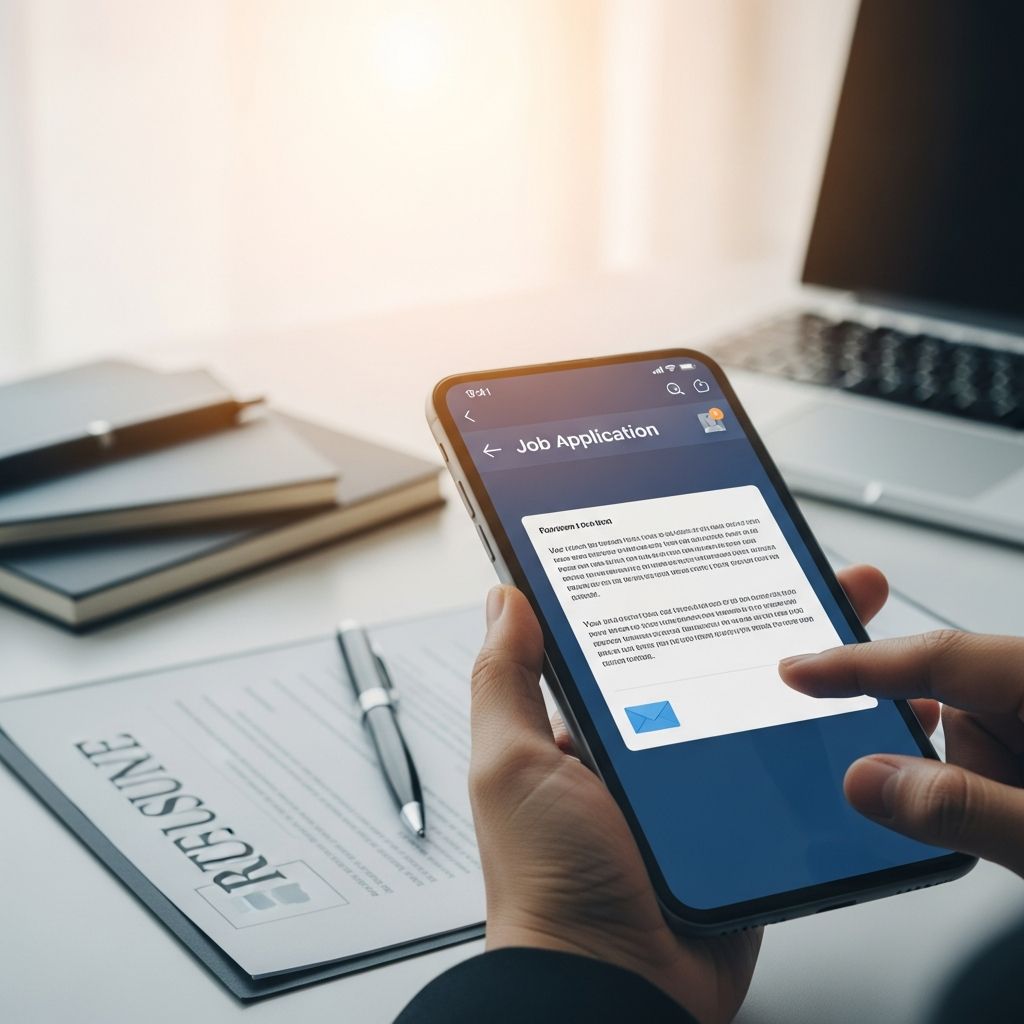
Following up on a job application can feel uncomfortable, but done well, it can reinforce your interest, highlight your qualifications, and keep your name in front of a busy hiring manager. Hiring professionals note that a concise, professional follow-up often helps candidates stand out—especially when competition is high.
This guide explains when to follow up, how to write effective messages, and what to avoid so you come across as prepared, confident, and respectful of the employer’s time.
Why Following Up Matters
Recruiters and hiring managers often review dozens or even hundreds of applications for a single role, which makes it easy for strong candidates to get lost. A well-timed follow-up message:
- Reminds the employer who you are and which role you applied for.
- Signals genuine interest and enthusiasm for the position.
- Gives you a chance to quickly restate your most relevant skills.
- Shows professionalism and communication skills through your writing.
However, there is a fine line between being proactive and being pushy. The goal is to be visible and memorable without creating extra pressure for the hiring team.
Understanding Hiring Timelines
Before you send a follow-up, it helps to understand typical hiring timelines. Research from employer surveys and career centers suggests that initial screening and shortlisting can easily take one to three weeks, depending on role complexity and volume of applications.
Delays are often caused by:
- Internal approvals and budget reviews.
- Coordinating schedules between multiple interviewers.
- Unexpected business priorities or changes in hiring needs.
Because these delays are normal, not hearing back for a week or two is usually not a rejection—it just means the process is still moving behind the scenes.
When to Follow Up After Applying
Most career services and hiring experts recommend waiting about 10–14 days after submitting your application before sending your first follow-up, unless the posting gives a specific timeline.
| Situation | Recommended Follow-Up Timing |
|---|---|
| Standard job posting, no dates mentioned | 10–14 days after you applied |
| Posting lists an application deadline | 7–10 days after the deadline (not before) |
| Posting says “no calls/emails please” | Do not follow up; respect the instructions |
| You have a strong internal referral | Ask your contact about timing; often 7–10 days is appropriate |
| No response to first follow-up | Wait another 10–14 days, then send one final, brief message |
Following up earlier than one week can appear impatient; waiting many weeks can make it seem as if the role is no longer important to you.
Choosing the Right Channel
For most candidates, email is the best and most professional way to follow up.
- Email: Keeps a written record, lets the recipient respond when convenient, and aligns with most employers’ preferences.
- LinkedIn message: Useful if you initially connected via LinkedIn or cannot find an email address; keep it short and professional.
- Phone call: Typically reserved for situations where email and LinkedIn are not options, or when the employer specifically invites calls.
Unless the posting clearly invites phone contact, a polite email is usually perceived as more respectful of the hiring manager’s time.
How to Find the Right Person to Contact
Addressing your message to a specific person can significantly increase the chance it will be read.
To identify the right contact:
- Check the job description for a recruiter, HR contact, or hiring manager name.
- Look on the company website or LinkedIn for the department head or HR representative.
- If needed, call the main company number and ask for the appropriate email address for the role.
If you still cannot find a name, use a professional, general greeting such as “Dear Hiring Manager” rather than an overly casual opener.
Essential Elements of a Strong Follow-Up Email
Effective follow-up messages are brief and purposeful. Career advisors emphasize that hiring teams often skim emails quickly, so you should make your main points immediately clear.
Include these core elements:
- Clear subject line that mentions the role and that you are following up.
- Polite greeting using the person’s name when possible.
- Reminder of context: which job you applied for and when.
- Brief statement of interest and why you are a strong fit.
- Short, respectful question about the status or next steps.
- Professional closing with your full name and contact information.
Sample Follow-Up Email Structure (Fill-in-Your-Own-Words)
Below is a flexible structure you can adapt. Avoid copying it word for word; instead, tailor the wording to match your own voice and the role.
- Subject: Follow-up on [Job Title] application – [Your Name]
- Line 1–2: Brief greeting and one-line reminder of when you applied.
- Line 3–4: One or two sentences highlighting your most relevant skill or achievement for this role.
- Line 5: A respectful question about timing or whether additional information is needed.
- Closing: Thank them for their time and include your phone number and LinkedIn URL.
Target 75–150 words. Longer messages are more likely to be skimmed or ignored.
Crafting a Professional Subject Line
Subject lines should make it immediately obvious why you are writing.
Good subject lines usually include:
- The phrase “Follow-up” or “Application”.
- The exact job title listed in the posting.
- Your name, especially if the company is large.
Examples you can adapt:
- Follow-up on Marketing Analyst application – Jordan Chen
- Application status inquiry: Product Designer – Taylor Singh
- Checking in on Software Engineer role – Alex Rivera
What to Emphasize in Your Message
Use your follow-up to reinforce the value you bring rather than simply asking for an update.
You might briefly highlight:
- One or two key skills that match the job description closely.
- A recent achievement that demonstrates those skills (e.g., improved a metric, led a project).
- Your enthusiasm for the company’s mission, product, or clients.
Keep your focus on what you can contribute, not just on your need for a job.
How Many Times You Should Follow Up
Persistence is useful, but only up to a point. Career services offices and staffing firms generally suggest a maximum of two follow-ups after the initial application.
- First follow-up: 10–14 days after applying.
- Second (final) follow-up: 10–14 days after the first, if you have not received any response.
If you still do not hear back, it is usually best to move on and focus your energy on other opportunities. Continuing to send messages can damage your reputation with that employer.
Common Mistakes to Avoid
Even strong candidates can undercut their chances with a poorly written follow-up. To stay on the safe side, avoid:
- Ignoring instructions: If the posting says not to contact the employer, following up anyway may hurt your candidacy.
- Sounding impatient: Phrases like “I expected to hear back by now” or “I need an answer immediately” can appear demanding.
- Over-sharing: Personal struggles or financial pressures usually do not belong in a follow-up email.
- Sending long messages: Multi-paragraph emails are less likely to be read carefully.
- Following up too frequently: Several messages per week can be seen as harassment rather than enthusiasm.
Polish and Professionalism: Final Checks Before Sending
Strong writing and attention to detail are often interpreted as signs of overall professionalism. Before you hit send:
- Run a spell-check and read the email aloud for clarity.
- Verify you used the correct company name and job title.
- Ensure your contact information (phone, email, LinkedIn) is correct and up to date.
- Remove any slang, abbreviations, or emojis, even if the company culture seems casual.
Because many recruiters read messages quickly on phones, using short paragraphs and clear spacing will also make your email easier to skim.
Advanced Tip: Leveraging Your Network
If you have a contact inside the company, a brief note to that person can complement—rather than replace—your direct follow-up to the hiring manager.
Consider asking your contact to:
- Confirm that the role is still open and active.
- Share any insight on the expected hiring timeline.
- Forward your resume internally or mention your application to the hiring manager.
Even a short internal message from an employee can increase the visibility of your application and demonstrate that you have taken the initiative to learn about the company.
Frequently Asked Questions (FAQs)
Q: Is it ever too late to follow up on a job application?
If more than six to eight weeks have passed with no response, the role is likely paused or filled. In that case, it is usually better to focus on new opportunities rather than sending a very late follow-up. However, you can still connect with recruiters or hiring managers on LinkedIn for future roles.
Q: Should I attach my resume again when I follow up?
Attaching your resume can be helpful, especially if some time has passed or you applied through an online portal. Career sites often recommend including your resume or a link to your portfolio so the hiring manager does not need to search for your materials.
Q: What if the job posting says “no phone calls”? Can I still email?
If the posting explicitly says “no calls” but does not mention email, a single, concise email is usually acceptable. However, if it clearly says “do not contact the employer,” you should respect that instruction and avoid following up through any channel.
Q: Is a LinkedIn message as good as an email?
Email is generally considered the default professional channel, but a short, well-written LinkedIn message can be effective—especially if the recruiter is active on the platform or the role was posted there. Keep the message concise and avoid sending multiple follow-ups on both LinkedIn and email.
Q: Can following up hurt my chances?
A single, polite follow-up rarely harms your chances and can sometimes help you stand out. Problems arise when candidates ignore instructions, follow up too frequently, or use a demanding tone. If you stay professional and limit yourself to one or two brief messages, your follow-up is more likely to be seen as diligence rather than pressure.
References
- Job Application Follow-Up: Best Practices for Success — Artech. 2023-05-10. https://www.artech.com/blog/job-application-follow-up-best-practices-for-success/
- Best Practices for Following Up on Your Job Application — Westchester-Putnam Career Center Network. 2022-03-15. https://www.westchesterputnamonestop.com/resources/11-resources/217-best-practices-for-following-up-on-your-job-application
- How To Write a Follow-Up Email After a Job Application — Indeed Career Guide. 2024-01-05. https://www.indeed.com/career-advice/finding-a-job/follow-up-email-after-application
- 12 Follow-up Email Templates for Every Work Situation — Hardin-Simmons University Career Services. 2024-12-03. https://careerservices.hsutx.edu/blog/2024/12/03/12-follow-up-email-templates-for-every-work-situation/
- Application Follow-Up Email Examples — Thorens Talents. 2023-11-20. https://www.thorenstalents.com/en/blog/application-follow-up-email-examples
- The Best Ways to Follow Up After Submitting a Job Application — Cardinal Staffing. 2025-07-22. https://www.cardinalstaffing.com/2025/07/22/the-best-ways-to-follow-up-after-submitting-a-job-application/

Medha Deb is an editor with a master's degree in Applied Linguistics from the University of Hyderabad. She believes that her qualification has helped her develop a deep understanding of language and its application in various contexts. Medha specializes in the areas of beauty, health, sports, and wellness and is committed to ensuring that the content on the website is…