
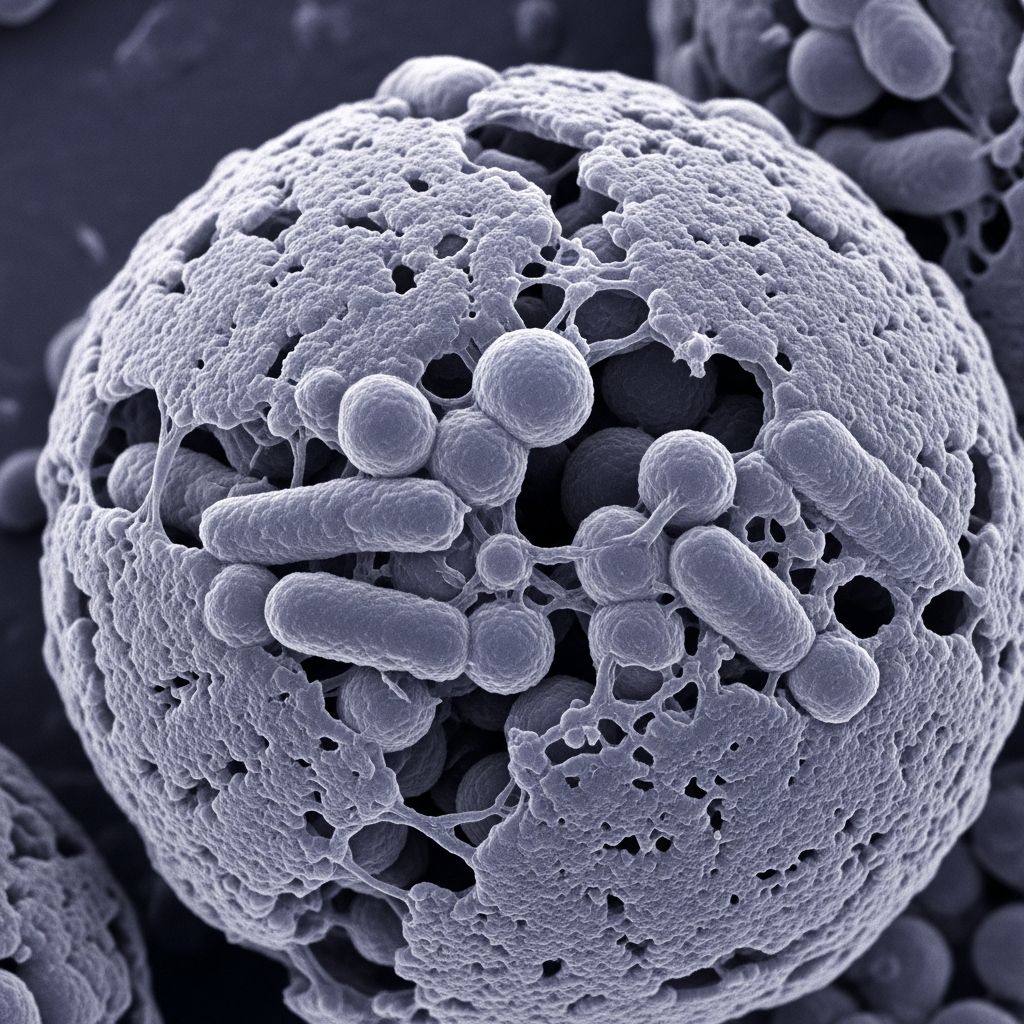
Preserving bacterial cultures through lyophilization, commonly known as freeze-drying, represents a cornerstone technique in microbiology for maintaining microbial viability over extended periods. This method removes water via sublimation, halting metabolic activity while preserving cellular integrity, making it ideal for research, clinical, and industrial applications.
Understanding the Science Behind Freeze-Drying Bacteria
Freeze-drying exploits the physical principle of sublimation, where ice transitions directly to vapor under vacuum without passing through the liquid phase. For bacteria, this process minimizes cellular damage from ice crystal formation and desiccation stress. Historical developments trace back to early 20th-century innovations, refined during World War II for blood serum preservation, and now adapted for routine microbial archiving.
Key to success is managing the glass transition temperature (Tg’) of the sample, ensuring it remains below this threshold during drying to prevent structural collapse and cell death. Studies show survival rates up to 90% under optimized conditions, such as pre-freezing at -20°C followed by vacuum storage.
Essential Equipment for Lyophilization
A standard lyophilization setup includes a freeze-dryer with programmable shelves for controlled freezing and heating, a high-vacuum pump achieving pressures below 0.1 mbar, and sterile glass ampoules or vials with rubber stoppers for sealing.
- Freeze-dryer: Shelf-style units allow precise temperature ramps; manifold dryers suit smaller batches.
- Protective media dispensers: For accurate addition of cryoprotectants.
- Sealing tools: Flame sealers for ampoules or crimpers for vials.
- Storage units: Refrigerators maintained at 4-10°C.
Commercial formulations from repositories like ATCC outperform traditional skim milk or sucrose, enhancing post-thaw recovery.
Step-by-Step Protocol for Preparing Bacterial Cultures
Begin with aseptic culturing on non-selective media to promote robust growth without antibiotics, which could select resistant subpopulations.
- Grow starter culture: Inoculate broth and incubate to log phase (OD600 ~0.5-1.0).
- Scale up: Transfer to main culture, shake at 130 rpm for 16 hours at optimal temperature.
- Harvest cells: Centrifuge at 4000g for 10 min, resuspend in lyophilization medium at 10^9-10^10 CFU/mL.
| Medium Component | Concentration | Purpose |
|---|---|---|
| Skim milk | 10-20% | Matrix stabilization |
| Sucrose | 5-10% | Cryoprotection |
| Monosodium glutamate | 1-5% | Membrane protection |
| ATCC universal medium | As per kit | Optimized viability |
Aliquot 0.5-1 mL into pre-chilled vials or ampoules.
Optimizing the Freezing Phase
Freezing initiates ice nucleation, critical for vapor escape channels. Rapid freezing at -40°C to -80°C forms small crystals, reducing mechanical damage, while slower rates (-20°C over hours) yield larger channels for efficient drying.
Research on Escherichia coli demonstrates superior survival (higher than at -80°C) with -20°C pre-freezing for 3 hours, attributed to moderated osmotic stress. Program shelf dryers to cool at 0.25°C/min to -30°C post-freezing.
Primary and Secondary Drying Processes
Under vacuum, primary drying sublimates free ice (3-24 hours, depending on load), monitored by pressure rise tests. Secondary drying desorbs bound water at gradually increasing temperatures (up to 20-30°C), targeting residual moisture <2-5%.
Maintain sample temperature below Tg’ (~ -30°C for sucrose-based media) to avoid collapse. Total cycle: 24-48 hours for full loads.
Sealing and Packaging for Stability
Seal under vacuum immediately post-drying to exclude moisture and oxygen, which degrade viability. Ampoules are flame-sealed; vials use crimped foil caps. Capped vials offer easier access but limit shelf life to ~2 years vs. decades for sealed ampoules.
Storage Conditions and Viability Monitoring
Store at 4°C; viability plummets above this, with room temperature causing die-off in weeks. Vacuum-sealed at -20°C yields 90% survival after 30 days, vs. 48% at 4°C non-vacuum.
Periodically test: Revive on agar, count CFUs, plot decay rates to predict refresh cycles. Expect 5-30 years stability.
Reviving Lyophilized Bacterial Cultures
Rehydrate aseptically with 0.5-1 mL sterile water or broth, incubate statically 30-60 min at room temperature, then subculture. Recovery rates: 70-95% under optimal conditions.
- Inspect powder integrity before opening.
- Avoid over-drying; use promptly.
- Streak for purity confirmation.
Advanced Tips for High Survival Rates
– Use strain-specific protectants: Lactobacillus benefits from trehalose.
– Optimize harvest at late log/early stationary phase.
– Pilot small batches to calibrate dryer parameters.
– For probiotics, formulate tablets pre-freeze.
Common Challenges and Troubleshooting
| Issue | Cause | Solution |
|---|---|---|
| Low viability | Collapse during drying | Lower shelf temp, check Tg’ |
| Powder clumping | Moisture ingress | Improve sealing, store colder |
| Slow drying | High load/vacuum leak | Pre-freeze slower, service pump |
| Contamination | Poor asepsis | Enhance sterile technique |
Frequently Asked Questions (FAQs)
What is the ideal pre-freezing temperature for bacteria?
-20°C often yields highest survival for species like E. coli, balancing crystal size and stress.
How long do lyophilized bacteria remain viable?
Sealed ampoules at 4°C: 10-30+ years; monitor periodically.
Can all bacteria be lyophilized?
Most Gram-positive and hardy Gram-negatives; sensitive anaerobes may require alternatives.
What protectant is best for beginners?
Commercial ATCC media for broad-spectrum protection.
Is home lyophilization feasible?
Large lab freeze-dryers needed; not practical for non-equipped settings.
Applications in Research and Industry
Lyophilization enables biobanks like NCTC to distribute viable strains globally without cold chain. In probiotics, it stabilizes formulations for shelf-stable products. Vaccine production and quality control rely on archived standards preserved this way.
Recent innovations include tablet-based drying for probiotics, achieving 90% viability under vacuum.
References
- Lyophilisation: Long-term storage for bacterial strains — National Collection of Type Cultures (NCTC). 2023. https://www.culturecollections.org.uk/culture-collection-news/lyophilisation-long-term-storage-for-bacterial-strains/
- A vacuum lyophilization and bacterial tablet-based method for… — Frontiers in Microbiology. 2025. https://www.frontiersin.org/journals/microbiology/articles/10.3389/fmicb.2025.1493947/full
- Bacteria Lyophilization Overview — IsoLab, University of Washington. Accessed 2026. https://isolab.ess.washington.edu/resources/manuals/OPS_Diagnostics_BacteriaLyophilizationOverview.html
- Freeze-drying of bacteria and micro-organisms — BarnaLab. 2023. https://www.barnalab.com/en/blog/freeze-drying-of-bacteria-and-micro-organisms/
- Formulations for Freeze-drying of Bacteria and Their Influence on… — PMC/NCBI. 2013-10-24. https://pmc.ncbi.nlm.nih.gov/articles/PMC3846756/
- Bacterial Freeze Drying Protocol — OPS Diagnostics. Accessed 2026. https://opsdiagnostics.com/notes/ranpri/rpbacteriafdprotocol.htm

Medha Deb is an editor with a master's degree in Applied Linguistics from the University of Hyderabad. She believes that her qualification has helped her develop a deep understanding of language and its application in various contexts. Medha specializes in the areas of beauty, health, sports, and wellness and is committed to ensuring that the content on the website is…