
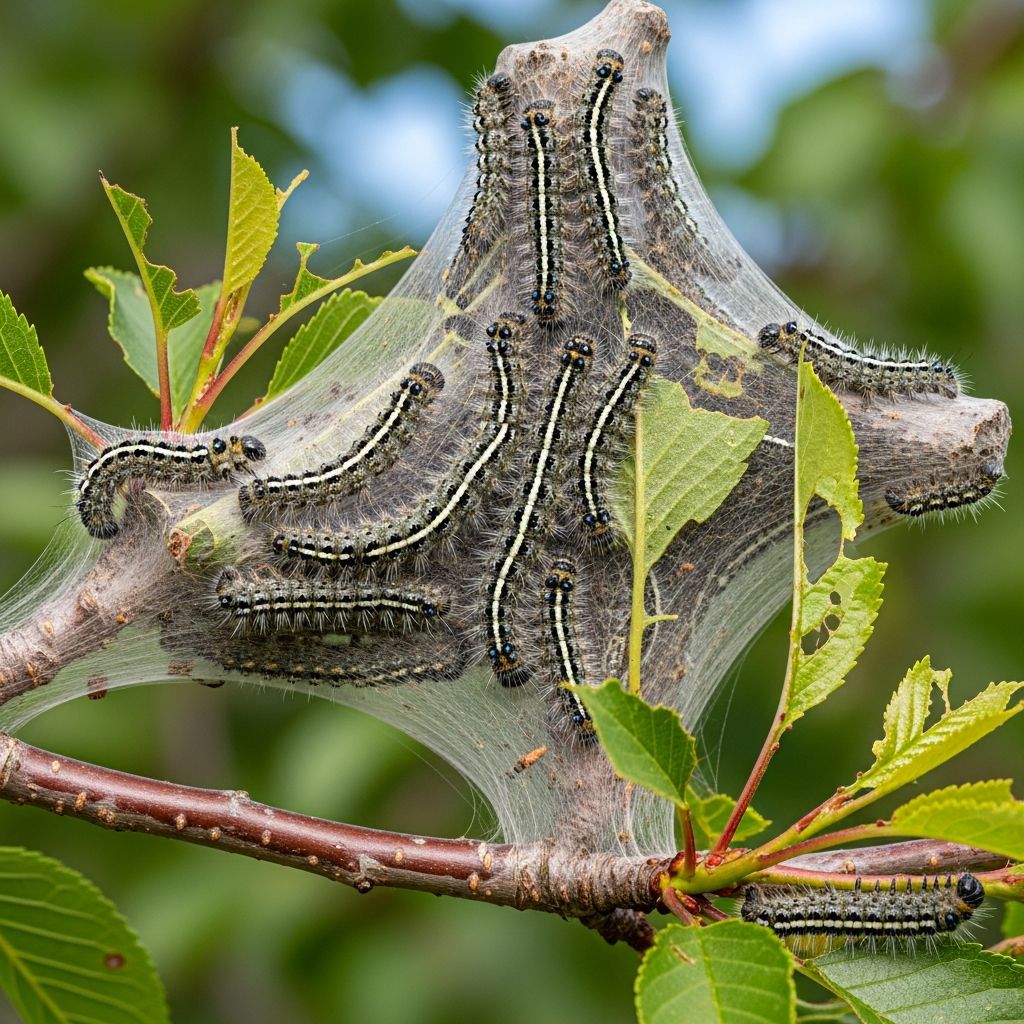
Eastern tent caterpillars pose a common threat to fruit and ornamental trees across North America, constructing silken tents in branch crotches and defoliating foliage during spring. These pests, scientifically known as Malacosoma americanum, can weaken trees if populations surge, though mature specimens typically recover fully. Effective management combines vigilance, cultural practices, and targeted interventions to minimize damage without unnecessary chemical use.
Understanding the Life Cycle of Eastern Tent Caterpillars
Grasping the biology of eastern tent caterpillars is essential for timely intervention. Eggs are laid in shiny, dark bands encircling twigs in late summer, overwintering until spring warmth triggers hatching around April. Newly emerged larvae, blue with white and black markings, spin silk tents at branch forks for shelter, venturing out to feed on leaves during daylight and retreating at night.
As they grow over five to six weeks, caterpillars undergo five instars, molting between stages. Mature larvae, about 2 inches long, wander to pupate in cocoons on tree trunks or nearby structures, emerging as drab brown moths by July to restart the cycle. This predictable pattern allows for proactive measures at vulnerable stages like egg masses and young larvae.
Spotting Signs of Infestation Early
Early detection prevents widespread defoliation. Look for frothy silken tents in upper branch crotches of host trees like cherry, apple, crabapple, and wild cherry, often appearing by mid-spring. Egg masses, resembling varnished bands 1 inch long, are visible on twigs after leaf drop in fall.
- Silken tents: Loose webs concentrated in crotches, not leaf-bound like fall webworms.
- Larvae: Hairy, black-spotted with blue and white stripes, 1-2 inches long.
- Defoliation: Skeletonized leaves near tents, frass (droppings) below.
- Mature signs: Cocoons on trunks, adult moths with white wing streaks.
Inspect trees weekly from egg hatch through larval dispersal, focusing on preferred hosts. Distinguish from similar forest tent caterpillars, which lack tents and feed gregariously on aspen.
Prevention Strategies for Long-Term Tree Health
Proactive steps reduce future outbreaks. Maintain tree vigor through proper watering, mulching, and balanced fertilization to enhance natural resilience. Promote biodiversity by planting diverse species less favored by tent caterpillars, such as oaks or maples.
Winter scouting for egg masses is key: prune and destroy them before hatch. Attract natural predators by installing birdhouses and feeders; birds like cuckoos devour larvae voraciously. Avoid broadleaf sprays that harm beneficial insects.
| Prevention Method | Timing | Benefits |
|---|---|---|
| Remove egg masses | Fall/Winter | Prevents 80-90% of hatch |
| Encourage birds | Year-round | Reduces larvae naturally |
| Tree maintenance | Spring/Fall | Boosts recovery speed |
Hands-On Removal Techniques
Manual methods are safest for small infestations, targeting nests when larvae cluster inside during dawn or dusk. Use gloves to scrape small tents into soapy water buckets or bags for destruction. For larger webs, twist a pole with nails or broom bristles to unwind and drop them.
Prune infested branches promptly, sealing cuts with tree wound dressing if needed, and burn or bury debris away from trees. Never burn tents on branches—fire risks more harm than pests. This approach suits accessible trees under 20 feet.
- Best times: Early morning/evening or cool days.
- Tools: Long pole, pruners, soapy bucket.
- Follow-up: Monitor for stragglers.
Biological Controls: Nature’s Allies
Leverage predators, parasites, and pathogens for sustainable control. Birds, wasps (braconid, ichneumonid), and spiders naturally suppress populations. Leave parasitized larvae with white cocoons intact—they host beneficial wasps.
Apply Bacillus thuringiensis var. kurstaki (Bt), a bacterium lethal to young caterpillars when ingested, sparing bees and birds. Spray foliage thoroughly at first tent signs; reapply after rain. Nematodes offer targeted soil drench for larvae holes.
Neem oil smothers eggs and disrupts growth hormones, applied dormant in winter. These options align with integrated pest management (IPM), minimizing environmental impact.
Chemical Options as Last Resort
Reserve synthetic insecticides for severe outbreaks on valuable trees. Bt leads organics, followed by spinosad, pyrethrins, or malathion for older larvae. Spray when caterpillars feed outside tents, wetting all leaf surfaces.
Horticultural oils suffocate early stages but avoid hot days to prevent phytotoxicity. Always follow labels, apply evenings, and protect pollinators. Broad-spectrum products kill beneficials, so prioritize selectivity.
| Product Type | Target Stage | Safety Notes |
|---|---|---|
| Bt (e.g., Caterpillar Killer) | Young larvae | Pet/bird-safe |
| Neem oil | Eggs/larvae | Organic, low toxicity |
| Spinosad | All larvae | Selective, reapply |
| Synthetic (bifenthrin) | Mature larvae | Restrict to heavy cases |
Integrated Pest Management Approach
IPM integrates monitoring, cultural, biological, and minimal chemical tactics. Scout weekly, act early on eggs/tents, foster predators, and use thresholds: treat if >10% defoliation on key trees. Track local cycles—outbreaks wane naturally via viruses/fungi.
Post-treatment, rake frass, sanitize tools. Educate neighbors for area-wide impact. Healthy trees tolerate minor defoliation, regrowing leaves rapidly.
Frequently Asked Questions (FAQs)
Are eastern tent caterpillars dangerous to humans?
No, they sting mildly at most and pose no health risk, though hairs irritate skin. Focus on tree protection.
Do trees die from tent caterpillar damage?
Rarely; repeated defoliation weakens but kills few mature trees. Young saplings need prompt action.
When is the best time to spray for tent caterpillars?
When young larvae feed outside tents, ideally evenings. Bt works best pre-third instar.
Can I burn tent caterpillar nests?
No—fire damages trees more and risks spread. Prune and destroy instead.
How do I differentiate tent caterpillars from webworms?
Tent caterpillars build in branch crotches spring; webworms at tips summer, leaf-enclosed.
Seasonal Calendar for Control Actions
- Fall: Scout/remove egg masses.
- Winter: Prune eggs, apply dormant oil.
- Spring (early): Monitor hatch, hand-remove small tents, Bt spray.
- Mid-Spring: Prune larger tents, encourage birds.
- Summer: Destroy cocoons, prep for next cycle.
By following this guide, homeowners safeguard landscapes economically and ecologically. Patience yields results as natural balances restore tree beauty.
References
- Tent Caterpillars & Web Worms — National Pesticide Information Center. Accessed 2026. https://www.pesticide.org/tent_caterpillars_web_worms
- How to Get Rid of Eastern Tent Caterpillars — Safer Brand. Accessed 2026. https://www.saferbrand.com/articles/get-rid-eastern-tent-caterpillars
- Eastern Tent Caterpillars — University of Connecticut, College of Agriculture. Accessed 2026. https://homegarden.cahnr.uconn.edu/factsheets/eastern-tent-caterpillars/
- Eastern Tent Caterpillar — Missouri Botanical Garden. Accessed 2026. https://www.missouribotanicalgarden.org/gardens-gardening/your-garden/help-for-the-home-gardener/advice-tips-resources/insects-pests-and-problems/insects/caterpillars/eastern-tent-caterpillar
- Tent Worms: Tent Caterpillar Home Remedy — Gardening Know How. Accessed 2026. https://www.gardeningknowhow.com/plant-problems/pests/insects/tent-worms-control.htm
- Eastern Tent Caterpillar — Penn State Extension. Accessed 2026. https://extension.psu.edu/eastern-tent-caterpillar/
- Fall Webworm & Eastern Tent Caterpillar Fact Sheet — University of New Hampshire Extension. Accessed 2026. https://extension.unh.edu/resource/fall-webworm-eastern-tent-caterpillar-fact-sheet

- Integrated M.A. in Applied Linguistics, University of Hyderabad
- 5+ years in editorial, instructional, SEO, and research-based writing
Sneha is a relationships and lifestyle writer with a strong foundation in applied linguistics and certified training in relationship coaching. She brings over five years of writing experience to theskillvault, crafting thoughtful, research-driven content that empowers readers to build healthier relationships, boost emotional well-being, and embrace holistic living. Her writing and insights reflect the belief that beauty, happiness, and wellness…