
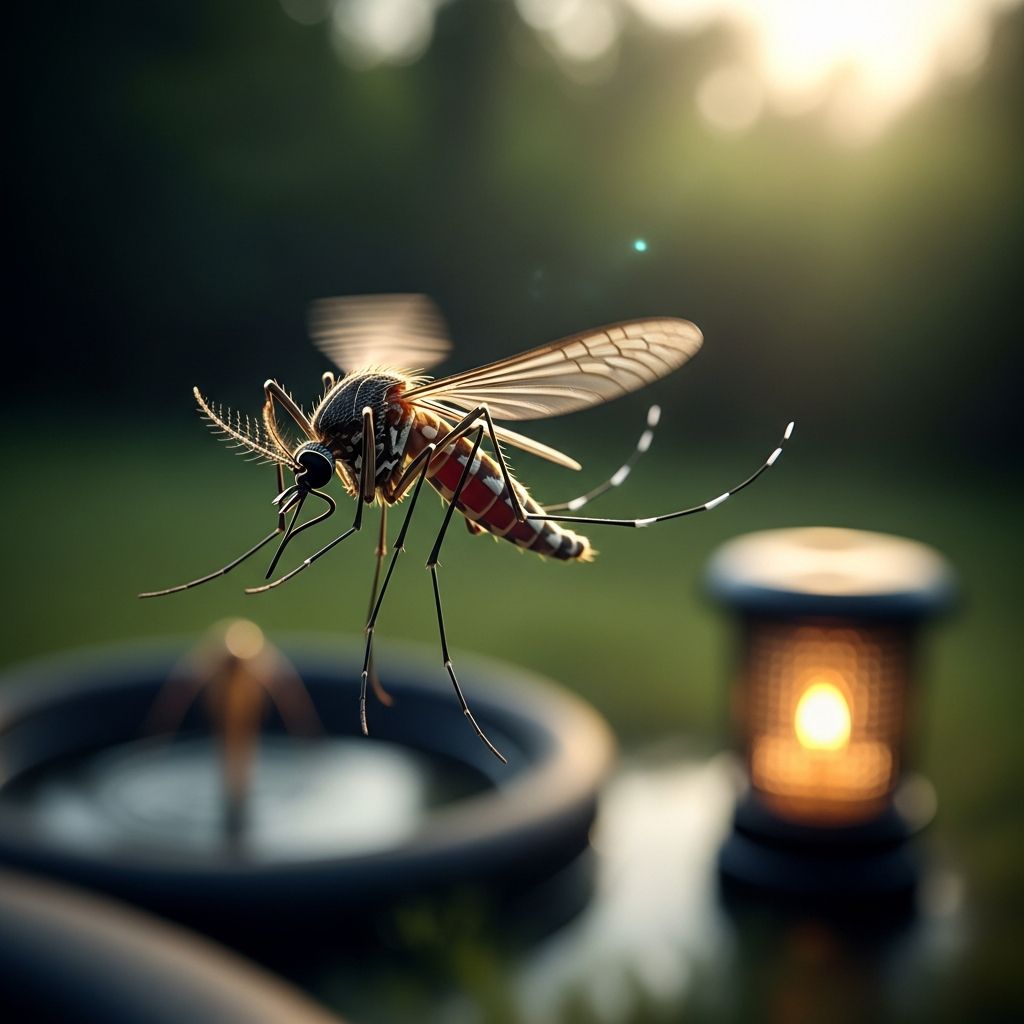
Mosquitoes pose significant challenges to outdoor enjoyment and public health due to their ability to transmit diseases. Implementing a multi-faceted approach targeting their life cycle stages offers the most reliable path to reduction. This guide explores practical, evidence-based methods to disrupt breeding, repel adults, and apply targeted controls.
Understanding the Mosquito Life Cycle for Better Control
Mosquitoes undergo four stages: egg, larva, pupa, and adult. Females lay eggs in standing water, where larvae develop over 7-10 days before emerging as biting adults. Focusing on the aquatic larval phase prevents up to 90% of the population from maturing, making it more efficient than solely targeting flying adults.
Adult mosquitoes seek shaded, humid resting spots during the day, becoming active at dusk. Recognizing these habits allows for precise interventions at vulnerable points.
Primary Prevention: Remove Breeding Habitats
The foundation of mosquito management lies in eliminating water sources where eggs are laid. Regularly inspect and address potential sites around properties.
- Empty bird baths, fountains, and pet water bowls weekly, refreshing with clean water.
- Clear clogged gutters and downspouts to prevent pooled water accumulation.
- Drill holes in tire swings or old tires storing rainwater; dispose of them properly.
- Fill tree holes, stumps, or low-lying depressions with soil or sand.
- Treat or cover rain barrels with fine mesh screens.
Swimming pools require constant circulation and chlorination; cover unused ones. These steps alone can drastically cut local populations without chemicals.
Larval Stage Interventions: Stop Them Before They Fly
Larvicides target immature mosquitoes in water, offering long-term suppression. Products containing Bacillus thuringiensis israelensis (Bti) bacteria or insect growth regulators like methoprene are highly selective, harming only mosquito larvae while sparing beneficial insects, fish, and wildlife.
| Method | Active Ingredient | Application | Duration |
|---|---|---|---|
| Mosquito Dunks/Briquettes | Bti or Methoprene | Drop in standing water (ponds, ditches) | 30 days |
| Pre-Strike Torpedo | Insect Growth Regulator | Place in water sources | Up to 90 days |
| Bucket Traps | Water + Organic Matter + Bti | Attract and kill larvae | Ongoing |
The ‘Bucket of Doom’ trap exemplifies this: Fill a 5-gallon bucket halfway with water, add grass clippings or leaves to ferment, attracting egg-laying females. Insert a Bti dunk to devour hatching larvae. Position several around the yard for optimal results.
Adult Mosquito Management Techniques
When prevention falls short, adulticides provide rapid knockdown. Ultra-low volume (ULV) sprays from EPA-registered products disperse fine droplets that contact and kill flying mosquitoes effectively.
- Indoor Space Sprays: Pyrethroids like allethrin offer immediate relief in enclosed areas.
- Outdoor Foggers: Backpack or hose-end models with zeta-cypermethrin target yards before events.
- Aerial Spraying: Used by professionals for large areas, minimizing environmental impact.
Apply at dusk when mosquitoes are most active, following label instructions to ensure safety.
Natural and DIY Repellent Solutions
For chemical-free options, leverage plant-based repellents and environmental tweaks. These provide temporary barriers ideal for patios or gatherings.
- Burn thyme or rosemary branches to deter nearby adults.
- Mix garlic powder, citric acid, and castile soap in water for a yard spray that repels and kills on contact.
- Essential oils: Geraniol, lemon eucalyptus, or peppermint diluted 1:10 with carrier lotion or witch hazel.
- Citronella torches/candles create localized zones; effectiveness drops in wind.
Fans disrupt flight patterns, as mosquitoes struggle in breezes over 5 mph. Combine with screens on porches for enhanced protection.
Advanced Tools and Traps for Persistent Problems
Technology aids in monitoring and reduction. CO2-emitting traps mimic human breath, vacuuming adults into containment. UV zappers attract via light but may kill non-target insects indiscriminately.
Structural changes like trimming vegetation reduce resting sites. Encourage mosquito-eating predators: bats via houses, dragonflies through pond plants, and fish like gambusia in ornamentals.
Integrated Pest Management: The Optimal Approach
Combining methods yields superior results. Start with source reduction (60-80% impact), add larvicides for remaining water, and use adult controls sparingly for outbreaks. Monitor weekly; adjust based on activity. Communities benefit from coordinated efforts, as mosquitoes travel up to 1-3 miles.
Safety note: Always select EPA-registered products, wear PPE during application, and notify neighbors if fogging outdoors.
Frequently Asked Questions (FAQs)
What is the most effective way to prevent mosquitoes?
Eliminate standing water sources weekly, as larvae cannot survive without it. This targets the root cause more effectively than sprays alone.
Are natural repellents as good as chemical ones?
Natural options like lemon eucalyptus provide short-term protection (2-4 hours) comparable to low-DEET formulas but require frequent reapplication.
How do I treat a large pond for mosquitoes?
Use Bti dunks or methoprene briquettes; they safely control larvae without harming aquatic life. Avoid broad-spectrum pesticides.
Can fans really keep mosquitoes away?
Yes, steady airflow above 300 feet per minute disrupts their flight and sensory detection, ideal for screened areas.
When should I call professionals for mosquito control?
For properties over 1 acre, disease concerns, or persistent infestations, district services offer surveillance and targeted spraying.
Seasonal Strategies for Year-Round Vigilance
In temperate climates, focus intensifies spring through fall. Winterize by draining equipment; in tropics, maintain constant measures. Track local outbreaks via health departments for proactive steps.
By prioritizing larval control and habitat denial, homeowners achieve sustainable reductions, minimizing bites and health risks effectively.
References
- Mosquito Control — American Mosquito Control Association. Accessed 2026. https://www.mosquito.org/mosquito-control/
- How to Get Rid of Mosquitoes in Your Yard — Lowe’s. Accessed 2026. https://www.lowes.com/n/how-to/get-rid-of-mosquitoes
- How to Get Rid of Mosquitoes — The Home Depot. Accessed 2026. https://www.homedepot.com/c/ab/how-to-get-rid-of-mosquitoes/9ba683603be9fa5395fab90c4977a49
- Success in Mosquito Control: An Integrated Approach — US EPA. 2022-04-28. https://www.epa.gov/mosquitocontrol/success-mosquito-control-integrated-approach
- KILL Every Mosquito In Your Whole Yard — YouTube (Zen Garden Oasis). Accessed 2026. https://www.youtube.com/watch?v=oBPWGPmpE40
- Resident’s Guide — Metropolitan Mosquito Control District. Accessed 2026. https://mmcd.org/residents-guide/
- Try the ‘bucket of doom’ to eliminate mosquitoes without harmful pesticides — University of North Carolina at Charlotte. 2022-07-15. https://ui.charlotte.edu/story/try-e28098bucket-doome28099-eliminate-mosquitoes-without-harmful-pesticides/
- Mosquito Control at Home — CDC. Accessed 2026. https://www.cdc.gov/mosquitoes/mosquito-control/mosquito-control-at-home.html

Medha Deb is an editor with a master's degree in Applied Linguistics from the University of Hyderabad. She believes that her qualification has helped her develop a deep understanding of language and its application in various contexts. Medha specializes in the areas of beauty, health, sports, and wellness and is committed to ensuring that the content on the website is…