
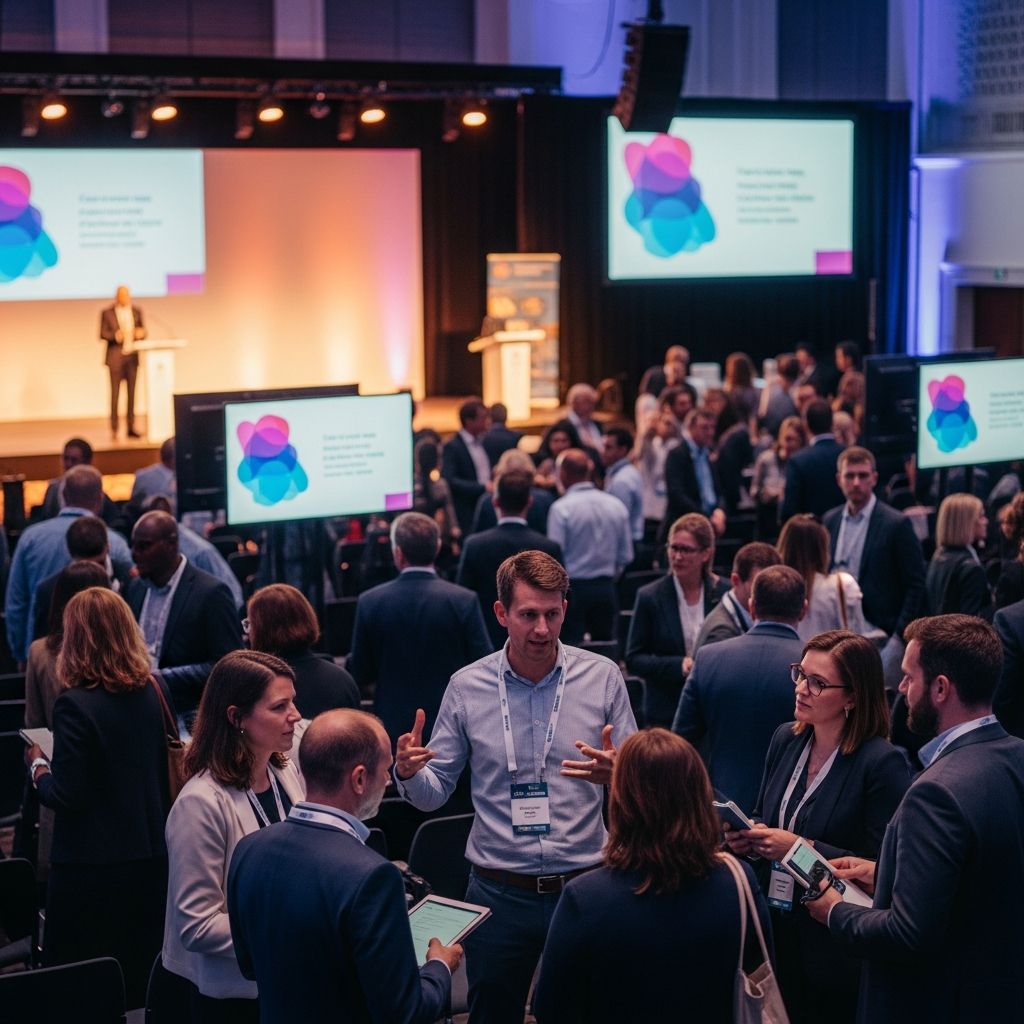
Conferences can accelerate your career: they put you in the same rooms as industry leaders, potential collaborators, and future employers while immersing you in fresh ideas. Yet many attendees leave feeling exhausted and unsure what they truly gained. With the right strategy, every event can be productive, energizing, and even enjoyable.
This guide walks you through how to plan before you go, navigate each day with intention, connect confidently with others, and follow up afterward so your new insights and relationships actually lead somewhere.
Clarify Why You Are Going Before You Register
Well before booking travel, decide exactly what a successful conference would look like for you. Research from professional development offices emphasizes that conference attendance is most valuable when it is tied to clear learning and networking goals rather than passive participation.
Define concrete outcomes
Replace vague hopes like “network more” with specific, measurable targets.
- Identify 3–5 people or types of people you want to meet (e.g., hiring managers, researchers in a niche topic, product leaders).
- Choose skills or topics you want to better understand by the end of the event.
- Set a networking goal, such as collecting 10 meaningful contacts, not just 50 business cards.
- Decide on at least one career or business problem you want input on.
These targets will guide your schedule, how you introduce yourself, and which conversations you prioritize.
Align the conference with your career stage
Different events serve different purposes. Ask:
- Is this conference known for cutting-edge content (great for learning) or high-powered networking (great for deals and jobs)?
- Does the typical attendee profile match the community you want to join in the next 2–5 years?
- Will attending help you publish, present, recruit, or be recruited?
If your goals and the event’s strengths don’t match, consider a different conference—or reset your expectations.
Pre-Conference Prep: Research, Plan, and Pack Intentionally
Most people underestimate how much of a conference’s value comes from preparation. A bit of planning can turn a chaotic schedule into a clear personal roadmap.
Study the program like a strategist
Once the agenda is available, do more than skim.
- Scan all tracks and mark any session that might be relevant, not just your first impulse choices.
- Highlight sessions led by speakers or organizations you want to meet.
- Note time blocks dedicated to keynotes, workshops, poster sessions, and social events.
- Look for new attendee orientations or welcome sessions if it’s your first time; these can help you understand the event culture quickly.
| Time Block | Your Primary Focus | Backup Plan |
|---|---|---|
| Morning | High-priority sessions (core skills, big-name speakers) | Coffee chats with new contacts if a session disappoints |
| Midday | Lunch networking and exhibitor hall | Quiet reflection and note cleanup if overstimulated |
| Afternoon | Interactive workshops or panels | Visit posters or smaller rooms for deeper conversations |
| Evening | Receptions and informal meetups | Short one-on-one meetings or rest if drained |
Use the event app and online tools to warm up connections
Many conferences now use mobile apps or online portals for schedules, messaging, and updates.
- Complete your profile with a photo, short bio, and clear description of what you do.
- Browse the attendee list and star people you might want to meet.
- Send a brief message before the event to 3–5 people to suggest a quick coffee or to say you’re looking forward to their session.
- Bookmark key sessions and set alerts so you don’t miss them.
Early, light-touch contact makes it easier to walk up and introduce yourself later because you are no longer a complete stranger.
Prepare a functional “conference kit”
Pack so you can move comfortably all day without scrambling for basics.
- Notebook or digital note-taking setup (with charging cables and adapters).
- Business cards or a digital contact card/QR code.
- Refillable water bottle and small, non-messy snacks.
- Layers: a blazer, cardigan, or scarf for overly air-conditioned rooms.
- A simple, professional outfit that matches the event’s dress norm.
If you will work remotely from the venue, follow basic travel security practices: avoid leaving your devices unattended and be aware of who can see your screen, especially in public spaces.
Mastering the First Day: Orient, Observe, and Reach Out
The opening hours set the tone for your entire experience. Use them to get oriented and start small conversations, not just to stand in the back and observe.
Arrive early to learn the terrain
- Pick up your badge at off-peak times if possible to avoid long lines.
- Walk the venue: find session rooms, restrooms, coffee spots, and quiet corners.
- Browse the exhibitor hall briefly to identify booths worth revisiting.
This quick reconnaissance reduces stress later when sessions change or you decide to pivot your plan.
Start with an easy win conversation
Use idle moments as networking opportunities rather than phone breaks. Experienced attendees stress that casual chats in hallways, coffee lines, or before sessions are often where the most valuable connections begin.
- In line: “What brought you to this conference?”
- Before a talk: “Have you heard this speaker before?”
- At a table: “Mind if I join you? I’m curious what you’re hoping to get from today.”
Keep it light; your goal is simply to warm up your social muscles and learn about the people around you.
Networking That Feels Natural (Not Awkward or Transactional)
Effective networking is more about genuine curiosity than relentless self-promotion. Research and practitioner guides alike emphasize being intentional, participatory, and open to peer learning rather than just collecting contacts.
Craft a flexible introduction
Prepare a short way to describe yourself that you can adapt to different contexts.
- Who you are: job title or main role.
- What you work on: a sentence or two about your focus area.
- What you’re exploring: the problem or question you’re hoping to learn about at the event.
For example, instead of reciting a résumé, you might say: “I work on customer experience for a mid-sized tech company, and I’m here to figure out how others are using data to improve onboarding.” That invites conversation.
Ask thoughtful questions and listen actively
- “What’s been the most useful session for you so far?”
- “What’s one challenge you’re trying to solve this quarter?”
- “Is there a session or speaker you’re especially excited about?”
Listen for overlaps with your work where you can offer a suggestion, share a resource, or simply empathize. People remember how you made them feel more than what you said.
Use social events strategically
Receptions, mixers, and informal dinners often provide easier networking than lecture-style sessions.
- Pick one or two social events you commit to attending, even if you feel tired.
- Set a small goal, such as having three substantial conversations before calling it a night.
- Rotate groups every 15–20 minutes so you meet more people without overstaying or monopolizing a conversation.
If large receptions drain you, seek smaller meetups or topic-based gatherings (e.g., first-timers, specific specialties, regional groups).
Making the Most of Sessions Without Burning Out
It’s tempting to attend sessions from morning to evening, but overscheduling leads to fatigue and shallow learning. Intentional selection and strategic skipping can produce better results.
Choose sessions for depth, not FOMO
- Prioritize talks that directly support your conference goals or current projects.
- Include a few sessions outside your niche to spark new ideas.
- Consider variety: mix lectures with interactive workshops or panels for different learning modes.
When two sessions conflict, check whether colleagues or new contacts can attend separately and share their notes later, a “tag team” approach recommended by advising and academic offices.
Schedule intentional breaks
Downtime is not wasted time; it’s when your brain consolidates information.
- Block short breaks to review notes and write one or two key takeaways per session.
- Use quiet corners to reset: stretch, hydrate, and check urgent messages.
- Protect at least one unscheduled block per day for spontaneous meetings.
Short gaps often turn into serendipitous hallway conversations or chances to join an impromptu small group.
Practical Note-Taking and Idea Capture
Without a system, conference notebooks become unreadable stacks that you never revisit. A simple structure can help you translate insights into action when you return.
Standardize your notes page
For each session, create the same layout:
- Title & Speaker (with contact info if available).
- 3 main ideas (bulleted, in your own words).
- Questions you want to explore later.
- Action items relevant to your team or projects.
Keep notes brief and focused on what you might actually use, not every detail the speaker mentions.
Capture people and context, not just content
- When you meet someone new, write where you met and what you discussed on their card or in your contacts app.
- Use tags like “mentor potential,” “vendor,” “research collaborator,” or “recruiter.”
- Take photos of key slides if permitted, especially those with frameworks or references.
These details will make your post-conference follow-up much easier and more personal.
Staying Safe and Professional While Traveling
Conferences often involve travel, public Wi-Fi, and long days away from your home office. Basic precautions protect both you and your organization.
- Avoid leaving laptops and phones unattended in public spaces or conference rooms, even for a few minutes.
- Be cautious when using public Wi-Fi; avoid accessing sensitive accounts unless you use a secure connection (such as a corporate VPN).
- Position your screen to minimize shoulder-surfing in crowded areas like planes or hotel lobbies; privacy filters can help.
- Keep any printed materials with confidential information out of common areas.
Professionalism includes safeguarding data, not just dressing appropriately and arriving on time.
Post-Conference: Turn Momentum Into Lasting Value
The real impact of a conference is decided in the days and weeks afterward. Without deliberate follow-up, ideas fade and new contacts drift away. Professional associations highlight reflection, documentation, and continued engagement as key to sustaining value.
Debrief with yourself and your team
- Within 48 hours, list your top 5 insights from the event.
- Highlight 3–5 people you want to stay in touch with long term.
- For your team, create a short summary email or slide with important takeaways, links, and recommended next steps.
Sharing what you learned reinforces your memory and demonstrates the value of sending you to future events.
Follow up with new contacts quickly
Timely, specific follow-up turns brief encounters into real relationships.
- Send a short email or message within a week reminding them how you met.
- Mention something you discussed or a session you both attended.
- Offer value where you can: share a resource, article, or introduction.
- Suggest a concrete next step only when relevant, such as a virtual coffee or a small collaboration.
Even if nothing immediate comes from the exchange, you are building a network of warm connections you can draw on later.
Implement at least one change
Choose a specific action inspired by the conference and commit to testing it within a set timeframe.
- A new workflow or tool you discovered in a session.
- An idea from a case study that you can adapt to your context.
- A career step you decided to explore, such as applying to present next year.
Small, concrete experiments are more realistic than sweeping transformations and are easier to evaluate.
Frequently Asked Questions (FAQs)
Q: How many sessions should I attend each day?
A: Aim for a mix of 3–5 formal sessions per day, plus unstructured time for networking, exhibits, and breaks. Overscheduling leads to fatigue and shallow learning, so leave space for spontaneous meetings or rest.
Q: What if I am attending alone and feel awkward?
A: Many attendees arrive solo. Start with small interactions—sitting next to someone in a session and asking what brought them there, or joining a new-attendee or first-timer meetup. Setting a modest goal, like introducing yourself to three people per day, makes it more manageable.
Q: Is it rude to skip a session for networking?
A: No—conferences are about both learning and relationship-building. If a conversation is productive or you have an opportunity to meet someone important to your goals, it can be more valuable than a session, as long as you are not skipping your own commitments or leaving a speaker mid-talk.
Q: How can introverts make the most of conferences?
A: Focus on depth over volume. Plan a few targeted conversations in advance, favor smaller sessions or roundtables, and schedule recovery time between social blocks. Preparing a short, flexible introduction and a few go-to questions can reduce anxiety when meeting new people.
Q: Are virtual or hybrid conferences worth it?
A: Yes, if you engage actively. Use chat and Q&A to participate, message speakers or attendees through the platform, and arrange short video coffees. While serendipitous hallway encounters are less common, virtual events can still offer high-quality content and efficient networking.
References
- 23 Networking tips to use at your next conference — Ex Ordo. 2023-03-15. https://www.exordo.com/blog/networking-at-a-conference
- Getting the Most out of a Professional Conference — University of California, Berkeley (Advising Matters). 2019-08-01. https://advisingmatters.berkeley.edu/getting-most-out-professional-conference
- How to Engage Conference Attendees: 10 Proven Strategies for 2025 — Bizzabo. 2024-01-10. https://www.bizzabo.com/blog/engage-conference-attendees
- How to Increase Conference Attendance: Real Stories from Association Professionals — Ewald Consulting. 2025-07-10. https://www.ewald.com/2025/07/10/increase-conference-attendance-real-stories/
- Best Practice when Attending a Conference or Traveling — Georgia Southern University, Office of Research. 2021-05-20. https://ww2.georgiasouthern.edu/research/researchintegrity/best-practice-when-attending-a-conference-or-traveling/

Medha Deb is an editor with a master's degree in Applied Linguistics from the University of Hyderabad. She believes that her qualification has helped her develop a deep understanding of language and its application in various contexts. Medha specializes in the areas of beauty, health, sports, and wellness and is committed to ensuring that the content on the website is…