
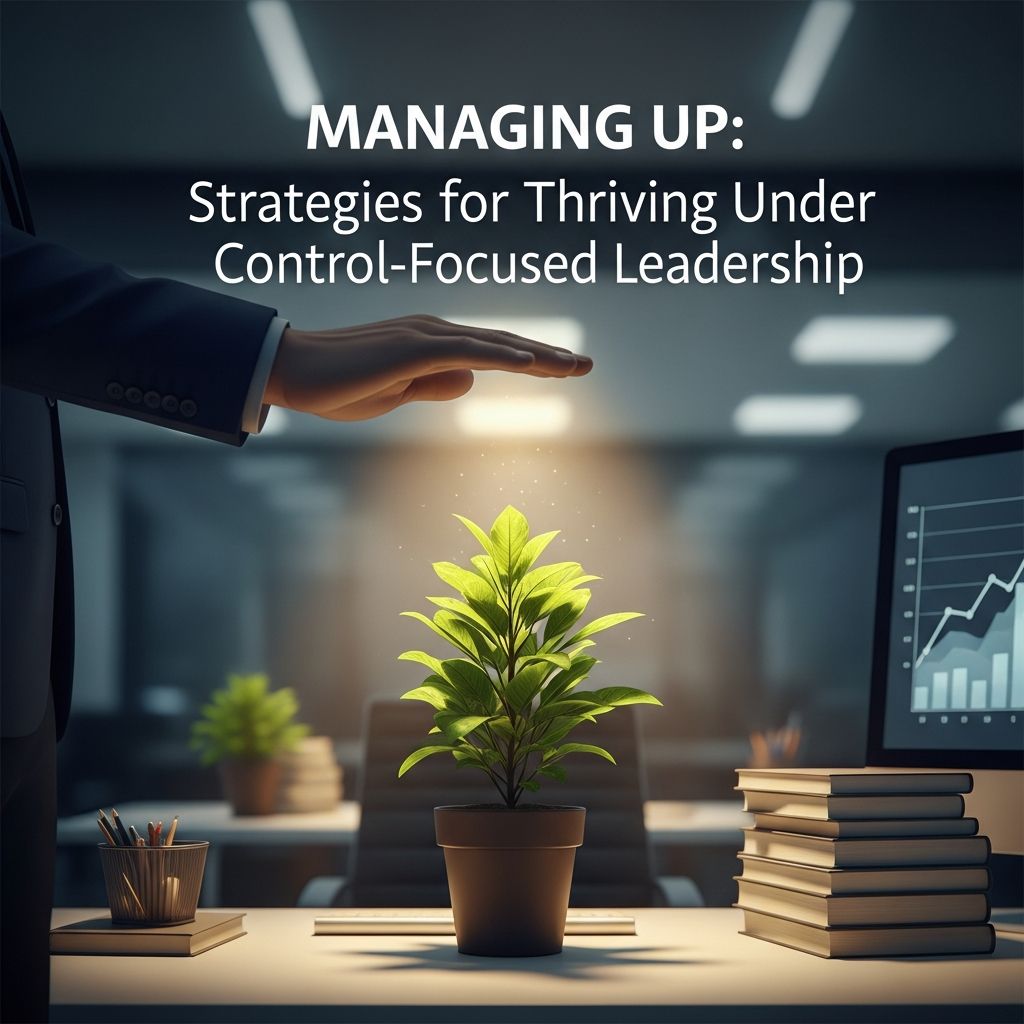
Understanding Controlling Management Styles in the Modern Workplace
The relationship between an employee and their supervisor significantly impacts overall job satisfaction, career progression, and workplace well-being. One particular management approach that creates substantial friction in professional environments is what many refer to as controlling or overly-involved leadership. This management style extends far beyond typical oversight and ventures into territory where supervisors insert themselves into nearly every decision, task, and interaction their team members undertake.
A controlling boss typically demonstrates excessive involvement in their team’s daily operations, often stemming from a fundamental belief that their direct intervention is necessary to ensure quality work. These managers position themselves as indispensable to project success and maintain tight oversight of how, when, and where work gets accomplished. Rather than establishing clear expectations and allowing their team autonomy in execution, controlling managers dictate processes, demand constant updates, and second-guess decisions made by capable professionals.
Recognizing the Patterns: What Controlling Management Looks Like
Identifying a controlling supervisor requires attention to behavioral patterns rather than isolated incidents. These patterns form a comprehensive approach to management that fundamentally undermines employee autonomy and professional development. Understanding these characteristics helps you validate your experience and determine appropriate response strategies.
The Refusal to Delegate Meaningful Responsibility
At the heart of controlling management lies an inability or unwillingness to delegate. Rather than assigning complete projects or decisions to capable team members, controlling bosses fragment work into micro-tasks they oversee personally. They may assign a project but require approval at each stage before proceeding. This approach suggests a fundamental distrust in their team’s capabilities, regardless of past performance or demonstrated competence. Even when employees repeatedly prove their ability to deliver quality work independently, the controlling manager finds reasons to remain involved, citing preferences for specific methods or concerns about standards.
Constant Monitoring and Surveillance Behaviors
Controlling managers maintain a persistent physical or digital presence in their team’s work environment. They frequently appear at your desk, join meetings they needn’t attend, and position themselves as necessary intermediaries in communications between team members and other departments. These supervisors create situations where employees feel continuously observed, unable to take a break without their manager appearing nearby or sending messages demanding status updates. This surveillance extends to digital channels, with controlling managers requesting documentation of time spent on tasks and detailed explanations of daily activities.
Excessive Meeting Requirements and Communication Control
Rather than relying on efficient, focused communication, controlling managers schedule constant meetings and status updates. These gatherings often serve little purpose beyond providing the manager opportunities to redirect work or reassert control. The manager typically dominates these meetings, speaking extensively while offering minimal space for team input. Attendance becomes mandatory, and absence invites scrutiny. Additionally, controlling managers often position themselves as the sole communication channel, discouraging direct conversations between team members and other departments or leadership levels.
Inflexible Process Requirements and Creativity Restriction
Controlling managers operate from a rigid belief that there is one correct way to accomplish tasks—their way. They provide detailed, step-by-step instructions for completing work and become defensive or dismissive when employees suggest alternative approaches. This rigidity prevents innovation and improvement, as any deviation from the prescribed method gets interpreted as insubordination or lack of respect. The manager focuses on whether employees followed the exact process rather than evaluating whether the work achieved its intended outcome effectively.
The Underlying Causes: Why Managers Adopt Controlling Behaviors
Understanding the roots of controlling management behavior provides context that, while not excusing the approach, can inform your response strategy. Most controlling managers do not wake up intending to be difficult supervisors. Instead, various professional and personal factors shape their management philosophy.
Anxiety and Inexperience in Leadership Roles
Many first-time managers experience significant anxiety about their new responsibilities. When promoted into supervisory positions without adequate training or mentorship, some managers develop controlling behaviors as a coping mechanism. They feel they must maintain tight oversight to prevent mistakes that might reflect poorly on them. As they gain confidence and experience, some naturally evolve toward more delegative approaches. Others, however, internalize the controlling style and continue it throughout their careers.
External Pressure from Senior Leadership
Sometimes controlling management originates not with the immediate supervisor but with their boss. When senior leadership demands excessive reporting, unrealistic quality standards, or frequent status updates, managers may cascade this pressure downward through controlling their team more tightly. The manager may genuinely believe they have no choice but to maintain this level of oversight to satisfy their own supervisors.
Perfectionism and Fear of Failure
Some controlling managers operate from a deeply ingrained perfectionism that makes delegation psychologically difficult. They struggle to accept that others might approach tasks differently, even if results remain equally good or better. Often, past experiences—perhaps working with an employee who failed to meet expectations—reinforce their belief that only their personal oversight prevents disaster. This fear-based management style becomes self-perpetuating, as talented employees leave the controlling environment, replaced by less experienced individuals who require more guidance, seemingly validating the manager’s controlling approach.
Organizational Culture and Systemic Issues
In some organizations, controlling management represents the dominant leadership paradigm. A company culture that emphasizes control, compliance, and fear naturally produces controlling managers at all levels. These organizations typically lack psychological safety, discourage innovation, and prioritize conformity over results. Individual managers may perpetuate controlling behaviors because they were trained into them by the organizational culture rather than developing them independently.
Impact on Employee Well-Being and Professional Development
Controlling management creates measurable negative consequences for both individual employees and organizational performance. Understanding these impacts helps clarify why tolerating this management style indefinitely harms your career.
Diminished Sense of Ownership and Autonomy
When a manager controls how, when, and where you work, you naturally disengage from genuine ownership of outcomes. You become a task executor following instructions rather than a professional exercising judgment. This loss of autonomy correlates with decreased job satisfaction, motivation, and engagement. Over time, high-performing employees in these environments begin operating at minimum acceptable levels rather than bringing their full capabilities and creativity to work.
Stunted Leadership Development and Growth
Professional growth requires opportunities to make decisions, learn from mistakes, and develop increasingly complex skills. Controlling managers prevent this development by refusing to grant their team members decision-making authority or space to learn through experience. Even employees with significant potential find their careers stagnating under controlling managers, as they gain no opportunity to develop leadership capabilities that would qualify them for advancement.
Erosion of Trust and Morale
Constant monitoring and micromanagement send a clear message: your manager does not trust you. Rather than motivating higher performance, this lack of trust demoralizes employees and creates resentment. Team cohesion deteriorates as members compete for limited autonomy or resources. Some employees respond by doing the bare minimum, while others become hypervigilant about their manager’s reactions, spending emotional energy managing the relationship rather than focusing on work.
Practical Strategies for Managing the Relationship
While you cannot change your manager’s behavior directly, you can employ strategies that reduce friction, protect your professional development, and preserve your well-being within the relationship.
Build a Foundation of Consistent Reliability
Controlling managers often justify their behavior by pointing to past mistakes or instances where team members failed to deliver. Establish an indisputable track record of meeting deadlines, exceeding quality standards, and following through on commitments. Document your successes and contributions. Over time, consistent reliability may reduce your manager’s perceived need to monitor your work so closely, particularly if you can demonstrate that your independent work produces excellent results.
Communicate Proactively and Transparently
Rather than waiting for your manager to demand status updates, provide regular communications about your progress, challenges, and timelines. This proactive approach reduces the manager’s anxiety and perceived need to check on you constantly. Frame these communications as helpful information sharing rather than reporting. Send brief, organized updates that address potential concerns before your manager voices them. This strategy demonstrates responsibility while reducing the manager’s motivation to hover and monitor.
Seek to Understand the Manager’s Priorities and Preferences
Ask clarifying questions about your manager’s expectations, preferred communication methods, and priority outcomes. Understanding what matters most to your manager allows you to address their concerns preemptively. While this requires emotional labor, it can reduce friction significantly. For instance, if your manager prioritizes detailed documentation, provide thorough records of your work processes and decisions. This investment in understanding their perspective may create space for increased autonomy in other areas.
Establish Clear Boundaries While Remaining Professional
Protecting your well-being requires setting certain boundaries, though doing so carefully with a controlling manager matters tremendously. Rather than overtly resisting, frame boundaries as matters of efficiency or professional standards. For example, if your manager interrupts you constantly, you might suggest a scheduled check-in time rather than ad-hoc interruptions, framing this as a way to maximize productivity. Avoid being the first to implement new communication tools your manager suggests, as these often provide more avenues for monitoring.
Document Your Work and Contributions Thoroughly
Maintain clear records of your accomplishments, projects completed, and contributions made. This documentation serves multiple purposes: it protects you if your manager misrepresents your performance, it provides evidence for performance reviews and promotion discussions with other leaders, and it helps you maintain perspective on your actual capabilities and value. When a controlling manager constantly questions your work, your own documentation helps counter internalized doubt.
Develop Relationships Beyond Your Direct Manager
While your controlling manager may discourage direct relationships with other departments or senior leaders, cultivating these connections strategically protects your career. Build genuine professional relationships based on work collaboration rather than bypassing your manager. These relationships provide perspective on whether your manager’s concerns are legitimate or rooted in control issues. They also create advocates for your advancement and help you discover future opportunities if your current environment becomes untenable.
Recognizing When to Move On
Strategies for managing a controlling manager work best when the manager can gradually adapt their behavior. However, some controlling managers resist any change, and some organizational environments entrench controlling behavior so deeply that no individual strategy succeeds. Recognizing these situations helps you avoid investing years in a relationship that cannot improve.
Consider exploring new opportunities if controlling management begins affecting your physical or mental health, if you notice your confidence and professional judgment deteriorating, or if you observe that your manager becomes more controlling over time rather than less. Additionally, if you achieve consistent success in other areas of your work but your manager continues to doubt your capabilities, the problem likely reflects the manager’s issues rather than your performance.
Frequently Asked Questions
Q: Is all close oversight automatically controlling management?
A: No. Some managers provide close oversight during onboarding, for complex projects, or when supporting new team members learning unfamiliar skills. The difference lies in intent and flexibility. Supportive managers gradually reduce oversight as employees demonstrate competence. Controlling managers maintain oversight indefinitely regardless of performance or capability.
Q: Can I request a transfer to another department if my manager is controlling?
A: Many organizations allow internal transfers, though the process varies. Approach HR or explore opportunities within your company strategically. Frame your interest as career development rather than criticizing your current manager, which could damage your reputation.
Q: Should I directly tell my controlling manager that their style bothers me?
A: Direct confrontation rarely succeeds with controlling managers and may escalate tensions. Instead, use indirect approaches like the strategies described above. If your company has anonymous feedback channels or 360-degree reviews, these provide safer ways to communicate concerns.
Q: How do I know if I should stay and manage the relationship or leave?
A: Consider the impact on your well-being, career growth, and long-term goals. If the role provides significant learning, industry credibility, or stability worth the difficulties, staying makes sense. If the controlling management prevents professional growth or harms your health, leaving becomes the better choice.
Q: Can HR help address a controlling manager?
A: HR can help if the controlling behavior crosses into harassment, discrimination, or violation of company policies. For general management style concerns, HR support depends on organizational culture. Document specific behaviors before approaching HR, and be prepared that HR might encourage communication with your manager first.
References
- What is the Micromanagement Definition — Echelon Front. Accessed 2025. https://echelonfront.com/what-is-the-micromanagement-definition/
- The Ultimate Guide to Micromanagers: Signs, Causes, Solutions — Gallup. 2023. https://www.gallup.com/workplace/315530/ultimate-guide-micromanagers-signs-causes-solutions.aspx
- Micromanager Definition: 25 Signs and How To Deal With One — Indeed. Accessed 2025. https://www.indeed.com/career-advice/career-development/micromanager
- 8 Signs of a Micromanager Boss & Ways to Deal With it — Teambuilding. Accessed 2025. https://teambuilding.com/blog/micromanager-boss
- Altering the Micromanagement Paradigm — Management Concepts. Accessed 2025. https://www.managementconcepts.com/resource/altering-the-micromanagement-paradigm/

- Integrated M.A. in Applied Linguistics, University of Hyderabad
- 5+ years in editorial, instructional, SEO, and research-based writing
Sneha is a relationships and lifestyle writer with a strong foundation in applied linguistics and certified training in relationship coaching. She brings over five years of writing experience to theskillvault, crafting thoughtful, research-driven content that empowers readers to build healthier relationships, boost emotional well-being, and embrace holistic living. Her writing and insights reflect the belief that beauty, happiness, and wellness…