
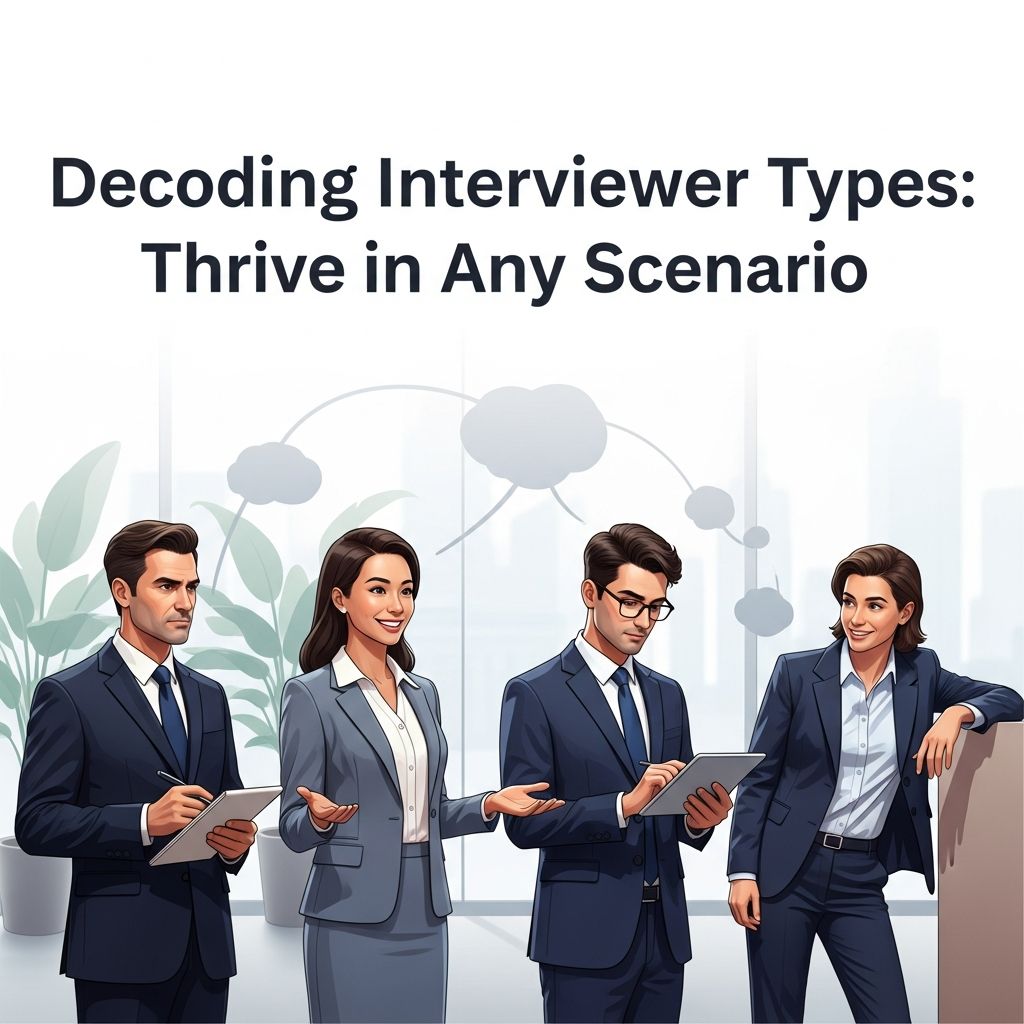
Job interviews represent a critical crossroads in the career journey, where first impressions and adaptability determine success. Understanding the various interviewer archetypes equips candidates with the tools to navigate conversations effectively, showcase strengths, and build rapport. This guide explores common interviewer profiles drawn from industry insights, offering practical tactics to excel regardless of the style encountered.
Recognizing Patterns in Interview Dynamics
Interviews rarely follow a uniform script; interviewers bring their unique temperaments, roles, and objectives to the table. Some prioritize efficiency and facts, while others probe deeply for cultural fit or resilience. By observing verbal cues, body language, and question patterns early on, candidates can pivot their responses dynamically. Research from career development resources highlights how these variations influence hiring outcomes, emphasizing preparation for multiple scenarios.
Key indicators include pacing of questions, tone of voice, and engagement level. A rapid-fire style signals focus on core competencies, whereas open-ended inquiries reveal interest in behavioral insights. Adapting swiftly enhances perceived fit and professionalism.
The Direct Professional: Efficiency Over Banter
This archetype embodies streamlined professionalism, minimizing small talk to dive straight into qualifications. Expect concise questions about experience, skills, and achievements without warmth or chit-chat. Their stoic demeanor might feel cold, but it stems from a mandate to assess suitability quickly amid packed schedules.
To connect effectively:
- Deliver crisp, data-backed answers highlighting quantifiable results, such as “Increased sales by 25% through targeted campaigns.”
- Respect their tempo by avoiding tangents; structure responses using the STAR method (Situation, Task, Action, Result) for clarity.
- Mirror their directness with confident posture and steady eye contact, signaling executive presence.
Such interviewers value substance over flair, making them ideal for roles demanding precision and results orientation.
The Probe Expert: Testing Resolve Under Pressure
Characterized by intense, relentless questioning, this type aims to uncover authenticity by challenging responses. Queries may veer into hypotheticals or past setbacks, designed to reveal composure and honesty. Frustration tests are common, probing for hidden flaws or inconsistencies.
Strategies for success include:
- Maintaining calm through deep breathing; respond thoughtfully rather than defensively.
- Anchoring answers in truth, e.g., framing weaknesses as growth opportunities: “I once missed a deadline due to scope creep, which taught me to implement better project scoping.”
- Redirecting gently to job relevance: “That experience directly applies to managing client expectations here.”
Excelling here demonstrates resilience, a trait prized in high-stakes environments like consulting or leadership positions.
Executive Decision-Makers: Strategic Visionaries
C-suite leaders focus on big-picture alignment, seeking evidence of innovation, risk-taking, and team collaboration. With a 38% likelihood of encountering them per industry stats, preparation involves storytelling around failures-turned-successes and bold initiatives. They prioritize cultural and strategic fit over tactical details.
Impress by:
- Sharing narratives of overcoming obstacles, e.g., “A product launch failure led to pivoting strategies, boosting revenue 40%.”
- Demonstrating fearlessness: Discuss calculated risks and their impacts.
- Emphasizing teamwork: “Collaborated cross-functionally to align on vision.”
These encounters test long-term potential, aligning candidates with organizational goals.
HR Gatekeepers: Cultural Fit Assessors
Human resources specialists screen for policy adherence, soft skills, and red flags. They wield veto power on mismatches, emphasizing behavioral questions and company values. Alarm bells ring for arrogance or poor self-awareness.
Key approaches:
- Show humility and coachability through balanced self-assessments.
- Align responses with core values, researching the company’s mission beforehand.
- Exhibit enthusiasm for growth: “Eager to contribute to your diversity initiatives.”
Their endorsement often paves the way for hiring manager approval.
External Recruiters: Perfect Match Pursuers
Agency professionals enforce strict criteria, lacking flexibility to bend requirements. They seek precise alignments in skills and experience, often pre-screening rigorously.
Stand out via:
- Precise resume-to-role mapping: “My AWS certification matches your cloud migration needs.”
- Concise pitches underscoring immediate value.
- Follow-up with tailored thank-yous reinforcing fit.
Building trust here accelerates advancement to internal rounds.
Hiring Managers: Team Integration Evaluators
These department leads gauge personality compatibility and practical contributions. Questions explore values, work style, and collaboration history to envision team dynamics.
Win them over by:
- Highlighting interpersonal successes: “Fostered team morale during a merger.”
- Asking insightful questions about challenges: “How does the team tackle evolving priorities?”
- Conveying genuine interest in their vision.
Rapport here often trumps HR’s influence.
Comparative Overview of Interviewer Styles
| Interviewer Type | Key Traits | Best Response Strategy | Common Pitfalls to Avoid |
|---|---|---|---|
| Direct Professional | Stoic, efficient | Concise, results-focused | Over-talking, jokes |
| Probe Expert | Intense, challenging | Honest, composed | Defensiveness, evasion |
| Executive | Strategic, visionary | Story-driven, bold | Tactical details only |
| HR Gatekeeper | Policy-oriented, cultural | Value-aligned, humble | Arrogance, mismatches |
| External Recruiter | Rigid, criteria-driven | Precise matching | Vague qualifications |
| Hiring Manager | Team-focused, personal | Relational, inquisitive | Generic responses |
Mastering Adaptability Across Styles
Versatility arises from acute observation and flexible communication. Start neutral, then adjust based on cues: tighten for direct types, expand narratively for executives. Practice with mock sessions simulating styles to build intuition. Post-interview reflections refine approaches for future rounds.
Body language universally matters—upright posture, eye contact, and nods convey engagement. Tailor stories to resonate, always tying back to the role’s demands.
Frequently Asked Questions
What if an interviewer mixes multiple styles?
Observe dominant patterns and blend strategies; prioritize the most evident traits while staying authentic.
How do I recover from a poor start?
Acknowledge briefly, refocus on strengths with a strong example, and maintain positivity.
Should I research the interviewer’s background?
Yes, LinkedIn profiles reveal roles and priorities, enabling targeted rapport-building.
What role does silence play in interviews?
Strategic pauses invite elaboration or signal thoughtfulness; avoid filling them unnecessarily.
Are virtual interviews different for these types?
Technical glitches amplify direct styles’ impatience; test setups and over-communicate clarity.
Building Confidence for Unpredictable Encounters
Preparation transcends rote answers—cultivate self-awareness and resilience. Role-play diverse scenarios, solicit feedback from mentors, and visualize success. Each interview hones skills, transforming challenges into career accelerators. By decoding these archetypes, candidates position themselves as adaptable leaders ready for any organizational context.
Ultimately, authenticity paired with strategic adaptation unlocks doors. Embrace the variety as opportunity, turning interviews into dialogues that propel professional trajectories forward.
References
- Four Types of Interviewers — Selectek. 2018-09-07. https://www.selectek.com/2018/09/07/roswell-four-types-of-interviewers/
- 11 Types of Interviewees and How To Identify Them — Indeed.com. Accessed 2026. https://www.indeed.com/career-advice/interviewing/types-of-interviewees-and-how-to-identify
- 4 Types of Interviewer – and How to Impress Them All — Recruiter.com. Accessed 2026. https://www.recruiter.com/recruiting/4-types-of-interviewers-and-how-to-impress-them-all/

- Integrated M.A. in Applied Linguistics, University of Hyderabad
- 5+ years in editorial, instructional, SEO, and research-based writing
Sneha is a relationships and lifestyle writer with a strong foundation in applied linguistics and certified training in relationship coaching. She brings over five years of writing experience to theskillvault, crafting thoughtful, research-driven content that empowers readers to build healthier relationships, boost emotional well-being, and embrace holistic living. Her writing and insights reflect the belief that beauty, happiness, and wellness…