
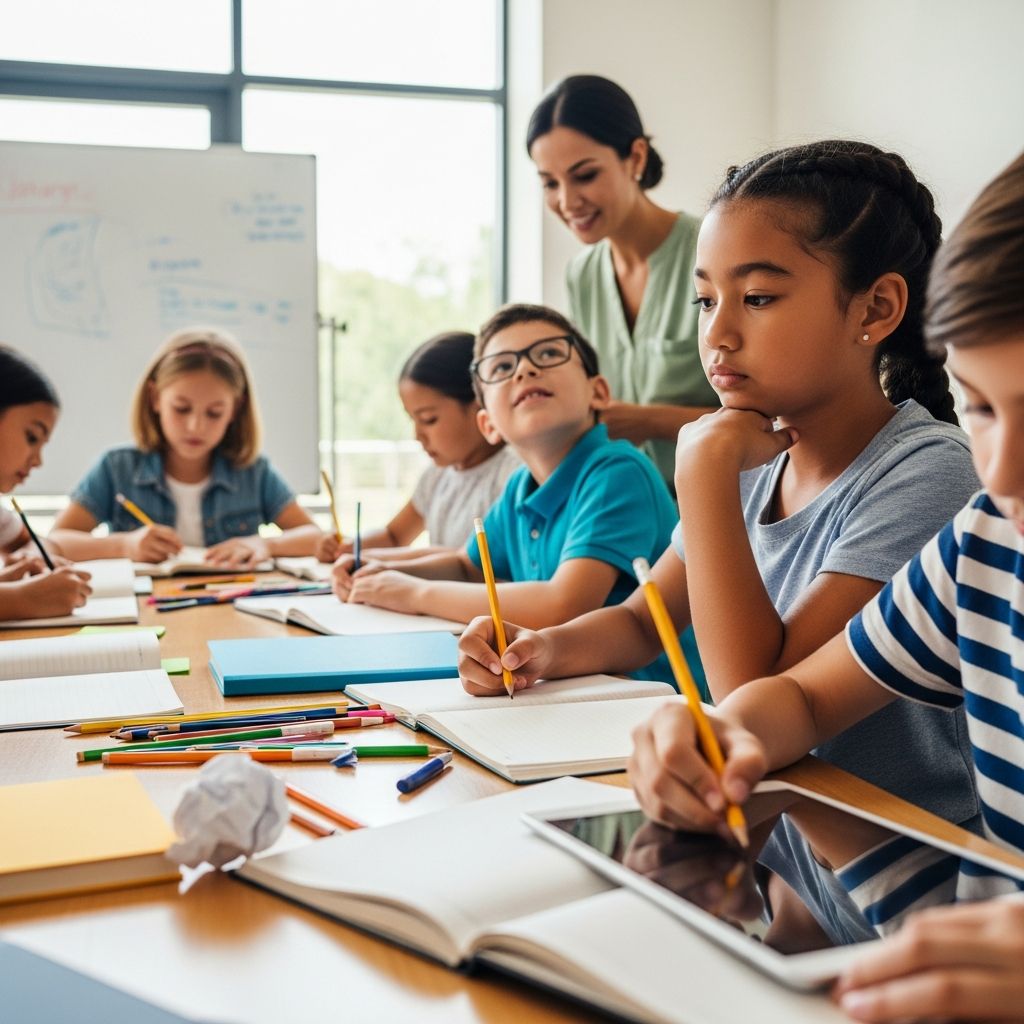
Writing is a fundamental skill that extends far beyond academic success—it is a powerful tool for self-expression, communication, and critical thinking. Yet many children struggle with writing, finding it frustrating or intimidating. The good news is that writing proficiency can be systematically developed through intentional strategies, consistent practice, and supportive environments both at school and home. Understanding how to scaffold writing development enables educators and parents to create conditions where children not only improve their technical abilities but also develop genuine enthusiasm for written communication.
The Foundation: Understanding How Children Develop Writing Abilities
Children do not simply arrive at writing proficiency overnight. Instead, writing development unfolds through gradual exposure to written language, observation of writing models, and opportunities to practice in meaningful contexts. The journey typically involves three interconnected dimensions: conceptual knowledge (understanding what writing is and its purposes), procedural knowledge (knowing how to physically form letters and organize thoughts on paper), and generative knowledge (the ability to apply writing skills creatively in new situations).
Research demonstrates that children who are frequently exposed to environmental print—signs, labels, lists, and other written materials in their surroundings—develop stronger connections between spoken and written language. This exposure creates a mental foundation upon which more formal writing instruction can build. When children see adults writing naturally as part of daily routines, they begin to internalize writing as a normal, purposeful activity rather than an isolated academic task.
Modeling: The Power of Demonstrating the Writing Process
One of the most effective yet underutilized strategies is explicit modeling of the writing process. Rather than presenting finished written products to children, teachers and parents should demonstrate the actual act of writing, thinking aloud as they compose. This might involve writing the day’s agenda, creating a classroom announcement, or drafting a message while children observe.
When adults model writing, children gain insight into the mental processes involved. They witness how writers generate ideas, organize thoughts, make word choices, and revise their work. This transparency demystifies writing and shows children that writing is a process involving multiple steps, not a skill that arrives fully formed. Thinking aloud during modeling—verbalizing decisions about word selection, spelling, or sentence structure—makes invisible cognitive processes visible and learnable.
Practical modeling opportunities include:
- Writing morning messages or daily agendas in view of students rather than preparing them in advance
- Creating shopping lists, thank-you notes, or invitations while narrating your decision-making
- Composing brief stories or descriptions and discussing alternative word choices
- Labeling classroom objects and environments to demonstrate functional writing purposes
Environmental Print: Creating Spaces Rich with Written Language
The physical environment profoundly influences children’s literacy development. Classrooms and homes that feature abundant, accessible writing materials and visible examples of written language create an implicit message that writing is valued and attainable. Strategic placement of writing tools throughout spaces encourages spontaneous writing engagement without requiring explicit teacher direction.
Effective environmental design includes:
- Baskets or stations containing diverse writing implements—markers, colored pencils, different pen types, crayons
- Varied paper options in multiple sizes, colors, and textures to maintain novelty and interest
- Clipboards positioned in different learning centers to facilitate writing across contexts
- Sticky notes, small whiteboards, and chalkboards available for informal writing experiments
- Functional labels identifying classroom areas, supplies, and routines
When writing materials are conspicuously available and attractively organized, children are more likely to engage in writing independently. This exposure builds comfort with writing tools and normalizes writing as an everyday activity rather than something reserved for formal lessons.
Purpose-Driven Writing: Connecting Writing to Real-World Functions
Children are far more motivated to write when they understand the purpose behind their writing and can see how writing serves genuine communicative functions. Writing that connects to children’s interests, current classroom themes, or real-world applications generates intrinsic motivation that worksheets and isolated assignments cannot.
Authentic writing purposes might include:
- Creating labels for a classroom farm display or thematic center
- Writing messages to classmates, family members, or community members
- Developing shopping lists, wish lists, or invitation cards
- Composing responses to characters in stories or about classroom events
- Documenting observations through journals or learning logs
- Creating books or collaborative narratives based on shared experiences
When writing serves a genuine communicative need, children understand why careful attention to form and clarity matters. A child writing a letter to a friend is far more invested in legibility and word choice than a child completing a copying exercise with no intended audience.
Reading as the Foundation for Writing Development
The relationship between reading and writing is reciprocal and powerful. Children who read extensively develop larger vocabularies, familiarity with diverse sentence structures, exposure to different writing styles, and implicit knowledge of grammatical conventions. These elements directly transfer to their own writing production.
When children encounter words in meaningful contexts through reading, those words move from their receptive vocabulary (words they understand) to their productive vocabulary (words they can use in speaking and writing). Additionally, reading exposes children to multiple models of how ideas can be expressed, providing templates and inspiration for their own compositional work.
To leverage reading for writing development:
- Read aloud diverse genres, styles, and authors to expose children to varied writing models
- Discuss books beyond comprehension, analyzing how authors made particular word choices or structured their narratives
- Select stories featuring writing activities—characters writing letters, creating lists, or documenting events
- Encourage children to emulate writing styles they admire by trying similar structures with their own ideas
Building Fine Motor Foundations and Letter Formation
Before children can comfortably produce written text, they must develop the fine motor control necessary for letter formation and sustained writing. Structured approaches to letter formation instruction help children develop muscle memory and proper formation habits from the beginning, preventing later correction difficulties.
The Wet-Dry-Try method provides a developmentally appropriate progression for letter formation. This three-stage approach begins with children tracing letters using a damp sponge on a chalkboard, progresses to tracing with a dry paper towel, and concludes with tracing using chalk. This sequence builds kinesthetic awareness and muscle memory while providing sensory feedback that makes the learning process engaging rather than tedious.
Complementary fine motor activities include:
- Finger painting and pre-writing strokes to develop hand control
- Manipulating magnetic letters or letter tiles
- Tracing in sand, salt trays, or other tactile media
- Copying simple shapes and patterns before advancing to letter formation
- Using specialized pencils, grips, or writing tools designed to accommodate developing hands
Interactive Games and Playful Learning Experiences
Playful, game-based approaches to writing instruction engage children’s natural inclination toward play while developing writing-related skills. Structured games focused on letter recognition, word building, and vocabulary development make skill practice enjoyable rather than burdensome.
Engaging writing games include:
- Letter hunts where children search for specific letters in books, magazines, or environmental print
- Rhyming word games where children identify and write words with similar ending sounds
- Word family activities building on common patterns and onsets
- Picture description exercises where children examine images and write labels or sentences
- Word creation games using manipulatives or magnetic letters
Games transform skill practice into playful exploration, reducing anxiety and increasing the frequency with which children engage in writing-related activities.
Scaffolding: Providing Appropriate Support for Individual Learners
Children progress through writing development at different rates and require varying levels of support. Effective instruction recognizes each child’s current abilities and provides scaffolding—temporary support structures—that allow access to more challenging tasks while gradually releasing responsibility to the learner.
Scaffolding strategies include:
- Beginning with open-ended prompts for confident writers while providing sentence starters or word banks for children needing more support
- Participating in collaborative writing experiences where the teacher helps organize and record ideas while children contribute content
- Using graphic organizers to help children structure their thinking before writing
- Providing specific, immediate feedback addressing one or two elements rather than overwhelming children with global critiques
- Gradually reducing support as children demonstrate increased independence and confidence
Collaborative and Peer Learning Experiences
Writing does not have to be a solitary activity. Collaborative writing experiences, where multiple writers contribute to a single piece or where peers review and provide feedback, offer multiple learning benefits. Children learn from observing others’ writing processes, gain new ideas through discussion, and develop metalinguistic awareness by analyzing peers’ writing choices.
Collaborative experiences might include:
- Group creation of classroom narratives about shared experiences
- Peer response partnerships where children read each other’s drafts and discuss them
- Shared writing projects where multiple children contribute illustrations or pages to a class book
- Writing circles or author sharing sessions where children present their work and receive supportive feedback
Vocabulary Development and Language Richness
The words available to children directly constrain what they can express in writing. Intentional vocabulary development expands children’s expressive possibilities and allows them to communicate with greater precision and sophistication. Building vocabulary involves both breadth (knowing many words) and depth (understanding nuances of meaning and usage).
Vocabulary-building strategies include:
- Creating home or classroom word books where children collect and illustrate new words
- Rhyming games that highlight word families and phonetic patterns
- Discussing word meanings in context rather than through isolated definitions
- Playing games that involve finding words with similar meanings or exploring how word choices affect tone
- Reading diverse texts that introduce vocabulary across various domains and contexts
Connecting Home and School Writing Experiences
Children’s writing development accelerates when home and school environments work in concert, providing consistent messages about writing’s value and offering frequent practice opportunities in varied contexts. Parents who understand effective writing strategies can reinforce school instruction and extend learning into authentic home contexts.
Home-based writing activities that support development include:
- Creating and posting shopping lists, to-do lists, and other functional writing
- Writing notes, letters, and messages to family members and friends
- Labeling household items and creating picture books together
- Encouraging journaling about daily experiences or favorite activities
- Writing replies to notes or messages left by parents
Schools can strengthen home-school connections by communicating with families about developmental writing stages, suggesting age-appropriate home activities, and inviting families to share examples of writing their children engage in at home. When parents understand that unconventional spelling, letter-like shapes, and scribbling represent important developmental stages rather than errors to be corrected, they can provide supportive encouragement rather than criticism.
Digital Tools and Modern Writing Practices
Contemporary writing increasingly involves digital platforms and tools. Touch-typing skills enable children to compose at the pace of their thinking, reducing the physical constraints that can slow young writers. For children with handwriting difficulties, typing offers an alternative pathway to written expression without penalizing ideas due to motor skill limitations.
Incorporating digital writing opportunities:
- Teaching keyboarding skills through games and practice activities
- Creating digital stories using presentation software
- Composing emails or digital messages to authentic audiences
- Using word processors with built-in spell-check and grammar tools to support independence
- Exploring digital storytelling platforms and creative writing applications
Celebrating Diverse Forms of Writing Expression
Writing development encompasses more than conventional written text. Accepting and celebrating all forms of emerging writing—scribbling, drawing, letter-like shapes, and unconventional attempts—validates children’s efforts and maintains motivation during the journey toward conventional writing. A child’s elaborate drawing with accompanying marks represents genuine attempts at written communication and should be treated as legitimate writing, not dismissed as “not real writing.”
Conclusion
Developing strong writing skills in children requires systematic, intentional support across multiple contexts. By combining explicit modeling, purposeful practice, authentic writing opportunities, rich reading experiences, and supportive feedback, educators and parents create conditions where writing flourishes. The goal extends beyond technical proficiency to fostering genuine enthusiasm for written expression—helping children discover that through writing, they can share ideas, connect with others, and give voice to their thoughts and imagination.
References
- Promoting Preschoolers’ Emergent Writing — National Association for the Education of Young Children (NAEYC). November 2017. https://www.naeyc.org/resources/pubs/yc/nov2017/emergent-writing
- Tips for writing with your child — nidirect (Northern Ireland Direct). https://www.nidirect.gov.uk/articles/tips-writing-your-child
- Building Foundational Writing Skills in Early Childhood Classrooms — Edutopia. https://www.edutopia.org/article/teaching-handwriting-early-childhood-classrooms/
- 7 Ways to improve writing skills for kids — Read and Spell. https://www.readandspell.com/us/how-to-improve-writing-skills-for-kids
- 10 Fun Exercises to Improve Writing Skills for Kids — Twinkl Blog. https://www.twinkl.com/blog/10-fun-exercises-to-improve-writing-skills-for-kids
- Writing in Early Childhood Classrooms: 12 Best Practices — Reading Rockets. https://www.readingrockets.org/topics/writing/articles/writing-early-childhood-classrooms-12-best-practices

Medha Deb is an editor with a master's degree in Applied Linguistics from the University of Hyderabad. She believes that her qualification has helped her develop a deep understanding of language and its application in various contexts. Medha specializes in the areas of beauty, health, sports, and wellness and is committed to ensuring that the content on the website is…