
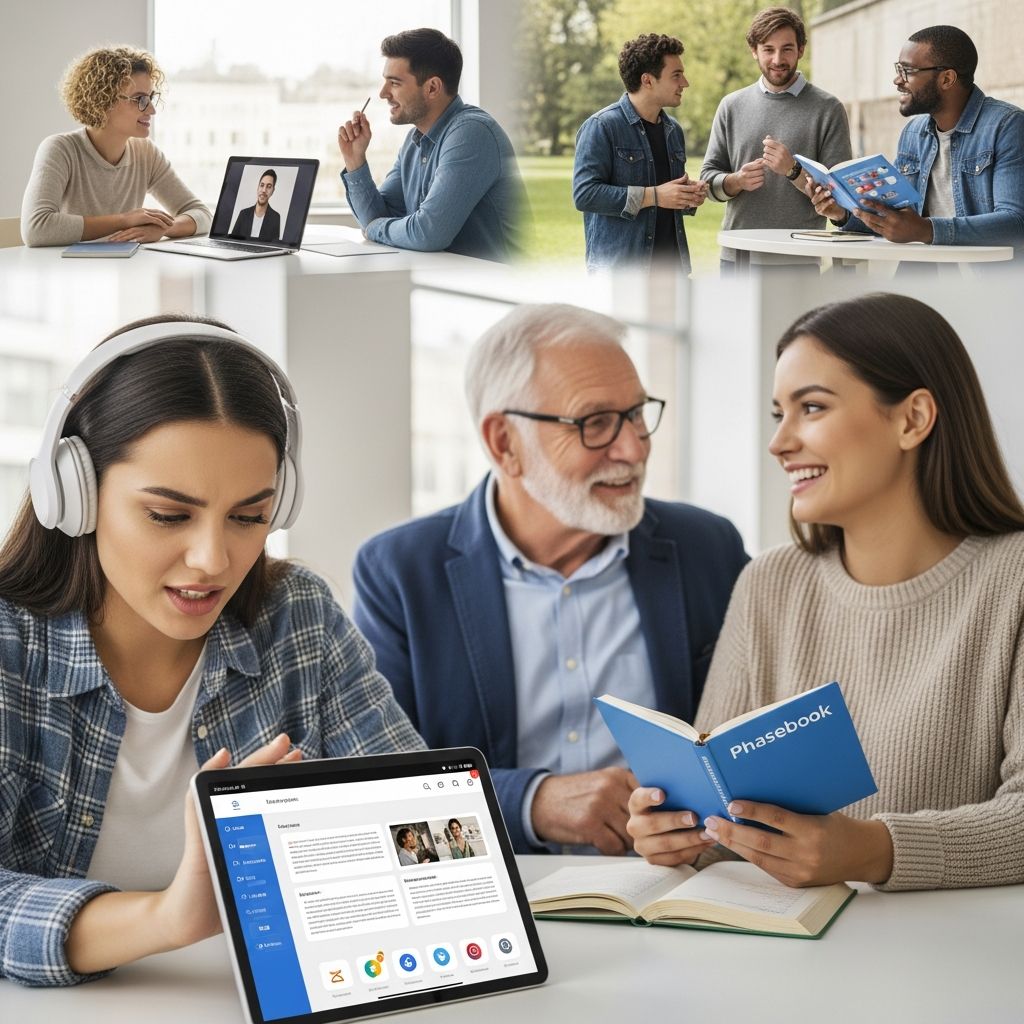
Acquiring proficiency in a foreign language opens doors to new cultures, career opportunities, and personal growth. This guide explores practical, research-backed approaches to accelerate your learning journey, drawing from cognitive science and proven methodologies to build skills in listening, speaking, reading, and writing.
Setting Clear and Achievable Goals
Success in language acquisition begins with defined objectives. Rather than vague aims like “get fluent,” focus on specific, measurable targets such as “hold a 10-minute conversation about daily routines in three months” or “learn 50 new words weekly.” Short-term goals keep motivation high and progress trackable.
- Break down long-term visions into weekly milestones.
- Use SMART criteria: Specific, Measurable, Achievable, Relevant, Time-bound.
- Track progress in a journal or app to celebrate wins and adjust as needed.
Research shows goal-oriented learners retain vocabulary longer and engage more consistently.
Building a Strong Foundation: Essential Vocabulary and Grammar
Start with high-frequency words and basic structures that cover everyday communication. Prioritize the top 1,000 words, which account for 80% of common speech. Use audio courses for the first 100 words and core grammar to quickly form simple sentences.
| Phase | Focus | Tools/Methods | Expected Outcome |
|---|---|---|---|
| Week 1-2 | Basic vocab (greetings, numbers, family) | Flashcards, apps | Form simple sentences |
| Week 3-4 | Common verbs, adjectives | Audio drills | Describe routines |
| Ongoing | Idioms, connectors | Reading simple texts | Fluent paragraphs |
Memory strategies like grouping words by theme or associating them with images enhance retention.
Immersion: Surrounding Yourself with the Language
Immersion transforms passive exposure into active acquisition. Integrate the target language into daily life by switching device settings, labeling household items, or listening to podcasts during commutes. This creates a natural environment where comprehensible input—language slightly above your level—drives subconscious learning.
- Watch subtitled shows, progressing to native-speed content.
- Listen to music or news daily for rhythm and intonation.
- Cook recipes or narrate chores aloud in the new language.
Consistent exposure builds intuition for grammar and pronunciation without rote drilling.
Mastering Listening and Pronunciation Skills
Listening regularly improves comprehension and models native speech patterns. Begin with slow, clear audio, then advance to podcasts or dialogues. Shadowing—repeating after speakers—strengthens pronunciation and fluency.
Key techniques include:
- Active listening: Note unfamiliar words and contexts.
- Dictation exercises: Write what you hear to train ear and spelling.
- Repetition with variation: Mimic accents and speeds.
Studies confirm regular listening boosts overall proficiency by providing rich input.
Spaced Repetition: The Key to Long-Term Retention
Spaced repetition systems (SRS) optimize memory by reviewing material at increasing intervals. Instead of cramming, revisit words just before forgetting, leveraging the spacing effect for 90% better recall.
Implement via apps that algorithmically schedule reviews:
- Day 1: Learn 20 words.
- Day 2: Review all + 20 new.
- Day 4: Review mastered + new.
- Extend gaps as mastery grows.
This method excels for vocabulary, outperforming massed practice.
Conversation Practice: From Solo to Social
Speaking is the ultimate test of mastery. Start solo by talking to yourself or recording monologues, then progress to language partners. One hour of corrected conversation equals five hours of classroom study.
- Use apps for AI chats or tandem exchanges.
- Join local meetups or online platforms.
- Focus on communication over perfection; errors are learning opportunities.
Tutoring accelerates gains, providing personalized feedback.
Reading and Writing for Depth
Reading exposes you to structures and vocabulary in context, while writing reinforces output. Begin with graded readers, then news or novels. Write daily journals, summarizing readings or events.
Strategies:
- Guestimate meanings from context before dictionaries.
- Keep a word bank from readings for active use.
- Seek feedback on writings via exchanges.
Extensive reading builds fluency effortlessly.
Leveraging Technology and Tools
Modern tools streamline learning:
| Tool Type | Examples | Best For |
|---|---|---|
| SRS Apps | Anki, Duolingo | Vocabulary |
| Conversation | HelloTalk, iTalki | Speaking practice |
| Immersion | Netflix, Podcasts | Listening |
| Grammar | Busuu, Grammarly | Writing |
Combine with Google Translate for quick chats, but verify usage.
Advanced Strategies: Memory and Metacognition
Employ memory tactics like mnemonics, imagery, and actions. Oxford’s framework categorizes them into mental linkages, images/sounds, reviews, and actions. Metacognitive strategies—planning, monitoring, evaluating—enhance efficiency.
- Create stories linking new words to personal experiences.
- Review via semantic maps or spaced quizzes.
- Self-assess weekly: What worked? Adjust accordingly.
Affective strategies manage motivation and anxiety, while social ones involve peers.
Overcoming Common Obstacles
Plateaus and frustration are normal. Combat with variety: alternate activities, set micro-goals, and rest. Consistency trumps intensity—20 minutes daily yields better results than marathons.
Address perfectionism by embracing “good enough” output early.
Daily Routine for Optimal Progress
A balanced 30-60 minute routine:
- 10 min: SRS review.
- 15 min: Listening/reading input.
- 15 min: Speaking/writing output.
- 5 min: New vocab/grammar.
Adapt to lifestyle for sustainability.
Measuring Progress and Staying Motivated
Assess via CEFR levels or self-tests. Track speaking duration or reading speed. Rewards like cultural media sustain drive.
Frequently Asked Questions (FAQs)
How long to reach fluency?
Typically 600-2200 hours depending on language similarity and dedication. Consistent practice halves time.
Best for beginners?
Apps for basics, then immersion and tutors.
Should I focus on one skill first?
Balance all four, prioritizing input (listening/reading) initially.
What if I forget words?
Spaced repetition and immediate reuse prevent this.
Group classes vs. one-on-one?
One-on-one is fastest, but groups build social confidence.
References
- Memorization strategy and foreign language learning — PMC – NIH. 2023-09-28. https://pmc.ncbi.nlm.nih.gov/articles/PMC10520696/
- The most effective language learning strategies — Mango Languages. 2023. https://mangolanguages.com/resources/learn/general/how-to-learn-a-language/your-learning-language-guide/the-most-effective-language-learning-strategies
- 25 Tips to Learn a Foreign Language — Mark Manson. 2014-10-15. https://markmanson.net/learn-a-foreign-language
- Language Learning Strategies — University of Oregon Libraries. 2023. https://opentext.uoregon.edu/languagelearningedition1/chapter/language-learning-strategies/

- Integrated M.A. in Applied Linguistics, University of Hyderabad
- 5+ years in editorial, instructional, SEO, and research-based writing
Sneha is a relationships and lifestyle writer with a strong foundation in applied linguistics and certified training in relationship coaching. She brings over five years of writing experience to theskillvault, crafting thoughtful, research-driven content that empowers readers to build healthier relationships, boost emotional well-being, and embrace holistic living. Her writing and insights reflect the belief that beauty, happiness, and wellness…