
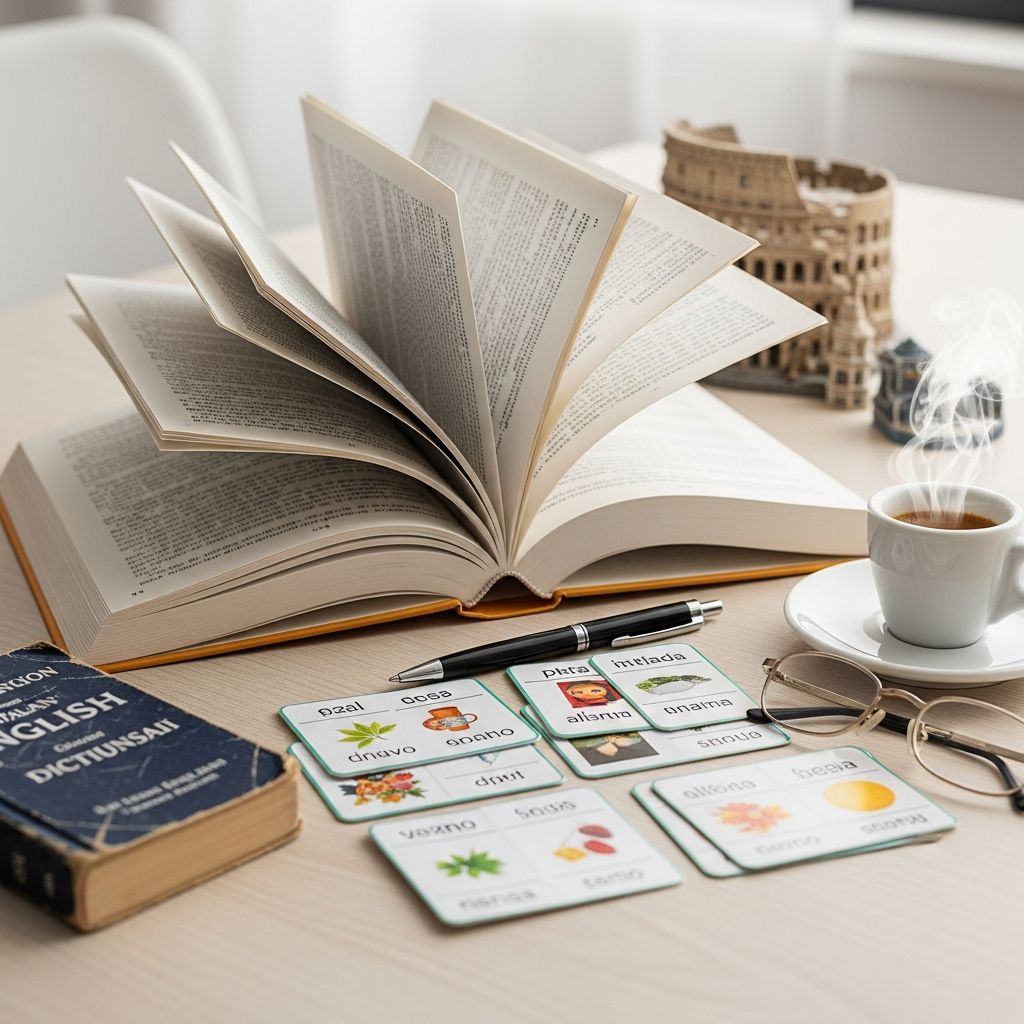
Embarking on the journey to learn Italian opens doors to one of the world’s most melodic and culturally rich languages. Spoken by over 60 million people primarily in Italy, Italian is renowned for its musical rhythm and historical influence on art, music, and cuisine. For beginners, success lies in focusing on practical skills like pronunciation, basic vocabulary, and consistent practice rather than overwhelming grammar rules from the start. This guide draws from expert-recommended methods to help you build a strong foundation, speak confidently, and enjoy the process.
Mastering Italian Pronunciation from Day One
Italian pronunciation is phonetic—what you see is what you say—making it far more straightforward than English. Unlike English’s silent letters and irregular sounds, every Italian letter has a consistent sound. Vowels are pure: A as in ‘father’, E as in ‘bed’ or ‘say’, I as in ‘machine’, O as in ‘or’ or ‘go’, and U as in ‘rule’. Consonants like C before E/I sound like ‘ch’ in ‘church’, and G before E/I like ‘j’ in ‘gem’. Double consonants, such as in ‘casa’ (house) vs. ‘cassa’ (cash register), require a brief pause, adding rhythm to speech.
To perfect this, listen to native speakers daily via podcasts or apps. Stress typically falls on the penultimate syllable unless marked with an accent, like paesaggio (landscape). Practice by repeating phrases aloud, recording yourself, and comparing to natives. This builds an ear for the language’s flow, essential before tackling speaking.
- Key tip: Roll your Rs lightly, like a purr, not a growl.
- Practice: Say ‘buongiorno’ (good morning)—stress on ‘gior’.
- Avoid common pitfalls: Don’t pronounce ‘gli’ as ‘glee’ but as ‘lyee’.
Building Your Core Vocabulary Arsenal
Start with high-frequency words and phrases used in everyday conversations. Prioritize cognates—words similar to English due to Latin roots and French influence—like importante (important), famiglia (family), or università (university). These give instant recognition, boosting confidence. Aim for 20-50 words daily, focusing on nouns, verbs, adjectives, and adverbs.
Essential categories include greetings, politeness, numbers, and directions. Memorize using spaced repetition apps like Anki or Memrise, reviewing daily to embed them in long-term memory.
| Category | Italian | English |
|---|---|---|
| Greetings | Ciao / Buongiorno | Hello / Good morning |
| Politeness | Grazie / Prego | Thank you / You’re welcome |
| Numbers | Uno, due, tre | One, two, three |
| Directions | Dov’è…? / A destra | Where is…? / To the right |
Expand to travel essentials: Parla inglese? (Do you speak English?), Un caffè, per favore (A coffee, please). Group words thematically—food, family, travel—for better retention.
Navigating Basic Grammar Without Overwhelm
Italian grammar seems daunting with gendered nouns and verb conjugations, but beginners should master basics first. Nouns are masculine (ending in -o, like libro—book) or feminine (-a, like casa). Articles match: il/lo for masculine singular, la for feminine, plurals i/gli/le.
Verbs fall into three groups: -are (parlare—to speak), -ere (leggere—to read), -ire (dormire—to sleep). Learn present tense for regulars: Io parlo (I speak), Tu parli (You speak). Irregulars like essere (to be: sono, sei, è) and avere (to have: ho, hai, ha) are crucial as they’re most common—practice them as vocabulary.
Adjectives agree in gender/number: bello (beautiful, m. sing.), bella (f. sing.), bei (m. pl.). Skip complex rules initially; use context from listening.
- Start with: Subject-verb-object structure, similar to English.
- Pro tip: Subject pronouns (io, tu) are often omitted as verb endings indicate person.
Effective Daily Practice Routines
Consistency trumps intensity—15-30 minutes daily yields better results than cramming. Immerse via listening: podcasts like Coffee Break Italian or short stories for beginners. Focus on keywords (nouns/verbs) even if not fully understanding.
Speaking practice: Shadow natives by repeating audio. Find language partners on apps like Tandem. Track progress in a journal: note new words, phrases mastered weekly.
- Listen 10 mins: Tune into beginner podcasts.
- Vocab drill: 20 words via flashcards.
- Speak aloud: Describe your day in simple Italian.
- Review mistakes: Don’t fear them—they’re progress markers.
Patience is key; fluency builds over months with steady exposure.
Cultural Nuances and Common Pitfalls
Italians value expressive communication—use gestures, maintain eye contact. Regional dialects vary (e.g., Sicilian vs. Tuscan), but standard Italian works everywhere. False friends: camera means room, not camera (fotocamera); burro is butter, not burro (donkey is asino).
Avoid translating word-for-word; think in Italian patterns. Embrace the passion—Italians speak with melody, rising intonation for questions.
50 Must-Know Italian Phrases for Beginners
Here’s a curated list for travel and daily use:
- Greetings: Ciao (hi/bye informal), Salve (hello formal), Arrivederci (goodbye).
- Polite: Per favore (please), Mi dispiace (sorry), Scusa (excuse me informal).
- Questions: Come stai? (How are you?), Quanto costa? (How much?), Dov’è il bagno? (Where’s the bathroom?).
- Travel: Un biglietto, per favore (One ticket, please), A sinistra/destra (Left/right).
- Food: Il conto, per favore (The bill, please), Allergico a… (Allergic to…).
Frequently Asked Questions (FAQs)
Is Italian hard for English speakers?
No, cognates and phonetic spelling make it accessible; focus on irregular verbs and gender.
How long to basic conversational Italian?
3-6 months with daily 30-min practice yields travel-ready skills.
Best apps for beginners?
Duolingo for basics, Anki for vocab, HelloTalk for speaking.
Do I need perfect grammar to speak?
No—communicate first; grammar refines later.
Why learn numbers early?
Vital for shopping, directions, and ordering.
References
- 10 Advice to Learn the Italian Language as a Beginner — Easitalian. 2023-05-15. https://www.easitalian.com/10-top-advice-learning-the-italian-language-as-a-beginner/
- 5 Very Good, Very Specific Tips To Learn Italian — Babbel Magazine. 2024-02-10. https://www.babbel.com/en/magazine/tips-learn-italian
- 40 Italian Phrases to Learn Before Your Next Trip to Italy — Trafalgar Real Word. 2023-11-20. https://www.trafalgar.com/real-word/italian-phrases/
- 50 Italian Words & Phrases to Know Before Visiting Italy — The Destination Designer. 2024-01-05. https://thedestinationdesigner.com/single-post/50-italian-words-phrases-to-know-before-visiting-italy
- The Best Way to Learn Italian and Start Speaking — The Linguist Blog. 2023-08-12. https://blog.thelinguist.com/the-best-way-to-learn-italian/

Medha Deb is an editor with a master's degree in Applied Linguistics from the University of Hyderabad. She believes that her qualification has helped her develop a deep understanding of language and its application in various contexts. Medha specializes in the areas of beauty, health, sports, and wellness and is committed to ensuring that the content on the website is…