
Understanding the Foundation of Saturated Solutions
In chemistry, solutions exist on a spectrum of concentration. At one end lies an unsaturated solution, where additional solute can dissolve. At the other end stands a saturated solution—a state representing the **maximum dissolved solute** that a particular solvent can hold under specific conditions. This equilibrium state is fundamental to countless applications, from laboratory experiments to culinary preparation and industrial processes.
A saturated solution achieves a critical balance: the rate at which solute particles dissolve into the solvent precisely equals the rate at which dissolved particles return to solid form through crystallization. Once this point is reached, no additional solute will dissolve, regardless of stirring effort or mixing intensity. Understanding this principle is essential for anyone seeking to prepare such solutions reliably and consistently.
Key Variables Influencing Solution Saturation
Before attempting to create a saturated solution, recognizing the factors that control saturation is crucial. Temperature plays perhaps the most significant role in determining how much solute a given solvent can accommodate.
Temperature Effects on Saturation
Most solid solutes exhibit dramatically different solubility at different temperatures. For instance, salt demonstrates minimal dissolution in cold water, yet substantially greater quantities dissolve when water temperature increases. This temperature-dependent behavior means that a solution saturated at one temperature may become unsaturated when heated or supersaturated when cooled. Understanding your target solute’s specific temperature-solubility relationship allows for precise control over the preparation process.
Pressure Considerations
While less obvious than temperature effects, pressure also influences solubility in many systems. Gases show particularly pronounced pressure sensitivity, making pressure manipulation a viable strategy in certain applications. For most solid-solute scenarios in standard laboratory conditions, pressure changes have minimal practical impact, but awareness of this variable remains valuable.
Solvent Selection and Saturation Limits
Not all solvent-solute combinations can form saturated solutions. Gases mixed with other gases generally dissolve completely in all proportions without reaching saturation, since reactive gases would fundamentally alter the system. Similarly, completely miscible liquids—such as water and ethanol—blend uniformly without forming saturation points. Recognizing these exceptions prevents wasted effort and confused results.
The Direct Dissolution Method: Adding Solute to Solvent
The most straightforward and commonly employed technique for creating a saturated solution involves the systematic addition of solid solute to liquid solvent. This approach requires minimal specialized equipment and relies on observable endpoints to signal completion.
Step-by-Step Dissolution Process
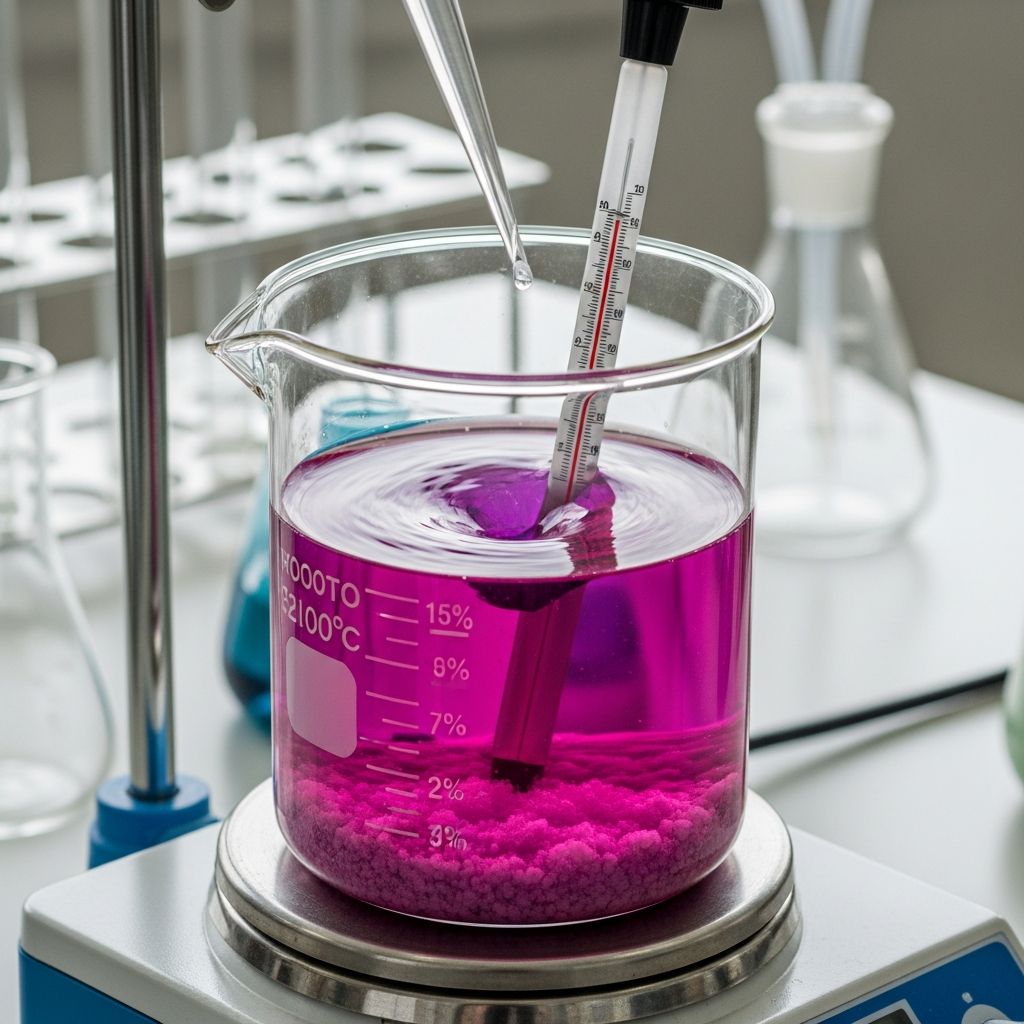
Begin by measuring your solvent into an appropriate container. While consulting a solubility chart provides guidance on theoretical quantities needed, many practitioners proceed empirically. Add small portions of solid solute while stirring continuously. The stirring action proves critical: it prevents localized concentration buildups around the dissolving solid and distributes dissolved particles evenly throughout the solvent. Continue this process, observing whether each added portion dissolves completely.
Persistence is key. Keep adding solute incrementally, stirring thoroughly between additions. Initially, each spoonful will vanish into solution. However, a threshold will eventually arrive: newly added solute no longer dissolves despite vigorous stirring. Undissolved particles begin accumulating at the container bottom or floating suspended in the liquid. This visible accumulation marks the saturation point—your solution has now reached its maximum solute capacity.
Practical Considerations for Direct Dissolution
Consulting solubility references before beginning offers significant advantages. A solubility table informs you how much solute to expect for your chosen conditions, preventing the frustration of exhausting your solute supply before saturation occurs. Reference tables typically indicate solute mass per unit solvent volume at specified temperatures, providing quantitative targets.
Remember that solubility values are temperature-specific. Room-temperature references may not apply if you’re conducting your experiment in different conditions. A solution saturated at room temperature may behave differently if heated or cooled. For precision work, matching your experimental temperature to the solubility data source eliminates uncertainty.
The Evaporative Approach: Concentrating Existing Solutions
An alternative pathway to saturation exists for those beginning with an unsaturated solution. By removing solvent, the concentration of remaining solute increases without adding additional solid material. This method proves particularly useful when additional solute is unavailable or when working with solutions already partially prepared.
Utilizing Evaporation for Solvent Removal
Evaporation represents the most accessible solvent removal technique. Several straightforward methods accelerate this process. Placing your solution in a warm location encourages water molecules to escape into surrounding air. Additionally, directing a fan toward the container’s surface increases air circulation, facilitating more rapid evaporation. For quicker results, gentle heating of the solution drives off solvent more aggressively, though care must be taken to avoid damaging heat-sensitive solutes.
Consider an example: you’re cultivating rock candy or sugar crystals. Sugar exhibits high water solubility, potentially making crystallization difficult if your solution hasn’t achieved complete saturation. If your sugar supply is exhausted before saturation occurs, simply place the container in a warm spot with good air circulation. Water evaporates steadily, concentrating the remaining sugar solution. Once sufficient evaporation has occurred, chill the solution. The cooling triggers crystallization, with sugar molecules organizing into visible crystal structures while the remaining liquid achieves saturation.
Advanced Evaporation Techniques
Beyond simple air evaporation, more sophisticated removal methods exist. Chemical reactions can extract solvent under specific circumstances, though these approaches demand deeper chemical knowledge. For most educational and practical purposes, thermal evaporation under increased air flow provides reliable results without requiring specialized chemistry expertise.
The Crystallization Route: Harvesting Supersaturated Solutions
A third pathway to saturation leverages the unusual properties of supersaturated solutions—liquids containing more dissolved solute than they should theoretically hold. These unstable systems represent stored energy awaiting release.
Understanding Supersaturation
A supersaturated solution exists in a precarious state of non-equilibrium. Though it contains excess dissolved solute, no visible solid appears because the solution has cooled too rapidly for crystallization to initiate naturally. This condition proves temporary and fragile. Any disturbance can trigger cascade crystallization, as solute molecules suddenly organize into solid form.
Inducing Crystallization Through Seeding
To deliberately cause a supersaturated solution to crystallize, introduce a **seed crystal**—a tiny fragment of pure solute or even a rough container surface. This seed provides nucleation sites where dissolved solute molecules preferentially attach. Once crystallization begins, it propagates rapidly. Solute transforms from dissolved state to organized crystal lattice. As crystallization proceeds, dissolved solute concentration drops, and when equilibrium is reached, the remaining liquid constitutes a saturated solution.
Alternatively, temperature manipulation achieves similar results. Raising the temperature of a supersaturated solution typically converts it into an unsaturated one, dissolving any incipient crystals. Conversely, cooling often triggers crystallization. However, caution is warranted: some specialized solutions behave counterintuitively, requiring warming rather than cooling. When working with unfamiliar systems, research the specific temperature response first.
Practical Application: Preparing a Saturated Salt Solution
To illustrate these principles concretely, consider preparing a common saturated salt solution. At 20°C, water can dissolve approximately 35.9 grams of sodium chloride per 100 milliliters. This specific knowledge guides your preparation.
Methodical Preparation Steps
Measure 100 milliliters of water into a clean container, noting the temperature. Calculate the required salt quantity using available solubility data, or proceed empirically by adding salt incrementally while stirring. Continue until salt crystals persistently remain undissolved despite prolonged stirring. Record the mass of salt added, the water volume, and the solution temperature. This documentation proves valuable for reproducibility and scientific rigor.
If greater precision is desired, filter the solution to remove undissolved salt particles, collecting clear saturated liquid. This filtered solution represents equilibrium saturation—maximum solute concentration without suspended solids.
Comparative Saturation Points
Different solutes reach saturation at varying concentrations. Under standard conditions, approximately five spoonfuls of salt saturate a typical volume of water, while the same volume requires only three spoonfuls of sugar for saturation. This difference reflects the distinct solubility characteristics of each compound. Heating the solution increases saturation points for both substances, permitting dissolution of additional solute at elevated temperatures.
Distinguishing Solution States and Equilibrium Dynamics
Saturated solutions represent one point along a spectrum of solution concentration. Understanding how saturation relates to other states clarifies your position within this spectrum.
An **unsaturated solution** contains less dissolved solute than the maximum capacity—additional solute would dissolve if added. These solutions exist when the dissolution rate exceeds the crystallization rate, creating a net movement of solute into solution.
A **saturated solution** maintains perfect equilibrium, with dissolution rate equaling crystallization rate. No net change occurs despite molecular-level exchange constantly proceeding. Once saturation is reached, further solute additions remain undissolved.
A **supersaturated solution** paradoxically contains more dissolved solute than theoretical equilibrium permits. This unstable condition emerges under special circumstances, typically rapid cooling of a hot saturated solution. The excess solute remains dissolved only through lack of nucleation sites for crystallization to begin.
Factors Enabling or Preventing Saturation
Certain conditions preclude saturation formation. Gases mixed with other gases typically mix completely across all concentration ratios without reaching saturation limits. Similarly, completely miscible liquids such as water and ethanol—which dissolve uniformly in each other regardless of proportions—cannot form saturated solutions because saturation assumes a maximum concentration threshold.
However, most solid solutes in liquid solvents can form saturated solutions, making this state achievable across the majority of common chemistry experiments and applications.
Optimizing Your Saturation Preparation
Success in creating saturated solutions depends on attention to practical details. Temperature control proves critical—maintain consistent conditions during preparation and measure all variables at the same temperature when possible. Solubility tables should be consulted as preparation guides, particularly when precision matters. Patience during the dissolution process prevents premature conclusion; continue adding and stirring until undissolved solute clearly appears.
Stirring throughout the process cannot be overstated. Continuous mixing prevents concentration gradients from forming around dissolving solid, ensuring uniform dissolution and reliable saturation identification. Finally, document your procedures and results, noting temperature, solute mass, solvent volume, and any observations. This record enables replication and troubleshooting if results diverge from expectations.
Frequently Asked Questions
Q: How can I tell when a solution is truly saturated?
A: A saturated solution displays visible undissolved solute particles remaining in the liquid despite vigorous stirring. No amount of additional mixing will dissolve these particles. This is the defining characteristic of saturation—the solution has reached maximum solute capacity.
Q: Does temperature affect how I prepare a saturated solution?
A: Yes, significantly. Most solid solutes dissolve more readily in hot solvents than cold ones. A solution saturated at room temperature becomes unsaturated when heated, allowing more solute to dissolve. Conversely, cooling a saturated solution can trigger crystallization. Always note the temperature when working with saturation.
Q: Can all solute-solvent combinations form saturated solutions?
A: No. Gases dissolving in other gases mix completely without saturation. Completely miscible liquids like water and ethanol also fail to form saturation points. Most solid solutes in liquid solvents, however, can achieve saturation.
Q: What is the difference between saturated and supersaturated solutions?
A: A saturated solution contains the maximum possible dissolved solute at equilibrium. A supersaturated solution contains more dissolved solute than should theoretically be possible at that temperature, existing in an unstable state. Supersaturated solutions trigger crystallization when disturbed or seeded.
Q: Why is stirring important when preparing saturated solutions?
A: Stirring distributes dissolved particles evenly and prevents concentration buildups around solid solute, ensuring consistent dissolution rates throughout the liquid. This accelerates reaching true saturation and helps you recognize the saturation point reliably.
References
- How to Make a Saturated Solution — Science Notes and Projects. 2024. https://sciencenotes.org/how-to-make-a-saturated-solution/
- Saturated Solutions and Solubility — Chemistry LibreTexts, University of California. 2024. https://chem.libretexts.org/Bookshelves/General_Chemistry/Map:_Chemistry_-_The_Central_Science_(Brown_et_al.)/13:_Properties_of_Solutions/13.02:_Saturated_Solutions_and_Solubility
- How to Prepare a Saturated Solution — BYJU’S. 2024. https://byjus.com/chemistry/saturated-solution/
- Saturation Points of Salt and Sugar — KClassScienceChannel. 2024. https://www.youtube.com/watch?v=95ChO2oEJPA

Medha Deb is an editor with a master's degree in Applied Linguistics from the University of Hyderabad. She believes that her qualification has helped her develop a deep understanding of language and its application in various contexts. Medha specializes in the areas of beauty, health, sports, and wellness and is committed to ensuring that the content on the website is…