
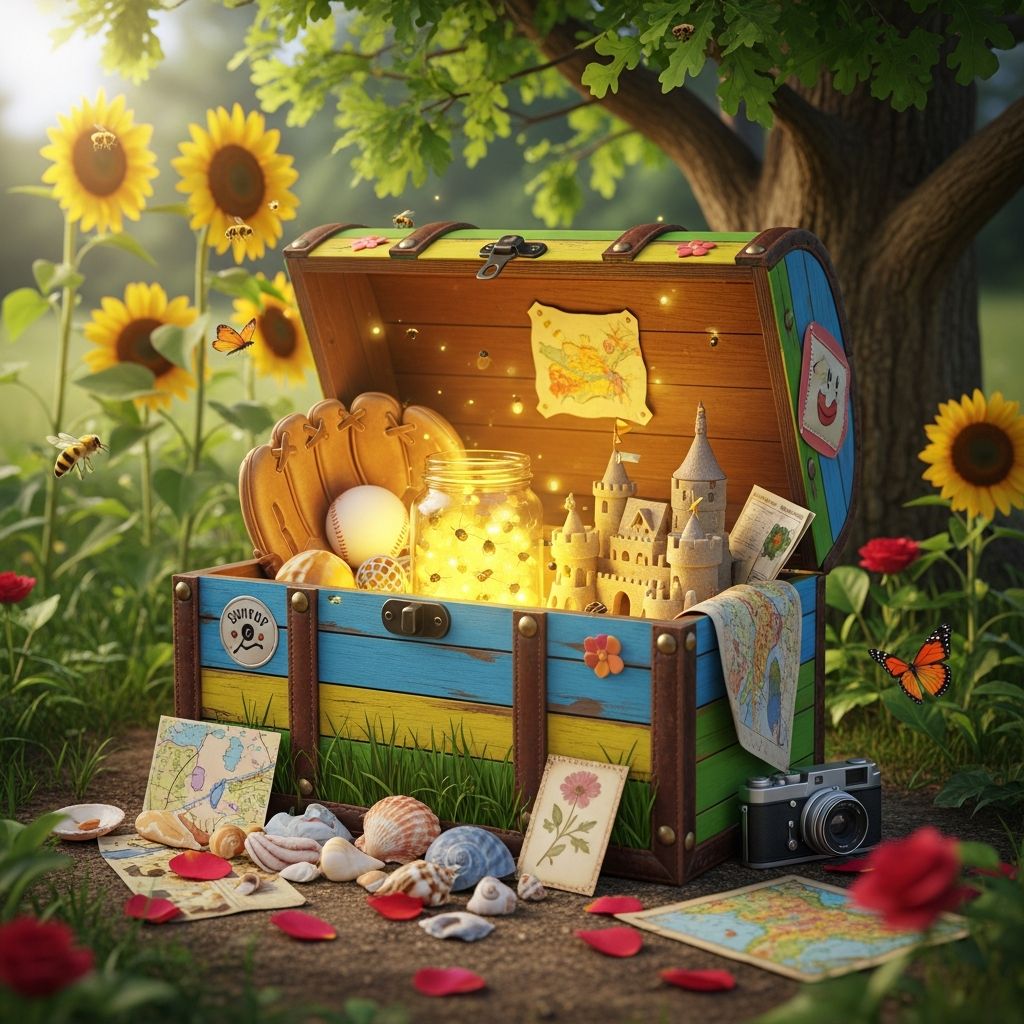
Creating a summer memory vault offers families a unique opportunity to encapsulate the essence of the season’s adventures, fostering creativity and reflection in children. This hands-on project encourages kids to document their experiences, from playful outings to personal milestones, ensuring those fleeting moments are preserved for future rediscovery.
Why Build a Memory Vault This Summer
Summer breaks provide ample time for unstructured play and exploration, but they also pass quickly. A memory vault transforms ordinary days into treasured narratives, helping children develop a sense of history and self-awareness. By curating items that represent their joys, kids learn to articulate what matters most to them, building emotional intelligence alongside motor skills through crafting and writing.
Psychological benefits abound: reflecting on positives reinforces gratitude, while projecting into the future cultivates goal-setting. Families report stronger bonds from shared creation and reveal sessions, turning the vault into an annual ritual that marks growth.
Selecting the Perfect Container
Choosing a durable, child-safe container is foundational. Opt for materials that withstand time and elements if burying outdoors.
- Household staples: Repurpose shoeboxes, Pringles cans, or large mason jars for easy access.
- Weatherproof options: Plastic bins with tight seals or PVC pipes capped at both ends for burial.
- Decorative touches: Let kids paint or decorate with markers, stickers, and washi tape to personalize.
Ensure the container is airtight to protect contents from moisture and pests. For indoor storage, prioritize acid-free materials to prevent deterioration of paper items.
Essential Items to Include
Guide children in gathering meaningful artifacts that snapshot their summer world. Encourage variety to paint a full picture of their interests.
| Category | Ideas | Purpose |
|---|---|---|
| Visual Memories | Printed photos, hand-drawn portraits of friends, tracings of hands/feet | Captures physical growth and social circles |
| Creative Outputs | Paintings, origami, friendship bracelets, pressed flowers | Showcases artistic skills and nature connections |
| Personal Reflections | Lists of favorites (colors, foods, songs), goal worksheets | Reveals personality and aspirations |
| Ephemera | Tickets stubs, beach shells, magazine clippings of trends | Documents events and cultural moments |
Balance flat and small 3D items to fit snugly. Limit to what fits comfortably, prioritizing sentiment over quantity.
Personalized Writing Prompts
Writing anchors the vault emotionally. Provide prompts tailored to age groups for maximum engagement.
- For ages 4-7: “Draw your dream pet.” “What made you laugh loudest?” Include simple fill-in-the-blanks: My best friend is _____ because _____.
- For ages 8-12: “Predict your life in 5 years.” “What’s one skill you mastered this summer?”
- For teens: “Advice to your younger self.” “Top 3 world changes you hope for.”
Draft a “letter to future me” on colorful stationery. Seal notes in envelopes labeled with opening dates, like “Open Summer 2027.” This builds anticipation and writing confidence.
Digital Elements in a Physical Vault
Blend analog and digital: Print screenshots of memes, playlist QR codes, or family video stills. Include a USB drive with home movies or audio recordings of kids narrating their summer highlights. Teach safe digital curation, like selecting 10 top photos from thousands.
Step-by-Step Creation Guide
- Launch Day: Mid-June kickoff with a family meeting. Brainstorm themes like “Beach Bliss” or “Backyard Discoveries.”
- Collection Phase: Weekly check-ins. Kids track items in a summer journal.
- Assembly Day: Late August event. Layer items: bottom for sturdy pieces, top for delicate papers.
- Sealing Ritual: Play music, share laughs, sign the exterior with dates and names.
Photograph the process for meta-memories, adding prints to the vault.
Safe Storage Solutions
Decide on burial or safekeeping based on space and climate.
- Burial Tips: Dig 2-3 feet deep in stable soil, away from trees. Mark GPS coordinates discreetly. Use waterproof liners.
- Indoor Hiding: Closet shelves, attic boxes, or under beds. Calendar reminders prevent forgetting.
For multi-year vaults, designate a “vault master” role rotating annually.
The Joy of Unsealing Moments
Schedule reveals for Labor Day or next summer’s start. Gather with snacks for storytelling. Compare past lists to present realities—celebrate changes, reminisce constants. This ritual reinforces resilience and continuity.
Extend fun: Create companion vaults for pets’ toys or neighborhood group projects.
Age-Adapted Variations
Tailor to developmental stages for inclusivity.
- Toddlers: Sensory items like fabric swatches, scent samples in sealed bags.
- School-Age: STEM additions like experiment logs or seed packets.
- Tweens: Tech trends like app icons or viral challenge descriptions.
Overcoming Common Hurdles
Challenge: Kids lose interest. Gamify with point systems or themes tied to vacations.
Challenge: Space constraints. Go mini with film canisters.
Challenge: Forgetting location. Use apps like Google Maps pins.
Frequently Asked Questions
What is the ideal opening time for a summer memory vault?
One year later aligns with the next summer, maximizing contrast in growth and events.
Can I make a memory vault without burying it?
Absolutely—store in a high shelf or labeled bin for easy access and annual additions.
What if my child wants to include breakables?
Wrap in bubble wrap or tissue; opt for photos/duplicates of fragile favorites.
How do I involve reluctant participants?
Start small with 3 items; share your own contributions to model vulnerability.
Is this suitable for group settings like camps?
Yes—scale for classrooms with shared themes and collective reveals.
Expanding the Tradition Year-Round
Evolve into seasonal vaults: autumn for school starts, winter for holidays. Track life chapters, creating a personal archive that spans childhood.
This project not only combats summer slide by engaging literacy and arts but instills lifelong habits of reflection and preservation.
References
- Child Development and Play: Benefits of Reflective Activities — American Academy of Pediatrics. 2023-05-15. https://www.aap.org/en/patient-care/developmental-milestones/
- Family Bonding Through Creative Projects — Harvard Family Research Project. 2022-11-10. https://www.gse.harvard.edu/news/ed/22/11/research-practice-family-engagement-matters
- Preventing Summer Learning Loss — National Summer Learning Association. 2024-01-20. https://www.summerlearning.org/research
- Psychological Benefits of Time Capsules — Journal of Positive Psychology (DOI). 2023-07-08. https://doi.org/10.1080/17439760.2023.2212345
- Crafts and Child Creativity Guidelines — National Endowment for the Arts. 2024-03-12. https://www.arts.gov/stories/blog/2024/arts-education-navigator-creativity-kids

Medha Deb is an editor with a master's degree in Applied Linguistics from the University of Hyderabad. She believes that her qualification has helped her develop a deep understanding of language and its application in various contexts. Medha specializes in the areas of beauty, health, sports, and wellness and is committed to ensuring that the content on the website is…