
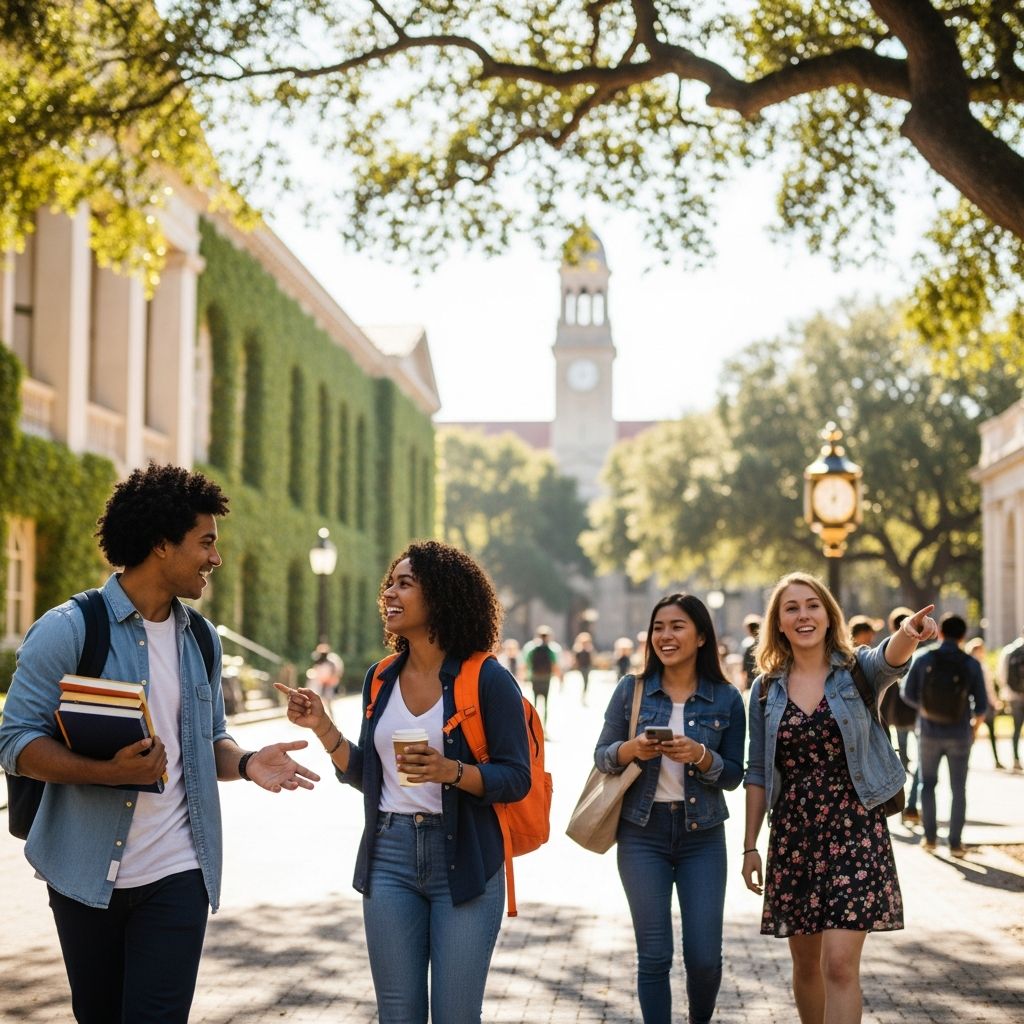
Entering college marks a pivotal transition where independence blooms alongside new opportunities for personal growth. One of the most crucial aspects of this phase is cultivating a robust social circle. Friendships formed during these years often endure a lifetime, providing emotional support, academic collaboration, and shared adventures. Yet, for many students, the sheer scale of campus life can feel overwhelming, leading to isolation if proactive steps aren’t taken. This guide explores actionable strategies to forge genuine bonds, drawing from real student experiences and expert insights to ensure you navigate this social landscape with confidence.
Embracing Your New Environment: First Steps on Campus
The initial days on campus set the tone for your social journey. Orientation programs serve as an ideal launchpad, designed specifically to connect incoming students. These events facilitate group activities that naturally encourage interactions, allowing you to identify peers with similar backgrounds or interests. Attend every session, from icebreakers to campus tours, and actively participate—volunteering to lead a discussion or share your hometown story can make you memorable.
Beyond orientation, explore residence halls if you’re living on campus. Your dormitory is a goldmine for immediate connections. Keep your door ajar during the first weeks to invite casual drop-ins, and introduce yourself to floormates systematically. A simple knock-and-greet, coupled with an invitation to grab coffee, can spark ongoing conversations. Common areas like lounges become hubs for spontaneous chats; linger there with a book or game to draw others in.
Leveraging Academic Spaces for Social Bonds
Classes offer daily chances to connect without extra effort. In lecture halls or seminars, position yourself near newcomers and initiate brief exchanges, such as commenting on the professor’s style or seeking notes from a missed segment. Small classes amplify this potential, fostering repeated interactions that evolve into study partnerships.
After-class lingering is a low-pressure tactic. Stay a few minutes to ask a classmate about assignments or weekend plans—this transitions academic ties into personal ones. Forming study groups formalizes these links; propose one via class chats or bulletin boards, rotating locations to include meals for deeper rapport.
| Academic Setting | Social Strategy | Expected Outcome |
|---|---|---|
| Large Lectures | Sit with different people weekly | Casual acquaintances grow |
| Seminars | Contribute to discussions | Stronger intellectual bonds |
| Study Sessions | Share snacks and breaks | Friendships beyond coursework |
Extracurricular Involvement: Clubs and Beyond
Campus organizations align passions with people, creating built-in communities. Involvement Fairs showcase hundreds of options—from cultural societies to hobby groups. Prioritize 2-3 that resonate, attending initial meetings without commitment pressure. Regular participation builds familiarity, leading to invitations for off-campus outings.
Volunteering extends this further. University service programs pair you with altruistic peers on community projects, blending purpose with socializing. Whether tutoring local youth or organizing clean-ups, these settings reward teamwork and reliability, hallmarks of true friendship.
- Research clubs thoroughly: Match your hobbies, like gaming or environmental advocacy.
- Commit gradually: Start with one event per week.
- Follow up: Text attendees post-meeting to sustain momentum.
Digital Tools and On-Campus Networking
Social media bridges pre-arrival gaps. Join freshman-specific Facebook groups or Discord servers to coordinate meetups before classes start. Platforms like Instagram facilitate event RSVPs and story shares, easing in-person transitions.
On-campus, prioritize presence over screens. Ditch the phone in waiting areas to signal approachability—eye contact and smiles invite chats. A psychology expert notes that setting micro-goals, like greeting three strangers daily, reduces anxiety and boosts warmth.
Cultivating Authenticity and Reciprocity
Authenticity magnetizes lasting friends. Shed facades; share quirks early to attract compatibles. Treat others as you’d wish: offer help with notes, celebrate wins, and include newcomers in plans.
Consistency cements bonds. Greet familiar faces daily, evolving hellos into deeper dialogues. Reciprocity thrives on reliability—follow through on hangout promises to earn trust.
Navigating Challenges: Overcoming Social Hurdles
Social anxiety affects many freshmen, but small acts dismantle it. Offer compliments or assistance, like photographing a group selfie, to initiate positivity. Affirmations like “People like me” reframe mindsets, per research on self-perception biases.
For introverts, quality trumps quantity. Target one-on-one coffees over crowds, and use roommates as event buddies for low-stakes entry. Patience is key—friendships simmer over time, not instants.
Rejection stings less than isolation; view non-clicks as filtering, not failure. Persistence—attending events solo—yields dividends.
Roommate Dynamics: Your Instant Ally
Roommates provide proximity-based bonds. Treat shared spaces as collaboration zones: cook together, binge shows, or attend fairs as a duo. Even mismatched pairs yield campus navigators, easing solo ventures.
Conflict resolution preserves these ties—communicate openly via scheduled check-ins, balancing individuality with unity.
Long-Term Strategies for Enduring Networks
Sustain friendships through rituals: weekly game nights or group travels. Diversify circles across majors for broader perspectives. As semesters progress, host events to reciprocate hospitality.
Transfer or commuter students: Anchor in consistent spots like libraries, leveraging online forums for hybrid connections.
Frequently Asked Questions (FAQs)
What if I’m shy or introverted?
Start small: smile and nod first, then progress to questions. Clubs with structured activities suit introverts, minimizing small talk.
How soon should I expect close friends?
Weeks to months; focus on consistent exposure rather than rushing intimacy.
Is it weird to approach upperclassmen?
No—many welcome freshmen into groups. Orientation mentors often initiate.
What about off-campus friendships?
Volunteering or local events expand horizons, but campus roots provide stability.
Can apps replace in-person efforts?
They supplement but not supplant; face-to-face builds deeper trust.
References
- How do you recommend making friends in college? — CareerVillage. 2023-10-01. https://www.careervillage.org/questions/830332/how-do-you-recommend-making-friends-in-college
- A Freshman’s Guide On How To Make Friends In College — Grace Christian University. 2023-08-15. https://gracechristian.edu/blog/a-freshmans-guide-on-how-to-make-friends-in-college/
- How to make friends in college: 8 tips from real students — Inside UNI, University of Northern Iowa. 2024-09-10. https://insideuni.uni.edu/campus-community/how-make-friends-college-8-tips-real-students
- 12 Ways to Make Friends in College — Carthage College. 2024-01-20. https://www.carthage.edu/news-events/carthage-compass/12-ways-to-make-friends-in-college/
- How to Make Friends in College: Psychology Expert Explains — Northeastern University News. 2024-08-20. https://news.northeastern.edu/2024/08/20/how-to-make-friends-in-college/

Medha Deb is an editor with a master's degree in Applied Linguistics from the University of Hyderabad. She believes that her qualification has helped her develop a deep understanding of language and its application in various contexts. Medha specializes in the areas of beauty, health, sports, and wellness and is committed to ensuring that the content on the website is…