
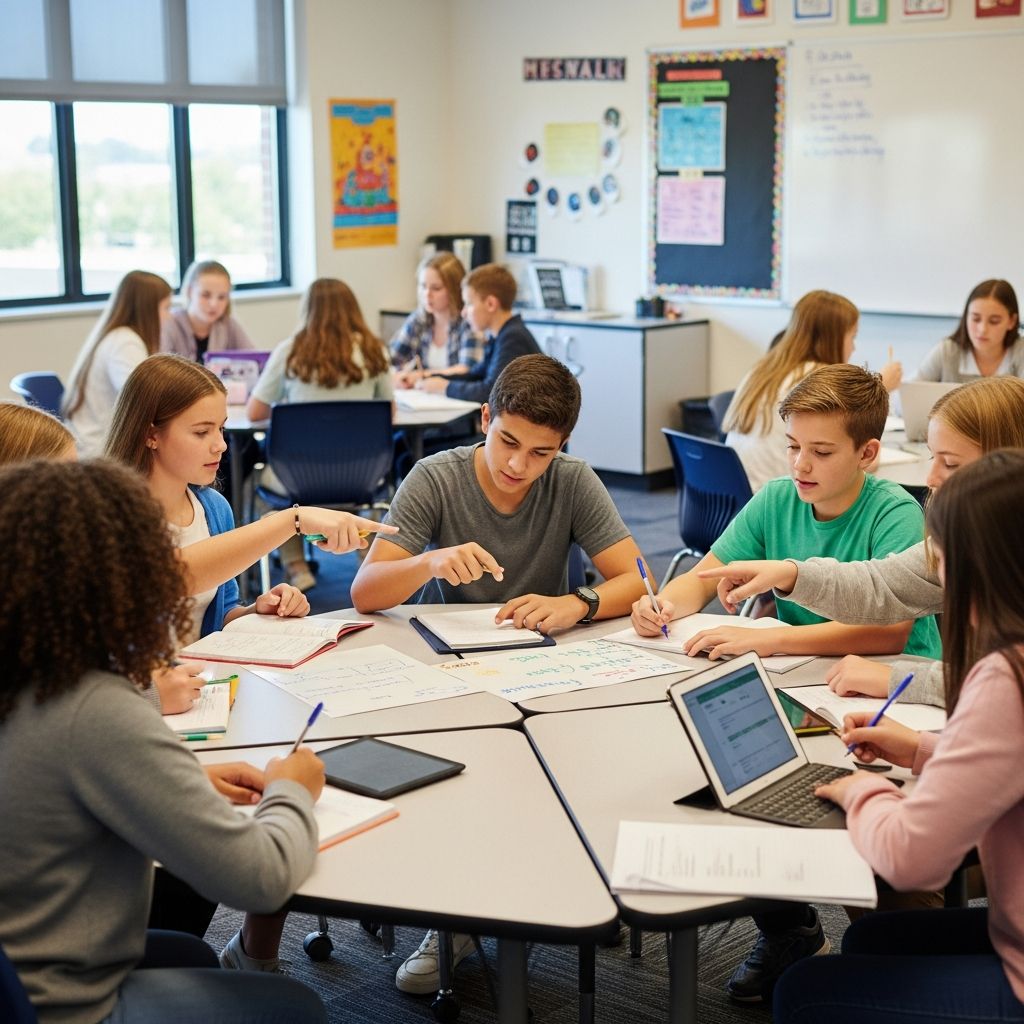
Group work remains a cornerstone of modern education, fostering skills like teamwork, communication, and critical thinking essential for future success. Yet, without proper structure, it often leads to frustration, uneven participation, and suboptimal results. This article explores actionable strategies to streamline collaborative activities, drawing from established educational practices to help educators create high-performing student teams.
Establishing a Strong Foundation for Collaboration
Success in group work begins with intentional setup. Educators should start by defining precise objectives that align with learning goals, ensuring every participant understands the purpose and expected outcomes. For instance, articulate not just the task but also the skills to be developed, such as analysis or presentation abilities. This clarity reduces confusion and motivates engagement from the outset.
Group composition plays a pivotal role. Optimal teams typically consist of 3 to 5 members to balance diverse perspectives without overwhelming logistics. Random assignment works for short tasks, but for extended projects, consider skill mixes or pre-assessments to promote equity. Thoughtful formation prevents imbalances where one student dominates or carries the load.
- Define success metrics early: Use rubrics outlining quality standards for both product and process.
- Balance heterogeneity: Mix abilities, backgrounds, and strengths for richer discussions.
- Set time parameters: Allocate specific durations for phases like brainstorming and execution.
Assigning Roles to Distribute Accountability
One of the most effective ways to enhance efficiency is through defined roles that rotate across activities. Roles such as facilitator, recorder, timekeeper, researcher, and presenter ensure every member contributes uniquely, minimizing free-riding and maximizing involvement. Rotation prevents burnout and allows students to build versatile skills.
| Role | Responsibilities | Benefits |
|---|---|---|
| Facilitator | Guides discussion, ensures all voices heard | Promotes inclusivity |
| Recorder | Documents ideas, tracks progress | Maintains accountability |
| Timekeeper | Monitors time, keeps group on schedule | Prevents procrastination |
| Researcher | Gathers data, verifies facts | Ensures accuracy |
| Presenter | Prepares summary, shares outcomes | Develops communication skills |
Implementing roles transforms chaotic sessions into structured endeavors. Provide role cards or checklists for clarity, and debrief afterward to refine assignments based on group dynamics.
Fostering Effective Communication Channels
Clear communication is the lifeblood of productive teams. Teach students active listening techniques, such as paraphrasing others’ ideas and asking clarifying questions, to build understanding and respect. Establish norms like ‘one speaker at a time’ and ‘build on ideas positively’ to create psychological safety where diverse views thrive.
Leverage digital tools for ongoing interaction, especially in hybrid settings. Platforms for shared documents and chat enable asynchronous updates, accommodating varied schedules. Regular check-ins, whether virtual or in-person, allow early issue spotting.
- Model behaviors: Demonstrate respectful dialogue during class.
- Use prompts: ‘What do you think?’ or ‘How does this connect?’ to draw out quiet members.
- Schedule syncs: Weekly huddles for alignment and adjustments.
Implementing Time Management and Prioritization
Efficient groups master time by breaking tasks into prioritized steps. Introduce frameworks like Eisenhower matrices to categorize activities by urgency and importance, ensuring critical elements receive focus first. Create shared timelines with milestones, using tools like simple planners or apps to visualize progress.
Encourage ‘divide and conquer’ while maintaining integration points. Independent work phases followed by synthesis meetings prevent bottlenecks and allow specialization based on strengths.
Procrastination often derails efforts; counter it with early starts and progress trackers. Groups that plan backward from deadlines allocate time realistically, reducing last-minute rushes.
Providing Ongoing Support and Feedback
Educators act as facilitators by circulating during activities, offering targeted prompts rather than solutions. Questions like ‘What evidence backs this?’ deepen thinking without taking over. Balance participation by gently redirecting dominant voices and empowering the reticent.
Feedback loops are crucial. Midway peer reviews using simple forms highlight strengths and gaps, fostering self-correction. End-of-activity reflections prompt groups to evaluate what enhanced productivity and what needs tweaking.
- Quick check-ins: 2-minute status updates per group.
- Individual outreach: Private chats with under-engaged students.
- Group self-assess: ‘Rate your collaboration 1-10; why?’
Assessing Both Outcomes and Processes Fairly
Evaluation should capture individual and collective efforts to incentivize fairness. Combine product grades (e.g., final report) with process components like peer ratings and personal reflections. Rubrics specifying criteria for participation ensure transparency.
Peer assessment midway flags issues like unequal contributions, allowing interventions. Self-reflections reveal personal growth, reinforcing accountability.
| Assessment Type | Focus | Example Tool |
|---|---|---|
| Product | Final deliverable quality | Rubric with content/accuracy scores |
| Process | Collaboration dynamics | Peer feedback survey |
| Individual | Personal contribution | Reflection journal |
Addressing Common Roadblocks Proactively
Challenges like conflicts, scheduling clashes, or tech hurdles are inevitable but manageable. Normalize disagreements as idea sharpeners, teaching scripts like ‘I see your point; here’s another angle.’ For logistics, suggest flexible options like recorded updates.
Uneven workloads? Roles and monitoring help. Social loafing? Anonymous peer input exposes patterns. By anticipating pitfalls, educators equip groups for resilience.
- Conflicts: Mediate with interest-based resolution.
- Scheduling: Use polls for meeting times.
- Tech issues: Provide backups and tutorials.
Leveraging Technology for Seamless Collaboration
Digital tools amplify efficiency. Shared docs enable real-time editing, task boards track assignments, and video calls bridge distances. Select user-friendly options with training to avoid frustration.
Integrate checkpoints via apps for automated reminders, ensuring momentum. Data from tools informs feedback, highlighting engagement trends.
Building Long-Term Collaborative Habits
Beyond single projects, cultivate a classroom culture of collaboration. Icebreakers build rapport, repeated low-stakes practices build proficiency, and celebrations of successes reinforce value. Over time, students internalize norms, making group work second nature.
Reflect collectively: What made this team excel? Use insights to iterate, creating a feedback-rich environment.
Frequently Asked Questions (FAQs)
Q: How do I handle a student who dominates discussions?
A: Assign rotating roles and use structured turns, like ‘pass the talking stick.’ Privately coach on inclusive language and check in with quieter peers.
Q: What if groups finish early or lag behind?
A: Prepare extension tasks for fast groups and scaffolds for others. Regular pacing checks allow timely adjustments.
Q: Are assigned groups better than self-selected?
A: Assigned groups promote diversity and equity, especially for complex tasks, though self-selection suits quick, low-stakes work.
Q: How much class time should group work take?
A: Vary by goal—10-15 minutes for discussions, full periods for projects. Balance with individual practice.
Q: Can these strategies work online?
A: Yes, with breakout rooms, collaborative platforms, and clear digital norms for participation.
References
- A Practical Guide to Effective Group Work — Center for Teaching Excellence, Texas A&M University. 2023. https://cte.tamu.edu/resources/practical-guide-effective-group-work.html
- Steps to Building an Effective Team — UC Berkeley Human Resources. 2024. https://hr.berkeley.edu/hr-network/central-guide-managing-hr/managing-hr/interaction/team-building/steps
- How Do I Facilitate Effective Group Work? — UMass Amherst Center for Teaching & Learning. 2023. https://www.umass.edu/ctl/how-do-i-facilitate-effective-group-work
- Tips to Make Group Work Successful — McIntire School of Commerce, University of Virginia. 2022. https://experience.mcintire.virginia.edu/blogs/ms-commerce/tips-to-make-group-work-successful/
- A Guide to Working in Groups — Rutgers Learning Centers. 2024. https://learningcenters.rutgers.edu/resources/guide-working-groups

Medha Deb is an editor with a master's degree in Applied Linguistics from the University of Hyderabad. She believes that her qualification has helped her develop a deep understanding of language and its application in various contexts. Medha specializes in the areas of beauty, health, sports, and wellness and is committed to ensuring that the content on the website is…