
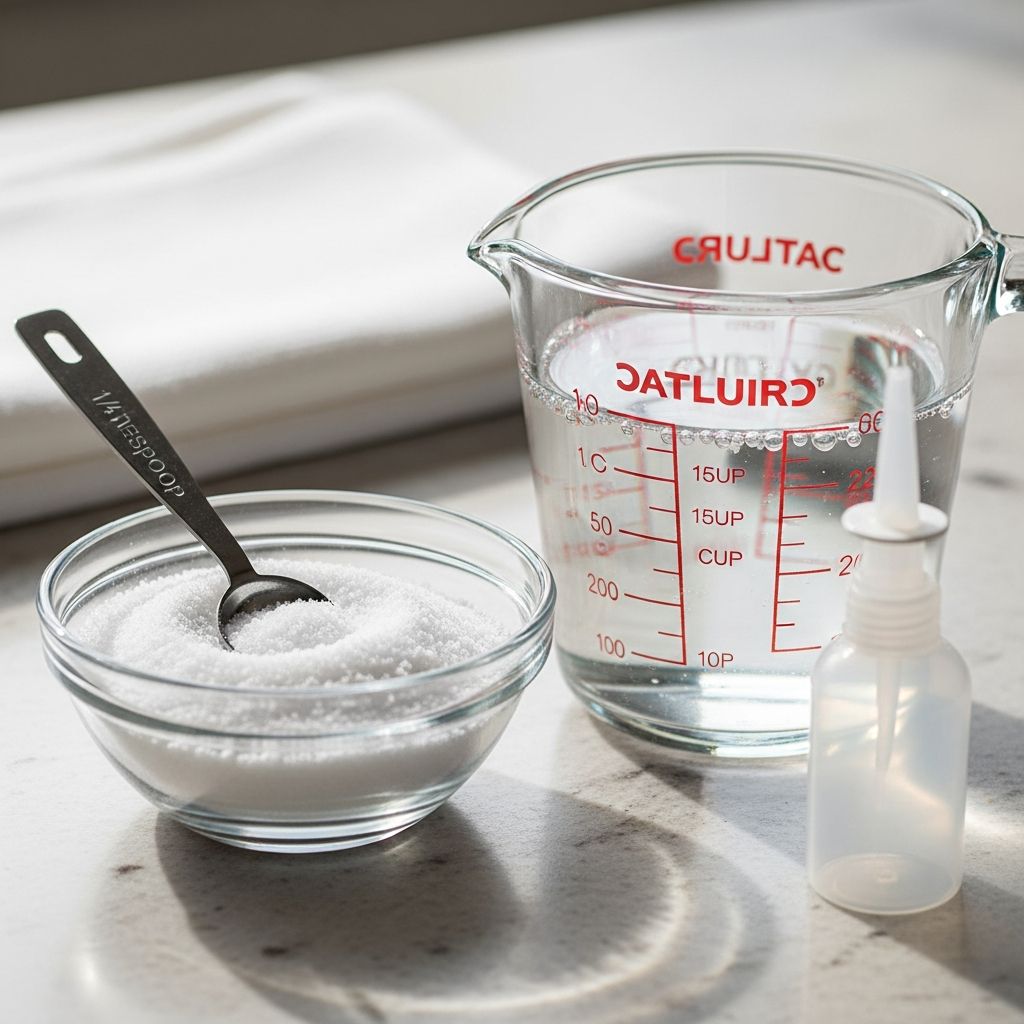
Saline solution, a simple mixture of salt and water, serves as a versatile tool in home health care. It mimics the body’s natural fluids, making it ideal for cleaning wounds, rinsing sinuses, soothing eyes, and maintaining contact lenses. Preparing it at home offers a cost-effective alternative to commercial products, provided hygiene and precise measurements are followed strictly.
Understanding Saline Solution Basics
At its core, saline solution is a sterile blend of sodium chloride (table salt) and water, typically at a 0.9% concentration to match physiological levels. This isotonic balance prevents irritation to tissues. Unlike plain water, it helps draw out fluids from inflamed areas without causing cell damage. Health authorities emphasize using non-iodized salt to avoid additives that could sting or irritate sensitive areas.
Key benefits include its role in reducing nasal congestion, promoting wound healing, and providing gentle hydration for mucous membranes. Studies show home-prepared saline can be as effective as store-bought versions when made correctly, offering savings and immediate availability.
Essential Ingredients and Equipment
To ensure safety, gather these items before starting:
- Clean, distilled water or tap water (boiled and cooled if tap)
- Non-iodized table salt (avoid sea salt or iodized varieties)
- Optional: Baking soda for buffering pH in nasal or eye solutions
- Measuring tools: Teaspoon, cup
- Sterile glass container with airtight lid (boil or dishwasher-sterilize)
- Pot with lid for boiling
- Clean stirring utensil
Distilled water skips boiling, extending shelf life, while tap water must be boiled for 15-20 minutes to kill bacteria. Always wash hands thoroughly first.
Step-by-Step Recipes for Different Needs
Recipes vary by volume and purpose. Start with small batches to minimize waste, as freshness is critical.
Basic Small-Batch Saline (1 Cup)
- Boil 1 cup (250 mL) tap water for 15 minutes, cool to room temperature.
- Add ½ teaspoon non-iodized salt; stir until dissolved.
- Optional: Pinch of baking soda for less irritation (not for urinary uses).
- Pour into sterilized jar; refrigerate and use within 24 hours.
Large-Batch for Nasal Irrigation (1 Liter)
- Boil 4 cups (1 L) water for 15 minutes; cool.
- Mix in 2 teaspoons salt and 1 teaspoon baking soda.
- Store airtight in fridge; discard after 24 hours.
Distilled Water Method (Longer Storage, 4 Liters)
Ideal for frequent use without boiling:
- Mix 8 teaspoons salt into 4 L distilled water.
- Stir well; refrigerate up to 1 month if sterile.
Sinus Rinse Mix (Dry Blend for Convenience)
Prepare a powder base for quick mixing:
- 3 teaspoons non-iodized salt
- 1 teaspoon baking soda
Store dry in airtight container. Use 1 teaspoon per 8 oz (1 cup) lukewarm distilled or boiled water.
| Batch Size | Salt Amount | Water Type | Additives | Shelf Life |
|---|---|---|---|---|
| 1 Cup | ½ tsp | Boiled tap | Baking soda optional | 24 hours (fridge) |
| 1 Liter | 2 tsp | Boiled tap | 1 tsp baking soda | 24 hours (fridge) |
| 4 Liters | 8 tsp | Distilled | None | 1 month (fridge) |
| Sinus Dry Mix | 3 tsp (per batch) | Lukewarm boiled | 1 tsp baking soda | Indefinite dry |
Common Applications in Home Care
Nasal Irrigation for Sinus Relief
Use a neti pot or squeeze bottle: Tilt head over sink, pour into one nostril, let drain from the other. This clears mucus, allergens, and reduces infection risk. Add baking soda for comfort.
Wound Cleaning and Piercing Care
Gently rinse minor cuts, scrapes, or new piercings to remove debris without harsh antiseptics. Pat dry; do not soak. A study confirmed home saline’s safety for wounds over weeks if refrigerated.
Eye Rinse and Contact Lens Solution
For dry eyes or lens cleaning, use preservative-free batches. Avoid if solution clouds. Cleveland Clinic recommends buffered mixes.
Other Uses: Baby Nose Relief, Oral Rinse
Dilute for infant congestion drops or gentle mouth rinses post-dental work. Always consult pediatricians for kids.
Safe Storage and Handling Practices
Bacteria thrive in saline, so discard if cloudy, odorous, or past expiry. Use sterile funnels for pouring; never dip tools directly. Refrigerate immediately; room temperature limits use to hours. Glass jars prevent leaching; avoid metal lids. Label with date and time.
- Small batches: 24 hours max
- Distilled large batches: Up to 4 weeks refrigerated, per culture tests
- Always pour into a separate clean cup before use
Critical Safety Precautions
Improper ratios can cause hypertonic (stinging) or hypotonic (cell bursting) solutions. Use exact measurements. Never use for sterile medical procedures like injections. Those with compromised immunity should opt for pharmacy-grade.
Warnings:
- Boil tap water adequately (15-20 min)
- No honey or unlisted additives except specified
- Discard unused portions daily
- Seek medical advice for persistent issues
Benefits Over Commercial Options
Home saline costs pennies per batch versus dollars for bottles. It’s customizable and free of preservatives that may irritate. Pediatric sites note its efficacy for kids’ runny noses.
Frequently Asked Questions (FAQs)
Can I use sea salt instead of table salt?
No, sea salt has impurities and minerals that may irritate tissues. Stick to pure non-iodized table salt.
How do I know if my saline is contaminated?
Look for cloudiness, particles, or off smells. If present, discard immediately to avoid infection.
Is baking soda always necessary?
Not for basic saline, but recommended for nasal/eye use to match pH and reduce sting. Avoid for bladder catheters.
Can children use homemade saline?
Yes, for nasal drops after doctor approval. Use boiled water and supervise.
What’s the difference between saline and sterile water?
Saline has salt for tonicity; sterile water lacks it, unsuitable for rinses.
Advanced Tips for Optimal Results
For chronic sinusitis, combine with steam inhalation. Test small amounts on skin first. Track batches in a log for freshness. Hospitals provide similar recipes for home enteral use.
In summary, mastering homemade saline empowers proactive health management. Precision and hygiene ensure its safety and efficacy across applications.
References
- Saline solution: How to prepare at home — AboutKidsHealth (The Hospital for Sick Children). Accessed 2026. https://www.aboutkidshealth.ca/saline-solution-how-to-prepare-at-home
- How to Make Your Own Saline Solution — Andros ENT & Sleep Center. Accessed 2026. https://androsent-sleep.com/how-to-make-your-own-saline-solution/
- Saline Solution: Making and storing instructions, benefits, risks — Medical News Today. 2023-10-20. https://www.medicalnewstoday.com/articles/323842
- How to make normal saline at home — Hamilton Health Sciences. 2019-08. https://www.hamiltonhealthsciences.ca/wp-content/uploads/2019/08/NormalSalineAtHome-lw.pdf
- Saline Solution: What It Is, Types & Uses — Cleveland Clinic. Accessed 2026. https://my.clevelandclinic.org/health/treatments/saline-solution
- Instructions for Homemade Normal Saline for Enteral Use — Children’s Health. 2025. https://assets.childrens.com/m/37d57119bfb58779/original/Instruction-for-Homemade-Saline-for-Enteral-Use-English-2025-Update.pdf
- Home-prepared saline: a safe, cost-effective alternative for wound… — PubMed (Wounds Journal). 2006-11. https://pubmed.ncbi.nlm.nih.gov/17108769/

- Integrated M.A. in Applied Linguistics, University of Hyderabad
- 5+ years in editorial, instructional, SEO, and research-based writing
Sneha is a relationships and lifestyle writer with a strong foundation in applied linguistics and certified training in relationship coaching. She brings over five years of writing experience to theskillvault, crafting thoughtful, research-driven content that empowers readers to build healthier relationships, boost emotional well-being, and embrace holistic living. Her writing and insights reflect the belief that beauty, happiness, and wellness…