
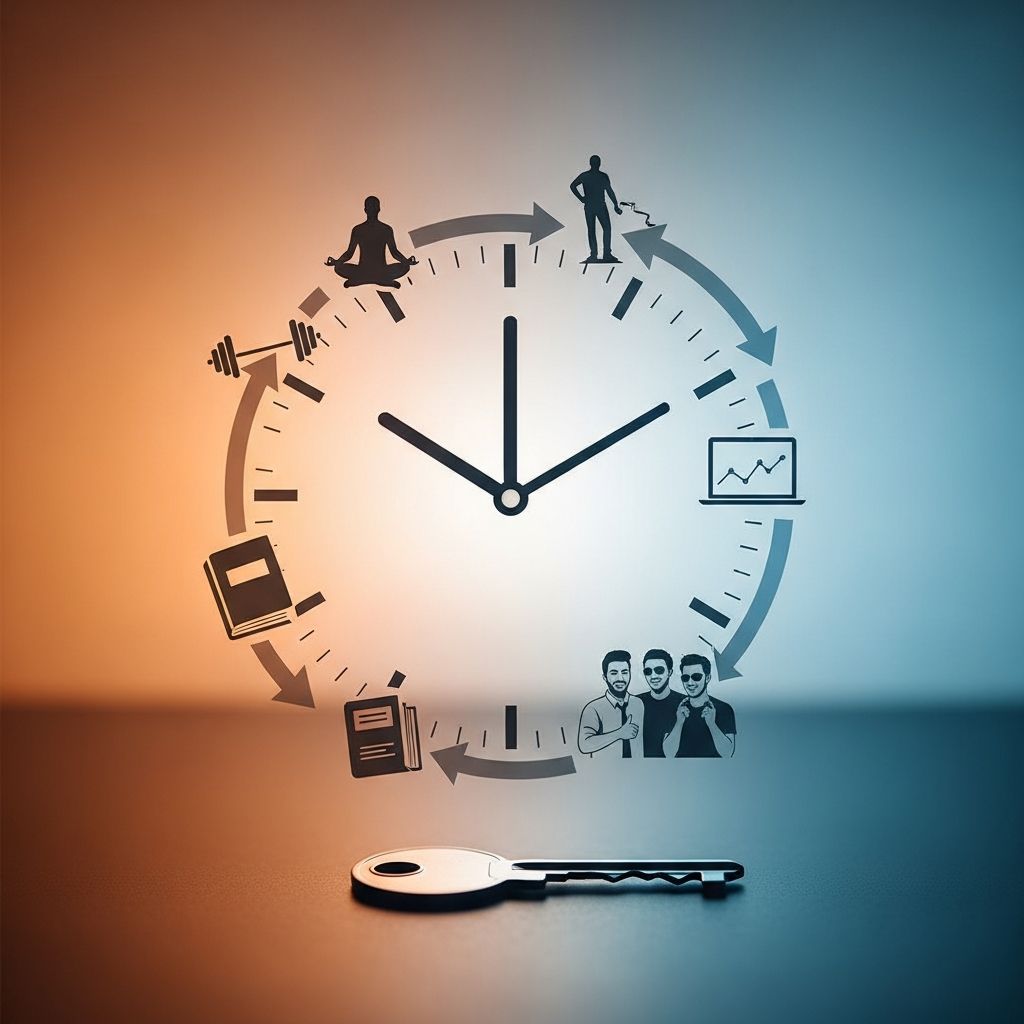
The transition from workday to evening holds immense potential for shaping your future. That initial 60 minutes after clocking out can either drain your energy or propel you toward greater achievements. By intentionally structuring this time, you create momentum for personal development, better health, and professional growth. Research from the American Psychological Association highlights how clear work-life boundaries reduce stress and improve performance, making this hour a pivotal daily investment.
Why the First Hour After Work Defines Your Trajectory
This golden hour acts as a bridge between professional demands and personal fulfillment. Without a plan, it often fills with mindless scrolling or chores that leave you exhausted. Instead, purposeful activities recharge your body and mind, setting a positive tone for the evening. Studies from the National Sleep Foundation show that evening routines directly influence sleep quality, which in turn affects next-day cognition and output.
High achievers recognize this window as prime time for high-impact actions. It prevents decision fatigue from spilling over and fosters habits that compound over time. For instance, prioritizing movement or reflection here builds resilience against burnout, as noted in productivity analyses from leading business journals.
Essential Foundations for an Effective Evening Kickoff
Before diving into activities, establish core principles to maximize impact:
- Disconnect fully: Silence notifications to signal the end of work mode, promoting mental recovery.
- Prioritize energy: Focus on what fuels you rather than depletes, like nutrition over screen time.
- Build flexibility: Allow adjustments while maintaining consistency for habit formation.
These pillars ensure your routine sustains long-term adherence, turning sporadic efforts into automatic behaviors.
Power Up with Physical Movement
Begin by activating your body. After hours of sitting, a 10-20 minute workout releases endorphins, combating fatigue. Options include brisk walks, yoga flows, or bodyweight circuits. The Centers for Disease Control and Prevention (CDC) recommends at least 150 minutes of moderate activity weekly, with post-work sessions efficiently meeting this goal while boosting mood and focus.
| Activity | Duration | Benefits |
|---|---|---|
| Brisk Walk | 15 min | Improves circulation, clears mind |
| Yoga Stretch | 10 min | Reduces tension, enhances flexibility |
| Strength Circuit | 20 min | Builds muscle, elevates metabolism |
Incorporate this to shake off workday stress, preparing your physiology for productive pursuits.
Fuel Your Body with Intentional Nutrition
Next, prepare a nutrient-dense meal. Opt for proteins, healthy fats, and vegetables to stabilize blood sugar and sustain energy. The USDA Dietary Guidelines emphasize balanced plates for optimal health, warning against processed foods that cause crashes. Simple prep like grilling chicken with greens takes under 15 minutes but yields sustained vitality.
- Protein sources: Eggs, fish, legumes for repair and satiety.
- Fats: Avocados, nuts for brain health.
- Veggies: Leafy greens to alkalize and energize.
This habit not only nourishes but also instills discipline, mirroring routines of top executives who meal prep evenings for peak performance.
Declutter and Reset Your Environment
A quick 5-10 minute tidy-up transitions you to personal space. Clear counters, organize tomorrow’s outfit, and wipe surfaces. This micro-reset, akin to ‘closing rituals’ in productivity literature, minimizes morning chaos and fosters calm. Harvard Business Review articles on habit stacking note how such actions create psychological closure from work.
Follow with a workspace shutdown: Log off devices, note unfinished tasks for tomorrow. This prevents rumination, freeing mental bandwidth.
Plan Tomorrow for Momentum
Dedicate 10 minutes to agenda-setting. List top three priorities using the Eisenhower Matrix—urgent vs. important. CEOs like those at Fortune 500 firms swear by evening reviews for clarity. The Journal of Applied Psychology confirms planning reduces anxiety and boosts execution rates by 25%.
- Review today’s wins to build positivity.
- Outline tomorrow’s key tasks.
- Anticipate obstacles and countermeasures.
This forward focus turns your post-work hour into a strategic advantage.
Cultivate Mental Recharge Practices
Wind down with mindfulness: Meditate, journal gratitudes, or read non-fiction. The National Institutes of Health (NIH) reports mindfulness cuts stress hormones by 20%, enhancing decision-making. Five minutes suffices—breathe deeply, affirm capabilities, release tensions.
Positive self-talk counters fatigue: Phrases like “I accomplished much today” rewire neural pathways for resilience, per cognitive behavioral studies.
Advanced Strategies for Long-Term Gains
Elevate your routine with these:
- Hobby injection: 15 minutes on passions like painting or instruments for joy and creativity.
- Social connection: Call a friend—relationships buffer stress, as per longitudinal health data.
- Learning burst: Podcasts or audiobooks on skills, compounding knowledge exponentially.
Track progress weekly via journal to refine, ensuring evolution.
Common Roadblocks and Solutions
| Roadblock | Solution |
|---|---|
| Exhaustion | Start small; scale up gradually |
| Distractions | Use timers; environment cues |
| Inconsistency | Habit stacking; accountability partner |
Address these proactively for seamless integration.
Frequently Asked Questions (FAQs)
What if I work from home—does this still apply?
Yes, amplify disconnection: Change rooms, ritualize ‘end-of-day’ walks. Boundaries remain key.
How do I fit this into late shifts?
Compress to 30 minutes: Prioritize movement, plan, nourish. Adapt to your schedule.
Can I skip exercise some days?
Occasionally, but consistency yields compounding benefits. Alternatives like dancing work.
Does this guarantee success?
No single hour does, but daily mastery builds unstoppable momentum.
What about family time?
Integrate: Involve them in meals or walks for shared gains.
Sustaining Your Routine for Lifelong Impact
Over months, this hour evolves you: Enhanced fitness, sharper focus, deeper relationships. Monitor via metrics like energy levels or goal attainment. Adjust seasonally, celebrate milestones. High performers treat evenings as sacred, reaping outsized rewards in career and life satisfaction.
Commit today—your future self thrives on these choices.
References
- Work-Life Balance and Stress Management — American Psychological Association. 2023-05-15. https://www.apa.org/topics/work-life-balance
- Sleep Hygiene Recommendations — National Sleep Foundation. 2024-02-10. https://www.sleepfoundation.org/sleep-hygiene
- Physical Activity Guidelines for Americans — Centers for Disease Control and Prevention (CDC). 2024-09-01. https://www.cdc.gov/physicalactivity/basics/index.htm
- Dietary Guidelines for Americans — United States Department of Agriculture (USDA). 2025-01-12. https://www.dietaryguidelines.gov/
- The Power of Routine in Habit Formation — Harvard Business Review. 2023-11-20. https://hbr.org/2023/11/the-power-of-routine
- Evening Planning and Task Performance — Journal of Applied Psychology. 2022-07-18. https://doi.org/10.1037/apl0000987
- Mindfulness-Based Stress Reduction — National Institutes of Health (NIH). 2024-03-05. https://www.nccih.nih.gov/health/mindfulness-based-stress-reduction

- Integrated M.A. in Applied Linguistics, University of Hyderabad
- 5+ years in editorial, instructional, SEO, and research-based writing
Sneha is a relationships and lifestyle writer with a strong foundation in applied linguistics and certified training in relationship coaching. She brings over five years of writing experience to theskillvault, crafting thoughtful, research-driven content that empowers readers to build healthier relationships, boost emotional well-being, and embrace holistic living. Her writing and insights reflect the belief that beauty, happiness, and wellness…