
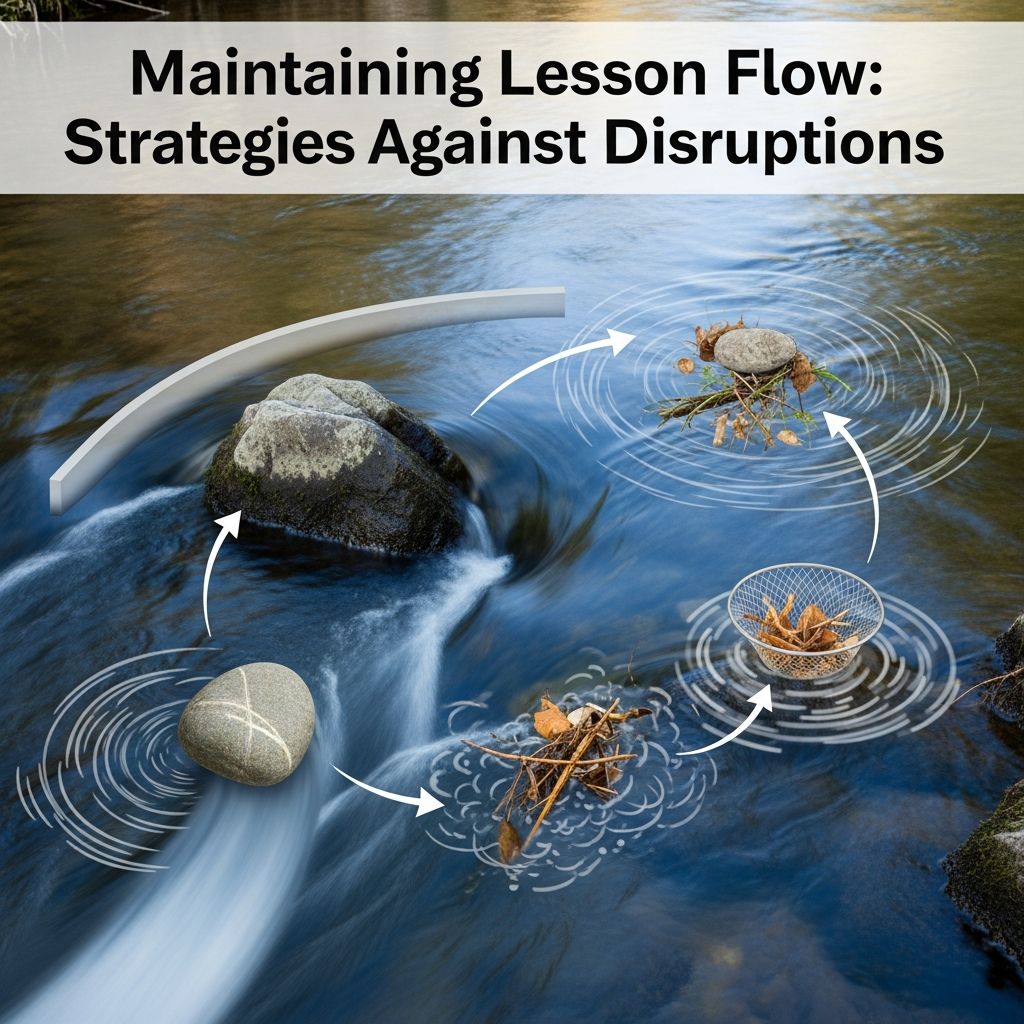
Effective teaching hinges on a controlled classroom environment where lessons proceed smoothly. Disruptions from students can quickly undermine instructional momentum, leading to lost time and reduced engagement. This article explores actionable techniques drawn from educational best practices to identify, prevent, and address these interruptions, empowering educators to sustain focus and productivity.
Understanding the Roots of Classroom Interruptions
Student disruptions often stem from unmet needs, lack of engagement, or unclear expectations. Recognizing patterns—such as side conversations, fidgeting, or off-task chatting—allows teachers to intervene early. Research from university resources emphasizes outlining both desired and undesirable behaviors from day one to set a proactive tone. By addressing root causes like boredom or seeking attention, educators can transform potential derailments into teaching moments.
Common triggers include transitions, unstructured time, or external interruptions like announcements. Proactive awareness helps in creating buffers, such as quick reflection activities, to refocus the group before issues escalate.
Establishing a Strong Foundation for Order
Begin each term by clearly communicating behavioral guidelines. Post visible charts detailing productive actions, like active listening, alongside consequences for disruptions. Verbal reinforcement on the first day reinforces these norms without confrontation. Consistency in enforcement builds predictability, reducing confusion and challenges.
- Define **positive behaviors** explicitly: e.g., ‘Raise your hand to contribute.’
- Outline **disruption responses**: Private warnings first, escalating only if needed.
- Review rules during morning routines to embed them in daily practice.
This foundation minimizes reactive measures, as students internalize expectations early.
Non-Verbal Techniques for Subtle Redirection
Non-verbal cues maintain lesson continuity by avoiding verbal escalations that draw class attention. Proximity control—standing near off-task students while facing engaged ones—prompts self-correction without pause.
Implement hand signals for common directives: a finger to lips for quiet, or a raised hand for pause. Teach these at the start of the year for seamless use. A simple desk-placed ‘focus’ card signals individual needs discreetly.
| Technique | Description | Benefit |
|---|---|---|
| Proximity | Walk near disruptor, eyes on class | Redirects without stopping instruction |
| Hand Signals | Pre-taught gestures for silence/stop | Minimizes verbal interruptions |
| Visual Cues | Cards or board marks | Private warnings, no class distraction |
These methods keep the majority engaged while correcting the few.
Verbal Strategies That Preserve Momentum
When words are necessary, use brief, calm phrases targeted at the individual. Instead of ‘Class, stop talking,’ say directly, ‘Alex, please hold questions for later.’ This isolates the issue without amplifying it.
Prompt self-reflection with questions: ‘How should we handle our materials?’ This encourages ownership over commands like ‘Put that away.’ Lower emotional intensity—speak softly to de-escalate—prevents drawing spectator interest.
- Target one student: Avoid group addresses.
- Use fewer words: ‘Eyes forward’ over lectures.
- Pair with positives: Follow corrections with praise for on-task peers.
Recovery Tools for Derailed Sessions
Unexpected halts, like drills or tech failures, require swift pivots. Distribute ‘reflection worksheets’ prompting students to note three key learnings, two questions, and one summary point. This sustains cognition during waits.
Engage via ‘stump your partner’ games: Students craft challenging questions from the lesson, exchanging to discuss. This reinforces content interactively without teacher-led recovery. For individual pull-backs, assign simple roles like material distribution to reintegrate seamlessly.
Proactive Engagement to Prevent Issues
Channel energy through involvement. Call on off-task students for low-stakes tasks, like selecting a highlighter color, fostering inclusion without embarrassment. During pair-shares or quick practices, circulate for private check-ins.
Model calm consistency: Adhere to schedules while flexing for needs. Build rapport by knowing students personally, redirecting disruptions as learning redirections.
De-Escalation for Rising Tensions
Early signs like agitation warrant non-confrontational approaches. Lower your stance, use soft tones, and inquire empathetically: ‘What’s on your mind?’ This prioritizes safety and diffuses before peaks. Avoid power struggles; focus on choices and positives.
Implementing Warning Systems Discreetly
A board with names serves as a visual tally. Approach casually while continuing instruction, adding marks silently. Modify for flow: Verbalize briefly if needed, then resume. This deters without halting the class.
Building Long-Term Classroom Culture
Sustain gains through routines: Start with focus-setters, end with reflections. Reinforce successes publicly to motivate. Track patterns via journals to refine approaches. Over time, a culture of mutual respect emerges, minimizing disruptions organically.
Flexibility balances structure—adapt for diverse needs while upholding core rules. Professional growth via peer observations refines these skills further.
Frequently Asked Questions (FAQs)
What if a student ignores non-verbal cues?
Use a brief, private verbal prompt during a natural break, then monitor closely. Escalate only if persistent, involving support systems.
How do I handle group disruptions?
Insert a 1-minute turn-and-talk, then redirect collectively with a class cue like a clap pattern.
Can these work for older students?
Yes—adapt signals to subtle gestures; emphasize self-regulation questions for maturity.
What about chronic disruptors?
Partner with counselors for underlying issues; consistent boundaries paired with positive reinforcement yield results.
How to recover after major interruptions?
Employ reflection sheets or partner challenges to recap and re-engage swiftly.
References
- Best Practices for Managing Disruptive Behavior — University of Washington DSL. Accessed 2026. https://dsl.uw.edu/faculty/disruptive-behavior-in-the-classroom/best-practices/
- 5 Creative Ways to Save a Derailed Lesson — Education to the Core. Accessed 2026. https://educationtothecore.com/5-creative-ways-to-save-a-derailed-lesson/
- 8 Ways to Redirect Off-Task Behavior Without Stopping Your Lesson — Truth for Teachers. Accessed 2026. https://truthforteachers.com/8-ways-to-redirect-off-task-behavior-without-stopping-your-lesson/
- Six Ways to Deal with Classroom Disruptions — Abeka. Accessed 2026. https://www.abeka.com/blog/six-ways-to-deal-with-classroom-disruptions/
- 6 Effective Strategies to Manage Disruptive Student Behaviors — Crisis Prevention Institute. Accessed 2026. https://www.crisisprevention.com/blog/education/6-effective-strategies-to-manage-disruptive-student-behaviors/

Medha Deb is an editor with a master's degree in Applied Linguistics from the University of Hyderabad. She believes that her qualification has helped her develop a deep understanding of language and its application in various contexts. Medha specializes in the areas of beauty, health, sports, and wellness and is committed to ensuring that the content on the website is…