
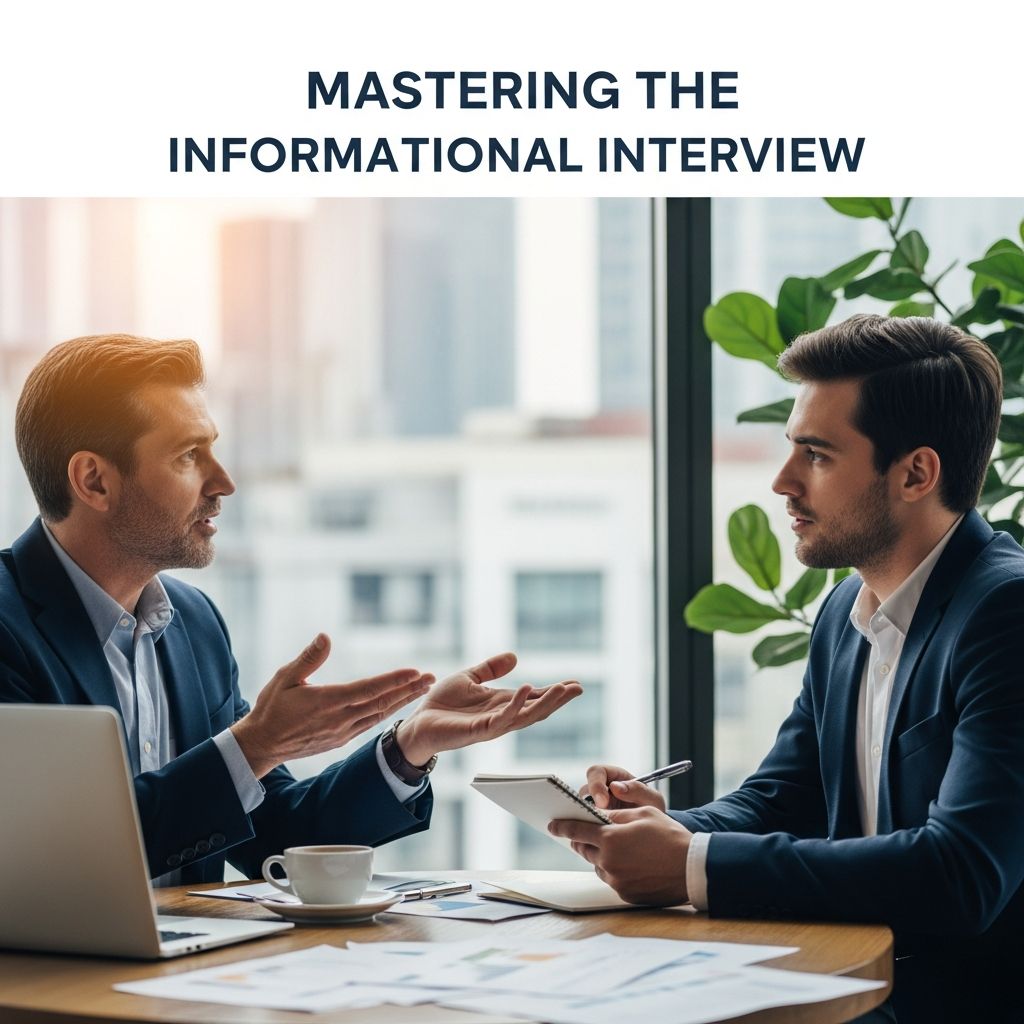
An informational interview represents one of the most underutilized yet powerful tools available to career-minded professionals. Unlike traditional job interviews aimed at landing a position, these conversations serve as opportunities to gather insights, build genuine professional relationships, and explore career pathways directly from experienced practitioners in your field of interest. Whether you are early in your career journey, considering a transition into a new industry, or seeking to deepen your understanding of a particular role, mastering the informational interview can significantly impact your professional trajectory.
Understanding the Purpose and Value of Informational Interviews
Informational interviews fundamentally differ from job interviews in both purpose and structure. Rather than evaluating your fit for a specific position, these conversations allow you to learn about someone’s career path, industry dynamics, organizational culture, and professional insights. This format creates a more relaxed environment where authentic dialogue can flourish, enabling you to ask thoughtful questions without the pressure of being evaluated as a candidate.
The value of informational interviews extends beyond gathering information. These interactions help you build a genuine professional network, increase your visibility within your target industry, and potentially uncover unadvertised opportunities. Many professionals report that their most meaningful career breaks came through relationships established during informational conversations. Additionally, these interviews provide you with real-world perspectives that cannot be found through online research, giving you a competitive advantage when you do pursue formal opportunities.
Laying the Foundation: Self-Assessment and Research
Before reaching out to potential contacts, invest time in understanding yourself and your career objectives. Conduct a thorough self-assessment examining your interests, values, skills, and personality traits. This introspection enables you to identify which professionals and organizations align with your aspirations, making your outreach more targeted and meaningful.
Simultaneously, research your target field comprehensively. Understand current industry trends, emerging challenges, and technological innovations shaping your area of interest. Familiarize yourself with the organizations you’re exploring, including their mission statements, recent news, product offerings, and competitive positioning. This preparation demonstrates respect for the professional’s time and establishes your credibility as someone serious about understanding the industry.
When researching individual contacts, examine their LinkedIn profiles, company biographies, published articles, and any media appearances. Understanding their career trajectory and areas of expertise allows you to craft more meaningful questions and demonstrates genuine interest in their work.
Identifying and Connecting With the Right Professionals
Successful informational interviews begin with identifying appropriate contacts. Leverage multiple resources to find professionals whose roles and experiences resonate with your interests:
- LinkedIn and professional networking platforms to search for individuals in your target field
- Alumni directories from your educational institutions, which often include contact information and career paths
- Industry-specific associations and professional groups that maintain member directories
- Personal and professional referrals from your existing network
- Company websites and organizational directories
- Industry publications and conference attendee lists
When reaching out, personalize your message regardless of the medium. Explain who you are, why you’re interested in their work specifically, and what you hope to learn from a conversation. Clearly state that you’re seeking advice and insights, not a job opportunity, as this distinction shapes their reception of your request. Express appreciation for their time and offer flexibility regarding scheduling.
Be prepared to contact multiple professionals, as not everyone will be available or willing to participate. Persistence combined with professionalism increases your success rate. Keep track of your outreach efforts, noting when you contacted each person and any responses received.
Crafting Compelling Questions That Drive Meaningful Conversation
The quality of your questions directly determines the quality of insights you’ll gain. Move beyond generic questions that could be answered through a quick internet search. Instead, craft questions that reveal the human experience behind the job, the practical realities of the role, and the professional’s authentic perspective.
Consider organizing your questions into thematic categories:
| Question Category | Purpose | Example Questions |
|---|---|---|
| Career Journey | Understand their path and decision-making | How did you transition into this field? What pivotal moments shaped your career? |
| Daily Responsibilities | Learn about actual day-to-day work | What does a typical day look like for you? What tasks consume most of your time? |
| Challenges and Solutions | Understand real obstacles and problem-solving | What are the most challenging aspects of your role? How do you approach complex problems? |
| Skills and Preparation | Identify what competencies matter most | What skills proved most valuable in your career? What would you recommend developing now? |
| Industry Insights | Gain forward-looking perspectives | What emerging trends are shaping your industry? Where do you see your field heading? |
| Personal Satisfaction | Understand intrinsic rewards and drawbacks | What aspects of your work bring you the greatest fulfillment? What trade-offs exist? |
Prepare a minimum of fifteen to twenty questions for a thirty-minute meeting, with additional questions available in case the conversation extends. Prioritize your questions, placing your most important inquiries early in case time becomes limited. Avoid binary yes-or-no questions that shut down conversation; instead, pose open-ended queries that encourage detailed responses and storytelling.
During the interview, remain flexible. If the professional mentions something intriguing, follow up with questions that weren’t on your prepared list. This adaptability demonstrates genuine interest and often leads to the most valuable insights.
Preparing Yourself for Interview Success
Adequate preparation extends beyond questions to encompass your overall readiness. Schedule the meeting at a time when you can be fully present and focused. If conducting the interview by phone, ensure you’re in a quiet environment with stable cell service or access to a landline. Test any technology beforehand if the meeting will be virtual.
Prepare a brief personal introduction that covers your background, current situation, and career interests. Keep this to under two minutes; remember this is their opportunity to speak, not yours. Have your resume readily available, though you likely won’t need to share it unless specifically requested.
Dress professionally, regardless of whether the meeting is in-person or virtual. For in-person meetings, wear business casual or business attire appropriate to the industry and setting. For virtual meetings, maintain the same professionalism above the camera line. This attention to presentation demonstrates respect for the professional’s time and conveys your seriousness.
Arrive ten to fifteen minutes early for in-person meetings. If interviewing by phone, call at the scheduled time from a quiet space where you can speak clearly without interruptions. Take notes throughout the conversation using a notebook or digital device. If you wish to record the interview, always ask permission first.
Mastering Communication During the Interview
Your demeanor and communication style significantly influence the quality of the conversation. Maintain enthusiasm and genuine interest in what the professional is sharing. Make eye contact if meeting in person, and if on the phone, let your voice convey energy and attention through inflection and pacing.
Listen actively rather than planning your next question while someone is speaking. Use affirming phrases like \”I see,\” \”that’s helpful,\” and \”yes, I understand\” to signal engagement. Allow for moments of silence after questions, giving the professional time to reflect and often leading them to share more substantive insights than their initial response.
Ask follow-up questions that dig deeper into responses. If someone mentions a challenge, ask how they overcame it. If they reference a success, ask what enabled that achievement. These probing questions demonstrate active listening and often yield the most valuable information.
Keep your questions and responses concise and well-organized. Avoid rambling or going on tangents. If the professional asks you questions, answer directly and then redirect focus back to them. Remember, this conversation is primarily about learning from their experience.
Building Genuine Professional Relationships
An informational interview isn’t simply a transaction where you extract information. Approach it as an opportunity to build a genuine professional relationship that could evolve over time. Show authentic interest in their work and perspectives rather than treating them as a means to an end.
Ask for permission to stay connected. Exchange contact information or connect on LinkedIn. Request their business card if meeting in person. These gestures establish the foundation for ongoing communication and potential future collaboration.
During the conversation, look for opportunities to offer value in return. Perhaps you possess information relevant to their interests, or you could provide a helpful introduction to someone in your network. Relationships built on reciprocity tend to be more meaningful and enduring.
Following Up and Maintaining Your Network
The follow-up after an informational interview is just as important as the interview itself. Within twenty-four hours, send a thoughtful thank-you message. Express specific gratitude for insights they shared, reference particular points from your conversation, and mention how you plan to apply what you learned.
If the professional mentioned resources, contacts, or opportunities, follow through on exploring them and report back on your progress. This demonstrates that their advice was valuable to you and worth acting upon.
Maintain your network by periodically reaching out to contacts you’ve made through informational interviews. Share relevant articles, congratulate them on promotions or achievements you notice on LinkedIn, or simply check in to see how they’re doing. These touchpoints keep relationships warm and top-of-mind.
Create a system for tracking your informational interviews. Maintain a spreadsheet containing the professional’s name, company, interview date, contact information, key insights gained, and any follow-up actions needed. This organization becomes invaluable as you build an increasingly large network.
Frequently Asked Questions
Q: Is it appropriate to ask for job leads during an informational interview?
A: While the primary purpose should be gathering information and advice, you can ask if they’re aware of opportunities in the field that might suit your background. However, avoid making this the main focus. If a genuine opportunity arises during the conversation, that’s different from explicitly soliciting job leads.
Q: How long should an informational interview last?
A: Typically, informational interviews last between twenty and thirty minutes. Respect the time commitment you initially requested. If the professional seems engaged and mentions having more time, you can extend slightly, but always remain attuned to subtle cues that they need to leave.
Q: Should I follow up multiple times if I don’t receive a response?
A: It’s reasonable to follow up once if you don’t receive a response within one to two weeks. Send a brief, friendly message reiterating your interest. However, if they don’t respond to your second attempt, respect their decision and move on to other contacts.
Q: Can I conduct informational interviews with people at my current company?
A: Absolutely. Internal informational interviews help you understand different departments, roles, and career paths within your organization. These conversations can reveal opportunities for growth and lateral moves you might not otherwise discover.
Q: What if I realize during the interview that I’m not interested in the field?
A: This is actually a valuable outcome. Informational interviews help you confirm whether a path aligns with your interests and values. Use the conversation to understand what specifically doesn’t appeal to you, as this clarifies your true preferences and helps guide your career exploration.
References
- Informational Interviewing — Embry-Riddle Aeronautical University Career Services. Accessed January 2026. https://careerservices.erau.edu/resources/interview-prep/informational-interviewing
- How to Facilitate an Informational Interview — Purdue University Krannert School of Management. Accessed January 2026. https://business.purdue.edu/careers/resources/prepare-for-informational-interviews.php
- Informational Interviews — USC Staff Assembly Career Resources. Accessed January 2026. https://staffassembly.usc.edu/informational-interviews/
- Preparing to Conduct an Informational Interview — Texas State University Career Services. Accessed January 2026. https://www.careerservices.txst.edu/students-alumni/resources-services/career-guides/informational-interview-guide.html
- Informational Interviewing — Yale University Office of Career Strategy. Accessed January 2026. https://ocs.yale.edu/channels/informational-interviewing/
- Six Steps of Informational Interviewing — UC Berkeley Career Engagement. Accessed January 2026. https://live-wp-sa-career-1.pantheon.berkeley.edu/start-exploring/informational-interviews/
- How to Get the Most Out of an Informational Interview — Harvard Business Review. 2016. https://hbr.org/2016/02/how-to-get-the-most-out-of-an-informational-interview

Medha Deb is an editor with a master's degree in Applied Linguistics from the University of Hyderabad. She believes that her qualification has helped her develop a deep understanding of language and its application in various contexts. Medha specializes in the areas of beauty, health, sports, and wellness and is committed to ensuring that the content on the website is…