
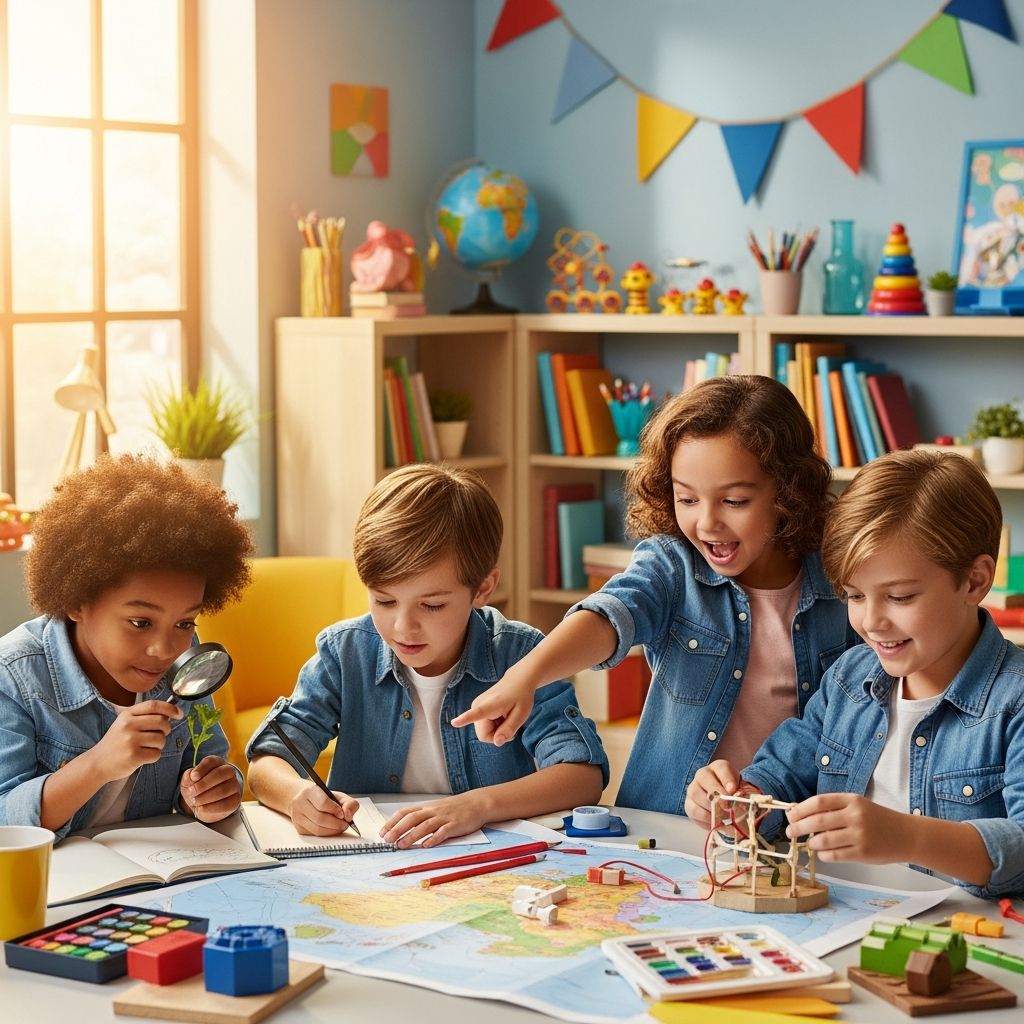
Every parent dreams of seeing their child dive into books, experiments, and discoveries with genuine excitement. Yet, fostering that inner drive requires more than just homework reminders—it’s about nurturing intrinsic motivation that turns learning into an adventure. This guide draws from psychological research and practical wisdom to equip you with tools that make education feel rewarding rather than rote.
Understanding the Roots of Children’s Motivation
Motivation in children stems from a blend of internal desires and external influences. Intrinsic motivation—driven by curiosity and personal satisfaction—outshines extrinsic rewards like stickers or screen time, leading to deeper retention and resilience. According to developmental experts, when kids feel competent, autonomous, and connected, they naturally seek challenges.
External factors, such as parental enthusiasm and classroom dynamics, play key roles too. A child’s belief in their ability to grow through effort, known as a growth mindset, transforms ‘I’m not good at this’ into ‘I can improve with practice’. By focusing on these foundations, parents can create an environment where learning thrives.
Building Strong Foundations at Home
The home sets the stage for academic attitudes. Start by modeling curiosity: share fascinating facts during dinner or explore a park with questions like ‘What do you think lives under that rock?’ This shared enthusiasm is contagious, encouraging kids to view the world as a classroom.
Create dedicated learning spaces free from distractions, stocked with books, puzzles, and art supplies. Consistency matters—establish routines that blend fun with focus, like a daily ‘discovery hour’ where kids lead the activity. These habits build discipline without drudgery.
Personalizing the Learning Journey
One size never fits all. Tailor education to your child’s passions, whether dinosaurs, space, or soccer. If math bores them, frame it through sports stats: ‘How many goals per game does your favorite player score?’ This relevance hooks reluctant learners.
Observe their learning style—visual, kinesthetic, or auditory—and adapt. For hands-on kids, use building blocks for geometry; for storytellers, turn history into narratives. Personalization boosts engagement by making knowledge feel owned, not imposed.
Empowering Through Choice and Autonomy
Control breeds resistance; choice sparks ownership. Offer options: ‘Do you want to study science via a volcano experiment or a plant-growing project?’ This agency fosters self-determination, a core driver of motivation.
Gradually increase responsibility—let older kids plan their study schedules or select library books. Research shows autonomy reduces withdrawal and enhances persistence, as children invest in decisions they’ve shaped.
The Power of Playful Learning
Play isn’t recess—it’s prime learning time. Games disguise lessons as fun, activating pleasure centers in the brain. Apps like Kahoot for quizzes or board games for strategy teach math and logic effortlessly.
Incorporate movement: scavenger hunts for vocabulary or role-play for history. Video games excel here, scaling challenges to skill levels, teaching grit through trial and error. Parents can join in, turning sessions into family bonding that reinforces concepts.
Cultivating a Growth Mindset
Dr. Carol Dweck’s research highlights praising effort over innate talent: ‘You worked hard to solve that puzzle!’ instead of ‘You’re so smart.’ This shifts focus to process, building resilience against setbacks.
Reframe failures as feedback: ‘What can we try next time?’ Normalize mistakes through stories of inventors like Edison. Over time, kids embrace challenges, viewing abilities as malleable.
| Aspect | Fixed Mindset | Growth Mindset |
|---|---|---|
| View of Ability | Innate and unchangeable | Developable through effort |
| Response to Failure | Avoidance or defeat | Opportunity to learn |
| Praise Focus | Talent or results | Strategy and persistence |
| Long-term Outcome | Stagnation | Lifelong learning |
Goal Setting and Progress Tracking
Clear goals provide direction. Help kids set SMART goals—Specific, Measurable, Achievable, Relevant, Time-bound—like ‘Read two chapters daily for a week.’ Visual trackers, such as sticker charts or apps, make progress tangible.
Break big tasks into micro-wins: finish one math problem, earn a high-five. Celebrating these builds momentum, turning overwhelming assignments into achievable quests.
The Role of Positive Reinforcement
Feedback fuels fire. Specific praise like ‘I love how you kept trying different ways!’ highlights behaviors to repeat. Rewards should tie to effort—extra playtime after focused work—not perfection.
Avoid over-rewarding; it can undermine intrinsic drive. Instead, use natural consequences: completing chores unlocks fun activities, teaching self-motivation.
Connecting Lessons to Real Life
Abstract concepts click when linked to reality. Cooking teaches fractions, budgeting apps introduce money math. Field trips or community service show subjects’ impact.
Discuss current events: ‘How does weather affect farmers?’ This relevance sustains interest, proving learning’s utility beyond tests.
Nurturing Social and Collaborative Learning
Learning thrives in groups. Study buddies encourage accountability; family quizzes add competition. Team projects build communication and empathy.
Encourage questions and debates at home, validating ideas. This social dimension makes education interactive and supportive.
Addressing Common Challenges
- Homework Resistance: Pair tasks with timers and breaks (Pomodoro-style) to maintain focus.
- Digital Distractions: Set tech-free zones; gamify offline alternatives.
- Low Confidence: Share your learning struggles to normalize growth.
- Boredom: Rotate activities; introduce novelty weekly.
Long-Term Habits for Lifelong Learners
Embed reading rituals: bedtime stories evolve into independent choices. Encourage journals for reflections, solidifying knowledge. Daily ‘wins’ reviews reinforce positivity.
Monitor burnout—balance with rest and hobbies. Track patterns; adjust strategies as kids age.
Frequently Asked Questions (FAQs)
What if my child hates reading?
Start with graphic novels or audiobooks tied to interests. Make it social: read together or join book clubs. Gradually build stamina with short, fun sessions.
How much screen time for educational games?
Limit to 30-60 minutes daily, supervised. Balance with physical play; choose apps with proven pedagogy.
Does rewarding effort backfire?
Not if rewards are effort-based and fade over time. Focus shifts to internal satisfaction.
At what age start goal setting?
From age 5, with simple visuals. Refine as executive functions develop around 7-8.
How to motivate teens?
Emphasize real-world links like college or careers. Grant more autonomy; discuss aspirations.
References
- 7 Motivational Techniques for Students to Boost Learning — Summit K12. 2023. https://www.summitk12.com/blog/motivational-techniques-for-students
- 12 Strategies to Motivate Your Child to Learn — CES Academy. 2023. https://www.ces-schools.net/12-strategies-to-motivate-your-child-to-learn/
- Motivation: Top Twenty Principles for Early Childhood Education — American Psychological Association (APA). 2019-05-01. https://www.apa.org/ed/schools/teaching-learning/top-twenty/early-childhood/motivation
- Motivating Children to Learn: A Life-Long Perspective — Stanford Center for Education Policy Analysis (CEPA). 1993. https://cepa.stanford.edu/content/motivating-children-learn-life-long-perspective
- How to Motivate and Keep Kids Focused – Tips for Parents and Teachers — LearnWell Services. 2023. https://learnwellservices.com/how-to-motivate-and-keep-kids-focused-tips-for-parents-and-teachers/
- 5 Motivation Strategies to Keep Kids Engaged — LearningRx Charlottesville. 2023. https://www.learningrx.com/charlottesville/motivation-strategies-keep-kids-engaged/
- How to Motivate Children: Science-Based Approaches — Harvard Center on the Developing Child. 2023. https://developingchild.harvard.edu/resources/briefs/how-to-motivate-children-science-based-approaches-for-parents-caregivers-and-teachers/

- Integrated M.A. in Applied Linguistics, University of Hyderabad
- 5+ years in editorial, instructional, SEO, and research-based writing
Sneha is a relationships and lifestyle writer with a strong foundation in applied linguistics and certified training in relationship coaching. She brings over five years of writing experience to theskillvault, crafting thoughtful, research-driven content that empowers readers to build healthier relationships, boost emotional well-being, and embrace holistic living. Her writing and insights reflect the belief that beauty, happiness, and wellness…