
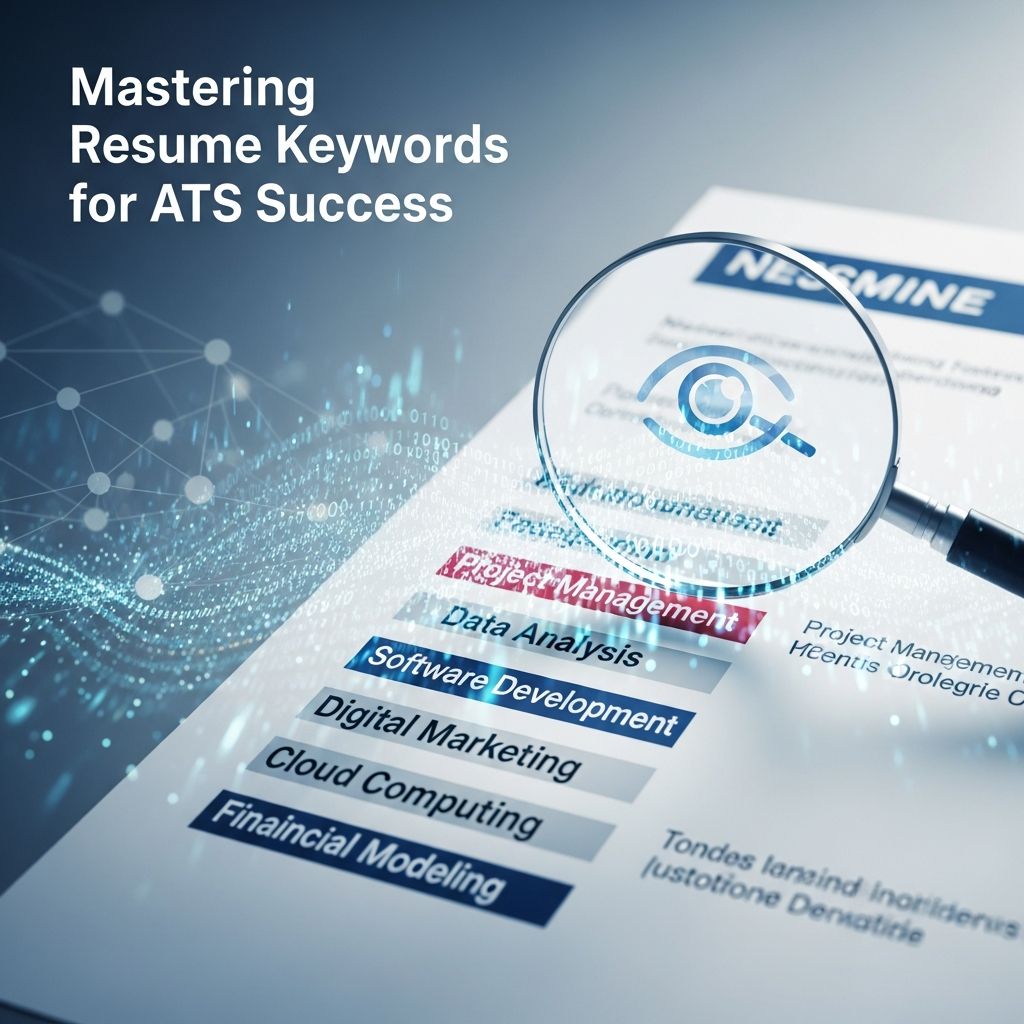
Modern recruitment relies heavily on automated tracking systems that scan thousands of resumes before human eyes ever review them. Understanding how to strategically incorporate relevant keywords throughout your resume is no longer optional—it’s essential for career advancement. This guide explores proven techniques for identifying, placing, and optimizing keywords to ensure your qualifications reach decision-makers rather than disappearing into digital oblivion.
Understanding the Role of Keywords in Modern Hiring
Applicant Tracking Systems (ATS) function as gatekeepers in the hiring process, automatically filtering resumes based on keyword matching and other predefined criteria. These systems look for specific terms, skills, certifications, and industry language that indicate you meet the position’s core requirements. When your resume contains the right keywords in appropriate contexts, the ATS assigns it a higher relevance score, increasing the likelihood it will advance to a recruiter’s desk.
The keyword-matching process extends beyond simple text recognition. Modern ATS platforms understand context, synonyms, and variations of terms. However, this doesn’t mean you should randomly populate your resume with industry jargon. Instead, effective keyword strategy requires thoughtful analysis of what specific roles demand and how those requirements align with your genuine experience and expertise.
Extracting Keywords from Job Descriptions: A Systematic Approach
The job description itself provides the most valuable roadmap for keyword selection. Rather than guessing which terms might impress hiring managers, you can use the employer’s own language as your guide. This alignment demonstrates that you understand the role’s expectations and possess the capabilities the organization prioritizes.
Begin by copying the entire job posting into a document where you can annotate and organize the content. Look beyond the obvious job title and identify patterns in how requirements are described. Phrases appearing multiple times—whether in the primary responsibilities, required qualifications, or preferred skills sections—indicate areas where the employer places emphasis.
Distinguish between hard skills and soft skills when reviewing job descriptions. Hard skills represent technical competencies like programming languages, software platforms, certifications, or specialized equipment expertise. Soft skills encompass qualities such as leadership, communication, problem-solving, and project management. Most ATS systems prioritize hard skills initially, making these your primary focus, though soft skills deserve inclusion when they appear prominently in the posting.
For example, if you’re pursuing a digital marketing position and the job description mentions “SEO,” “content management systems,” “Google Analytics,” “social media strategy,” and “email marketing automation” multiple times, these become your priority keywords. However, the listing also mentions “cross-functional collaboration” and “stakeholder communication” three times each, signaling that soft skills matter for this particular role.
Building Your Keyword Arsenal: Research and Resource Tools
Beyond individual job postings, broader research resources help identify keywords that resonate across your industry and target roles. The Occupational Outlook Handbook, maintained by the Bureau of Labor Statistics, provides comprehensive information about various positions, including typical responsibilities and required competencies. This resource helps you understand how your industry describes roles and qualifications consistently across employers.
O*NET OnLine’s AutoCoder tool offers another valuable approach. By inputting a job title and description, you receive standardized keyword suggestions and frequency analysis that reveals which terms appear most often in similar positions. This data-driven approach removes guesswork from keyword selection, showing you precisely which terminology carries weight in your field.
Professional networking platforms like LinkedIn provide real-world examples of how successful professionals in your target role describe their experience. Review profiles of people holding positions you aspire to reach and note the language they use to describe their skills and accomplishments. This reveals how top performers in your field position themselves and which keywords carry credibility within your industry.
Dedicated ATS analysis tools such as Jobscan, Rezi.ai, and Teal offer technological solutions for keyword identification. These platforms compare your resume against specific job postings, highlighting missing keywords and providing match rate scores. Many job seekers report landing interviews with match rates between 65-75%, though higher scores generally improve your odds.
Strategic Keyword Placement Throughout Your Resume
Identifying keywords represents only half the battle; placement strategy determines whether those keywords function effectively. Rather than confining keywords to a skills section, distribute them strategically across multiple resume components to reinforce their relevance and improve ATS recognition.
Your professional summary or objective statement serves as prime real estate for high-priority keywords. This opening section receives prominent ATS weighting, and including 3-5 crucial terms here immediately signals that your qualifications align with the position. For instance, a professional summary for a data analyst role might read: “Results-driven Data Analyst with expertise in SQL optimization, data visualization, and advanced statistical modeling. Proven track record implementing analytics solutions that drive business intelligence and support data-informed decision-making.”
The dedicated skills section provides another critical placement opportunity. Rather than simply listing skills alphabetically or randomly, organize them by relevance to the target position, placing your strongest matches at the top. This section should balance comprehensiveness with readability, avoiding keyword stuffing while ensuring all relevant qualifications appear.
Work experience descriptions offer perhaps the most natural integration opportunities for keywords. Rather than forcing terms awkwardly into bullet points, weave keywords into accomplishment statements that honestly reflect your contributions. This approach satisfies both ATS requirements and human readability, creating bullet points that resonate with recruiters reviewing your resume manually.
Education and certification sections deserve keyword attention as well. If your degree, certifications, or specialized training align with job requirements, ensure you use the exact terminology the employer uses rather than abbreviations or alternate naming conventions. For example, if the job description specifies “Project Management Professional (PMP) certification,” include that full phrase rather than just “PMP.”
Blending Keywords with Action Verbs and Quantifiable Results
Keywords alone create a hollow resume that passes ATS filters but fails to impress human readers. The most effective approach combines keyword inclusion with strong action verbs and measurable outcomes that demonstrate actual impact.
Action verbs energize your bullet points and convey confidence in your capabilities. Rather than saying “Responsible for managing social media accounts,” try “Orchestrated integrated social media strategy across five platforms, growing follower engagement by 156%.” The second version incorporates keywords naturally while showcasing concrete results.
Whenever possible, quantify your accomplishments with metrics that illustrate scope and impact. Numbers capture attention and provide context that helps readers understand the significance of your work. Compare these two versions:
- Weak: “Improved customer service processes using new software”
- Strong: “Implemented customer service software platform, reducing average response time by 40% and increasing satisfaction scores from 3.2 to 4.6 out of 5.0”
The second example incorporates keywords (customer service, software implementation), includes specific action verbs (implemented), and quantifies results with measurable metrics. This combination satisfies both ATS requirements and recruiter expectations for demonstrated value.
Maintaining Natural Language While Optimizing Keywords
A common mistake in resume keyword optimization involves keyword stuffing—overloading your resume with search terms at the expense of natural readability. ATS systems have become sophisticated enough to recognize and potentially penalize this approach. Additionally, recruiters reviewing your resume manually will immediately notice awkward phrasing and artificial language use.
Aim for 10-20 relevant keywords naturally integrated throughout your resume rather than attempting to include every possible industry term. This density achieves ATS optimization without compromising the professional tone and clarity that human readers expect. Each keyword should fit logically within the context where it appears, describing your actual experience and capabilities rather than appearing forced or irrelevant.
The balance between keywords and natural language improves when you focus on synonyms and variations. Rather than repeating identical terms multiple times, incorporate related words and acronyms that express the same concepts. For example, use both “Search Engine Optimization” and “SEO,” “customer relationship management” and “CRM,” or “budget management” and “financial planning.” This variety maintains readability while ensuring the ATS recognizes your qualifications regardless of which terminology the employer uses in their system’s keyword filters.
Customizing Keywords for Industry and Role Specificity
Different industries prioritize different keywords, and your resume should reflect industry-specific terminology rather than using generic language. A healthcare professional’s resume demands different keywords than a technology specialist’s, which differs substantially from a marketing professional’s vocabulary.
Technology roles emphasize programming languages, frameworks, tools, and technical certifications. Marketing positions highlight campaign management, analytics platforms, creative tools, and communication strategies. Healthcare resumes feature clinical knowledge, patient care methodologies, medical software, and regulatory compliance terminology. Taking time to understand your industry’s particular language ensures your resume resonates with both ATS systems and recruiters familiar with that sector.
Additionally, your career level influences keyword selection. Entry-level positions prioritize foundational technical skills and academic qualifications, while mid-career roles emphasize leadership, project management, and process improvement. Executive positions focus on strategic vision, organizational leadership, and business impact. Customizing your keywords to match your career stage ensures you position yourself appropriately within your field’s hierarchy.
Formatting Considerations for Optimal ATS Compatibility
Technical formatting choices directly impact how effectively ATS systems parse and recognize your keywords. While keyword strategy matters most, format decisions determine whether an ATS can even access and analyze your content correctly.
Unless a specific job posting requests otherwise, submit your resume as a .docx file (Microsoft Word format). Many ATS platforms handle Word documents more reliably than PDFs, which can cause parsing errors that obscure your keywords. Avoid creative formatting elements like graphics, headers, footers, columns, and complex tables that ATS systems struggle to interpret. These design choices may enhance visual appeal but create technical barriers between your qualifications and the systems evaluating them.
Maintain a clean, linear structure using standard heading styles, bullet points, and simple formatting. This approach ensures ATS compatibility while keeping your resume scannable for human reviewers. Your goal is a document that serves both audiences—the automated system that filters resumes and the recruiter who makes hiring decisions.
Testing and Refining Your Keyword Strategy
Once you’ve incorporated keywords strategically throughout your resume, testing your work against actual job postings provides valuable feedback before submitting applications. AI-powered resume analysis platforms allow you to input your resume and a specific job description, receiving detailed comparisons that identify which keywords you’ve successfully incorporated and which critical terms remain absent.
Use this feedback to refine your master resume and create targeted versions for specific applications. Rather than maintaining a single static resume, effective job searching involves customizing your resume for each opportunity. This doesn’t mean fabricating skills you lack; instead, it means emphasizing genuine qualifications that align most closely with each particular role’s requirements.
Each time you refine your resume based on a new job posting, you deepen your understanding of how your industry describes qualifications and what various employers prioritize. This accumulated knowledge improves your ability to quickly identify relevant keywords in future postings and incorporate them effectively.
Aligning Keywords with Company Culture and Values
Beyond technical skills and job-specific keywords, consider incorporating terminology that reflects a company’s culture and values. If company descriptions emphasize innovation, include examples demonstrating your creative problem-solving. If they prioritize collaboration, highlight teamwork and cross-functional project experiences. This alignment signals that you understand the organization’s identity beyond just fulfilling job requirements.
Research the company’s website, mission statement, and recent news to understand their priorities and language. Use this insight to customize your professional summary and achievement statements, showing that you don’t just have the necessary skills but also fit within the organization’s culture and strategic direction.
Common Keyword Optimization Questions
How many keywords should I include in my resume?
Aim for 10-20 relevant keywords naturally distributed throughout your resume rather than attempting to force every possible industry term into your document. This density achieves ATS optimization without compromising readability or creating an artificial tone that human reviewers will recognize immediately.
Should I use abbreviations or full terminology in my resume?
Include both variations when possible. Use the full term initially (e.g., “Customer Relationship Management”) followed by the acronym (“CRM”) to ensure the ATS recognizes your qualifications regardless of which format the employer’s system searches for. This dual approach accommodates different keyword-matching approaches without cluttering your resume.
How do I balance keyword optimization with professional readability?
Focus on keywords that genuinely describe your experience and integrate them into accomplishment statements featuring action verbs and quantifiable results. This approach satisfies both ATS requirements and human readability expectations, creating a resume that functions effectively for both audiences.
Should I customize my resume for every job application?
Yes, creating targeted versions for specific positions allows you to emphasize keywords most relevant to each opportunity. Rather than fabricating skills, reorder your experience and highlight qualifications that align most closely with each role’s requirements. This strategy respects both your actual capabilities and the employer’s specific needs.
Which keywords matter most for ATS systems?
Hard skills typically receive higher ATS weighting than soft skills. Technical competencies, certifications, software proficiency, and industry-specific methodologies generally carry more algorithmic weight than general qualities like communication or leadership, though both matter for comprehensive positioning.
Moving Forward with Keyword Strategy
Resume keyword optimization represents a learnable skill that improves with practice and attention. By systematically identifying relevant terms from job descriptions, strategically placing them throughout your resume, and maintaining natural language that serves both ATS systems and human readers, you significantly improve your chances of reaching hiring managers and securing interviews. The investment in keyword strategy pays dividends throughout your job search, creating a foundation for career advancement in an increasingly automated recruitment landscape.
References
- Words You MUST Include in Your Resume to Pass ATS Screening — Huru.ai. 2024. https://huru.ai/ats-keywords-resume-success/
- 6 Iron-Clad Ways To Find Keywords To Optimize Your Executive Resume — Chameleon Resumes. 2024. https://chameleonresumes.com/keywords-to-optimize-your-executive-resume
- How to Optimize Your Resume for ATS in 2026 (Updated Guide) — Scale.jobs. 2026. https://scale.jobs/blog/optimize-resume-for-ats-2026-guide
- 100 Top Resume Keywords for 2026 Job Applications — Final Round AI. 2026. https://www.finalroundai.com/blog/resume-keywords-2026
- Make Your Resume AI-Friendly: Expert ATS Optimization Tips (2026) — National Search Group. 2026. https://www.nationalsearchgroup.com/optimize-resume-for-ats-ai-screening/

- Integrated M.A. in Applied Linguistics, University of Hyderabad
- 5+ years in editorial, instructional, SEO, and research-based writing
Sneha is a relationships and lifestyle writer with a strong foundation in applied linguistics and certified training in relationship coaching. She brings over five years of writing experience to theskillvault, crafting thoughtful, research-driven content that empowers readers to build healthier relationships, boost emotional well-being, and embrace holistic living. Her writing and insights reflect the belief that beauty, happiness, and wellness…