
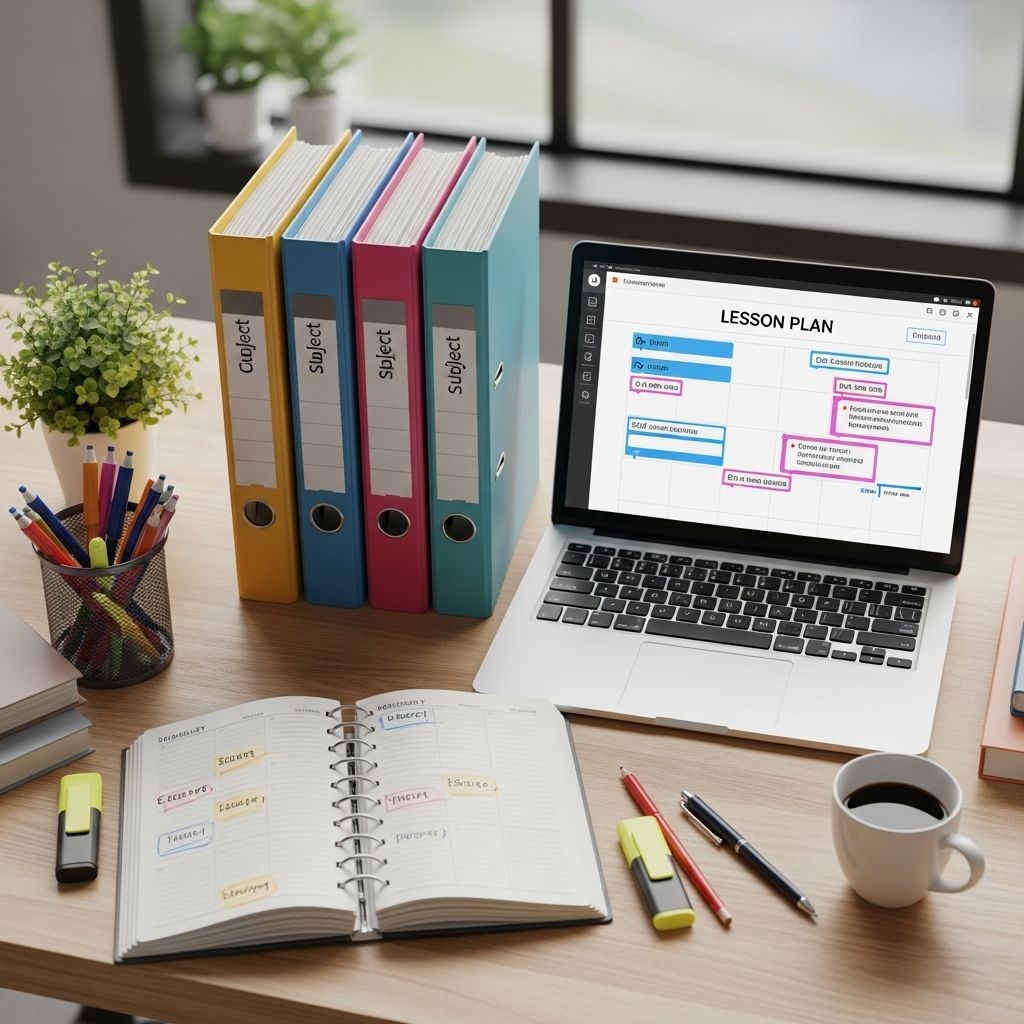
Effective lesson planning is the cornerstone of successful teaching, yet it often consumes excessive time that educators could spend on instruction or professional growth. By adopting smart strategies, teachers can create high-quality plans more quickly, allowing for adaptability and creativity in the classroom. This article explores practical approaches drawn from established educational practices to help you plan better and faster.
Establish Clear Learning Goals from the Start
Every strong lesson begins with well-defined objectives. Start by identifying the key concepts, skills, or knowledge students must acquire. Rank these objectives by priority to ensure focus on essentials, especially under time constraints. For instance, ask: What must students grasp? Why does it matter? Which can be deferred if needed?
Prioritizing helps manage class time effectively. Write objectives in actionable terms, such as “Students will analyze primary sources to evaluate historical events.” This clarity guides activity selection and assessment, streamlining the entire process.
Adopt Proven Lesson Frameworks for Speed
Rely on time-tested structures to avoid reinventing the wheel. Frameworks like Engage-Study-Activate (ESA) provide a straightforward sequence: spark interest, teach explicitly, then practice application. Task-Based Learning (TBL) centers on a single meaningful task with language support and reflection, reducing the need for multiple disconnected activities.
Limit lessons to 3-4 core activities to maintain momentum. Always articulate a clear aim upfront: “By lesson’s end, students will be better able to…” This keeps planning focused and execution efficient.
Build a Resource Bank of Reusable Components
One of the biggest time-savers is developing a personal library of adaptable materials. Create “lesson skeletons” – flexible outlines for common topics that can be tweaked for different classes or levels. Store successful activities like debates, role-plays, or storytelling prompts in a digital folder for quick access.
Over time, this bank becomes invaluable. Recycling proven elements frees mental energy for customization rather than creation from scratch, leading to consistently engaging lessons.
Implement Batching for Long-Term Efficiency
Batching involves planning multiple related lessons in one focused session, leveraging thematic continuity to boost quality and speed. Begin with a year-long pacing guide that maps units, standards, and timelines across subjects like reading or math. This eliminates daily sequencing decisions, such as duration per topic.
During a batching session, outline an entire unit – e.g., all opinion-writing lessons. Work in a flow state for deeper creativity and cohesion. Adjust for actual teaching weeks by trimming non-essentials, then assign dates. This method cuts stress and ensures comprehensive coverage.
Master Time Allocation and Pacing Techniques
Precise timing prevents overruns and rushed endings. Divide class periods into 3-4 chunks of 10-20 minutes, matching students’ attention spans and minimizing disruptive transitions. For a 45-minute class, allocate: 10 minutes warm-up, 15 minutes main activity, 10 minutes practice, 10 minutes review.
- Estimate activity durations conservatively, adding buffers for discussions or questions.
- Display a timed agenda on the board at class start, e.g., “10:45 Warm-up | 11:00 Group Work | 11:15 Share-Out | 11:30 Wrap-Up.” This keeps everyone on track and builds student anticipation.
- Plan extra tasks or reflections for overruns, and build in cleanup time.
Flexibility is key: Monitor engagement and pivot if an activity falters, prioritizing core objectives.
Craft Versatile Activities That Multitask
Replace fragmented drills with integrated tasks that build multiple skills simultaneously. A product design role-play, for example, hones speaking, vocabulary, and problem-solving in one go, sustaining engagement for extended periods without teacher-led input.
Prepare varied explanations – analogies, visuals, real-world examples – to suit diverse learners. Embed checks for understanding, like targeted questions or quick demos, to gauge progress in real-time. Anticipate common queries to maintain flow.
Incorporate Spaced Repetition for Retention
Effective planning weaves in review of prior material. Spaced practice – revisiting content over days – outperforms cramming, as evidenced by research showing distributed study sessions yield better long-term recall. Include warm-ups recycling last week’s topics or intersperse new lessons with targeted reviews.
This approach not only reinforces learning but also paces content delivery realistically across meetings.
Share Plans Transparently with Students
Transparency fosters engagement. At lesson start, outline objectives and agenda visibly – on the board or handout. This helps students track progress, understand activity purposes, and stay motivated.
It also aids you: A public timeline reinforces pacing and allows quick adjustments if needed.
Assess and Adapt Continuously
Build formative checks throughout: polls, pair-shares, or exit tickets to verify objective achievement. Decide in advance how students will demonstrate mastery for each goal.
Post-lesson, reflect: What worked? What to tweak? Use insights to refine your resource bank, creating a feedback loop for ongoing improvement.
Practical Tools for Planning Efficiency
Organize materials ahead: checklists for handouts, tech setups, and transitions. Use digital tools for skeletons and banks, tagging by skill or theme.
| Planning Phase | Time-Saving Tip | Benefit |
|---|---|---|
| Pre-Planning | Pacing guide creation | Eliminates daily decisions |
| Activity Design | 3-4 tasks max | Sustained focus |
| Execution | Visible timed agenda | Shared accountability |
| Review | Spaced repetition | Improved retention |
Frequently Asked Questions (FAQs)
What if a lesson runs over time?
Prioritize top objectives and shift secondary ones to homework or next class. Use your ranked list to decide swiftly.
How do I start batching without a pacing guide?
Map one subject’s units first, estimating weeks per topic. Refine iteratively based on your calendar.
Can these tips work for all grade levels?
Yes, scale frameworks and chunks to age and period length – shorter for young kids, integrated for advanced groups.
How often should I update my resource bank?
After every few lessons, add winners and note adaptations for future reuse.
What’s the role of flexibility in planning?
Prepare alternatives and stay responsive to student needs over rigid adherence.
References
- Time-Saving Lesson Planning Tips Every TEFL Teacher Should Know — Barefoot TEFL Teacher. 2023-05-15. https://www.barefootteflteacher.com/p/time-saving-lesson-planning-tips
- Strategies for Effective Lesson Planning — University of Michigan CRLT (crlt.umich.edu). 2022-08-10. https://crlt.umich.edu/gsis/p2_5
- Develop Effective and Engaging Lesson Plans — ExploreLearning. 2024-01-22. https://www.explorelearning.com/resources/insights/effective-engaging-lesson-plans
- Batching Lesson Plans Makes Planning Ahead Easy — Edutopia. 2023-11-07. https://www.edutopia.org/article/batching-lesson-plans/
- 6 Ideas to Fine-Tune the Pacing of Our Lessons — MiddleWeb. 2022-03-14. https://www.middleweb.com/52640/six-ideas-to-fine-tune-the-pacing-of-our-lessons/
- Ten quick tips for creating an effective lesson — PMC/NCBI (pmc.ncbi.nlm.nih.gov). 2019-04-10. https://pmc.ncbi.nlm.nih.gov/articles/PMC6459472/

- Integrated M.A. in Applied Linguistics, University of Hyderabad
- 5+ years in editorial, instructional, SEO, and research-based writing
Sneha is a relationships and lifestyle writer with a strong foundation in applied linguistics and certified training in relationship coaching. She brings over five years of writing experience to theskillvault, crafting thoughtful, research-driven content that empowers readers to build healthier relationships, boost emotional well-being, and embrace holistic living. Her writing and insights reflect the belief that beauty, happiness, and wellness…