
Establishing a Predictable Schedule Foundation
The cornerstone of any successful recurring family activity is consistency. Families benefit from knowing exactly when their shared viewing time will occur, allowing everyone to anticipate and plan around this commitment. By designating a specific evening each week—whether Friday, Saturday, or another day that aligns with your family’s rhythm—you create an anchor point in the weekly calendar that everyone can depend on. This predictability transforms what might otherwise be a spontaneous gathering into an anticipated tradition.
To reinforce this commitment, mark the chosen date prominently on household calendars, set digital reminders on smartphones, and communicate the timing clearly to all family members. When children know with certainty that movie night happens every Friday at seven o’clock, for instance, they can mentally prepare and build excitement throughout the day. This psychological preparation enhances their engagement and enthusiasm when the actual time arrives.
The timing of your movie night matters significantly. Consider when family members are most alert and available, avoiding late hours that may cause restlessness or fatigue. Early evening timing works well for families with younger children, while later slots suit households with teenagers who naturally stay awake longer. The goal is selecting a window when everyone can be genuinely present without watching the clock or struggling to stay focused.
Crafting Thematic Experiences That Engage Everyone
Beyond simply pressing play on any available film, successful family movie nights incorporate purposeful thematic elements that unify the experience and make it feel special. Creating a distinctive identity for your movie night—whether through a catchy name, visual aesthetic, or narrative thread—elevates the occasion from routine entertainment to an intentional family ritual.
Thematic approaches can take numerous forms. Some families develop seasonal themes, rotating through categories like “Adventure Films Spring” or “Holiday Classics Winter.” Others organize around specific genres, dedicating certain weeks to animated features, adventure stories, or family comedies. Themed approaches need not be elaborate; even simple concepts like “Movie Night Pajamas” or “Popcorn Bar Nights” create psychological demarcation that signals something special is happening.
When family members understand the overarching theme for a particular evening, it provides framework for related activities. A space exploration movie night naturally leads to discussing planets or watching a science documentary afterward. A superhero theme might inspire decorating the viewing area with action figures or encouraging everyone to wear their favorite hero’s colors. These thematic connections deepen engagement and create conversation starters that extend beyond the film itself.
Implementing Fair Movie Selection Processes
A frequent source of tension during family entertainment planning involves disagreements over what to watch. Different age groups and individual preferences create natural conflict that, if left unmanaged, can undermine the positive experience you’re trying to create. Establishing transparent, equitable selection methods eliminates frustration and ensures everyone feels heard and valued.
One effective approach involves rotating responsibility for movie choice among family members. Each person gets an assigned week when they serve as the primary decision-maker, selecting from movies everyone has agreed are appropriate and appealing. This system guarantees that diverse tastes get represented across multiple weeks, preventing any single preference from dominating the schedule.
To prevent conflicts while maintaining autonomy, establish clear parameters before the selection period begins. Determine age-appropriateness guidelines, set runtime limits based on when your family needs to sleep, and perhaps create a pre-approved list of films to choose from. This framework respects individual choice while maintaining necessary boundaries. Children feel empowered knowing their preference will be honored within reasonable limits, and parents maintain appropriate oversight without micromanaging every decision.
Transforming Your Space Into a Theater Environment
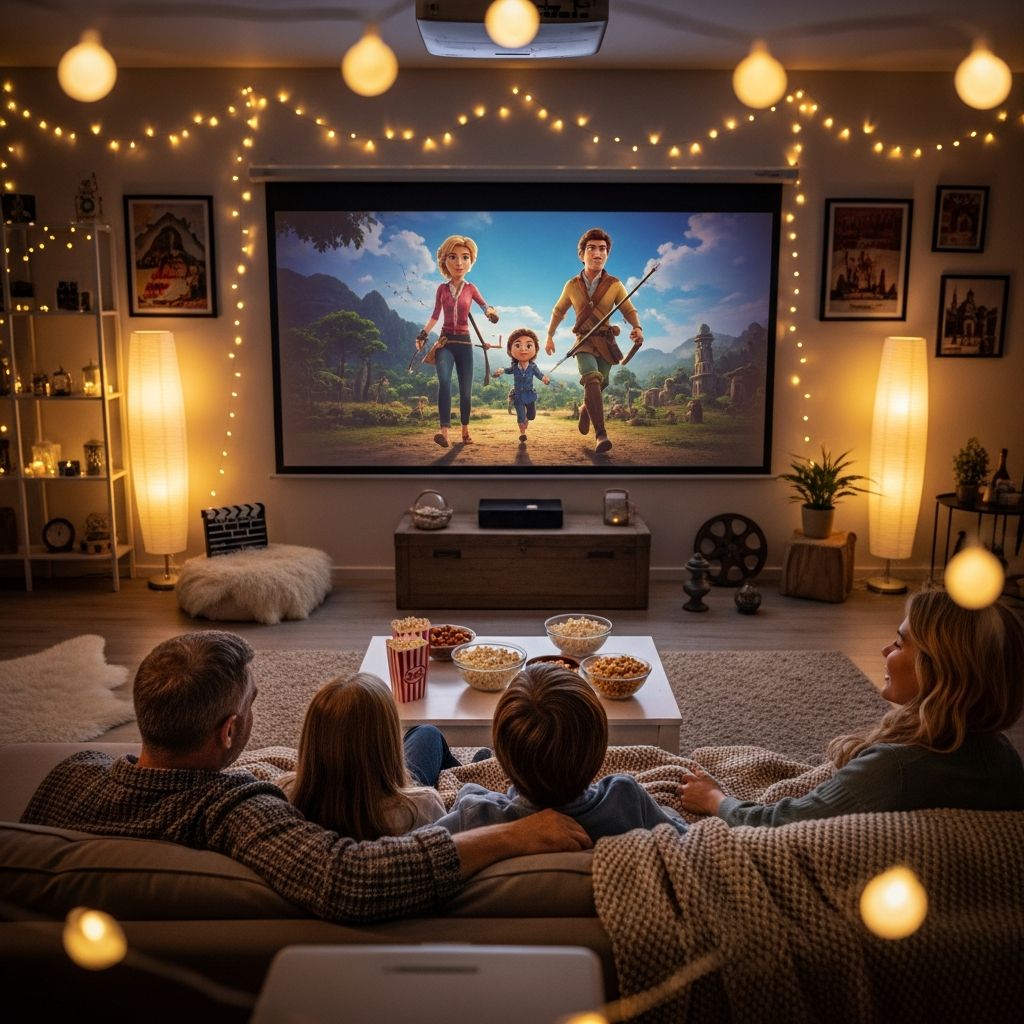
The physical setting dramatically influences how family members experience and enjoy your movie night. Most living rooms don’t naturally feel like cinema spaces, but thoughtful environmental modifications can create an immersive atmosphere that shifts everyone’s mindset from “casual TV watching” to “special event viewing.”
Lighting plays a crucial role in establishing theatrical ambiance. Dimming overhead lights and relying instead on softer sources—table lamps, candles, or string lights—creates visual drama while reducing screen glare that interferes with picture quality. Many families find that starting with gentle lighting and gradually reducing it as the movie begins works well, allowing eyes to adjust comfortably rather than suddenly plunging into darkness.
Comfort infrastructure deserves equal attention. Gather blankets, pillows, cushions, and any cozy textiles your home contains and arrange them strategically around your viewing area. Creating distinct comfort zones allows different family members to customize their setup according to individual preferences—some may want to nestle under multiple blankets while others prefer having arms free. Bean bag chairs, floor cushions, and even strategically positioned furniture can accommodate diverse comfort needs.
For families willing to invest modest effort, constructing a temporary blanket fort or cushion nest elevates the experience into something notably different from ordinary television watching. These makeshift structures need not be architecturally complex; even draping blankets over existing furniture creates a sense of enclosed coziness that children find delightful and adults often rediscover as surprisingly enjoyable.
Curating and Presenting Snack Experiences
No movie-watching experience feels complete without appropriate refreshments. The snack component serves multiple functions: it provides sensory enjoyment, contributes to the overall theatrical atmosphere, and gives families an additional avenue for customization and bonding.
Rather than simply opening bags of prepackaged snacks, consider establishing a designated snack station or concession area. This visual presentation mimics actual cinema experiences and signals that thoughtfulness went into planning this evening. Arrange multiple snack options so different preferences get accommodated: traditional popcorn prepared fresh, candy selections, fruit, cheese and crackers, or homemade treats prepared during the day.
The snack preparation itself can become part of the family bonding experience. Younger children often enjoy operating the popcorn maker or assembling candy combinations, developing ownership of the movie night process. Some families use playful money systems where children “purchase” snacks with provided tokens, adding an interactive game element to the typical consumption routine.
Consider beverages alongside solid snacks—hot chocolate during winter months, refreshing lemonade during summer, or simple water served in special cups designated specifically for movie night. These thoughtful details accumulate to create a cohesive, intentional experience rather than incidental snacking.
Integrating Interactive and Participatory Elements
While passive viewing of films certainly has value, incorporating interactive components can significantly enhance engagement, particularly for younger audience members whose attention spans benefit from varied activities. These additions need not distract from the film; instead, they deepen connection to the content and to each other.
Strategically pausing the film to pose questions represents one accessible interactive method. Rather than asking “What did you think?” after the credits roll, pose specific queries during the viewing: “What do you think will happen next?” or “Why did that character make that choice?” These momentary pauses invite active thinking rather than passive absorption and create natural discussion opportunities that younger viewers might otherwise miss.
Establishing a family movie rating system gives everyone voice in evaluating what you’ve watched. Whether using traditional star ratings, thumbs up/down assessments, or creative systems families design themselves, recording these evaluations creates an evolving record of family preferences. Over time, this data reveals patterns in what resonates with different family members and becomes a touchstone for future selection decisions.
Post-viewing activities can extend the experience beyond the closing credits. Some families engage in themed craft projects inspired by the film, prepare discussion questions exploring the movie’s themes, or create artwork responding to what they’ve seen. These extensions transform the movie night from a contained event into a broader experience that influences your family’s thinking and activities throughout the following week.
Addressing Practical Logistics and Timing
Successful family movie nights rarely happen by accident; they require thought about the timing and sequencing of related activities. The hours immediately preceding your designated viewing time significantly influence how smoothly and enjoyably the evening unfolds.
Consider scheduling dinner well before the movie begins rather than immediately before. This approach provides time for digestion, cleanup, and transition activities that help family members shift into a relaxed viewing mindset. An early dinner—perhaps 4:00 or 4:30 PM for families planning an evening movie—allows cleanup completion, personal grooming (changing into comfortable clothes, taking baths if desired), and appetite restoration before snacks arrive. This sequencing prevents the discomfort of watching films on too-full stomachs or with messy kitchen worries still occupying mental space.
The evening’s endpoint deserves equal consideration. Build in realistic buffer time before bedtime requirements, accounting for the actual movie length plus any interactive components you’ve included. Families with young children may need to conclude earlier, while those with older teens might extend later. The key is aligning movie night timing with your family’s natural sleep patterns and requirements rather than forcing it into an incompatible window that creates stress.
Adapting for Different Family Compositions
Family structures vary widely, and successful movie night strategies must accommodate these differences. Families with significant age ranges face particular challenges in finding content that genuinely appeals to toddlers, school-age children, and teenagers simultaneously.
One solution involves occasionally splitting into separate viewing groups, allowing age-appropriate content for each cohort while maintaining the family-gathering principle through other means. Perhaps the youngest watches an episode of gentle children’s programming with one parent while older siblings experience a more sophisticated film with the other parent, followed by everyone reconvening for shared snacks and conversation. This adaptation honors developmental differences while preserving the togetherness that movie night cultivates.
Alternately, families might designate certain weeks for content that spans age ranges and other weeks for separated viewing experiences. This hybrid approach balances the desire for shared family time with the reality that content preferences diverge significantly across different life stages.
Selecting Movies That Resonate Across Interests
Movie selection requires balancing competing preferences and developmental appropriateness. The most successful family films tend to operate on multiple levels—entertaining younger viewers through humor, action, and visual appeal while offering older audience members thematic depth, sophisticated humor, or compelling storytelling.
When possible, research films before committing to them for your movie night. Reading parent reviews and age-appropriateness guides helps identify content that aligns with your family’s values and comfort levels. Some families explore films connected to ongoing family interests or curricular topics if homeschooling, deepening educational value alongside entertainment.
Encouraging family members to try genres or styles they wouldn’t normally select independently broadens everyone’s viewing horizons. International films, older classics, animated features, documentaries, or lesser-known contemporary releases expand the movie night repertoire beyond obvious mainstream choices. These explorations often surprise family members, who discover unexpected enjoyment in formats they initially resisted.
Frequently Asked Questions About Family Movie Nights
Q: How long should a typical family movie night last?
A: Most successful family movie nights run between 90 and 120 minutes including the film itself, plus any interactive activities or discussion time. Adjust based on your family’s ages and attention spans.
Q: What if family members have conflicting schedules?
A: Consistency matters more than perfection. Choose your designated night knowing occasional conflicts will occur, then recommit to the schedule the following week rather than abandoning the tradition when disruptions happen.
Q: How do we decide between watching at home versus other venues?
A: Home movie nights offer advantages in customization and cost, while theater visits provide special occasion atmosphere. Consider alternating between both experiences to maintain novelty and engagement.
Q: What if someone doesn’t want to watch the selected film?
A: Establish household expectations about participation while respecting genuine conflicts or strong preferences. Perhaps they engage in a quiet compatible activity nearby, participate partially, or trade their selection opportunity to next week in exchange for sitting this one out.
Q: How can we ensure movie night remains special rather than becoming routine?
A: Vary elements throughout the year—themes, snack offerings, viewing location within your home, interactive activities, and occasional special guests. This variation maintains novelty while preserving the structural consistency that makes it a reliable family tradition.
References
- How to Make Family Movie Nights Part of Your Weekly Routine — Wholeheartily. 2025-09-24. https://wholeheartily.com/2025/09/24/howtomakefamilymovienightspartofyourweeklyroutine/
- How to Have the Coziest Family Movie Night — The Property Lovers (PJ and Thomas). 2024-09-22. https://www.pjandthomas.com/blog/2024/9/22/tips-for-a-perfect-family-movie-night
- Planning for Movie Night Events: A Guide to Creating Unforgettable Evenings — Hobnob. https://hobnob.app/planning-for-movie-night-events-a-guide-to-creating-unforgettable-evenings/
- All About Family Movie Nights — Holistic Parenting Resources (Meagan Rose Wilson). 2021-04. https://meaganrosewilson.com/2021/04/all-about-family-movie-nights/
- How to Plan the Perfect Family Movie Night — Mississippi Mom. https://mississippimom.com/how-to-plan-the-perfect-family-movie-night/
- House Rules For Family Movie Night — The Mom Hour. https://themomhour.com/family-movie-night-tips/

- Integrated M.A. in Applied Linguistics, University of Hyderabad
- 5+ years in editorial, instructional, SEO, and research-based writing
Sneha is a relationships and lifestyle writer with a strong foundation in applied linguistics and certified training in relationship coaching. She brings over five years of writing experience to theskillvault, crafting thoughtful, research-driven content that empowers readers to build healthier relationships, boost emotional well-being, and embrace holistic living. Her writing and insights reflect the belief that beauty, happiness, and wellness…