
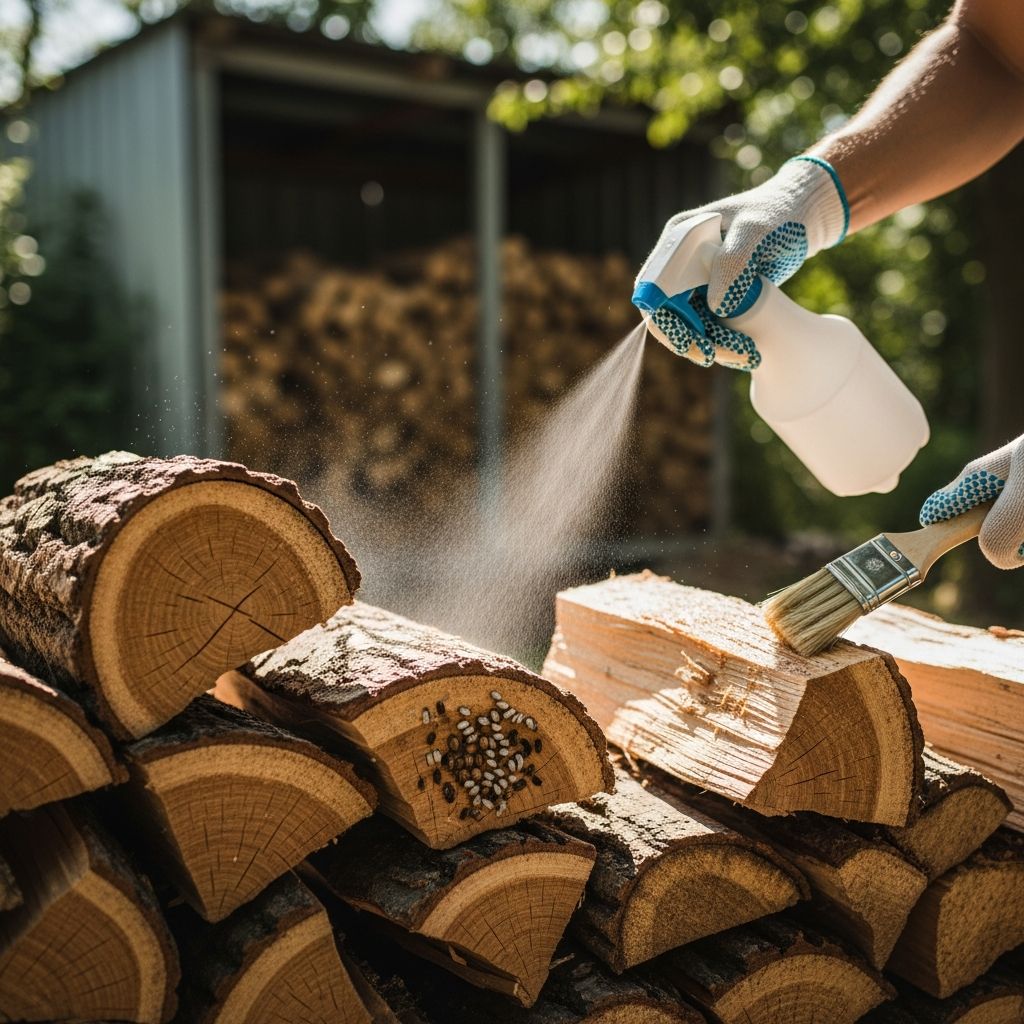
Firewood provides essential warmth during cold months, but it often harbors insects that can hitchhike into living spaces. Understanding common culprits and adopting smart storage habits drastically reduces these risks, ensuring cleaner burns and pest-free homes.
Common Insects Lurking in Firewood Piles
Firewood attracts a variety of pests seeking shelter, moisture, or food. These organisms thrive in the organic material, especially if conditions are damp or undisturbed.
- Wood-boring beetles: Larvae tunnel deep into logs, emerging as adults when wood warms indoors. Species like longhorned and bark beetles are frequent invaders.
- Carpenter ants: These large ants excavate galleries in moist wood for nesting, not eating it, but their presence signals potential structural risks nearby.
- Termites: Damp wood draws subterranean termites, which can transfer from piles to home foundations if stored too close.
- Horntail wasps and spiders: Non-stinging wasps overwinter in dead wood; spiders follow prey insects into stacks.
- Moisture lovers like pillbugs, sowbugs, and earwigs: These crustaceans and arthropods flourish under wet piles, dispersing when disturbed.
Different pests favor specific conditions: dry wood hosts beetles and wasps, while wet stacks invite termites and isopods. Recognizing them helps target prevention.
Why Firewood Becomes a Pest Haven
Pests view firewood as ideal habitat due to three factors: food, shelter, and moisture. Beetles and termites feed on cellulose; ants and wasps use it for nests. Ground contact retains soil moisture, drawing subterranean species upward. Poor airflow traps humidity, accelerating larval growth. Trees near stacks allow beetles to migrate, infesting healthy bark. Indoors, rising temperatures activate dormant insects, prompting mass emergence.
| Pest Type | Preferred Moisture Level | Risk When Burned Indoors |
|---|---|---|
| Beetles (bark, longhorned) | Dry to moderately moist | High – adults fly out |
| Termites | High moisture | Medium – swarmers emerge |
| Carpenter Ants | Moist, decaying wood | Low – vacate quickly |
| Pillbugs/Sowbugs | Very wet | Low – crawl away |
| Spiders/Wasps | Any | Low – harmless dispersal |
Optimal Outdoor Storage for Pest Prevention
Proper outdoor management is the cornerstone of pest control. Elevate stacks 6-12 inches off soil using racks, pallets, or blocks to block termite access and enhance drying. Maintain 20-30 feet from structures to prevent invasions; closer proximity invites crossover. Position in sunny, open areas for UV exposure and wind flow, which desiccate eggs and larvae.
Cover tops with breathable tarps or racks, leaving sides open for circulation. Avoid plastic sheeting, which traps moisture. Stack loosely in crisscross patterns: bottom layer parallel to ground, subsequent layers perpendicular for stability and airflow. Locate away from overhanging branches or dense vegetation to deter migrating beetles.
Seasonal Timing for Harvesting Wood
Cut logs mid-to-late fall after borer flight seasons, reducing egg-laying opportunities. Fresh cuts attract fewer pests if dried promptly under sun. Split logs expose inner wood to air, hastening seasoning and discouraging borers.
Stacking Techniques That Discourage Infestations
Efficient stacking minimizes pest appeal. Use the “first in, first out” rotation: consume oldest bottom logs before adding new top layers. This prevents prolonged aging, which fosters colonies. Aim for compact yet airy piles—no tighter than needed for stability.
- Select a raised, level base.
- Layer logs evenly, ends interlocking.
- Limit height to 4-6 feet for safety and drying.
- Top with angled cover sloping away from center.
These methods promote uniform drying below 20% moisture, unlivable for most pests.
Bringing Firewood Inside Without Inviting Guests
Minimize indoor exposure by transporting only 1-2 days’ supply at a time. Knock or shake logs outdoors to dislodge loose pests. Store briefly near the fireplace, never in living areas or basements long-term—warmth accelerates emergence. Burn promptly; unburned stacks indoors become hatcheries.
For unavoidable storage, isolate in garages with good ventilation, but prefer outdoor woodsheds. Vacuum emergents promptly; most disperse naturally within days and pose no sting or bite threat.
Dangers of Chemical Treatments on Firewood
Resist spraying insecticides—burning releases toxic vapors, endangering respiratory health. Pyrethroids or foggers on stacks contaminate air and ash. No labeled products exist for firewood due to combustion risks. Focus on cultural controls: dryness and isolation outperform chemicals.
If ants or spiders invade homes from wood, treat surfaces sparingly with approved pyrethroids, avoiding wood itself.
Advanced Monitoring and Natural Deterrents
Inspect piles quarterly for frass (insect waste), sawdust, or mud tubes—early signs of activity. Natural aids like diatomaceous earth around bases deter crawlers without residues, though efficacy varies. Encourage parasitic wasps by tolerating minor emergents; they control borers biologically.
Frequently Asked Questions About Firewood Pests
Can I burn firewood with bugs in it?
Yes, most insects perish in flames, but adults may emerge beforehand. Shake logs and burn quickly to minimize issues.
Is a woodshed necessary?
Not essential, but ideal for protection. Open racks suffice if elevated and covered properly.
What if pests appear indoors?
Vacuum them up; avoid panic. They typically leave soon. Check storage habits to prevent recurrence.
How long to season firewood?
6-12 months split, depending on species. Drier wood = fewer pests.
Are horntail wasps dangerous?
No, they lack stingers and target dying trees, not humans.
Long-Term Benefits of Pest-Free Firewood Management
Consistent practices yield drier, hotter-burning wood, reducing creosote buildup and chimney fires. Healthier homes avoid allergen dispersal from frass. Economically, less waste from rotted logs saves costs. Environmentally, fewer invasives spread via transported wood.

- Integrated M.A. in Applied Linguistics, University of Hyderabad
- 5+ years in editorial, instructional, SEO, and research-based writing
Sneha is a relationships and lifestyle writer with a strong foundation in applied linguistics and certified training in relationship coaching. She brings over five years of writing experience to theskillvault, crafting thoughtful, research-driven content that empowers readers to build healthier relationships, boost emotional well-being, and embrace holistic living. Her writing and insights reflect the belief that beauty, happiness, and wellness…