
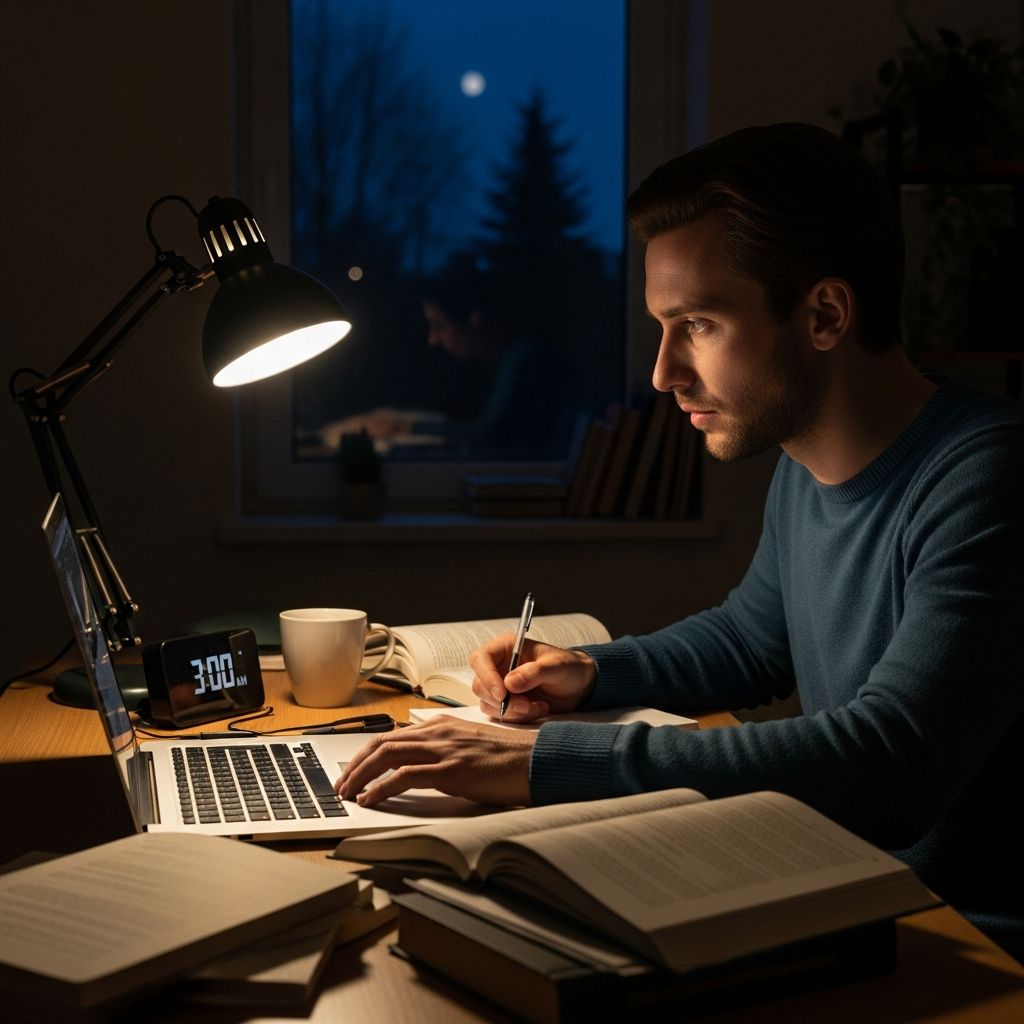
Extended work sessions through the night can be a necessary evil when deadlines loom, but approaching them haphazardly leads to diminished returns and health risks. This guide outlines a structured approach to maximize output while minimizing fatigue, drawing on techniques proven to sustain focus and energy levels.
Why All-Nighters Demand Preparation Over Impulse
Success in staying awake and productive hinges on foresight rather than sheer willpower. Rushing into an all-nighter without rest or a roadmap often results in scattered efforts and early crashes. Start by securing a full night’s sleep—aim for at least seven hours—the evening prior to build a reserve of alertness. This foundation allows your body to handle sleep deprivation better, as confirmed by sleep research from the National Library of Medicine.
Next, craft a detailed timeline. Divide the night into segments, assigning specific tasks to each hour or block. For instance, tackle high-cognitive tasks like analysis during peak alertness windows, typically early evening or post-breakfast hours, and save rote work for lulls. Tools like planners or digital calendars help track progress and prevent drift into unproductive rabbit holes.
Core Technique: Harnessing Time-Blocking for Sustained Focus
The **Pomodoro Technique** stands out as a cornerstone for all-nighters, breaking work into manageable 25-minute sprints followed by 5-minute rests, with extended 15-30 minute pauses every four cycles. This method, developed in the 1980s, combats mental fatigue by enforcing rhythm, enabling up to 8+ hours of high-quality output without burnout.
- Select a single task to avoid multitasking dilution.
- Set a timer for 25 minutes of uninterrupted effort.
- During breaks, stand, stretch, or hydrate—never extend into social media.
- After four cycles, recharge with a longer interval for light activity.
Users report completing 20 such cycles overnight, yielding over eight hours of sharp work, far surpassing unstructured grinding. Pair this with task batching: group similar activities, like all emails in one block or data entry in another, to minimize cognitive switching costs.
Fueling Your Body: Nutrition and Hydration Essentials
Dehydration and poor food choices amplify tiredness, so prioritize steady energy sources. Drink water every two hours to maintain cognitive function, as even mild dehydration impairs concentration.
Opt for nutrient-dense snacks over junk:
| Category | Recommended Snacks | Benefits |
|---|---|---|
| Fruits | Apples, berries, bananas | Complex carbs and natural sugars for steady glucose release |
| Proteins | Nuts, hummus with carrot sticks, sandwiches | Sustained energy without crashes; supports brain repair |
| Treats | Dark chocolate | Moderate caffeine and antioxidants for mild alertness boost |
| Avoid | Packaged sugars, heavy meals | Causes energy spikes and slumps |
Snack continuously in small portions while working to sidestep the post-meal drowsiness trap. Fresh options like fruit provide quick, clean fuel, packing vitamins that counter stress from sleep loss.
Physical Activation: Movement as an Alertness Multiplier
When eyelids droop, **short bursts of exercise** outperform any stimulant. Bodyweight moves like push-ups, squats, or jumping jacks during breaks spike heart rate and oxygen flow, resetting alertness. Dedicate longer pauses to 5-10 minutes of activity for amplified effects.
Research supports this: physical exertion combats adenosine buildup, the chemical behind sleep pressure, making it ideal for overnight endurance. Even a quick walk around the room suffices if space is limited.
Strategic Caffeine and Napping: Timing is Critical
Caffeine blocks adenosine receptors, enhancing wakefulness, but overuse leads to tolerance and jitters. Employ a **caffeine power nap**: consume 100-200mg (a coffee or two) then nap 20-30 minutes. Upon waking, caffeine peaks align with refreshed neural pathways for superior focus.
Limit intake to 2-3 servings, spaced 4 hours apart, avoiding late-night doses that disrupt recovery sleep. Alternatives like green tea offer L-theanine for smoother alertness.
Environmental Mastery: Optimize Your Workspace
A conducive setup prevents subtle energy drains. Dim lights mimic dusk, signaling sleep, so use bright, cool-toned lighting (4000K+ bulbs) to mimic daylight. Keep the room cool (around 65°F/18°C), as warmth induces drowsiness.
- Eliminate distractions: phone on Do Not Disturb, apps blocked.
- Use noise-cancelling headphones with focus playlists if ambient sound helps.
- Position desk facing a window for natural light cues when possible.
Stand-up desks or alternating sitting/standing further integrates movement.
Recovery Roadmap: Bouncing Back Post-All-Nighter
The night ends, but repercussions linger without proper wind-down. Set multiple alarms—starting 30 minutes early—to account for micro-sleeps. Prioritize a 90-minute nap mid-morning to capture a full sleep cycle, preserving analytical skills.
Follow with balanced meals and light exposure to reset circadian rhythms. Avoid habitual all-nighters; Stanford experts advocate consistent schedules for long-term health. Use the post-recovery day for low-stakes tasks, easing back into routine.
Common Pitfalls and How to Sidestep Them
Many fail by skipping planning, leading to aimless toil. Procrastination stalls starts—counter by committing to a 5-minute kickoff, momentum builds naturally. Over-relying on caffeine without breaks invites crashes; balance with Pomodoro.
Don’t neglect social accountability: inform a friend of your plan for check-ins, reducing temptation to quit.
Frequently Asked Questions (FAQs)
Q: Is pulling all-nighters safe regularly?
A: No, occasional use is tolerable with preparation, but chronic sleep deprivation harms cognition and health. Aim for 7-9 hours nightly.
Q: How much caffeine is too much during an all-nighter?
A: Cap at 400mg (4 coffees); time doses strategically to avoid interference with recovery sleep.
Q: What if I accidentally fall asleep?
A: Set alarms and use a power nap strategy upon waking with caffeine to rebound quickly.
Q: Can all-nighters improve my grades or work output long-term?
A: Short-term boosts possible with hacks, but consistent sleep yields better results overall.
Q: Best snacks for brain fuel?
A: Nuts, fruits, yogurt—protein-carb combos prevent sugar crashes.
Long-Term Habits to Minimize All-Nighter Needs
Build buffers: daily planners track deadlines, study groups distribute load. Time-block demanding subjects during peak alertness. Tools like Focus@Will apps enhance concentration sans exhaustion. Ultimately, discipline averts crises.
By integrating these strategies, transform dreaded overnights into controlled, high-yield marathons. Preparation trumps endurance every time.
References
- The All-Nighter Experiment: What Worked and What Didn’t — Wall Street Oasis. 2015 (relevant for timeless techniques like Pomodoro, predating modern apps but validated in practice). https://www.wallstreetoasis.com/forum/consulting/the-all-nighter-experiment-what-worked-and-didnt
- How To Pull An All-Nighter: Tips & Alternatives For Well-being — BetterHelp. Accessed 2026. https://www.betterhelp.com/advice/students/how-to-pull-an-all-nighter-tips-and-alternatives/
- College Hacks – How to Pull An All-Nighter (The RIGHT Way!) — Instructables. Accessed 2026. https://www.instructables.com/College-Hacks-How-to-Pull-An-All-Nighter-The-RI/
- The Grown-Up’s Guide to Pulling An All-Nighter — Amerisleep (citing NIH/National Library of Medicine). Accessed 2026. https://amerisleep.com/blog/pulling-an-all-nighter/
- The Flourish, May 2022: Sleep Corner — Stanford Student Affairs (.edu primary source). 2022-05. https://studentaffairs.stanford.edu/flourish-may-2022-sleep-corner

- Integrated M.A. in Applied Linguistics, University of Hyderabad
- 5+ years in editorial, instructional, SEO, and research-based writing
Sneha is a relationships and lifestyle writer with a strong foundation in applied linguistics and certified training in relationship coaching. She brings over five years of writing experience to theskillvault, crafting thoughtful, research-driven content that empowers readers to build healthier relationships, boost emotional well-being, and embrace holistic living. Her writing and insights reflect the belief that beauty, happiness, and wellness…